
Many homeowners in the USA spend huge amounts on premium self-closing hinges while completely forgetting about the quality of the door slab itself. Installing powerful mechanics on a drying, warping wooden sash is nothing but throwing money to the wind, doomed to fail from the very first days of use. If the base frame is weak, expensive steel hardware will simply rip chunks of wood out of its mounting points. In this article, we explain how to properly choose and upgrade your entryway so your high-end closers work flawlessly for decades.
The Anatomy of a Reliable Entrance: Why the Frame Determines Everything
Heavy mechanical hinges like those produced by the Waterson brand create serious load dynamics on the door frame with every closing cycle. Obviously, lightweight hollow mass-market constructions will instantly begin to deform under such intense pressure. A sturdy frame made of high-quality fiberglass ensures perfectly correct distribution of physical weight across the entire contact area.
This approach effectively prevents any sash misalignment and sudden jamming of heavy locking mechanisms. Calculating the load-bearing capacity of the opening is critically important, especially when dealing with harsh climate challenges with sharp temperature swings. Homeowners must consider not only the aesthetics of the facade but also the strictly engineering parameters of material compatibility.
Climate Test Drive: When Winter Puts Hinges to the Test
Extreme weather conditions become ruthless killers both for complex steel hardware and for door openings in general. Moisture silently penetrates microcracks, freezes overnight, and literally tears apart the mounting holes for the hinges, inevitably causing severe sagging of the entire structure. For residents of traditionally cold and windy regions, an excellent benchmark of premium quality can be Ecoline exterior doors Calgary, engineered specifically to withstand brutal arctic frosts.
The installation of such a monolithic body ensures that you never worry again about condensation on the glass or icing near the keyhole. The effective sealing of the perimeter ensures that moisture cannot get near your expensive self-closing hardware. The layered nature of the monolith ensures that no cold enters from the outside and freezes everything, allowing for smooth operation even under extreme weather conditions. Your home truly turns into an invincible castle, capable of withstanding anything thrown at it.
Investing in Airtightness: Eliminating Drafts
A good door closer is designed to gently and tightly press the sash against the frame, blocking even the slightest outdoor chill. If the door itself has poor factory geometry or has deformed over time, no premium hardware will save your entryway from freezing drafts. In such neglected situations, you must radically rethink the entire approach to insulating the home’s opening. Pay close attention to the basic factors indicating the urgent need to replace the structure:
- Appearance of stubborn black mold in the corners of the door frame due to regular deep freezing;
- A noticeable stream of cold air along the floor, even with all bolts fully locked;
- Heavy accumulation of dirty moisture between the glass panes in decorative transparent inserts.
Timely reaction to these alarming markers will protect your hinges from aggressive corrosion and your family budget from astronomical gas heating bills. Moreover, professional replacement of an outdated block usually takes just one daylight cycle, instantly relieving you of years of headaches. Proper installation eliminates any heat loss, preserving the desired microclimate inside the living spaces.
Technical Nuances: Comparing Materials
When choosing a new sash for complex heavy mechanics, you must clearly understand the basic physical properties of popular construction materials. Natural wood has the tricky habit of expanding and contracting depending on the season, causing hinges to squeak annoyingly and require constant manual adjustment. Synthetic polymers and painted metal have no such archaic drawbacks, remaining completely inert to fluctuations in atmospheric humidity.
To clearly demonstrate the difference between materials, we have compiled key performance metrics in a convenient format.
| Door Material Type | Hardware Mounting Strength | Thermal Expansion Risk | Average Insulation R-Value |
|---|---|---|---|
| Hollow core wood | Poor | Very high | 1.5 to 2.0 |
| Fiberglass foam-filled | Excellent | Minimal | 5.0 to 6.0 |
| Insulated steel | Superior | Low | 5.5 to 6.5 |
| Solid hardwood | Good | Moderate | 2.5 to 3.0 |
Analyzing these figures allows for a clear, well-reasoned conclusion in favor of modern composite solutions. Durable impact-resistant fiberglass or galvanized steel provides an ideal rigid platform for installing concealed heavy hinges with auto-closing mechanisms.
No misalignment will ever again disturb the hardware, forcing it to operate strictly within its intended mode without unnecessary friction. Thus, investments in modern door manufacturing technologies pay off through unmatched longevity and the complete absence of constant repairs.
Summing Up: Building an Entryway the Smart Way
High-quality door hardware can fully reveal its potential only when paired with a reliable, deformation-resistant slab. A well-balanced combination of powerful high-tech hinges and an energy-efficient composite frame guarantees maximum safety, quietness, and comfort for your home. We hope our detailed engineering breakdown helps you make the right choice and forget forever about entry doors slamming from drafts.
Recent Post
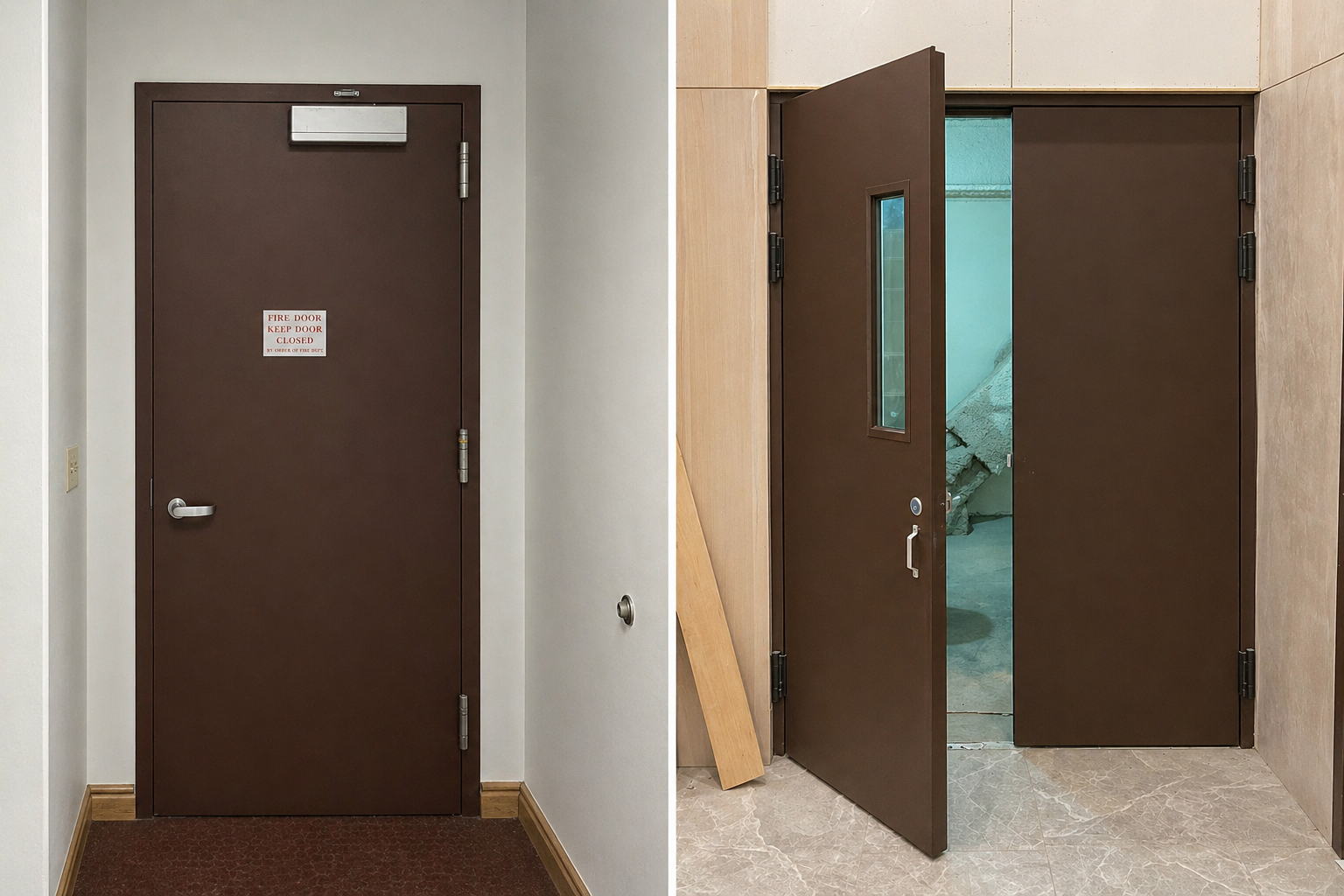
5 Warning Signs a Fire Door Spring Hinge Is About to Fail Inspection
Fire door spring hinges are easy to overlook until inspection day arrives and a deficiency report lands on your desk. NFPA 80 §5.2.1 requires every [...]
How Security Door Hinges Prevent Unauthorized Entry in High Traffic Facilities
"When most people think about door security, they think about locks. But a lock is only as effective as the door it is mounted on." [...]
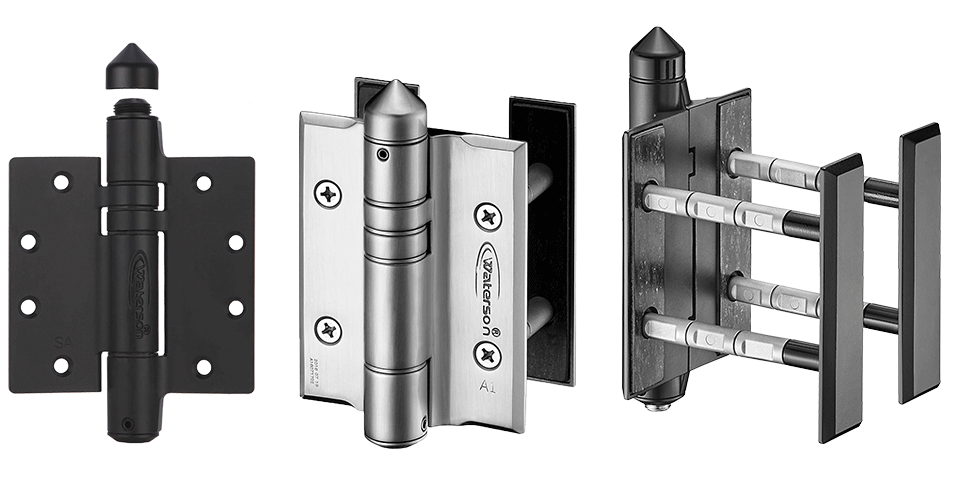
A Guide to Waterson Self Closing Outdoor Gate Hinges: Pool, Garden, Driveway & Industrial Applications
"Choosing the right gate hinge comes down to four things: gate type, environment, weight capacity, and code compliance." In case you are uncertain about how [...]