
Fire door spring hinges are easy to overlook until inspection day arrives and a deficiency report lands on your desk. NFPA 80 §5.2.1 requires every fire door assembly to be inspected and tested at least annually. And then, your door starts to sag on the hinge side, fails to latch from full open, develops play in the barrel, collects a paint bridge across the knuckles, or shows gap violations along the frame.
Most of these failures do not happen overnight. They telegraph themselves weeks or months before inspection day through visible, physical warning signs that anyone walking the corridor can spot. Here is what each one looks like, what the inspector writes, and how to fix it before it becomes a line item.
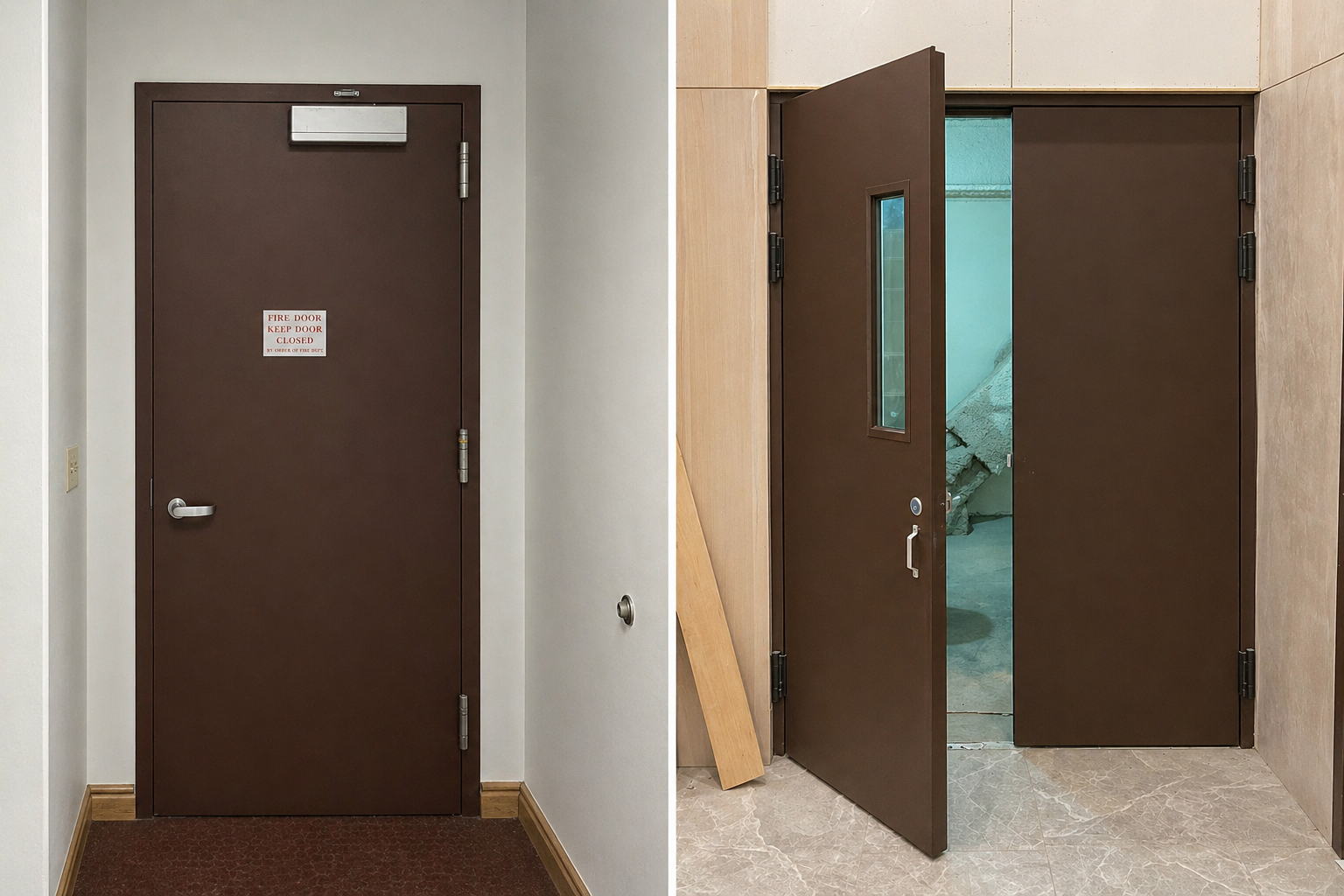
5 Warning Signs a Fire Door Spring Hinge Is About to Fail Inspection
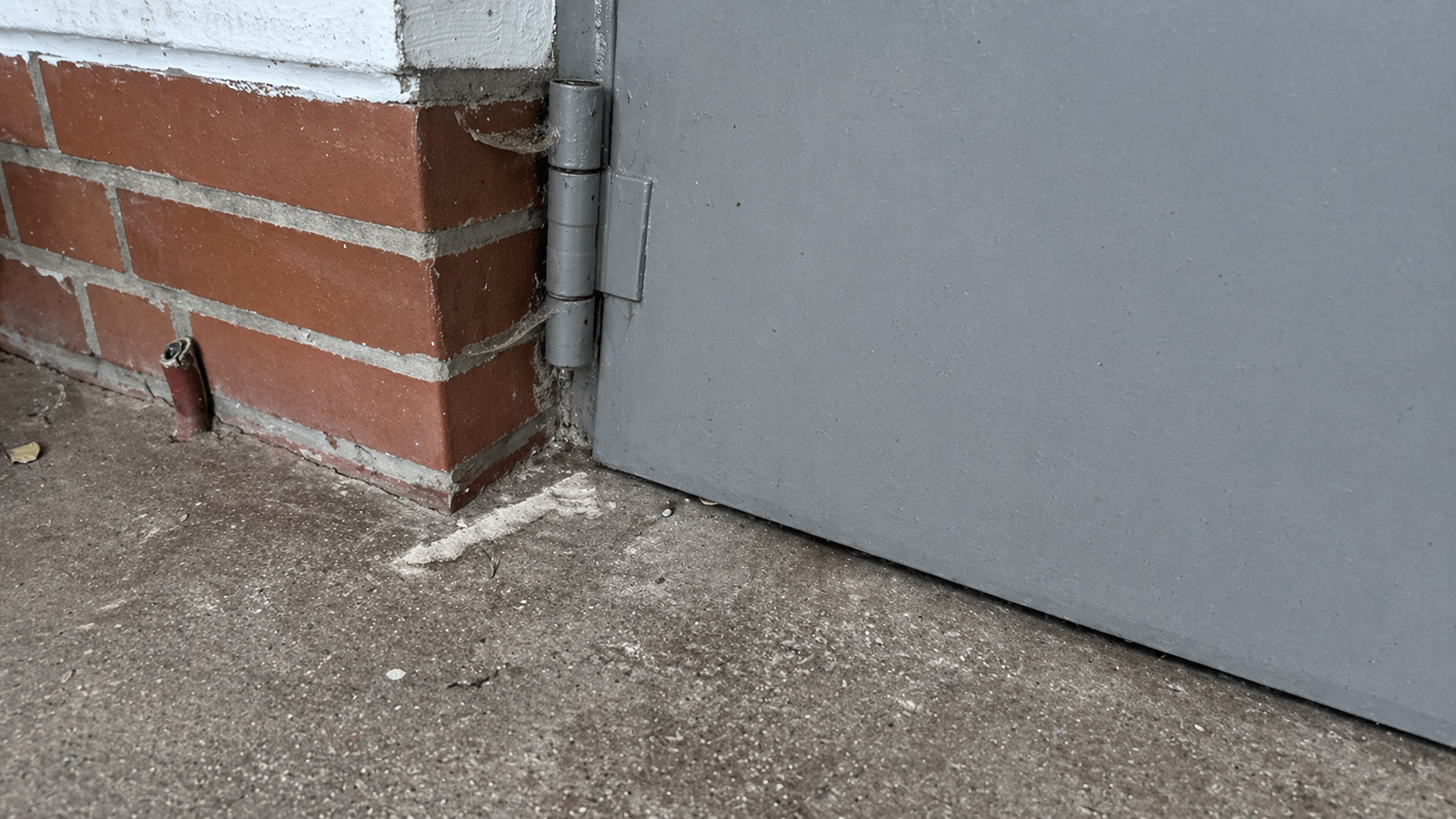
1. Visible Sag on the Hinge Side
Sag is the leading cause of perimeter clearance violations under NFPA 80 §4.8.4.1, which limits the gap at sides and top to 1/8 inch and at the threshold to 3/4 inch. Once the door has rotated even a few millimeters about a worn pivot, maintaining that clearance becomes impossible. Sag also produces last-inch latch misalignment, which triggers the failure of the close-and-latch operational test from the full-open position.
Re-tensioning does not reverse mechanical sag. A like-for-like listed replacement is required. If the door prep itself is worn (elongated screw holes, shifted frame), a through-bolted repair plate precedes the hinge swap.
2. Latching Delay or Latch Miss from Full Open
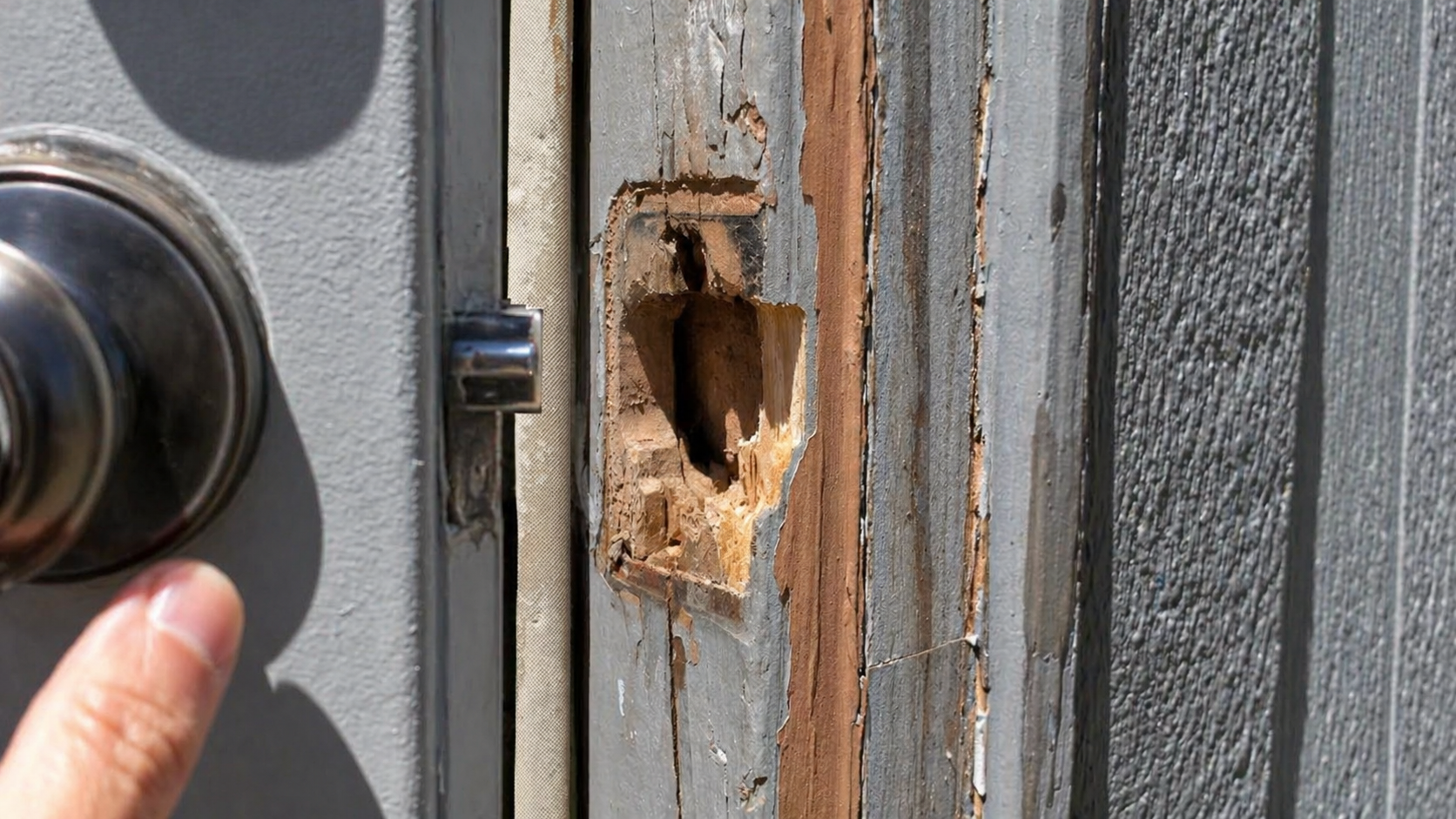
Release the door from its maximum open position, and it decelerates heavily in the last 6 to 8 inches. The latch bolt contacts the strike face but does not compress into the keeper. Sometimes the door settles against the stop and visibly shifts without securing.
According to NFPA 80 Fire Door Latching Requirement, every fire door must be equipped with an active latchbolt that keeps the door latched under the pressure created by a fire. This latchbolt cannot be held in a retracted position. If the door fails to latch from full open, it fails the most basic operational test and will receive a citation immediately.
With standard spring hinges, there are typically no adjustment notches available. Once those are maxed out and the door still fails to latch, the hinge has reached the end of its service life and must be replaced.
3. Hinge Play and Barrel Rock
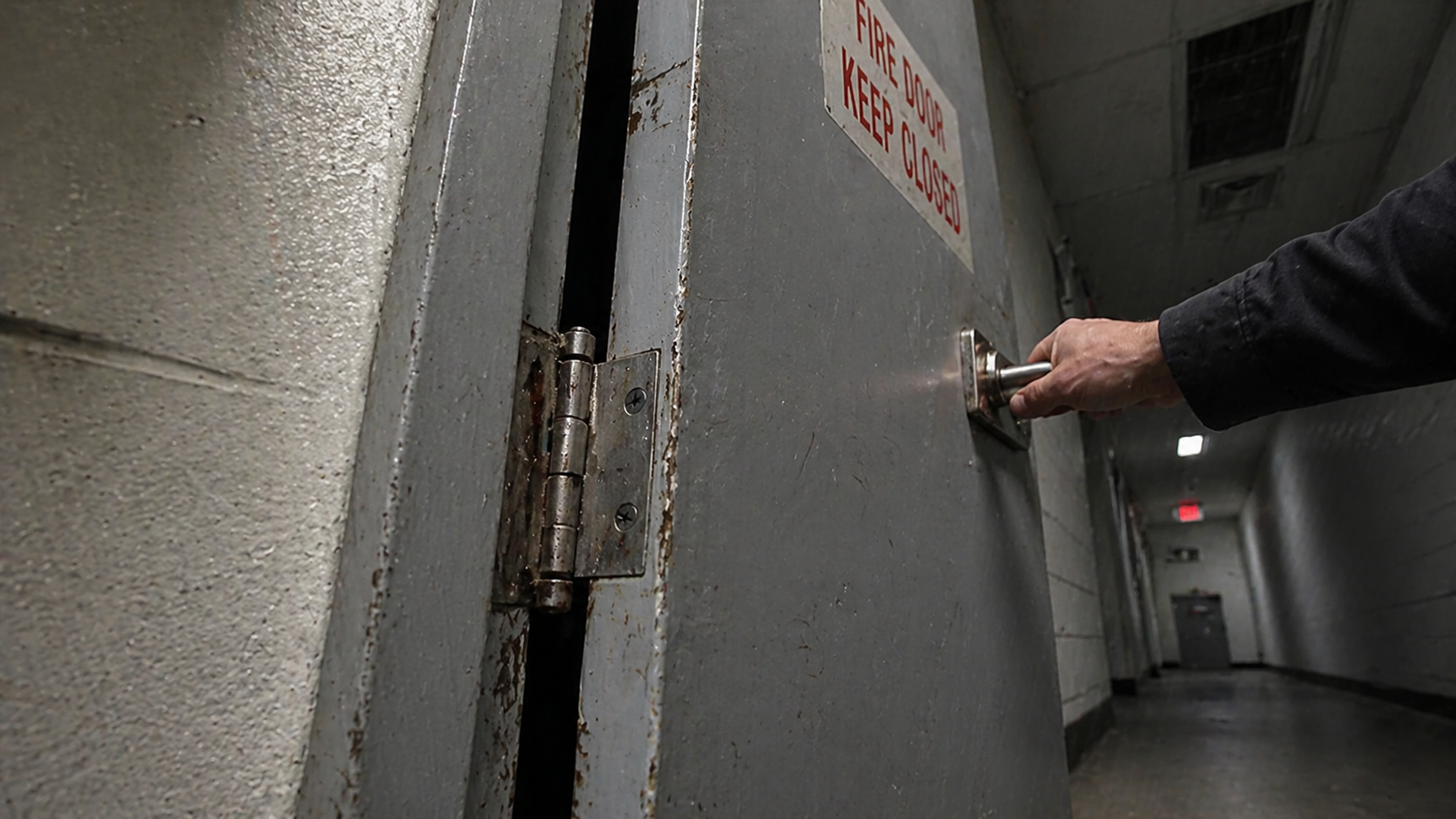
With the door slightly open, lift the free edge and push it horizontally. Any perceptible movement in the barrel, including faint lateral rock at the pivot pin, indicates wear on the knuckle bearing surfaces. With the door closed, you may see a thin gap along the hinge line that was not there before.
NFPA 80 §5.1.3.1 requires that doors shall be operable at all times, and barrel play accelerates every failure mode that threatens that: sag, latch miss, and gap overrun. Under §5.1.5.1, repairs shall be made and defects that could interfere with operation shall be corrected without delay. Which means hinge replacement, not shimming.
For large buildings where replacing hinges across dozens of doors carries a high cost, the code offers no flexibility on timing. The better answer is hardware that does not wear out as quickly to begin with.
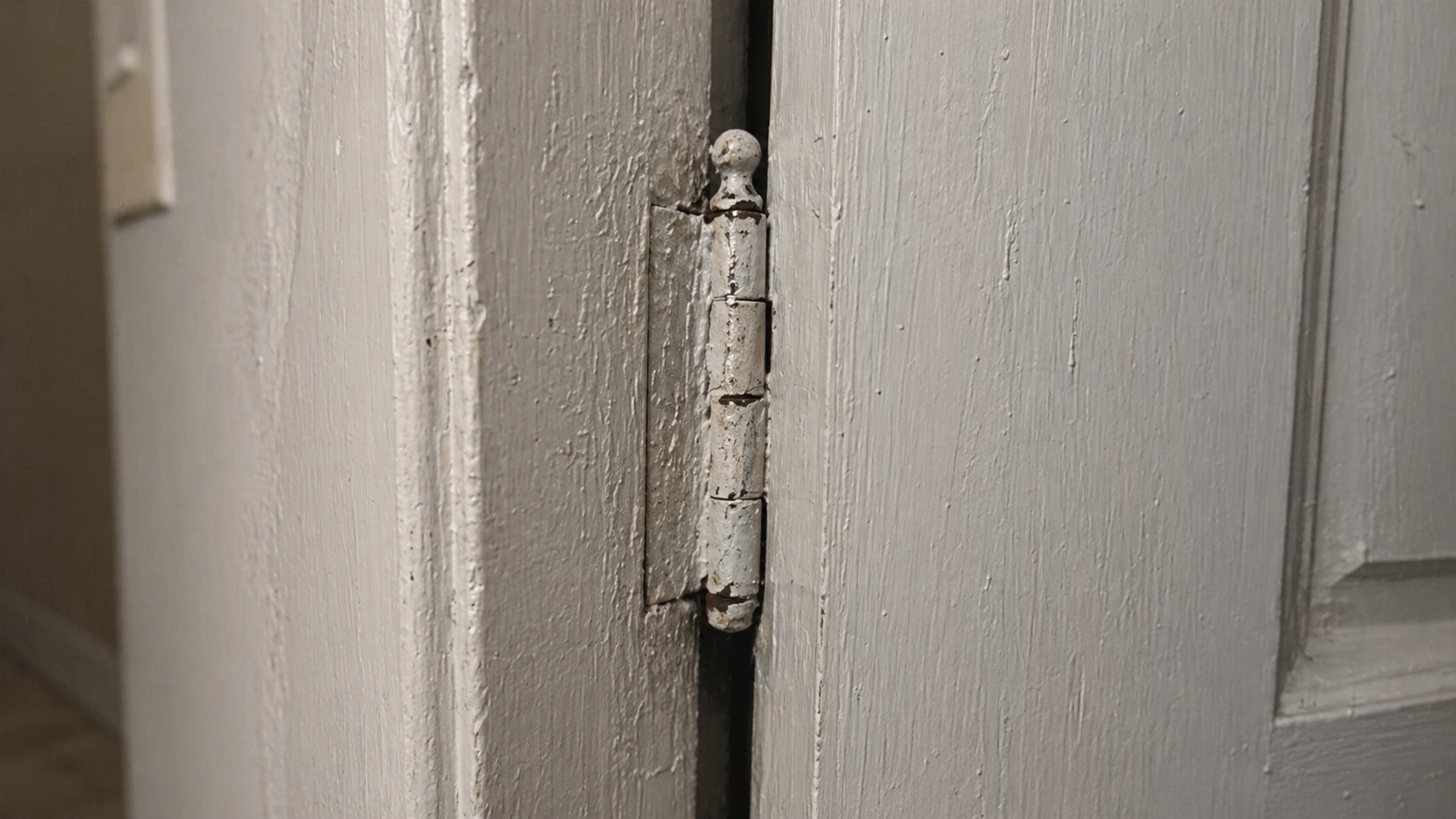
4. Paint Bridge Across the Barrel
A continuous film of paint spans two or more knuckles of the hinge, visibly locking the leaves together. The hinge either does not rotate at all, or it rotates with audible cracking as the paint film splits.
NFPA 80 §5.2.14.5 clearly states that paint shall be prevented from accumulating on any movable part. This is one of the most visually obvious deficiencies and one of the most common on annual inspection, because painters routinely coat corridor hardware without masking hinge barrels.
The right solution is not to paint over the hinge after installation. Instead, specify a hinge that comes with the finish applied at the factory. The color is processed directly onto the hinge before it ships, eliminating any reason for painters to touch the barrel after installation.
5. Jamb Gap Anomaly and Bottom-Corner Lift
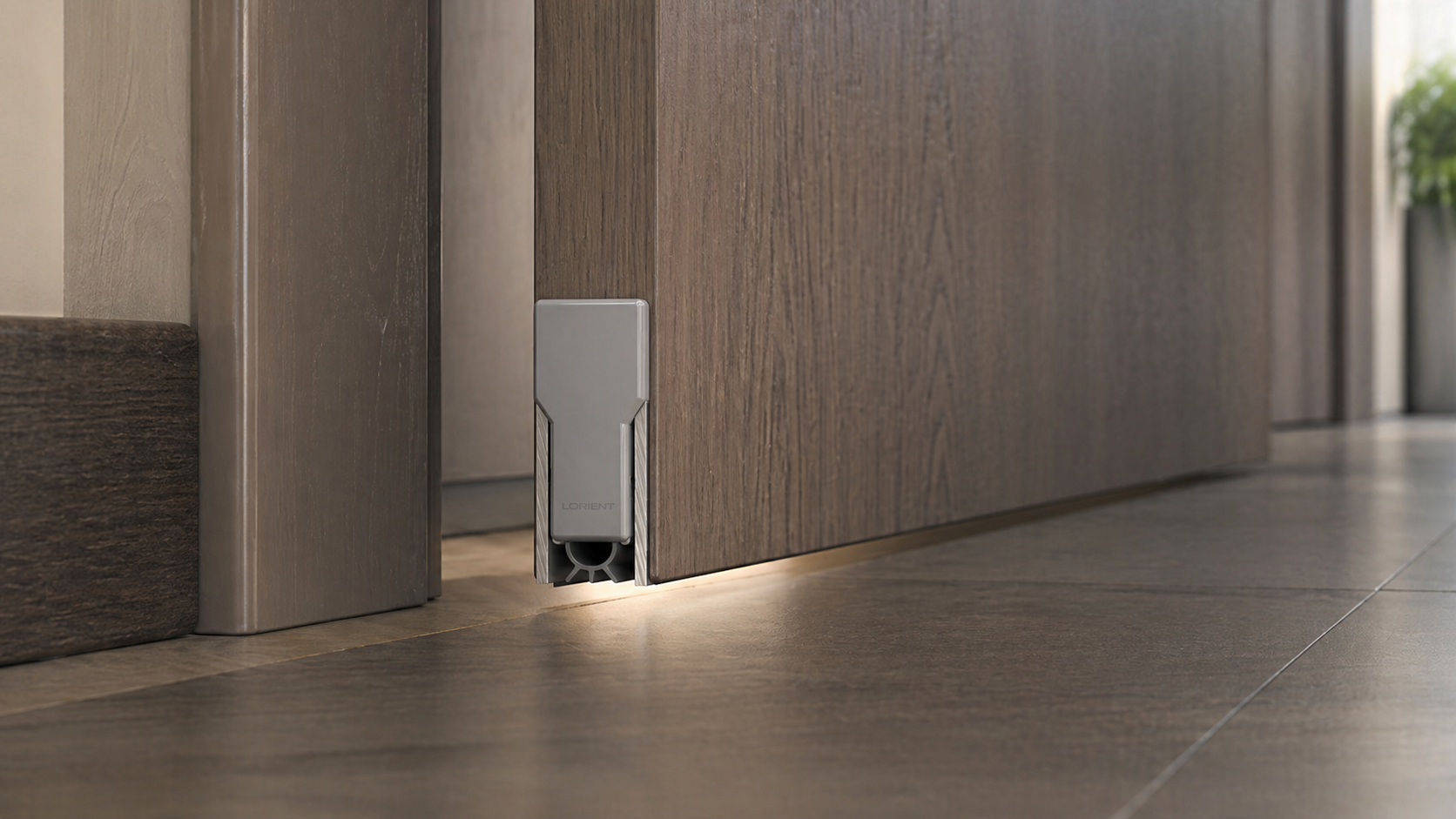
NFPA 80 §4.8.4.1 sets the maximum at 3/4 inch under the door. Visible lift at the bottom latch-side corner when the door is closed signals that the lower spring is no longer pulling the corner flush against the frame.
This gap almost always traces back to hinge wear: stamped steel yielding under load, knuckle play compounding with age, or springs that no longer apply even closing force across the full door height. Therefore, confirm the frame is square, replace the hinges, and if the corner lift persists, the frame itself requires shimming or partial reinstallation as a separate carpentry step.
What Are the Code Requirements for Fire Door Self-Closing Hinges?
Every fire door spring hinge has to clear the same bar under NFPA 80. Based on the five warning signs above, here is what the code actually demands to the door hinges and hinge function:
- Must self-close and latch reliably from full-open position, every single time (§5.2.1, §5.2.14.1)
- Must remain operable at all times, meaning no sag, no barrel play, no seized knuckles (§5.1.3.1)
- Must not accumulate paint on any movable part (§5.2.14.5)
- Defects must be corrected without delay, and any replacement must meet fire protection requirements with a like-for-like listed product (§5.1.4, §5.1.5)
- Must maintain bottom clearance of no more than 3/4 inch under the door (§4.8.4.1)
- Inspection records must be signed and kept available for the AHJ, with annual inspection required (§5.2.1)
So, What Is the Top Rated Fire Door Spring Hinge for Commercial Doors?
Most inspectors reached out to Waterson Self Closing Fire Door Spring Hinges as a solution for the past years.
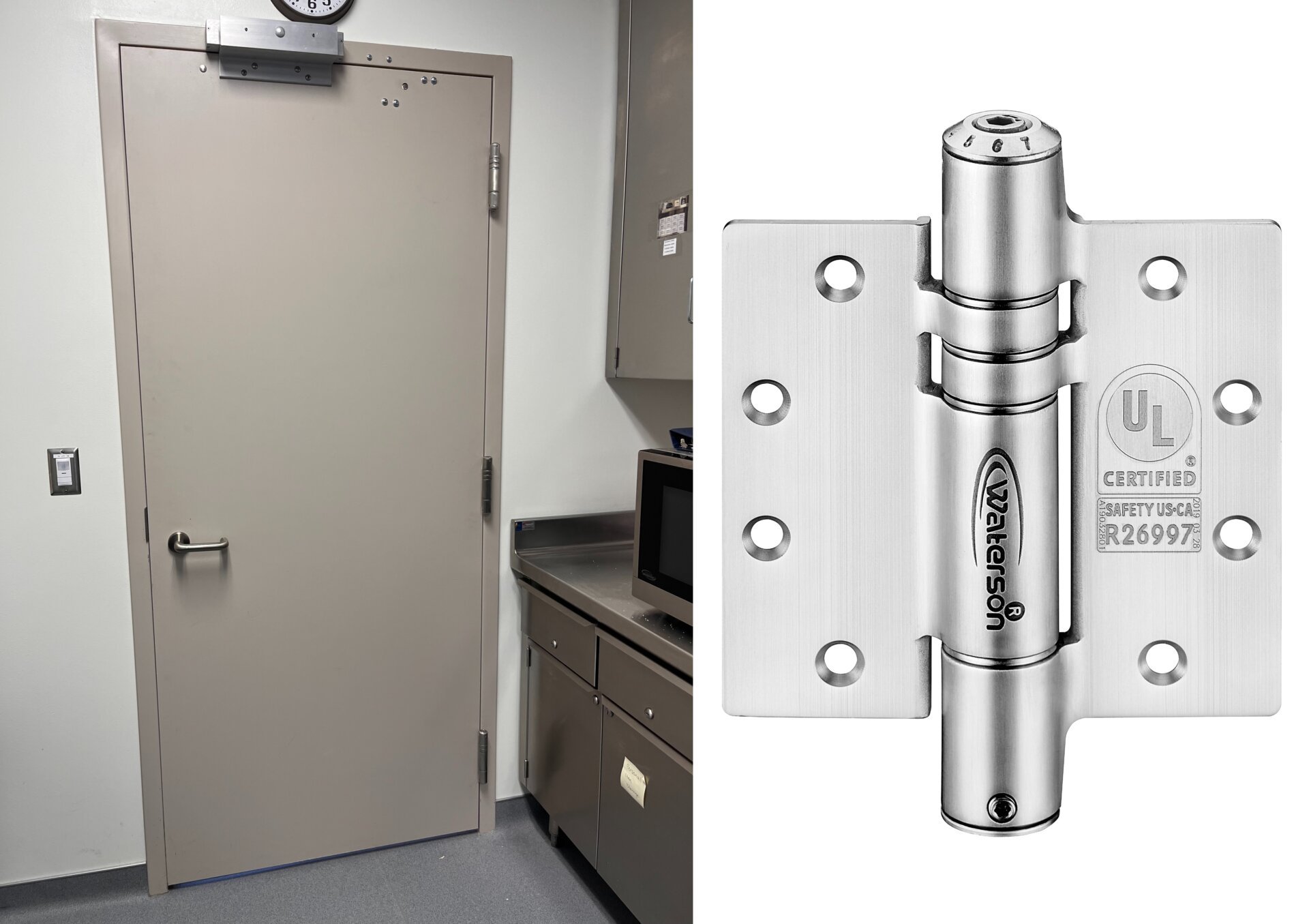
Waterson K51M full-mortise self closing door hinge built from investment-cast Type 304 stainless steel, combining a mechanical spring with an optional hydraulic damping cylinder in a single barrel. It drops in on standard ANSI mortise prep with no additional door modification, carries a 3-hour UL Listing, and is verified to ANSI/BHMA A156.17 Grade 1 through 1,000,000 cycles of testing.
| Warning Sign | Waterson K51M Solution |
|---|---|
| #1 Visible sag on the hinge side | Investment-cast stainless steel is harder and more wear-resistant than stamped steel, keeping the pivot precise longer and reducing sag over time |
| #2 Latching delay or latch miss from full open | Independent latch speed control precisely manages the final 20 degrees of closing, ensuring positive latching every time |
| #3 Hinge play and barrel rock | ANSI/BHMA A156.17 Grade 1 verified to 1,000,000 cycles, tighter tolerances than stamped steel, pivot assembly stays accurate far longer |
| #4 Paint bridge across the barrel | PVD finish in 4 standard colors: Satin, Black, Brass, Bronze, applied at the factory, eliminating any reason for field painting |
| #5 Jamb gap and bottom-corner lift | Consistent closing force combined with hydraulic damping controls closing speed, minimizing door slam that damages the frame over time |
Waterson Self-Closing Fire Door Spring Hinges also come with the following key features:
- 3-hour UL Listed fire rating: the highest available for self-closing hinges, suitable for the most demanding fire door assemblies
- Adjustable closing speed: with separate swing speed and latch speed control zones, ensuring positive latching from full-open position under NFPA 80 §5.2.1.5
- ADA compliant: for opening force and closing speed, meeting accessibility requirements alongside fire code
- Warranty: 10-year warranty for mechanical models, 3-year warranty for hydraulic models, covering material and manufacturing defects
Start with door height, then confirm by weight. As a general rule, 1 hinge per every 30 inches of door height:
- Up to 60 inches: 2 hinges
- 60 to 90 inches: 3 hinges
- 90 to 120 inches: 4 hinges
For weight: 3 hinges handle up to 2600 lbs, 4 hinges handle up to 330-440 lbs. Always use a full set of Waterson hinges; mixing with commodity hinges causes alignment issues.
The K51M drops in on the same ANSI mortise pocket as a standard butt hinge, no additional routing or door modification needed.
- Measure door height and weight to confirm hinge quantity and size
- Mark hinge locations using the labeled stickers on each hinge
- Cut the mortise and ensure the barrel sits flush with the door edge
- Secure with included screws, use steel shims for gap adjustment if needed
- Verify the door latches cleanly before making any speed adjustments
All adjustments are made on the door without removing the hinge. A 3mm and 5mm hex wrench are included in the pack.
- Tension: Rotate the numerical panel from N (neutral) to 7 (maximum)
- Swing speed: Controls closing from 90 to 20 degrees
- Latch speed: Controls the final 20 degrees independently for reliable latch engagement
- Re-check: Open the door at
Waterson Stainless Steel Self Closing Fire Door Spring Hinges
Waterson self closing fire door hinges combine the function of an overhead closer and a hinge into a single, sleek component—complete with optional hold-open and door-stop features. Designed for commercial openings, gates, and glass doors, these hinges are easy to install and adjust to meet ADA and ICC A117.1 standards for opening force, while ensuring quiet and secure closure. Crafted from durable stainless steel, they are NFPA 80 compliant, UL 3-hour fire-rated, and built to perform reliably in both interior and all-weather exterior environments. See all our features.
In addition to these performance advantages, Waterson offers custom hinge services. As a direct manufacturer, we can tailor hinge sizes, finishes, and especially hinge leaf designs to meet the specific structural needs of your doors. This makes our hinges an ideal solution for door manufacturers seeking custom options that integrate seamlessly with their existing frames.
Request For Quote
Please note that Waterson Closer Hinges start from a size of 4″x4″. If you’re in need of smaller self-closing hinges, we’d recommend checking out some other resources! Also, we only provide single acting closer hinges. Thank you.
Recent Post
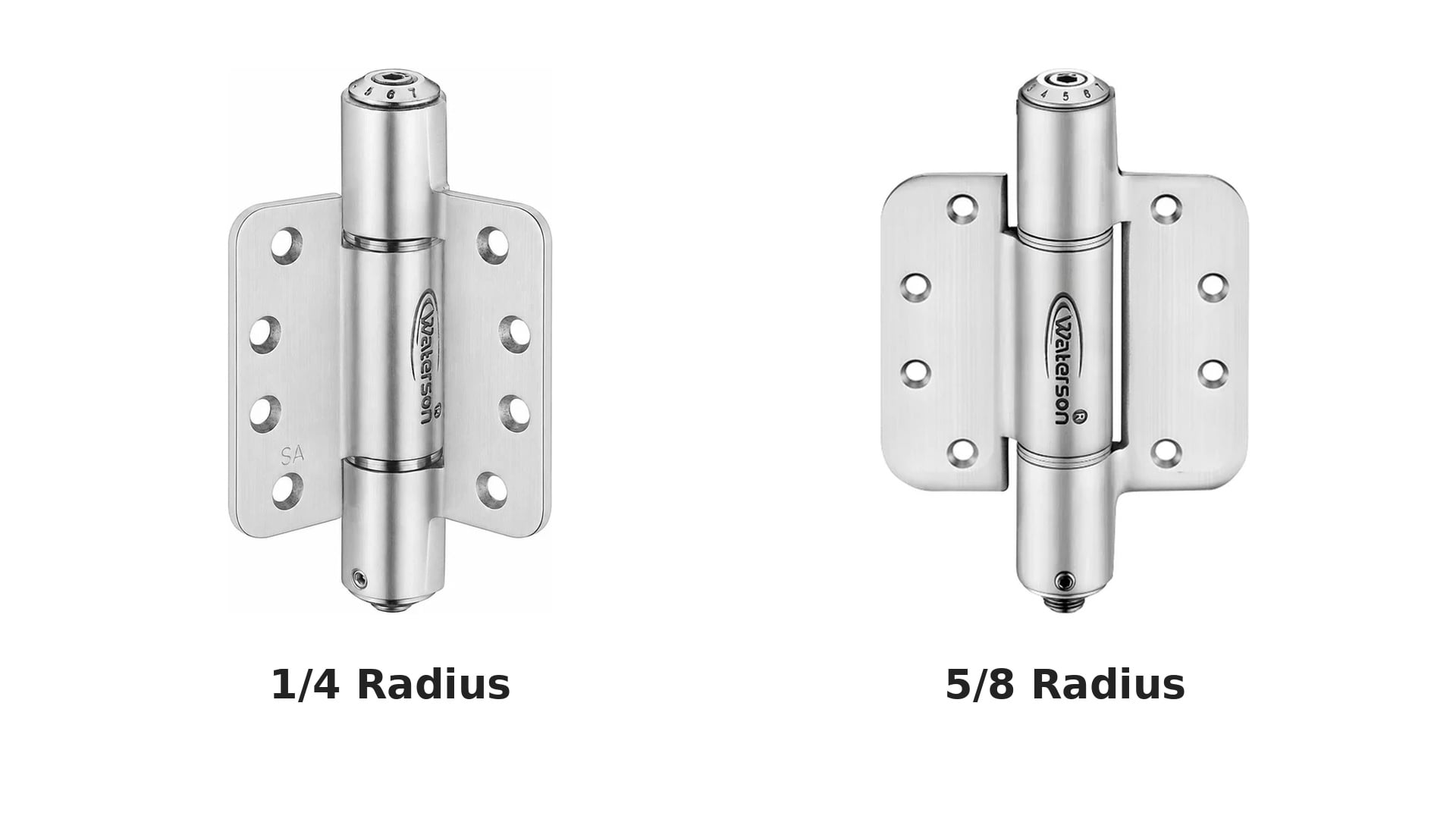
Replacing Door Hinges: 1/4 vs 5/8 Radius vs Square Corners
Quick Answer Most 4 inch residential door hinges have one of three corners: square, 1/4" radius, or 5/8" radius. A rounder hinge fits a mortise [...]
Why Won’t My Self Closing Door Hinges Close in Cold Weather
Quick Answer An exterior door that closes fine in summer but won't latch in winter is usually affected by two things: weather stripping that stiffens [...]

Soft Closing Hinges: 9 Most Frequently Asked Questions
Since the AIA in 2018, there has been an increased interest in Waterson hinges for many different projects. We have been inundated with questions by [...]