
Quick Answer
The ADA 5 lb rule means a door must open with 5 lbs of force or less, while still closing in at least 5 seconds and maintaining a 32 inch clear width, three requirements that conflict on standard hardware since one tension mechanism controls both opening and closing force. Most ADA violations happen because cranking up closing force to ensure a reliable latch also raises opening resistance above 5 lbs. Waterson hinges solve this by separating spring tension, swing speed, and latch speed into independently adjustable zones, so closing force can stay high enough to latch while opening force stays compliant.
Most doors in commercial buildings are not ADA compliant. Not because the architect got it wrong, but because the hardware was specified or installed without accounting for how opening force, closing speed, and clear width interact in practice. If your door has a self-closing mechanism and has never been tested with a force gauge, there is a real chance it fails the 5 lb rule right now.

The 3 Numbers That Actually Matter
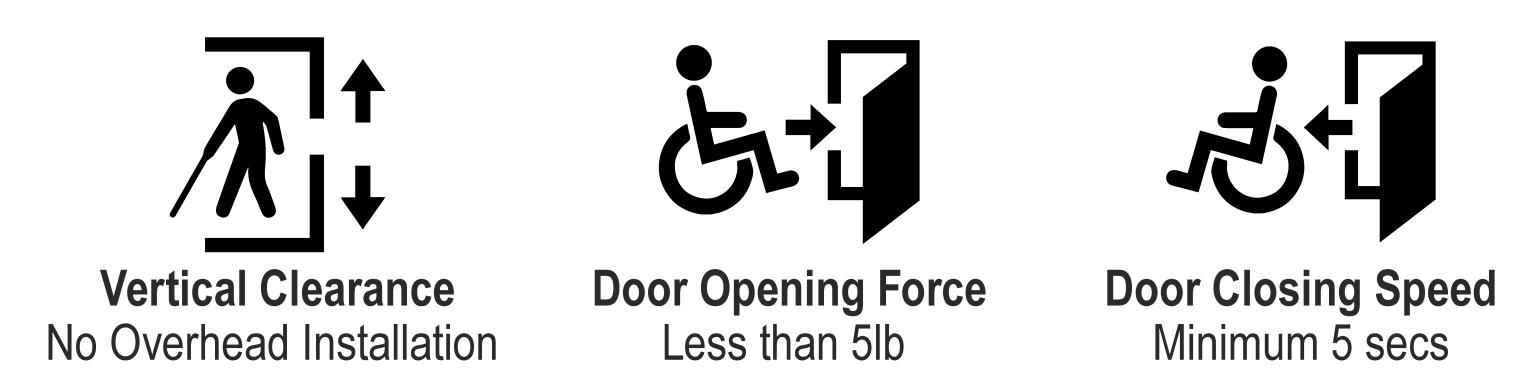
The ADA does not regulate door hardware directly. What it regulates is performance. According to the U.S. Access Board ADA Standards, every compliant door must meet three measurable thresholds:
| Requirement | Standard |
|---|---|
| Opening force | 5 lbs or less (interior doors) |
| Closing speed | At least 5 seconds from 90° to 12° from latch |
| Clear opening width | Minimum 32 inches at 90° |
These three numbers sound simple. In practice, they constantly conflict with each other.
Where Most Doors Fail
1. Opening Force
A standard spring hinge or overhead closer uses a single tension mechanism to do two jobs: push the door closed hard enough to latch, and let the door open easily. You cannot crank up closing force without also increasing opening resistance. On most commercial doors with an overhead closer set tight enough to reliably latch, opening force exceeds 5 lbs. That is an ADA violation, even if everything else looks fine.
2. Closing Speed
This problem tends to happen on lighter interior doors where installers set spring tension high for reliable latching. A door that snaps shut from 70° in under 1.5 seconds creates a hazard for anyone with a mobility limitation. The ADA requires at least 5 seconds from 90° to 12° from the latch, which means the closer must have genuine speed control across the full arc, not just at the end.
3. Clear Width
The clear width problem is a hardware placement issue. A standard butt hinge mounted flush with the frame does not give the door room to fully clear the opening. At 90°, the door leaf itself and the hinge barrel eat into the clear width. On a 36-inch door, a standard hinge configuration can drop the clear opening below the required 32 inches. This is where swing clear hinges solve the problem, by repositioning the barrel so the door swings fully out of the opening at 90°.

How to Test Your Door Right Now
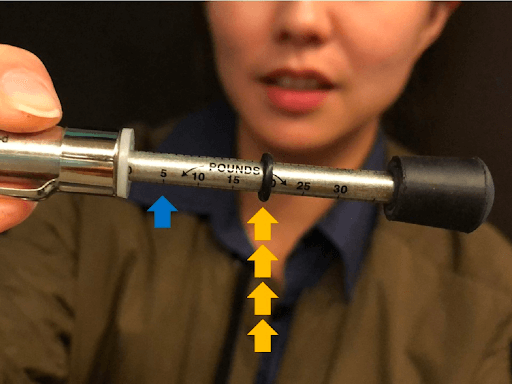
The ADA National Network recommends a door force gauge (also called a door pressure gauge) as the most accurate measurement method. You do not need to hire a consultant to do this.
Place the gauge on the handle side of the door at handle height. Push the door open from a closed position and read the peak force required. If it exceeds 5 lbs on an interior door, the door is not compliant regardless of what hardware is installed on it.
For closing speed, use a stopwatch. Open the door to 90°, release it, and time from release to 12° from the latch. Under 5 seconds is a fail.
What to Look for in an ADA Compliant Hinge
The core problem with most hardware is that closing force and opening force are mechanically linked. Increase one, you increase the other. The only way to break that relationship is a hinge that independently controls spring tension, swing speed, and latch speed.
Waterson self-closing door hinges separate these three variables into independently adjustable zones:
- Spring tension (S): controls closing force without directly adding opening resistance
- Swing speed (A): controls how fast the door travels through most of its arc
- Latch speed (A1): controls the final degrees before the latch, preventing slamming without requiring more spring force
This means you can set closing force high enough to reliably latch while keeping opening force at or below 5 lbs, which is the exact conflict that most standard hardware cannot resolve.
Additional specs that matter for ADA compliance:
- Closing time exceeds 5 seconds from 90° to 12° from latch, fully adjustable via the swing and latch speed controls
- Swing clear configuration provides more than 33 inches of clear opening at 90°, giving margin above the 32-inch minimum
- No overhead arm or surface closer required, so no hardware intrudes into the ADA maneuvering clearance zone
- UL listed, NFPA 80 compliant, and fire rated for 3-hour assemblies
Common Applications
ADA compliance requirements apply across a wide range of commercial door types, not just main entries:
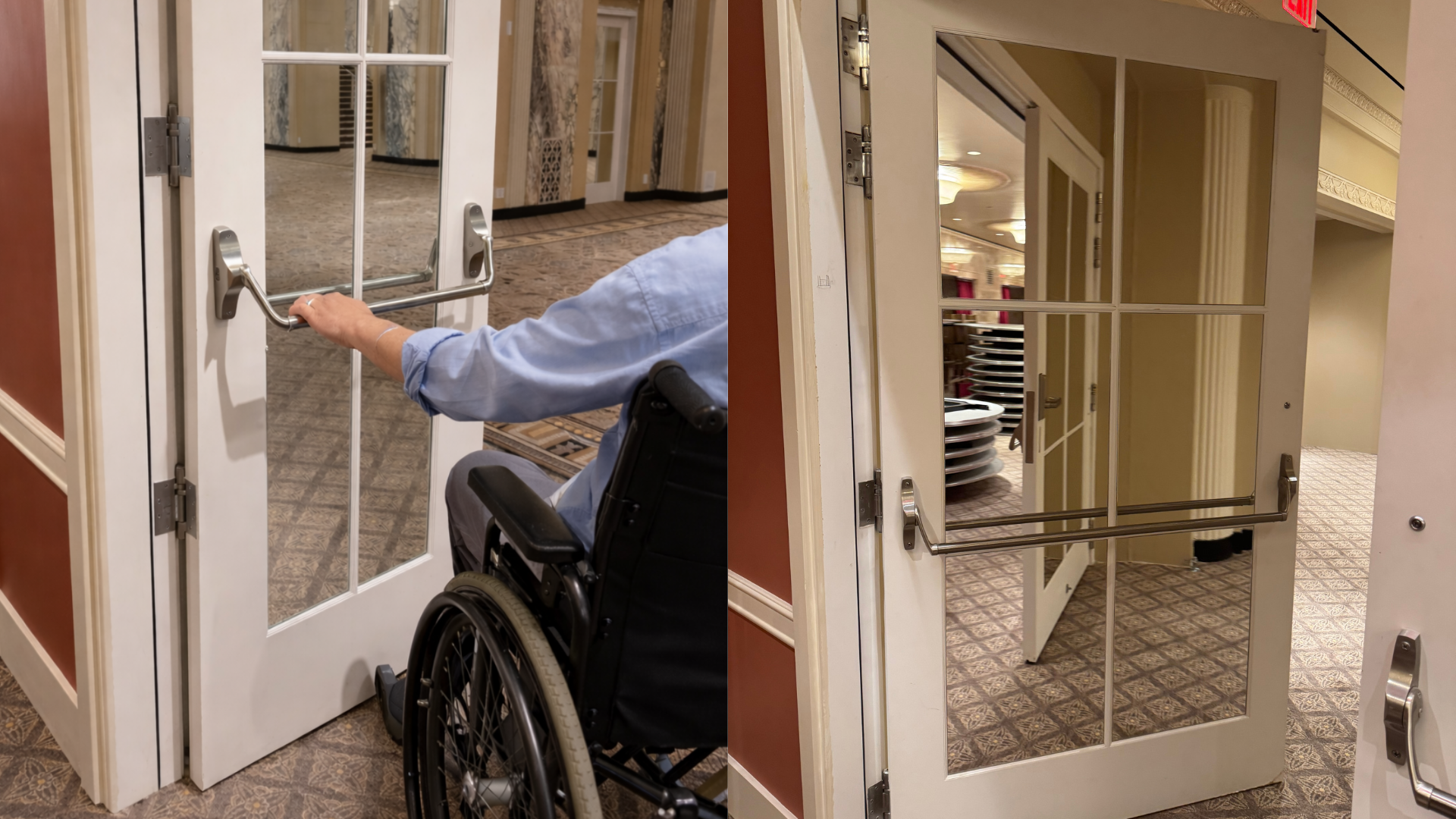
- Commercial corridor and office doors
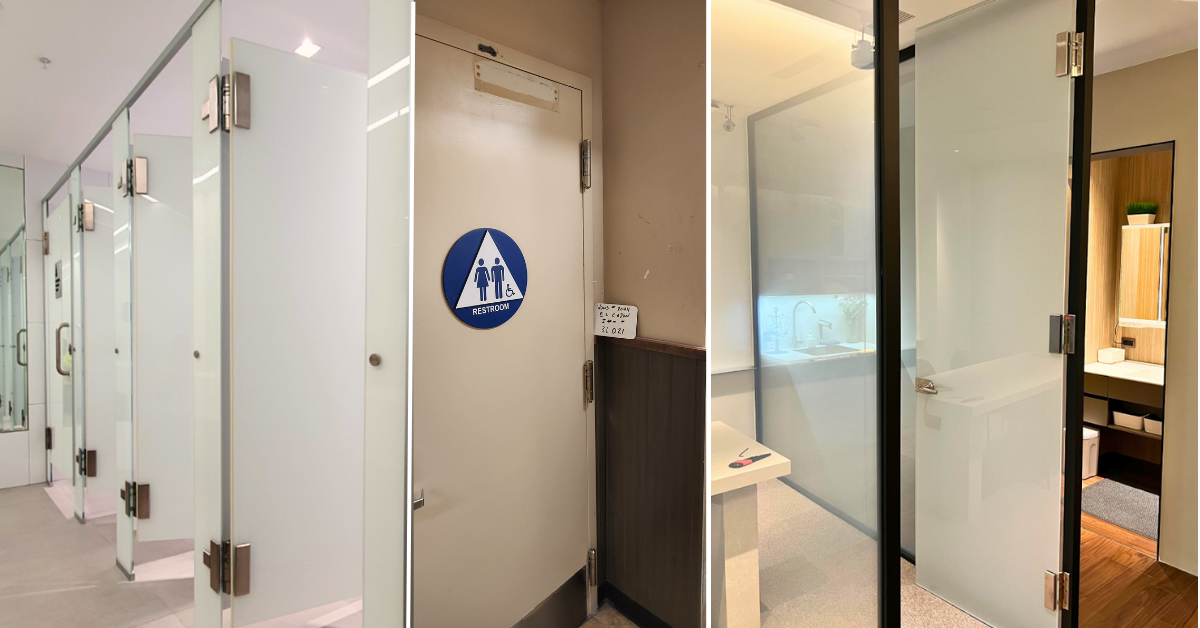
- ADA bathroom and restroom stall doors
- Handicap bathroom doors
- Recessed entry doors with limited push-side clearance
- Handle height compliance on commercial entries
If Your Door Is Failing the 5 lb Test, the Hardware Is the First Place to Look
Most ADA violations on self-closing doors trace back to a single-tension mechanism that cannot separate closing force from opening resistance. Waterson ADA compliant door hinges are built around three independently adjustable zones specifically to solve this.
View ADA Compliant Door Hinges here.
Waterson Stainless Steel ADA Door Hinges
Waterson Self Closing ADA Door Hinge combine the function of an overhead closer and a hinge into a single, sleek component—complete with optional hold-open and door-stop features. Designed for commercial openings, gates, and glass doors, these hinges are easy to install and adjust to meet ADA and ICC A117.1 standards for opening force, while ensuring quiet and secure closure. Crafted from durable stainless steel, they are NFPA 80 compliant, UL 3-hour fire-rated, and built to perform reliably in both interior and all-weather exterior environments. See all our features.
In addition to these performance advantages, Waterson offers flexible customization services. As a direct manufacturer, we can tailor hinge sizes, finishes, and especially hinge leaf designs to meet the specific structural needs of your doors. This makes our hinges an ideal solution for door manufacturers seeking custom options that integrate seamlessly with their existing frames.
Request For Information
Please note that Waterson closer hinges start from a size of 4″x4″. If you’re in need of smaller self-closing hinges, we’d recommend checking out some other resources! Also, we only provide single acting closer hinges. Thank you.
Recent Post
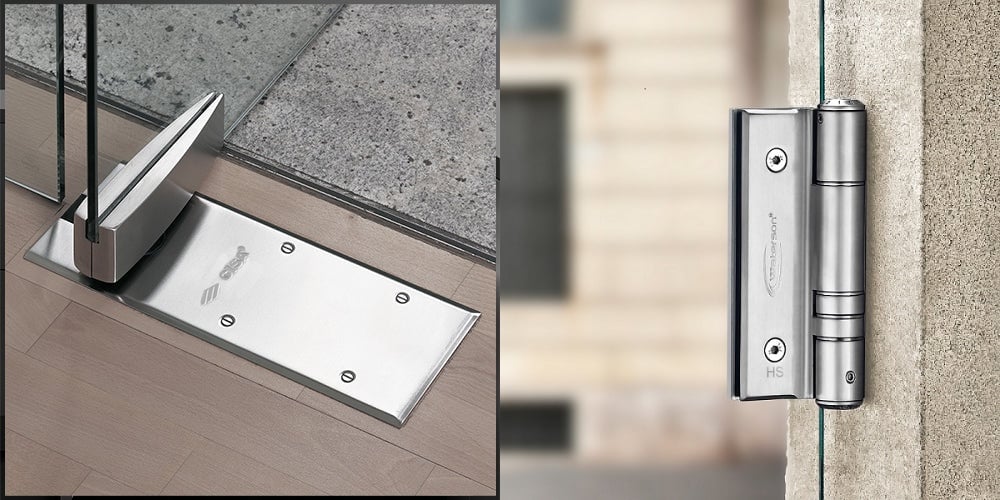
Glass Door Hinges: Floor Spring vs Spring Hinge Compared
Quick Answer Floor hinges (also called floor springs) are hydraulic closers set into the floor slab for center-hung or double-acting glass doors with fully concealed [...]
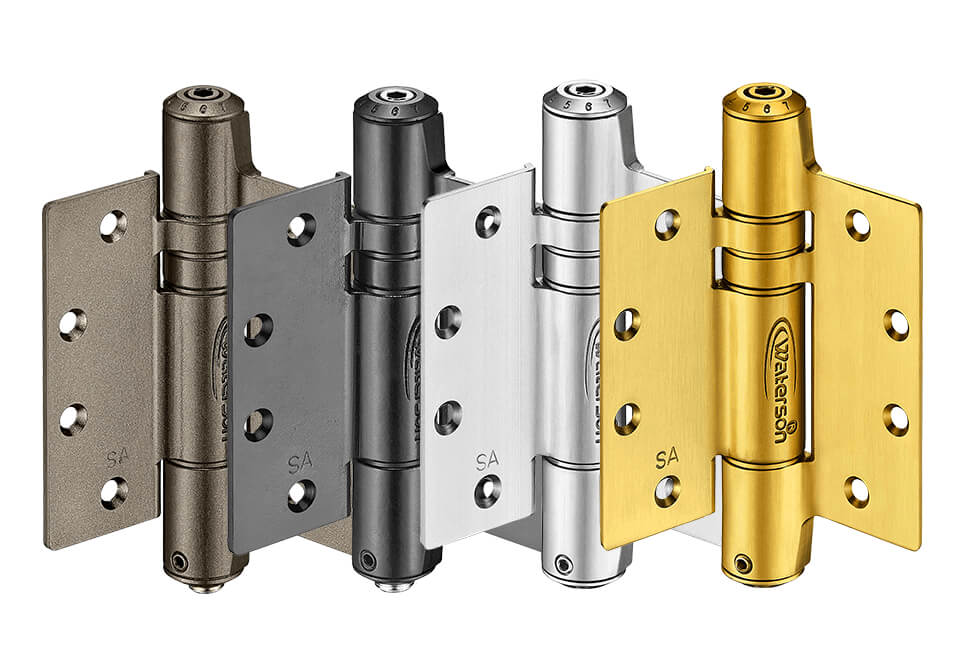
Stainless Steel Spring Hinges: Self-Closing Hinges for Interior and Exterior Doors
Quick Answer A stainless steel spring hinge is a self-closing hinge with a torsion spring inside the barrel, so it swings the door and closes [...]
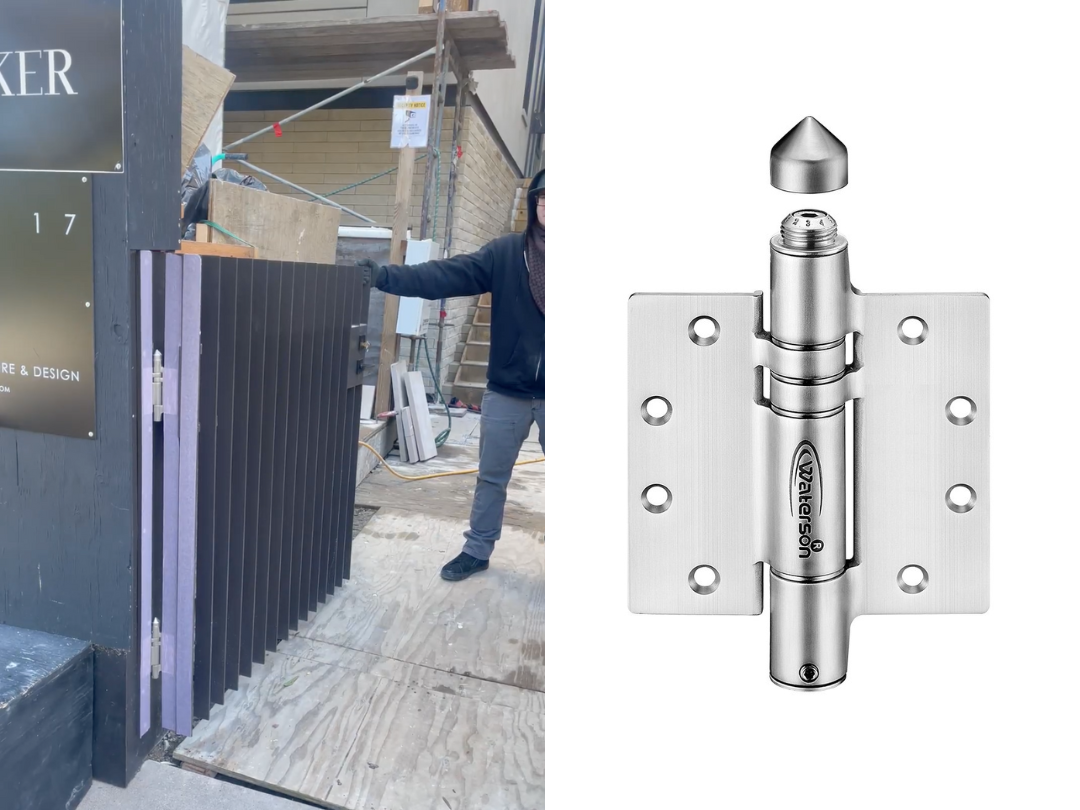
Cold Weather Gate Hinges: How Waterson Performs in Winter
When winter comes, temperatures drop, and outdoor fence gates start to behave differently. Wood absorbs moisture and swells, metal contracts slightly, and hardware components shift [...]