
Quick Answer
Floor hinges (also called floor springs) are hydraulic closers set into the floor slab for center-hung or double-acting glass doors with fully concealed hardware. Spring hinges mount on the door edge, need no core drilling, and adjust at the hinge. Choose a floor hinge for double-acting doors and spring hinges for single-swing glass doors and retrofits.
When working with glass doors, whether frameless panels, aluminum frames, or glass-to-glass systems—the type of hinge you specify can affect not just how the door closes, but how it performs, looks, and installs. Both floor hinges and spring hinges offer self-closing function, but they differ significantly in setup, swing capability, code compliance, and long-term serviceability.

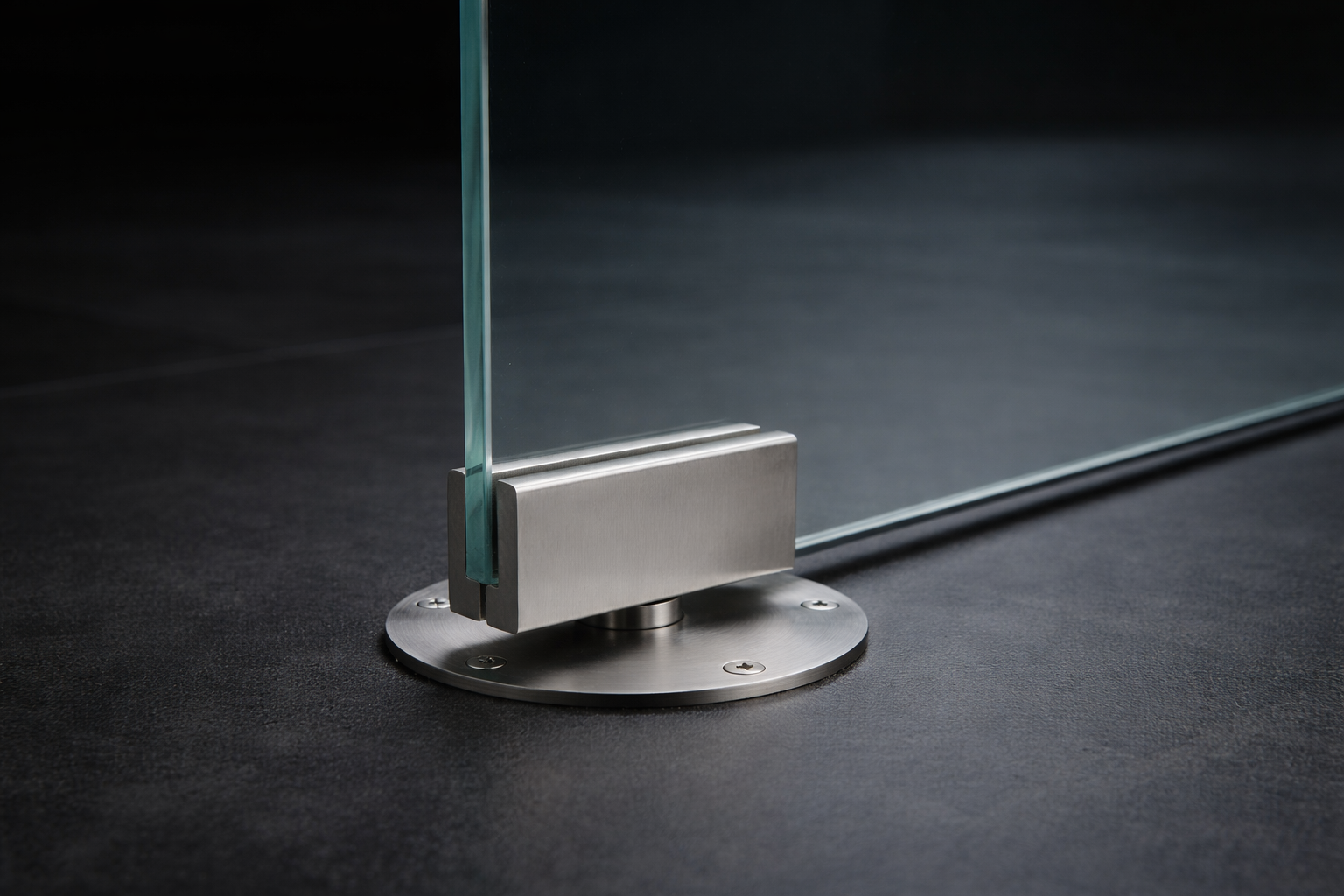
What Is a Floor Hinge
In the glass industry, floor hinges are also called floor springs or floor closers. A floor hinge is a concealed hydraulic pivot system mounted into the floor slab. It’s commonly used in center-hung glass doors and double-swing configurations. The hinge body is hidden below threshold level, allowing for clean visual lines and wide opening angles.
Why it’s used:
- Frameless swing doors in commercial lobbies or storefronts
- Full-glass partitions with center pivot setups
- Dual-swing glass systems without visible arms or closers
Floor hinges provide excellent speed control (sweep, latch, backcheck), but they require perfect vertical alignment and slab coordination. Even minor misalignment can affect swing path or seal engagement. Adjustments typically require removing threshold plates or accessing embedded floor boxes.
What Is a Spring Hinge for Glass Doors?
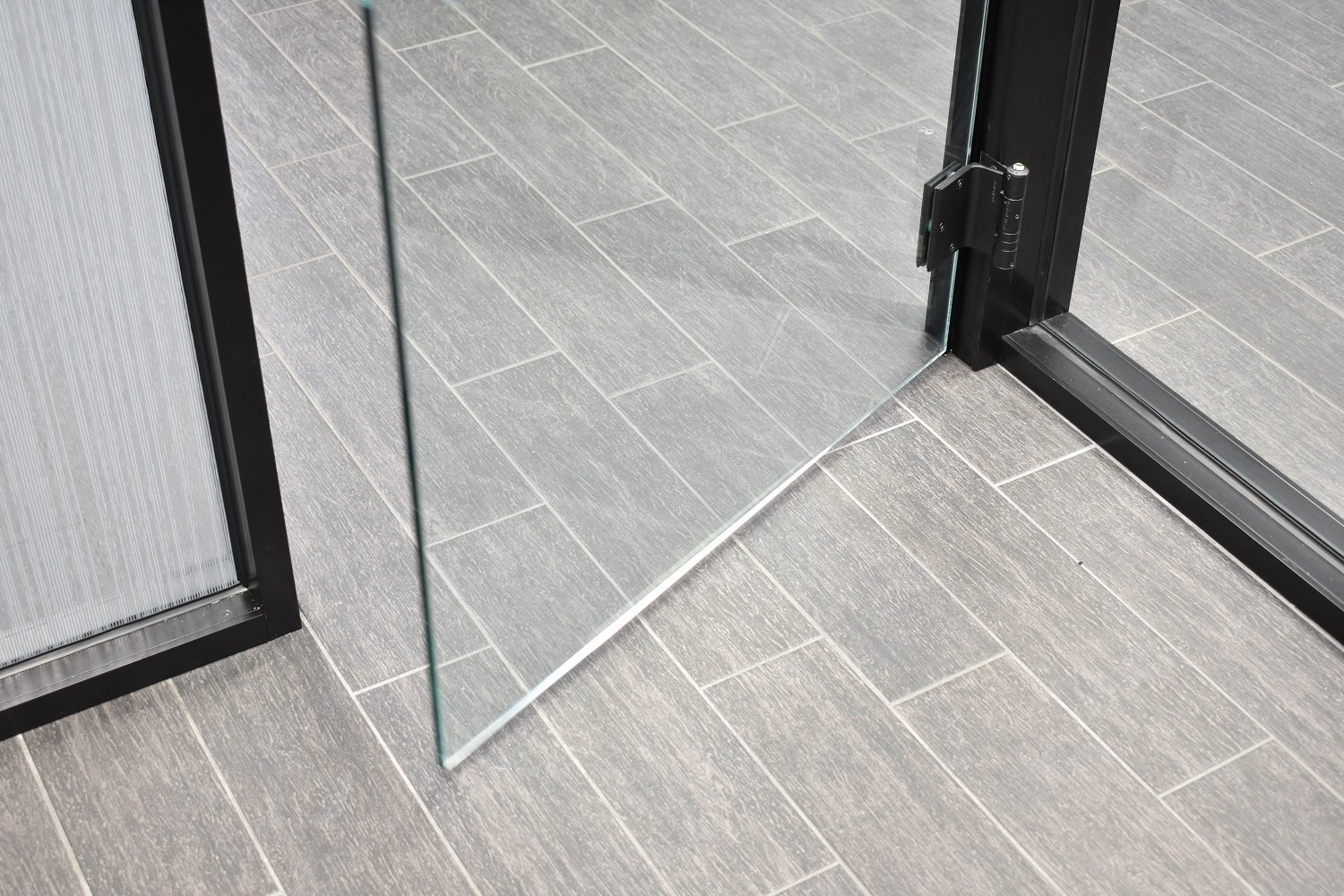
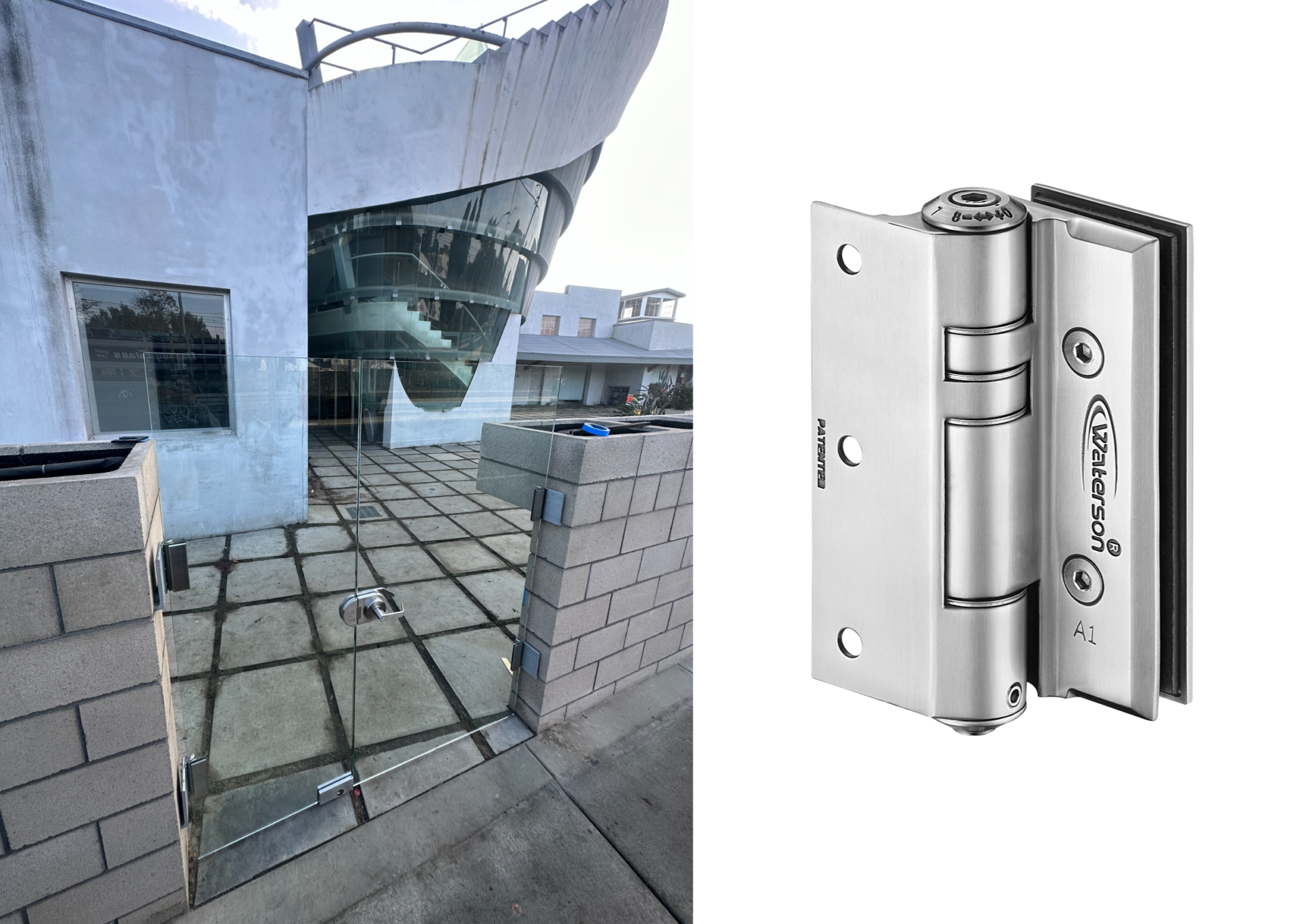
A spring hinge looks like a traditional butt hinge but features an internal self closing and soft closing mechanism. Glass door spring hinges clamp directly onto tempered glass, so the door gets self-closing and soft-closing function without a floor box. Waterson K51GM glass hinges fit 5/16 in to 1/2 in glass, and two hinges carry doors up to 6 ft tall and 150 lb
Key features include:
- Glass-to-frame, glass-to-glass, glass-to wall swing doors
- Full-glass panels with bracket-mounted spring hinges
- Retrofit or prefabricated glass doors without slab drilling
Spring hinges now come in stainless steel, hybrid hydraulic versions, and fire-rated designs, offering tension control and hold-open functions—all in a compact footprint that fits cleanly with minimal disruption.
Floor Hinges vs Spring Hinges: How to Choose the Right One
| Feature | Floor Hinges | Spring Hinges |
|---|---|---|
| Also Called | Floor spring, floor closer | Glass door hinge, self-closing glass hinge |
| Installation | Recessed into floor slab; requires core drilling and alignment with top pivot | Surface- or mortise-mounted; brackets adapt to glass or metal frame |
| Closing Mechanism | Hydraulic system with multi-point control | Mechanical spring or hybrid spring-hydraulic; tension-adjustable |
| Swing Direction | Suitable for single or double-swing setups (e.g. center-hung glass) | Single-swing only (single acting) |
| Door Weight Handling | Weight carried at the bottom pivot; suits very heavy or oversized glass | Weight carried at the door edge; check rated capacity per model |
| Aesthetic Integration | Fully concealed at floor level; no exposed arms | Compact hinge at door edge; minimal visible hardware |
| Material Compatibility | Glass with patch fittings or bottom rails | Glass-to-metal, framed glass, or frameless with bracket systems |
| Maintenance & Adjustment | Requires access to floor box; involves disassembly in some cases | Field-adjustable at hinge point; no floor or slab disruption |
| Code Compliance | UL-listed; used in fire-rated glass entry sets | UL fire-rated, ADA/ICC A117.1 compliant; tension and hold-open settings available |
| Replacement | Requires slab rework if misaligned or failed | Swappable using bracket kits; supports retrofit and system upgrades |
| Corrosion & Noise Control | Hydraulic seals may wear over time in high-moisture zones | Stainless steel builds available; sealed springs reduce squeak and wear |
In summary, you can go with floor hinges if the project involves frameless or center-hung glass doors that require dual-swing function and fully concealed hardware. Meanwhile, spring hinges are well-suited for framed glass doors or retrofit applications where adjustability, code compliance, and installation efficiency are key.
What Is the Best Alternative to a Floor Spring?
It depends on whether the door must stay center-hung or double-acting. If the door only needs to swing one way, edge-mounted glass door spring hinges are the simplest alternative: no floor box, no core drilling, and adjustment at the hinge. If the design requires a center-hung pivot or a double-acting door, overhead concealed or transom closers keep the pivot geometry while moving the mechanism off the floor.
For very heavy or oversized glass, a floor spring is often still the right choice, because the bottom pivot carries the door weight. Check the hinge’s rated capacity before switching.
Retrofit tip: tempered glass cannot be cut, drilled, or notched after tempering. Before replacing a floor spring with hinges, confirm the existing glass prep matches the new hinge clamps, or plan for a new glass panel. Then fill or cap the old floor box.
Ideal Glass Door Hinge Solution Across Applications
Waterson glass door hinges offer an integrated solution that combines safety, performance, and design flexibility. Engineered with precision closing control and durability in mind, they support a wide range of commercial and architectural glass door systems with features like:
- Soft Closing: Prevents abrupt slams and protects glass panels and frames
- Heavy Weight Capability: Two hinges support doors up to 6 ft and 150 lb
- Stainless Steel: Built with 304 or 316 stainless steel for long-term corrosion resistance
- Aesthetic: Save the hassle of drilling/cutting the floor or attaching the metal frame to your glass door
- Adjustable Closing Speed: Separate closing speed and spring tension adjustment
- Low Opening Force: Engineered for smooth operation, adjustable to the ADA 5 lbf limit for interior doors, suitable for high-traffic and accessible spaces
- Hold Open (Optional): Supports 90°, 110°, 120°, 135°, and 180° hold angles depending on setup
- Outdoor Use Approved: Resistant to weather, suitable for indoor and exterior applications
- No Floor Cutting Required: Simplifies installation compared to floor springs
- 5-Year Warranty: Supported with long-term performance coverage
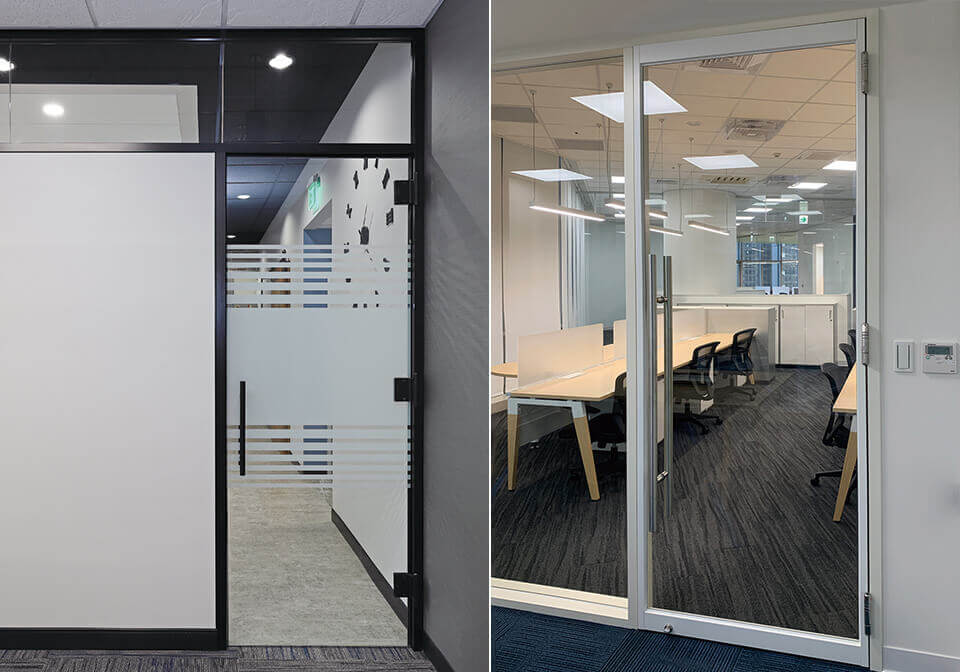
Some Commercial Glass Door Hinges Applications Waterson has supported


Request For Information
Please note that Waterson Closer Hinges start from a size of 4″x4″. If you’re in need of smaller self-closing hinges, we’d recommend checking out some other resources! Also, we only provide single acting closer hinges. Thank you.
Recent Post
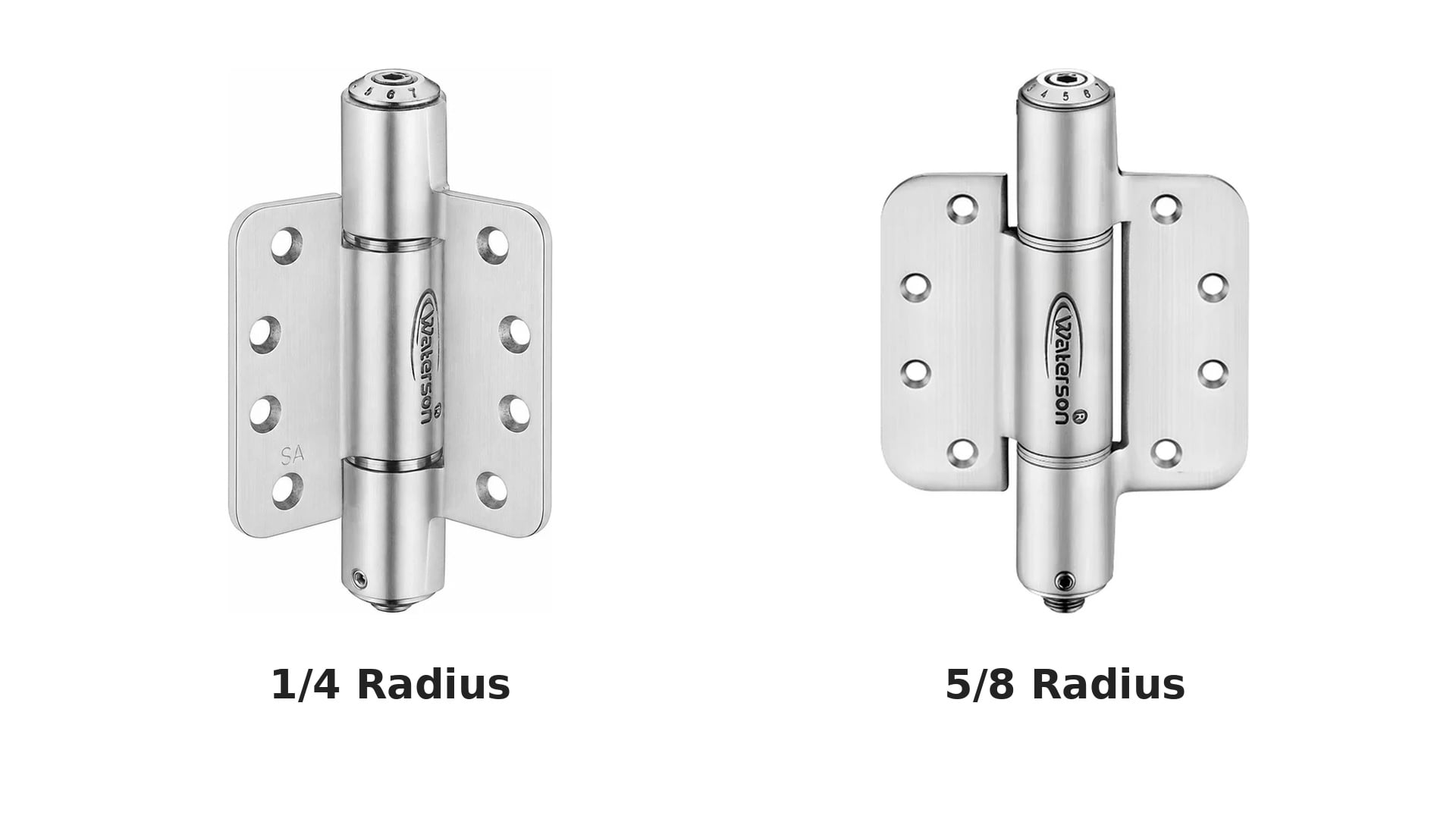
Replacing Door Hinges: 1/4 vs 5/8 Radius vs Square Corners
Quick Answer Most 4 inch residential door hinges have one of three corners: square, 1/4" radius, or 5/8" radius. A rounder hinge fits a mortise [...]
Why Won’t My Self Closing Door Hinges Close in Cold Weather
Quick Answer An exterior door that closes fine in summer but won't latch in winter is usually affected by two things: weather stripping that stiffens [...]

Soft Closing Hinges: 9 Most Frequently Asked Questions
Since the AIA in 2018, there has been an increased interest in Waterson hinges for many different projects. We have been inundated with questions by [...]