
Quick Answer
Fire doors are required to be self-closing under NFPA 80. They must close and latch reliably from fully open, with most jurisdictions expecting consistent latching from approximately 30°. Clearance limits must not exceed 3/4 inch at the bottom and 1/8 inch on remaining edges. A fire door left open even a few inches fails to contain fire, smoke, and toxic fumes effectively.
Standard spring hinges often stall before fully latching, especially under weatherstrip drag or pressure differences. Self-closing fire door hinges with controlled closing from 90° to 20° and reliable latching from 20° to 0° are the more code-consistent alternative to bulky overhead closers.
How do you keep a fire door code-compliant when the door must close and latch reliably without adding bulky overhead closers?
According to NFPA 80, a fire-rated door must be self-closing from fully open, and many jurisdictions expect reliable latching from roughly 30°. Most spring hinges can’t hit that range consistently, which is why builders often default to traditional closers, even though they add weight, visual bulk, and an institutional feel.

What are NFPA 80 Requirements for Fire Rated Spring Hinge
Some people come to us with the same question: do fire doors need to be self closing?
NFPA 80 is the standard that sets specific requirements that every fire door must meet, including:
- Fire doors are required to be self-closing,
- Many jurisdictions expect reliable latching from roughly 30°,
- No open holes or breaks exist in the surfaces of either the door or frame
- Clearance limits must be: ≤ 3/4″ bottom gap and ≤ 1/8″ on remaining edges.
The purpose of fire doors is to block/trap fire, smoke, and toxic fumes from going to other building sections. In the event of fire, fire doors without self closing hinges opened by a panicked evacuee would stay open, compromising the fire barrier. Even if a fire door is left open just by a few inches, it doesn’t work effectively. In conclusion, fire doors are not compatible with the hold open feature.
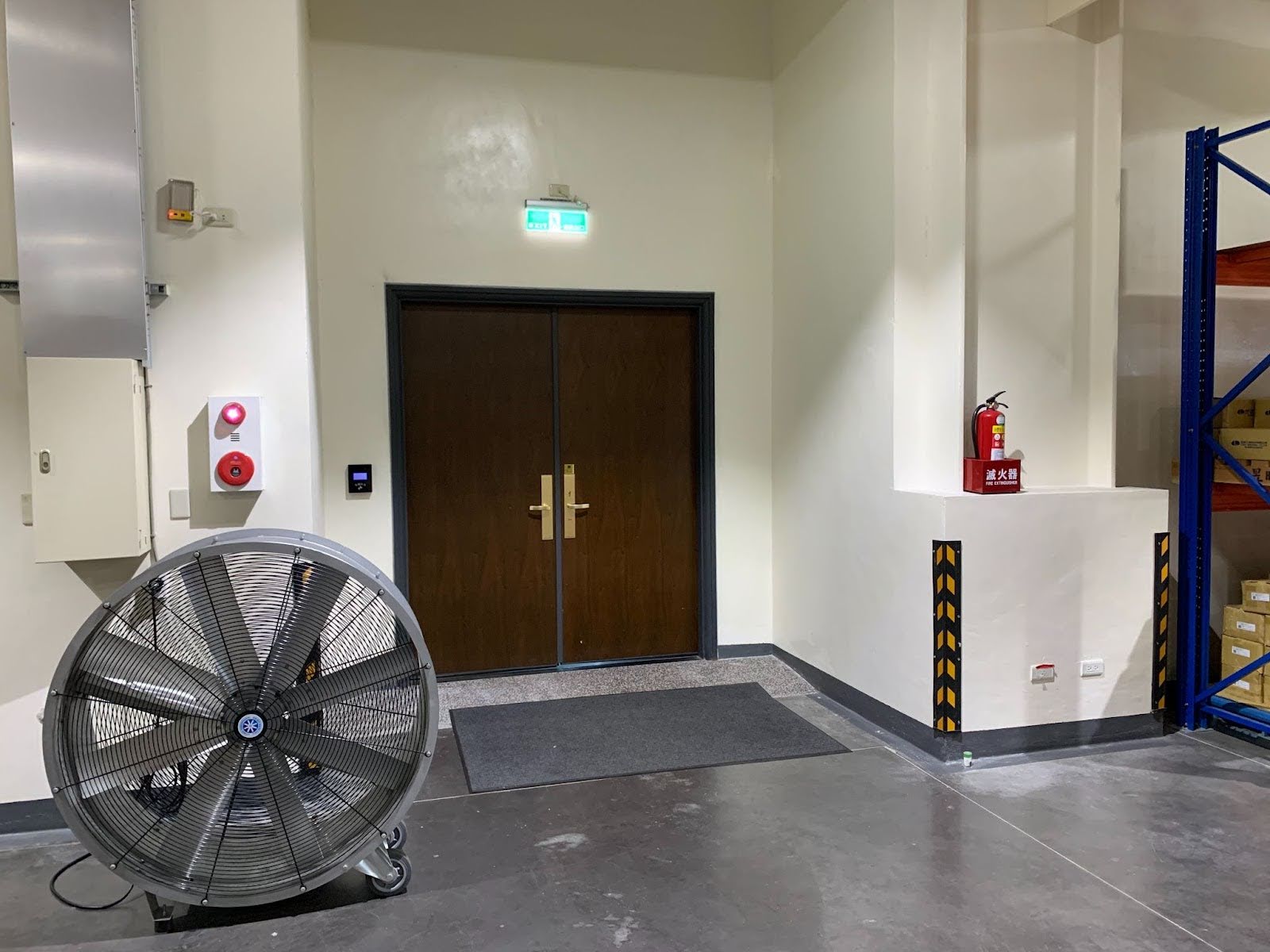
Why Standard Fire Rated Spring Hinges Might Not Be Enough for Fire Doors
A standard spring hinge mainly adds return force, but it may not deliver consistent power through the full swing, especially in the last few degrees where latching happens. If your door is installed in a residential garage door setting, the spring hinges can work if you don’t mind the slamming sound.
So, Do Spring Hinges for Fire Doors Need to be Self Closing
Yes, and here is why.
Standard spring hinges are common because they’re simple and cheap. But lateron, many projects will face these issues: the door closes “most of the way,” then stalls or bounces before it fully latches. The closer you get to the latch zone, the more small factors matter: weatherstrip drag, alignment, pressure differences, and door weight.
This is why a proper fire-rated spring hinge must do more than just “pull the door shut.” It needs a controlled, consistent self-closing action that overcomes latch resistance, meets code requirements, and holds up reliably over long-term use.
Why Some Users Hesitate To Use Door Closers for Fire Rated Doors
An overhead closer is a proven standard, but it adds visible hardware and more mounting variables. A closer hinge keeps the door face clean and can reduce parts and maintenance points. If your project cares about aesthetics, vandal resistance, or simplified installation, a fire-rated closer hinge is often worth evaluating.
Here’s the practical comparison people care about in the field:
- Visual impact: closer hinges keep the top rail clean; overhead closers are more visible.
- Installation complexity: closer hinges install like hinges; overhead closers need mounting/arm geometry.
- Ongoing issues: fewer exposed components can mean fewer breakage points in high-abuse areas.
If your building standard already uses overhead closers everywhere, you may still stay consistent. But when the project is pushing for “no closer” visuals, the hinge becomes the natural place to solve the closing problem.
When Ideal Fire Door Hinges Self Closing Step in
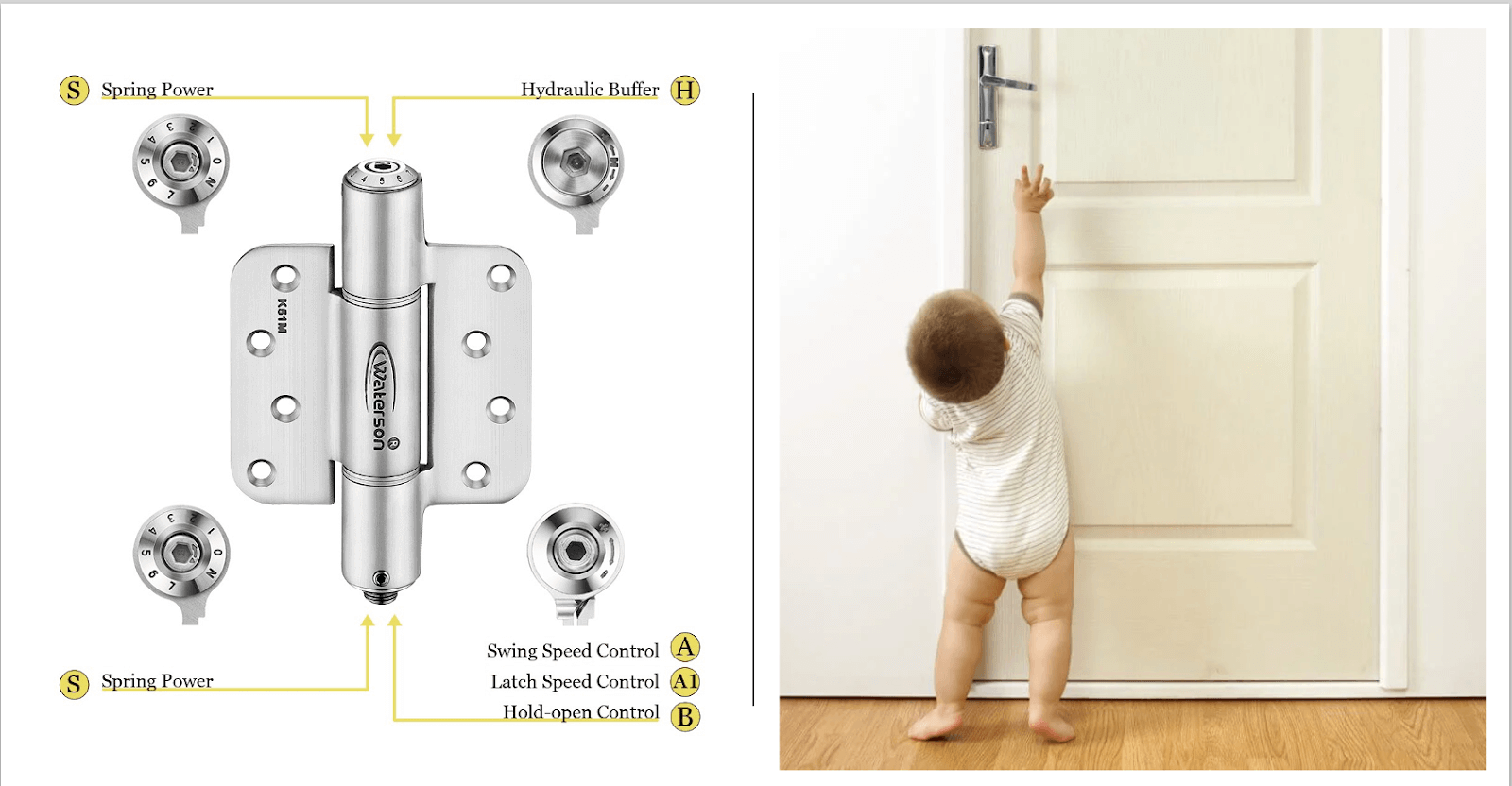
Waterson spring-loaded fire door hinges self closing meet fire-rated code requirements while maintaining a clean, unobtrusive profile. They provide controlled closing from 90°–20° and reliable latching from 20°–0°.
Compared to traditional hinge designs, these fire door hinges self closing stand out for their stronger torque, smoother action, and more consistent code-compliant performance.
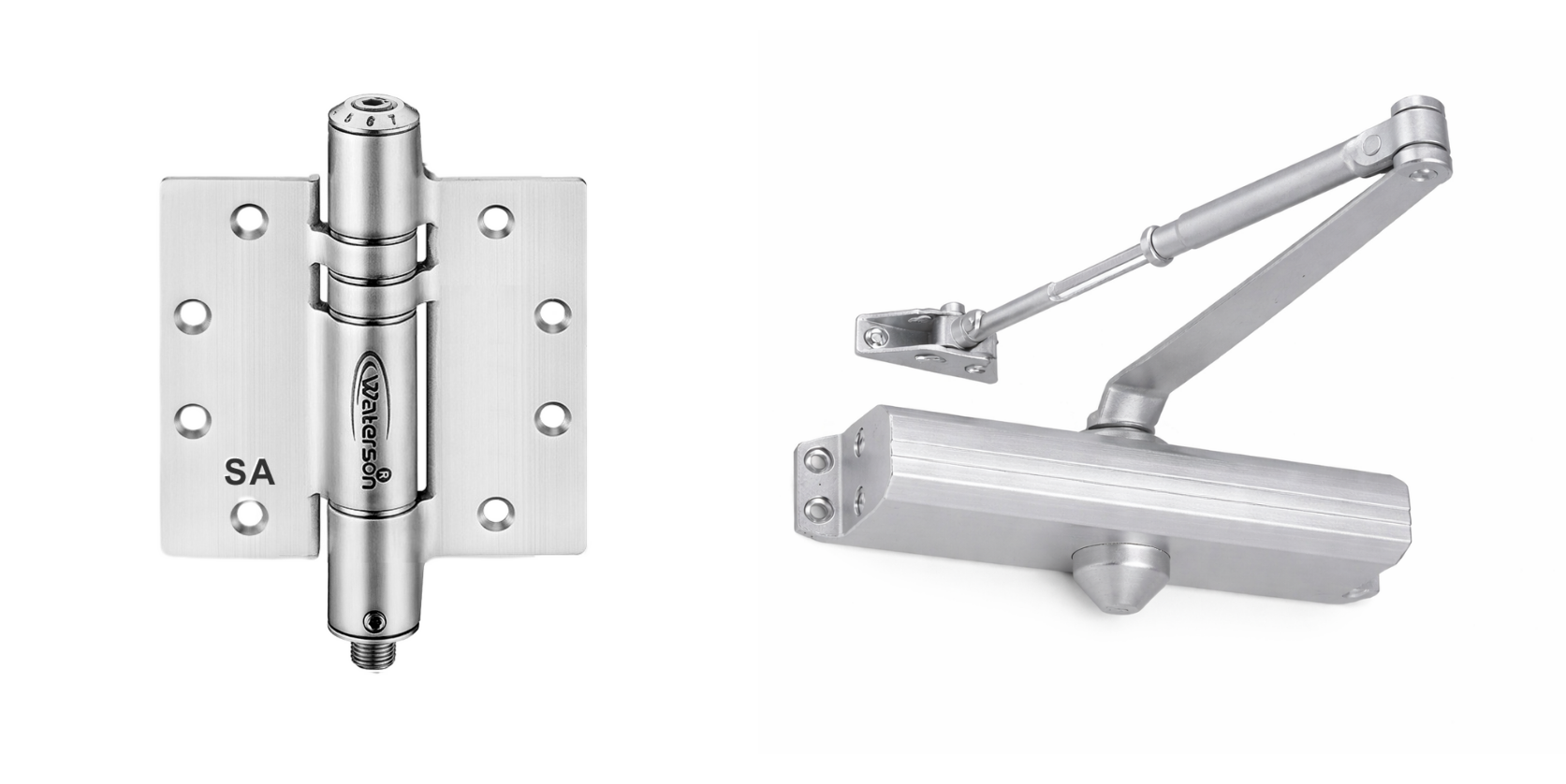
Comparison With Door Closer
| Waterson Self Closing Fire Rated Door Hinges | Traditional door closer | |
|---|---|---|
| Closer Location | Side of door. Installs easily like regular hinges |
Top of door. Requires additional installation space |
| Aesthetics | Elegant and minimal visual intrusion |
Bulky and significant visual intrusion |
| Opening Force | Effortless |
Requires more effort |
| Outdoor Use | Yes, highly weather-resistant |
Closing arm susceptible to rust |
| Interior Use | Less likely to be broken or vandalized |
Closing arm susceptible to breakage and vandalism |
| Fire Resistance | UL-Listed 3 hours |
Various fire-rating levels |
| Durability | 1 million cycle test certified |
Various cycle test levels |
| Total Cost | Low installation & maintenance expense |
High installation & maintenance expense |
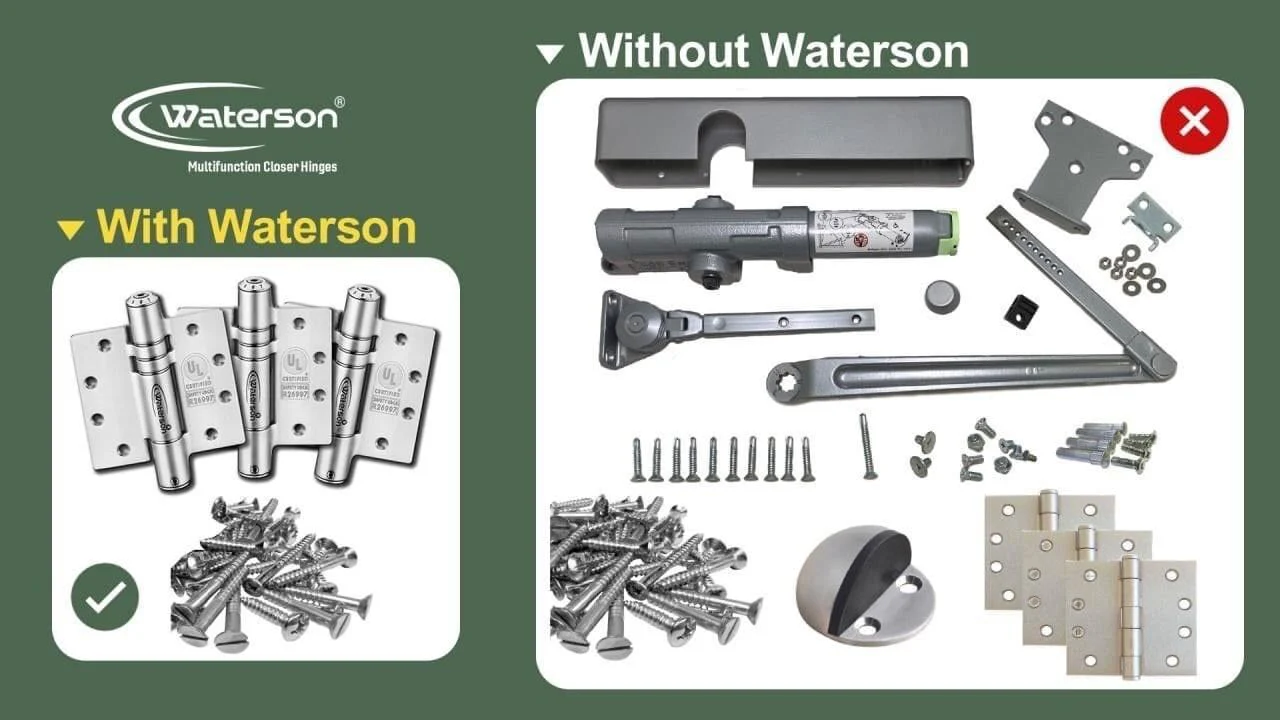
An Ideal Fire Door Hinges Self Closing Solution
Waterson fire-rated self-closing hinges install quickly, maintain alignment, and require no additional drilling thanks to their built-in self-closing mechanism. Their stainless-steel construction ensures long-term reliability that contractors can depend on.
- Self Closing Mechanism: Ensure spring hinges or closers function properly to maintain reliable self-closing.
- Code Compliance: Complies with ANSI/BHMA A156.17 standards (1.000.000 cycle tested), IRC R302.5.1 and NFPA 80 requirements
- Operational Check: Verify smooth, controlled closing action between door, frame, and closer to maintain fire or smoke protection.
- Component Inspection: Replace any missing or damaged parts immediately.
- Clearance Measurement: Confirm NFPA 80 clearances—≤ 3/4″ bottom gap and ≤ 1/8″ on remaining edges.
- Latch Verification: Ensure the door closer provides enough force to fully latch for proper compartmentalization.
- Custom Finishes: Satin, black, gold, bronze, and other finishes available to meet architectural requirements.
- Typical Applications: Garage-to-house doors, stairwells, rated corridors, fire lobbies
Wooden Fire Doors with Waterson Self Closing Door Hinges
The Flor 401 Lofts in Los Angeles, CA has requested for self closing door hinges that meet NFPA 80. The doors are 200 lbs 90mins wood fire doors measuring 8ft tall x 3ft wide x 1-3/4″, and asking for 4,5” by 4,5” size hinge.
This request is still within the Waterson 4 1/2″ by 4 1/2″ self closing hinges for fire doors capacity, that support doors up to 8ft tall x 4ft wide and up to 330 lbs, while maintaining the integrity of a 3-hour fire rating. With Waterson self closing hinges, a total of 87 fire doors provide clear openings with durability and ensure the building’s safety.
Waterson self closing hinges for fire doors are not limited to wood fire doors either. They are ideal for garage-to-house fire doors, heavy duty fire doors in hotel corridors, stairwell doors, and many more.
Waterson Stainless Steel Self Closing Spring Hinges for Fire Doors
Waterson fire rated self closing hinges combine the function of an overhead closer and a hinge into a single, sleek component—complete with optional hold-open and door-stop features. Designed for commercial openings, gates, and glass doors, these hinges are easy to install and adjust to meet ADA and ICC A117.1 standards for opening force, while ensuring quiet and secure closure. Crafted from durable stainless steel, they are NFPA 80 compliant, UL 3-hour fire-rated, and built to perform reliably in both interior and all-weather exterior environments. See all our features.
In addition to these performance advantages, Waterson offers flexible customization services. As a direct custom hinge manufacturer, we can tailor hinge sizes, finishes, and especially hinge leaf designs to meet the specific structural needs of your doors. This makes our hinges an ideal solution for door manufacturers seeking custom options that integrate seamlessly with their existing frames.
Request For Quote
Please note that Waterson Closer Hinges start from a size of 4″x4″. If you’re in need of smaller self-closing hinges, we’d recommend checking out some other resources! Also, we only provide single acting closer hinges. Thank you.
Recent Post
Frameless Glass Sauna Door Hinges: ADA Self Closing Solution for Commercial Saunas
Quick Answer For a frameless tempered glass sauna door that swings from a wall, use the Waterson K51GWL glass-to-wall hinge in the hydraulic hybrid version. [...]

Self Close vs Soft Close Hinges: Two Different Needs, Explained
Most commercial self-closing hinges still adopt either spring or hydraulic damper for [...]
4 Inch Self Closing Door Hinges for Residential & Commercial Doors
Quick Answer Waterson 4-inch self-closing hinges (K51M-400) fit standard 4" x 4" templates on 1-3/8" or 1-3/4" residential doors, in mechanical or hydraulic versions with [...]