
Quick Answer
A door that won’t close flush is usually caused by loose hinge screws, a misaligned strike plate, swollen wood, or in high-rise buildings, elevator shaft air pressure. Start by tightening hinge screws and adjusting the strike plate. If the problem keeps coming back, especially in commercial or fire-rated doors, the hardware itself may need an upgrade.
A door that won’t close flush is one of the most common and frustrating problems in both residential and commercial buildings. It can stem from something as simple as a loose hinge screw or as complex as air pressure differentials in high-rise environments. Either way, the result is the same: gaps, failed latches, and doors that never quite sit right. So, what’s the solution to this ongoing problem?

What is a Door Not Closing Flush?
When a door doesn’t close flush, it means it fails to sit evenly against the frame. This often happens due to loose hinges, misaligned strike plates, swollen doors from humidity, or slight structural shifts. It can lead to gaps, poor sealing, and even latch issues.
This becomes a serious issue in residential buildings as it can compromise privacy, reduce energy efficiency, allow drafts or pests to enter, and even pose a security risk if the latch doesn’t catch properly. Over time, it can also cause wear on door hardware and frames, leading to costly repairs.
Common Causes of a Door Not Closing Flush
Before jumping to fixes, it helps to understand why the problem is happening in the first place. A door that won’t close flush usually points to one of these root causes:
- Loose or worn hinges: Over time, hinge screws can loosen from daily use, causing the door to sag or shift out of alignment.
- Swollen wood: Changes in humidity and moisture cause wooden doors and frames to expand, leaving no room for the door to close properly.
- Misaligned strike plate: If the latch bolt does not line up with the strike plate hole, the door will not latch, even if it appears close to flush.
- Settling foundation or structural shift: Buildings naturally shift over time. Even minor movement can throw a door frame out of square.
- Air pressure differential (high-rise specific): In tall buildings, elevator shafts create pressure zones that actively push back against a closing door, making it nearly impossible to latch without extra closing force.
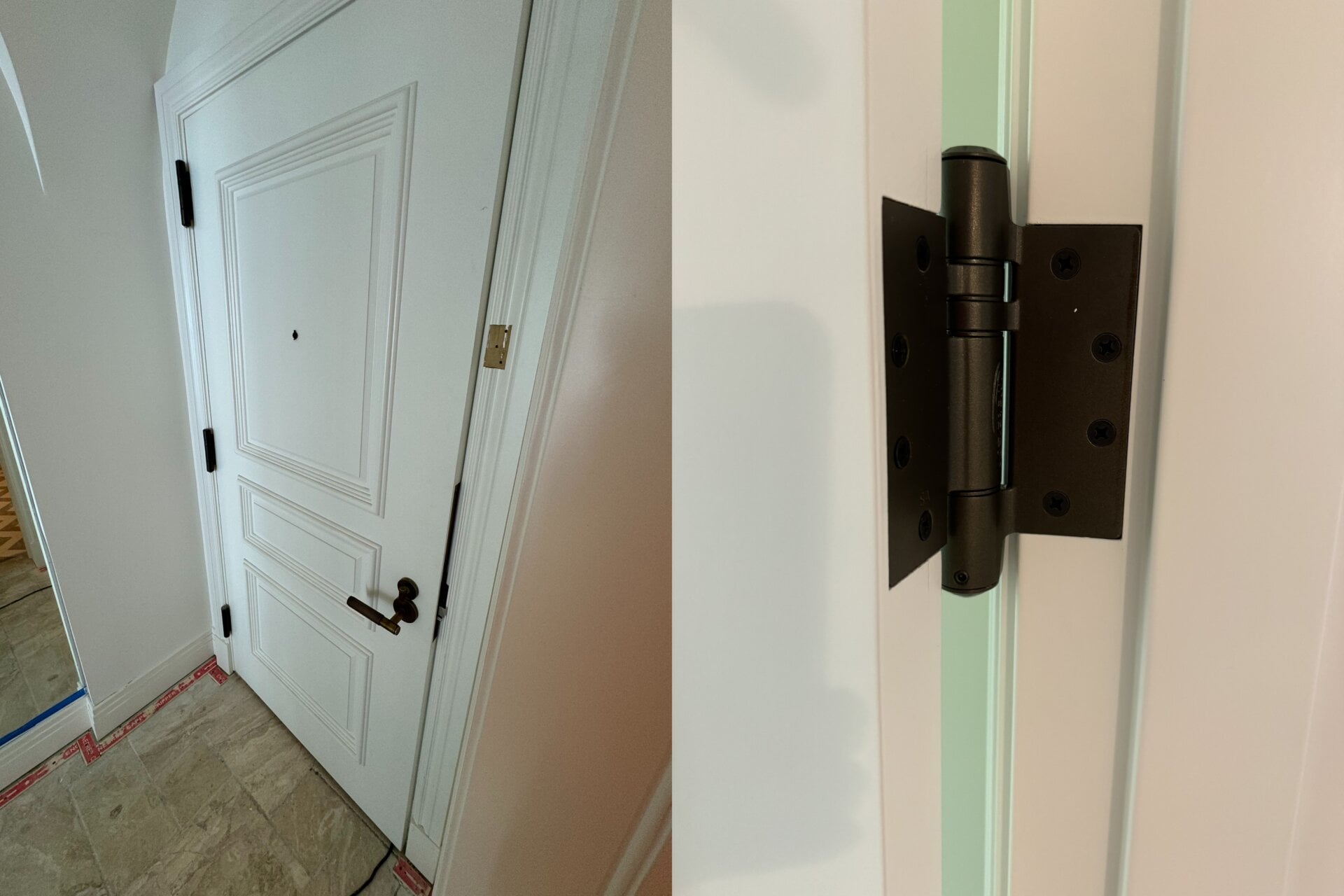
How to Fix a Door Not Closing Flush
Step 1: Tighten or re-anchor hinge screws
If screws spin freely, fill the hole with a toothpick and wood glue, let it dry, then re-drive the screw. Often the fastest fix.
Step 2: Adjust the strike plate
Watch where the latch bolt hits and shift the plate accordingly. For bigger gaps, use a strike plate with an elongated opening.
Step 3: Sand or plane a swollen door
Look for friction marks along the edge. Shave the binding area down in small passes and check the fit as you go.
Step 4: Shim the hinges
If the door leans toward the frame on the latch side, place a thin cardboard shim behind the opposite hinge to subtly rotate the door back into alignment.
Step 5: Address air pressure (high-rise buildings)
When the door is aligned but still won’t latch, elevator shaft pressure is usually the culprit. Standard fixes won’t hold, and the closing hardware itself needs to do the work.
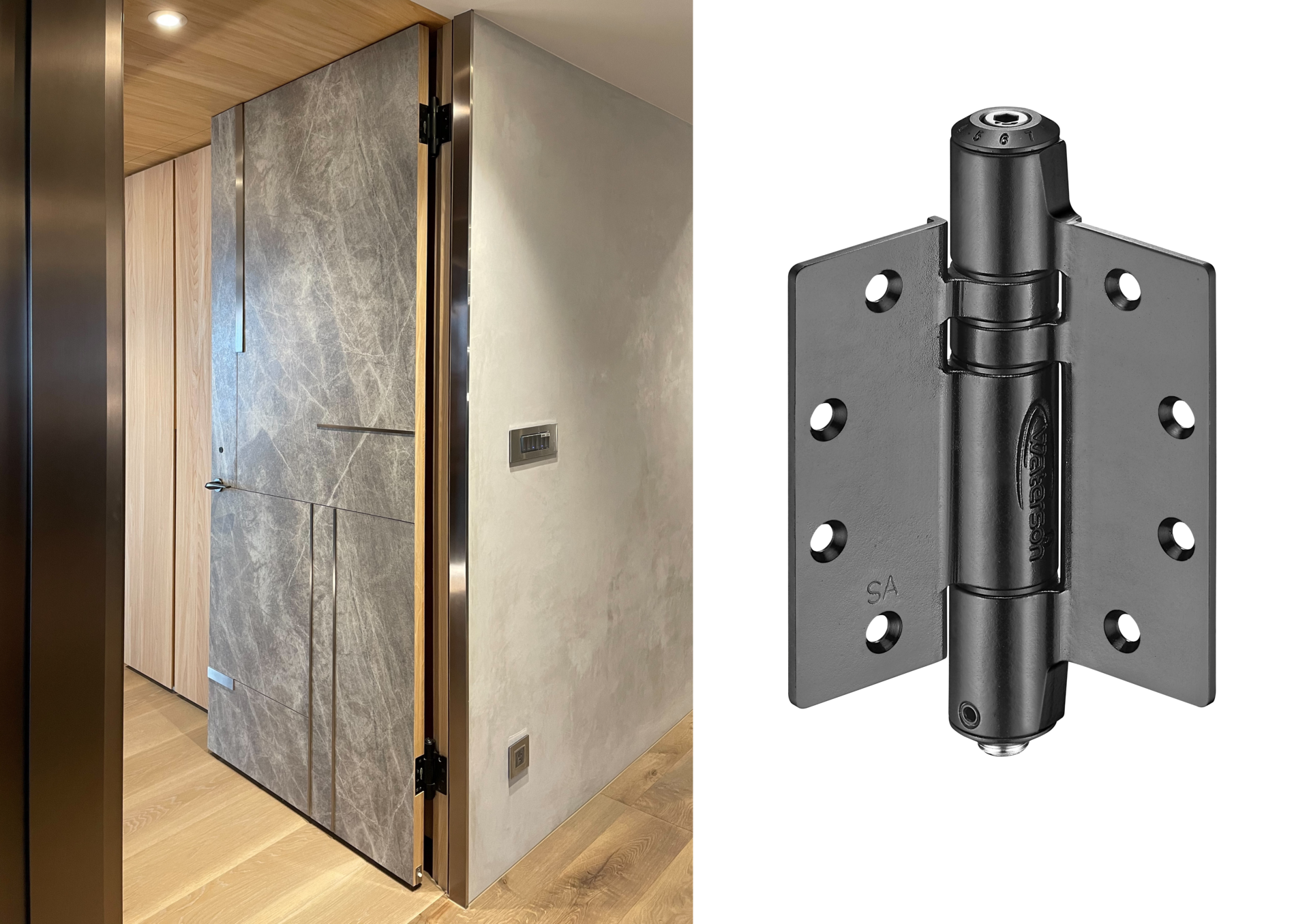
When Basic Fixes Are Not Enough
Tightening screws, shimming hinges, and repositioning a strike plate will solve most door problems. But in commercial buildings, fire-rated corridors, or high-rise environments where air pressure works against the door constantly, these repairs tend to come back. When that happens, the issue is not the door itself, it is the hardware not being built for the environment.
This is especially critical in high-rise buildings, where fire door performance is not just a comfort issue, it is a safety requirement.
Fire Doors Not Closing Risk in High-Rises
In high-rise buildings, elevator shafts often create significant air pressure differentials—especially on upper floors. These pressure zones can prevent fire-rated doors from closing and latching completely, undermining their ability to contain smoke and fire in the event of an emergency.
For developers and facility managers, this isn’t just a matter of resident comfort—it’s a serious safety concern. When a fire-rated door fails to perform due to air resistance, the building’s fire protection strategy is compromised. That’s why pressure-resistant door solutions are no longer optional—they’re essential for code compliance and occupant safety.
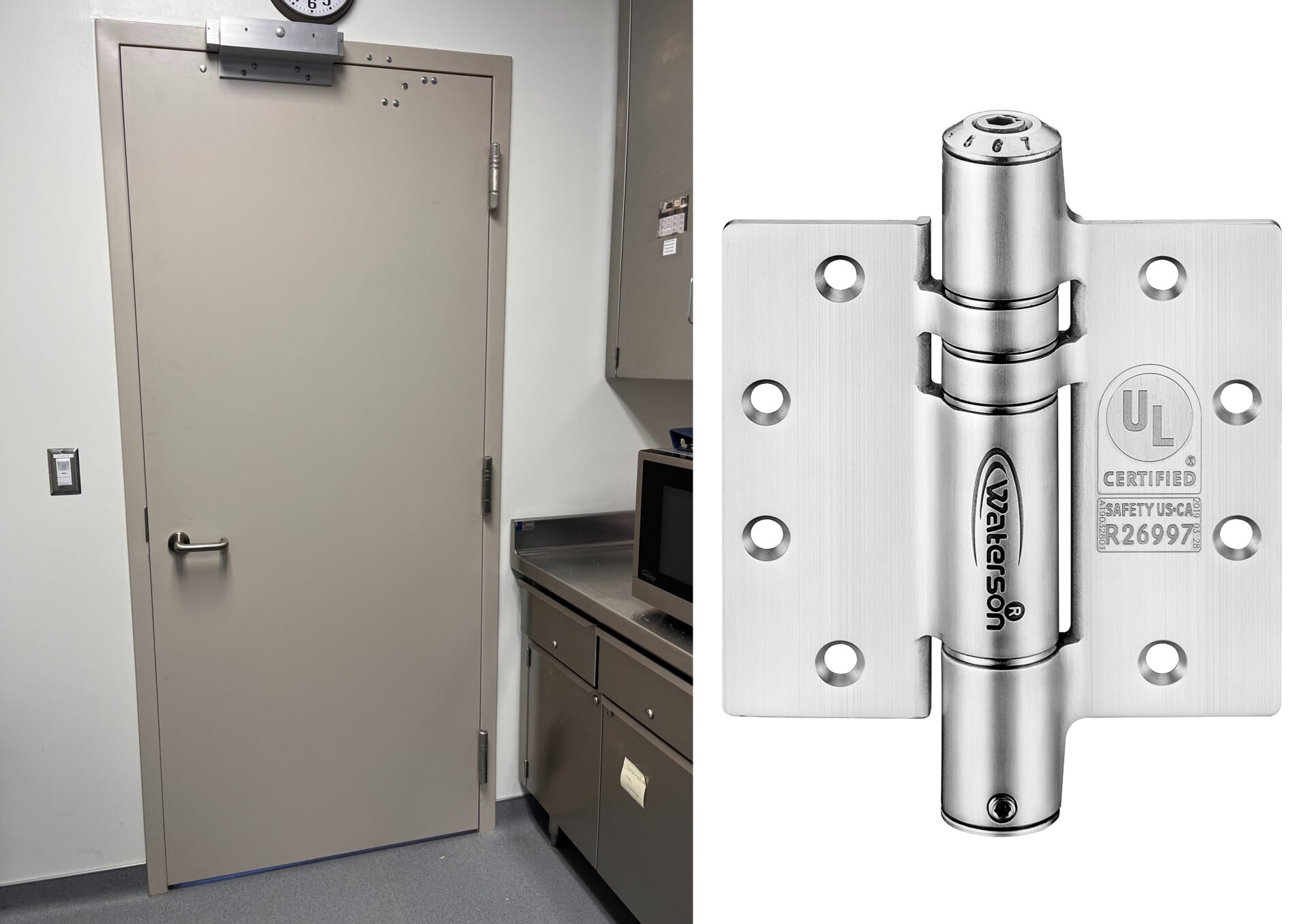
Waterson’s All-in-One Self-Closing Door Hinges
While no hinge can fully eliminate the challenges caused by extreme elevator shaft pressure, Waterson heavy duty self closing door hinges come remarkably close. Unlike the general door hinges or generic door closers, our spring loaded door hinges are specifically engineered to handle from 260-330 lbs or more. These hinges are also designed to solve multiple challenges in one product—offering clean aesthetics, mechanical durability, and precision adjustability.
Engineered for high-traffic, pressure-sensitive environments, these self closing door hinges integrate closer, stop, hold-open, and tension control without hydraulic fluid or maintenance headaches. A numeric tension adjustment panel allows for on-site fine-tuning based on door weight, size, and site pressure.
Architects also appreciate the design continuity it offers. Options like black door with black hardware allow for visually consistent, modern applications in luxury towers or boutique hotels.\
Two versions available:
- Mechanical: Best for heavy use and variable climates. Zero fluid means zero leaks or maintenance.
- Hydraulic (Soft-Close): Includes a built-in damper for smoother, quieter door closing.
Not sure which to use? Our spec guide walks you through the decision based on door size, weight, and location. Read here.
Limitations: What Even the Best Hinges Can’t Fully Solve
But even with the best hardware on the market, there are limits. Air pressure levels vary from floor to floor, and no single self-closing door hinge or door closer can guarantee flawless performance in every environment. What works well in one building may struggle under different conditions.
This isn’t a flaw in the product—it’s the unpredictable reality of high-rise construction. The most effective way to ensure performance is to test onsite, using actual doors and frames. Only then can you confirm whether your selected hardware will meet both life safety requirements and user expectations.
Here’s what we recommend for high-rise residential projects:
- On-site testing with actual door assemblies to validate hinge performance under pressure.
- Dual-system approach in tough zones: Combine door hinges with a concealed closer to ensure both aesthetics and closure reliability.
To meet all the residential requirements—from fire safety and visual aesthetics to consistent door performance—every detail matters. While no solution can fully neutralize the effects of extreme elevator shaft pressure, there are still highly effective options on the market.
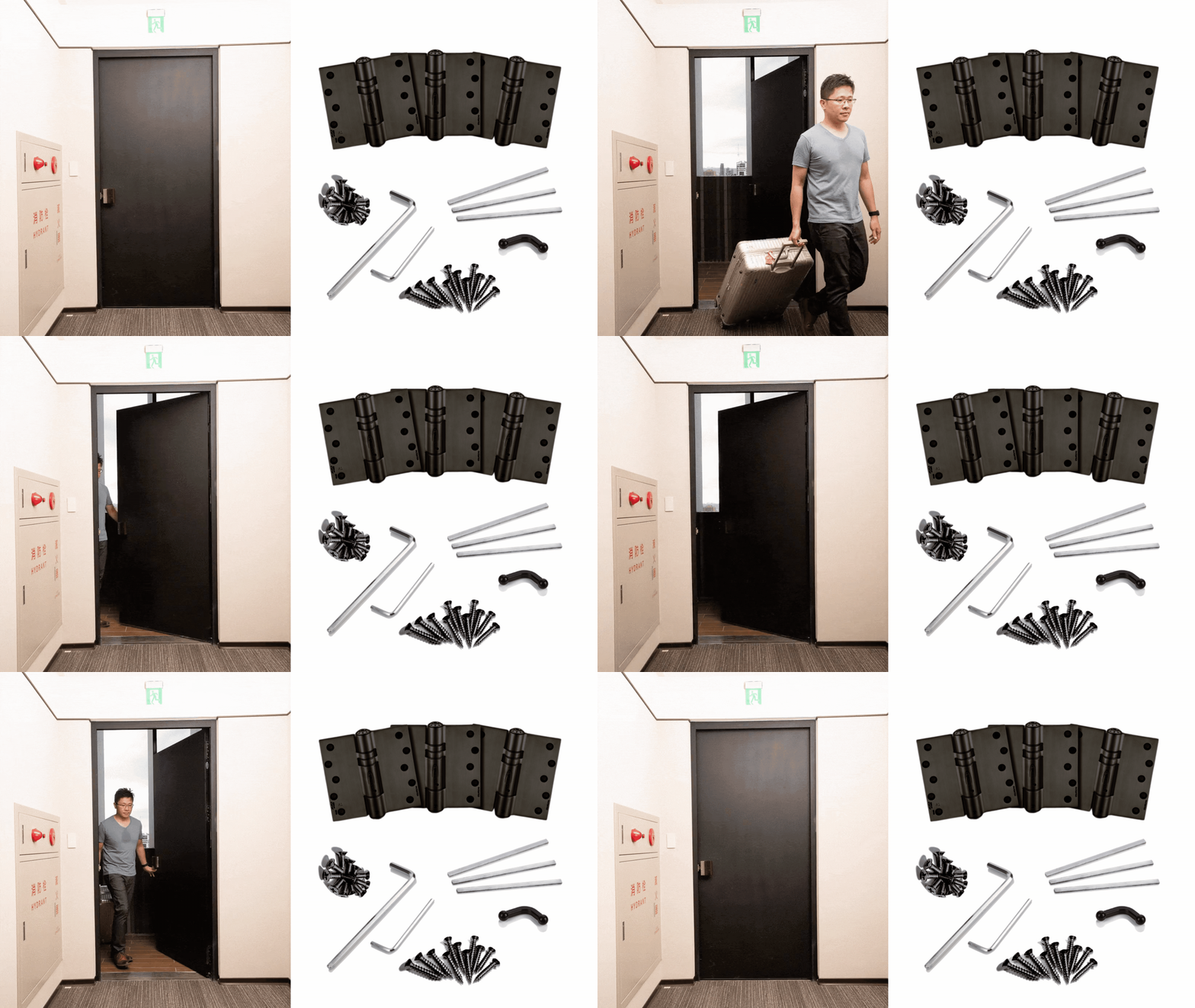
Waterson Residential Hinge Applications

Idyl Fenway Apartments
Boston, MA

FLOR 401 Lofts
Los Angeles, CA

50 Leo
Boston, MA

The Florian
Washington, DC
Waterson Self Closing Spring Hinges is a self closing hinge system that has the functionality of a door closer, hinges, hold open and door stop. Our hinges are UL listed, fire rated up to three houses. Each hinge’s unique numerical panel allows the spring tensions to adjust precisely according to door weight and environmental conditions. Additionally, Waterson hinges meet all ADA codes concerning speed control, closing force, and door clearance.
Go further with the Waterson Door Hinge vs Spring Hinge Door Closer analysis here
Please see this page here for an in-depth comparison: Soft Close vs Self Close Hinges
We wouldn’t recommend an aluminum body, as it’s typically designed for less frequently used applications or smaller properties. To ensure a consistent and reliable closing experience throughout the entire building, stainless steel would be a much better choice.
Waterson Residential Self Closing Spring Hinges for Door Not Closing Flush
Waterson self closing spring loaded door hinges combine an overhead closer and hinge into one attractive component with optional hold-open and door-stop features. These hinges are ideal for commercial openings, gates, and glass doors. The hinges are easily installed and adjusted to comply with ADA & ICC A117.1 requirements for opening force and to assure quiet, secure closing. Made with stainless steel, Waterson soft close door hinges meet NFPA 80 and are UL 3-hour fire-rated, as well as being suitable for both interior and all-weather exterior openings. See all our features.
In addition to these performance advantages, Waterson offers flexible customization services. As a direct manufacturer, we can tailor hinge sizes, finishes, and especially hinge leaf designs to meet the specific structural needs of your doors. This makes our hinges an ideal solution for door manufacturers seeking custom options that integrate seamlessly with their existing frames.
Request For Quote
Please note that Waterson closer hinges start from a size of 4″x4″. If you’re in need of smaller self-closing hinges, we’d recommend checking out some other resources! Also, we only provide single acting closer hinges. Thank you.
Recent Post
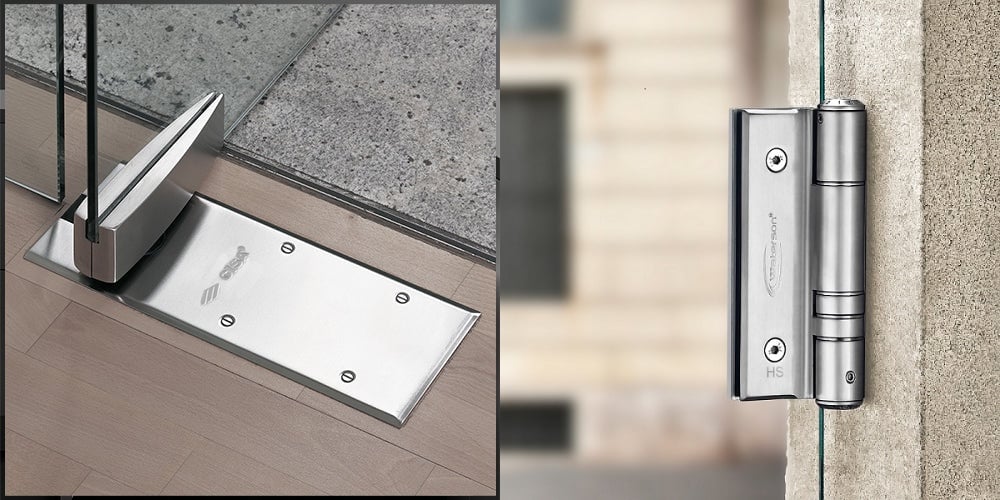
Glass Door Hinges: Floor Spring vs Spring Hinge Compared
Quick Answer Floor hinges (also called floor springs) are hydraulic closers set into the floor slab for center-hung or double-acting glass doors with fully concealed [...]
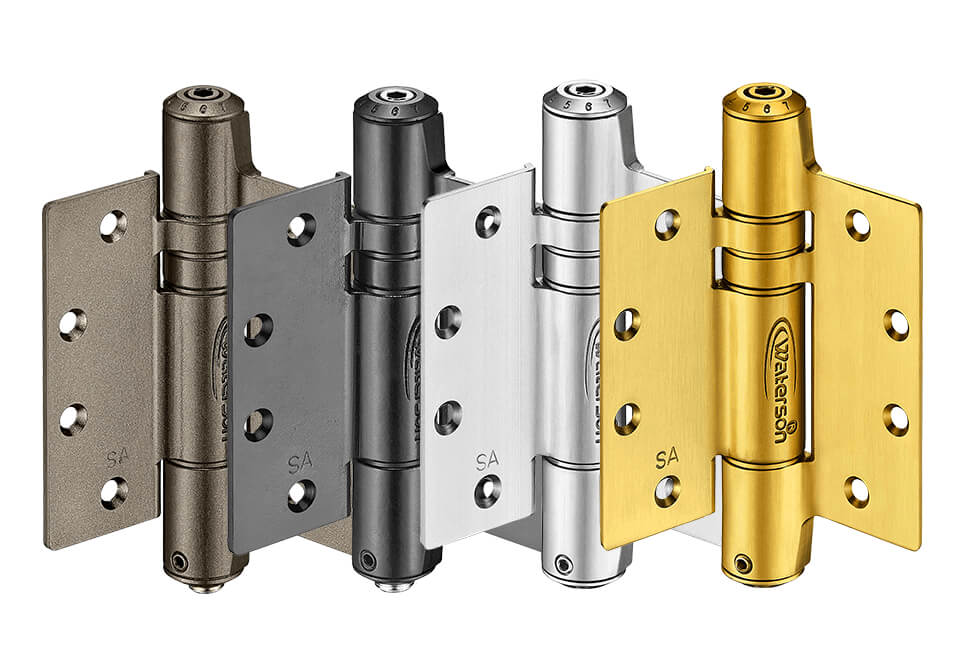
Stainless Steel Spring Hinges: Self-Closing Hinges for Interior and Exterior Doors
Quick Answer A stainless steel spring hinge is a self-closing hinge with a torsion spring inside the barrel, so it swings the door and closes [...]
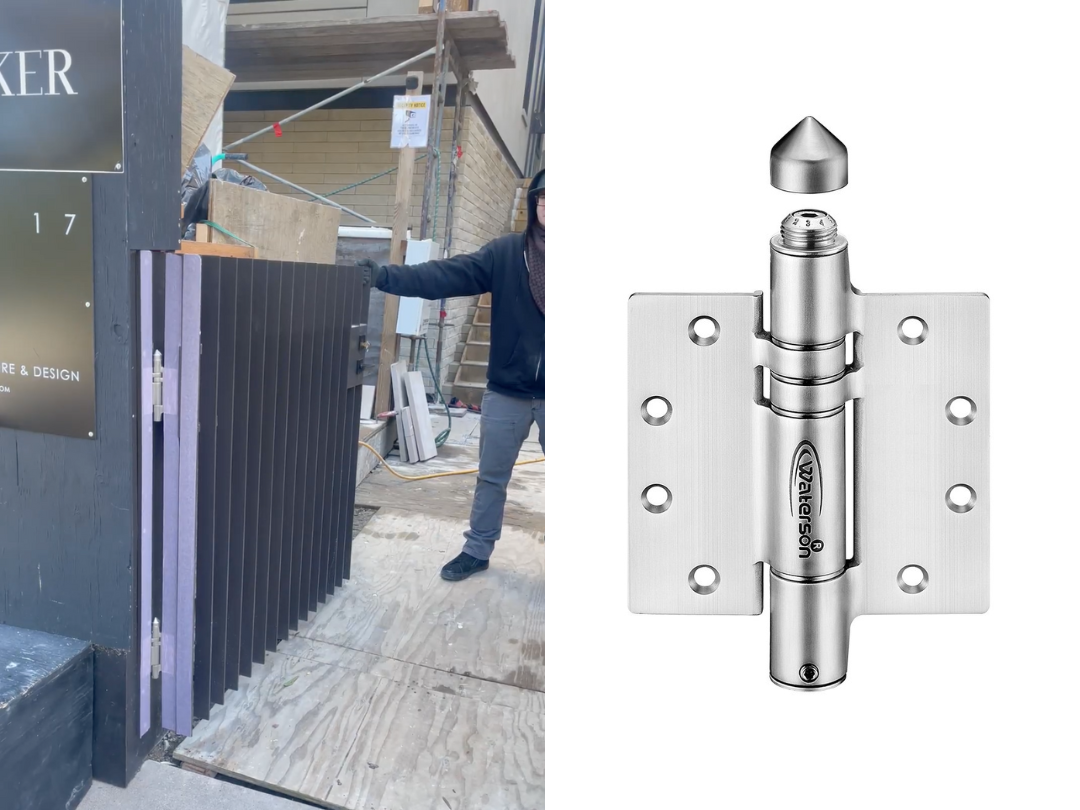
Cold Weather Gate Hinges: How Waterson Performs in Winter
When winter comes, temperatures drop, and outdoor fence gates start to behave differently. Wood absorbs moisture and swells, metal contracts slightly, and hardware components shift [...]