
Quick Answer
The most common issues with storm door hinges self closing include door slamming from wind gusts, sagging hinges, latches not catching, and closer arms bending from repeated impact. Most problems trace back to standard pneumatic closers that cannot handle sudden wind load changes. Upgrading to a self closing or soft closing door hinge fixes most of these problems permanently.
Wind is the number one reason storm doors fail early.
A storm door sits exposed at the front of your home, taking direct hits from outdoor pressure changes every single day. Unlike interior doors, it has no corridor or vestibule to buffer the load. The door slams. The frame takes the hit. Repeat enough times, and something breaks.
So why does the hardware that ships with most storm doors keep failing at exactly the moment it matters most? And what is the solution to this problem?
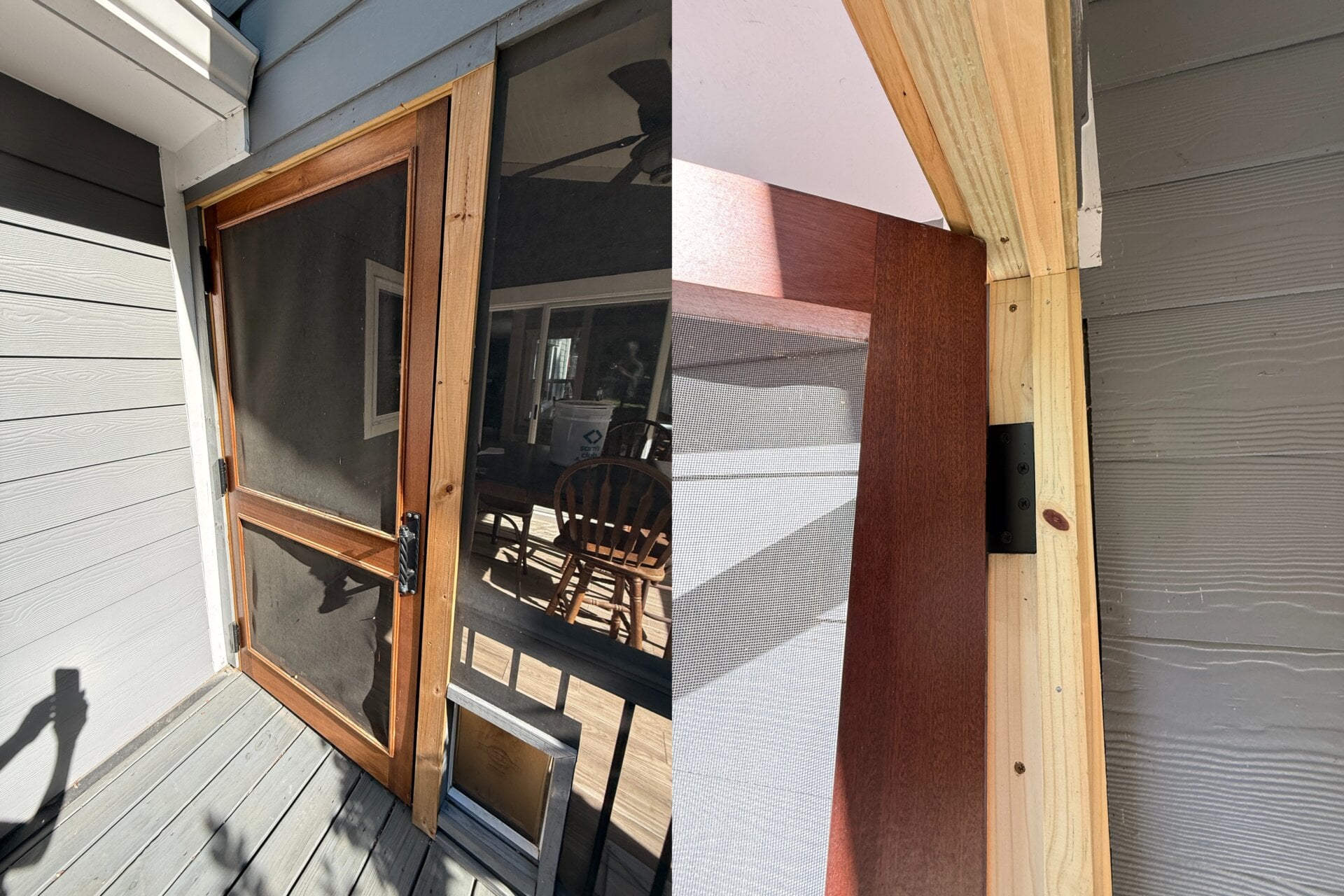
What Is a Storm Door and Why Does Wind Hit It Harder Than Other Doors?
A storm door is a secondary door installed in front of your main entry door. It’s designed to protect the primary door from weather, add insulation, and let in natural light while keeping rain, wind, and cold out. Most are aluminum-framed with glass panels, though some include retractable screens for ventilation.
Because it’s the outermost door on the home, it faces wind directly with no buffer. Every gust, pressure spike, or cross-breeze hits it first. That’s a completely different condition from an interior door, and it’s why hardware that works fine inside fails quickly on a storm door.
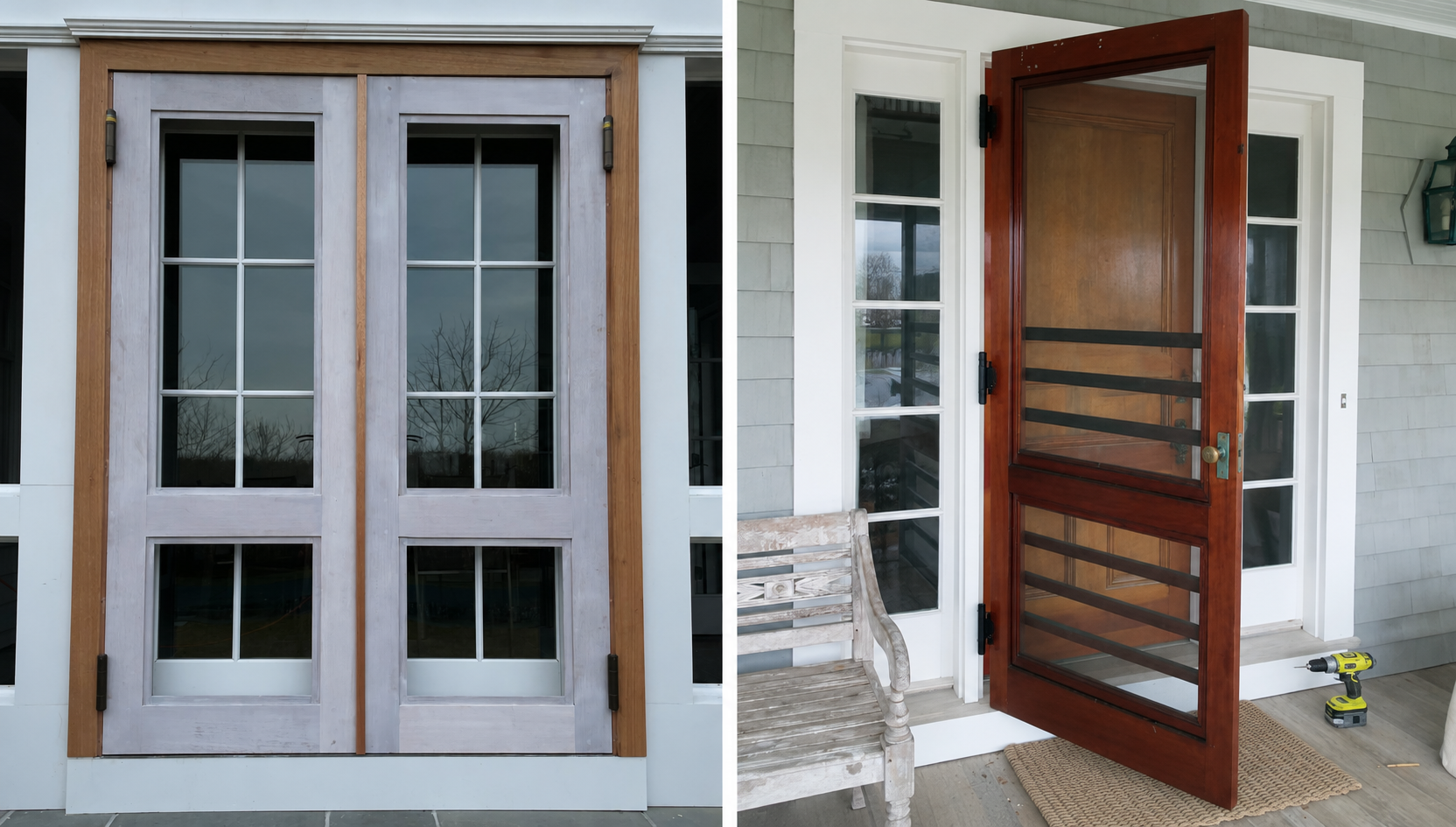
What Are the Most Common Storm Door Problems?
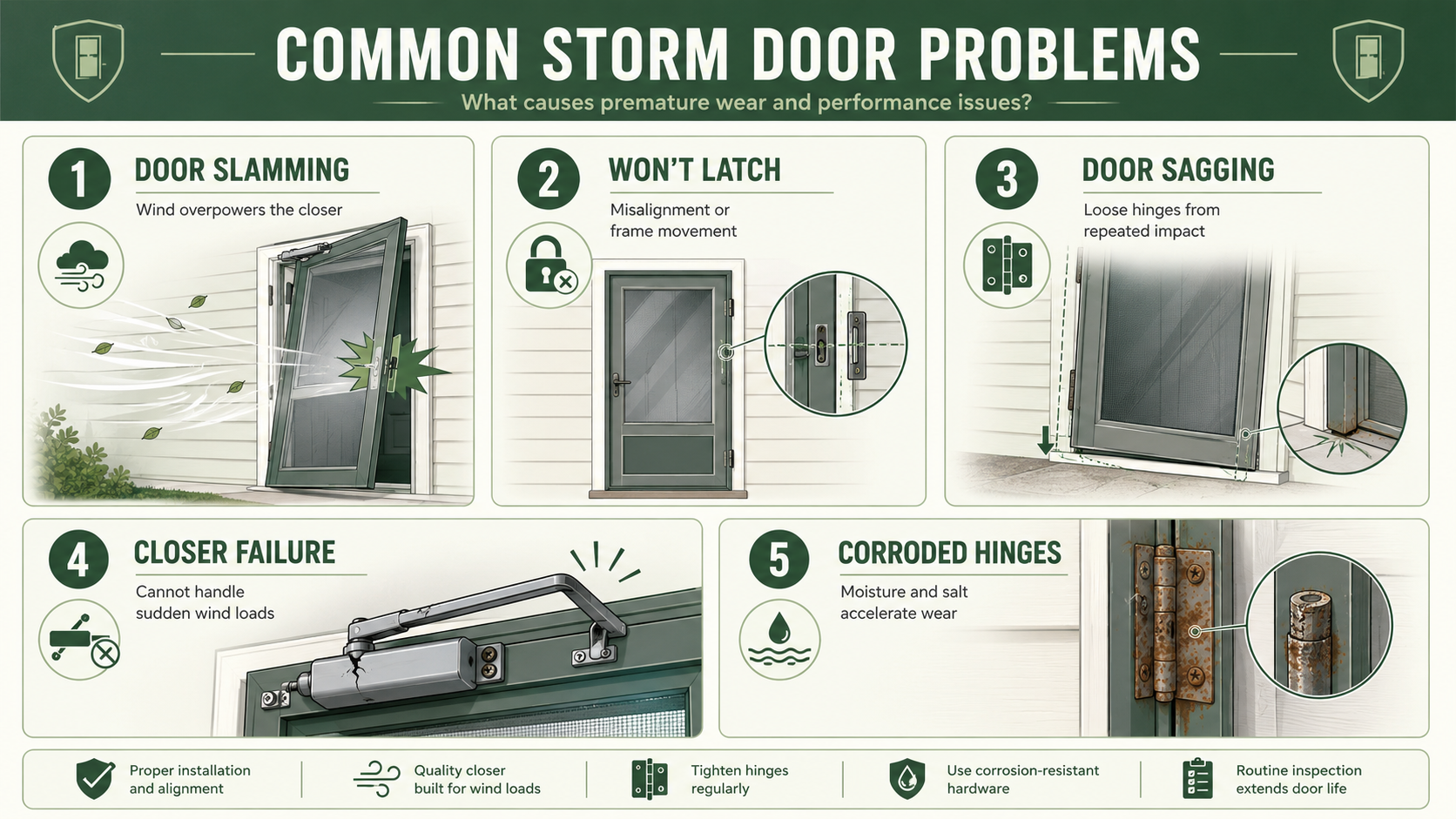
- Door slamming shut. Wind pushes the door faster than the closer can control. Standard pneumatic closers are tuned for steady, predictable loads. A sudden gust mid-swing overpowers them completely.
- Door not latching all the way. Usually, a misaligned latch or a closer rod bent from repeated impact. Also common after the door frame shifts from house settling or humidity.
- Door sagging or scraping the frame. Hinge screws loosen over time from repeated slam force. Once the hinge shifts, the door drops and catches on the frame.
- Closer arm failing repeatedly. A single-arm pneumatic closer has one fixed closing speed and no ability to handle sudden load spikes. In windy conditions, that load comes fast and often.
- Squeaking or corroded hinges. Aluminum storm door hinges in coastal or humid environments corrode faster than most people expect. Once corrosion is deep enough, the hinge pin wears unevenly and the door starts to bind.
Why Do Standard Storm Door Closers Keep Failing?
Most residential storm doors ship with a pneumatic closer, a single arm mounted on the door frame. It works fine in calm conditions. The problem is that it has one fixed closing speed and no ability to respond to sudden load changes.
When wind hits the door mid-swing:
- Closing speed can increase 2-4x instantly
- Impact force at the frame jumps 4-10x above normal
- The closer arm absorbs none of that and eventually bends or cracks at the bracket
Tightening the closure makes it harder to open, which creates ADA issues and frustrates users. However, slowing it down causes the door to not latch in low-wind conditions. You’re adjusting to the problem, not solving it.
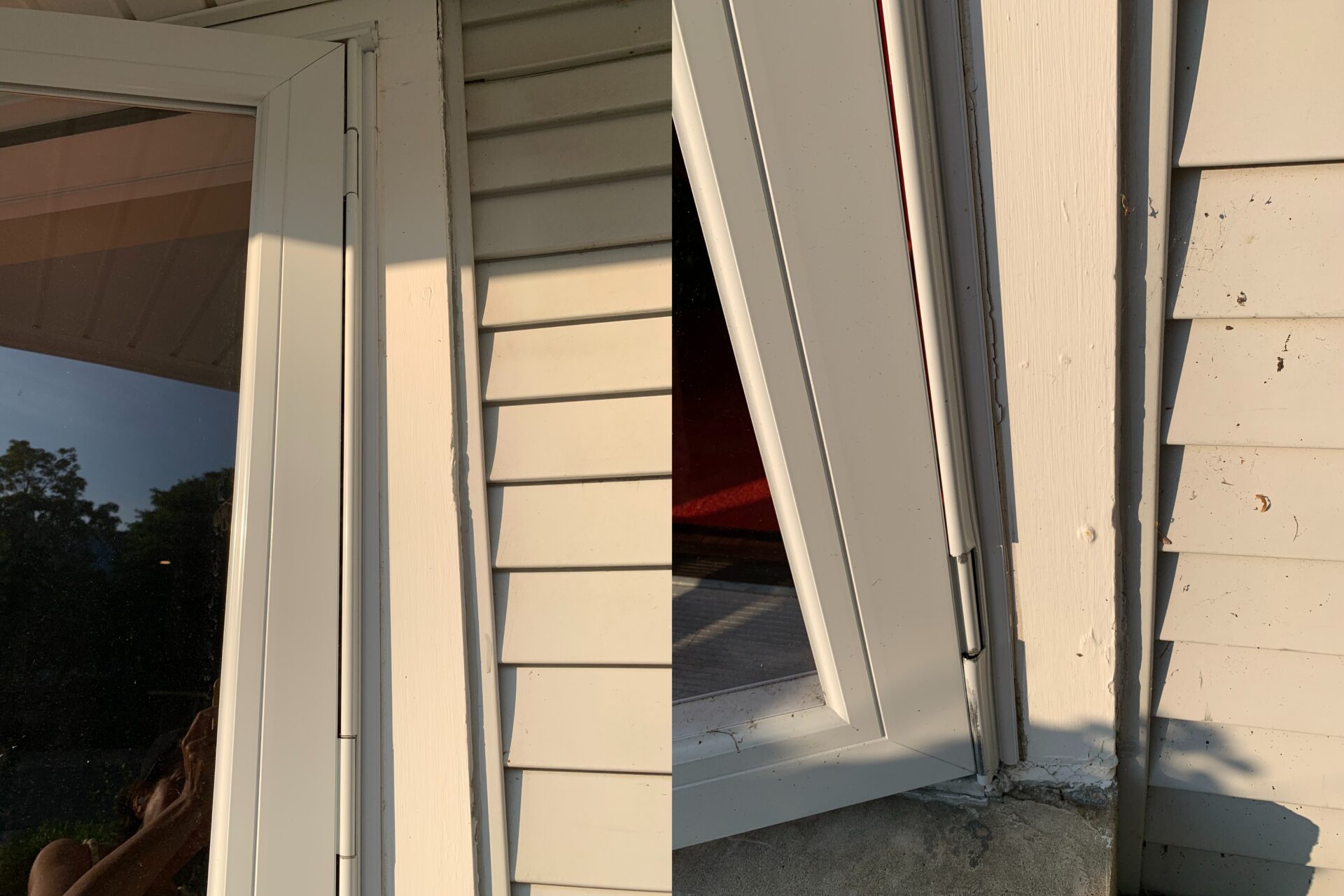
What Makes Waterson Storm Door Hinges Handle Wind Better Than a Standard Closer?
The fundamental difference is where the control lives. A standard pneumatic arm controls speed only at the end of the swing. Waterson’s hydraulic hybrid hinge controls the full arc.
When a gust accelerates the door mid-swing, the hydraulic system in the hinge barrel slows it down immediately, not 10 degrees before it hits the frame. That’s what prevents the impact force spike that breaks frames and bends closer arms.
Key specs include:
- Self-closing: Mechanical spring ensures the door latches every time, including low-wind conditions
- Soft-closing: Hydraulic damping absorbs sudden gust force across the full swing
- Tested to 1,000,000 cycles under BHMA A156.17: built for repeated impact loads
- Supports up to 260 lbs: covers full-view glass storm doors
- Adjustable tension: Separate controls for swing phase (90 degrees to 20 degrees) and latch phase (20 degrees to 0 degrees)
- ADA compliant: Opening force < 5 lbs, closing speed > 5 seconds
- Stainless steel for coastal and high-humidity environments
- Finishes: Flat black, satin stainless, dark brown, satin brass
- Warranty: 3 years performance
Which Storm Door Hinges Self Closing Should You Buy?
For residential storm doors, the standard spec is: Full Mortise 4×4, door thickness 1-3/8″, height under 7’0, weight up to 260 lbs.
| Situation | SKU | Type | What It Does |
|---|---|---|---|
| Light to moderate wind, occasional gusts | K51M-400-A3 | Mechanical (M) | Self-closing with adjustable spring tension |
| Consistent wind exposure, slamming is recurring | K51M-400-B3 | Hydraulic Hybrid (H) | Self-closing + hydraulic damping, no slam |
K51M-400-A3 is the right call when the wind is occasional, not a daily structural issue. The mechanical spring closes the door reliably and tension is adjustable. No damping, so if the door gets caught by a hard gust mid-swing, it will still close fast.
K51M-400-B3 is for storm doors that face real wind exposure. The hydraulic damper absorbs gust-driven acceleration across the full swing arc, not just at the latch. The door closes smoothly regardless of what hits it mid-way. This is what you need if your current closer keeps failing or your door is in a wind-exposed position.
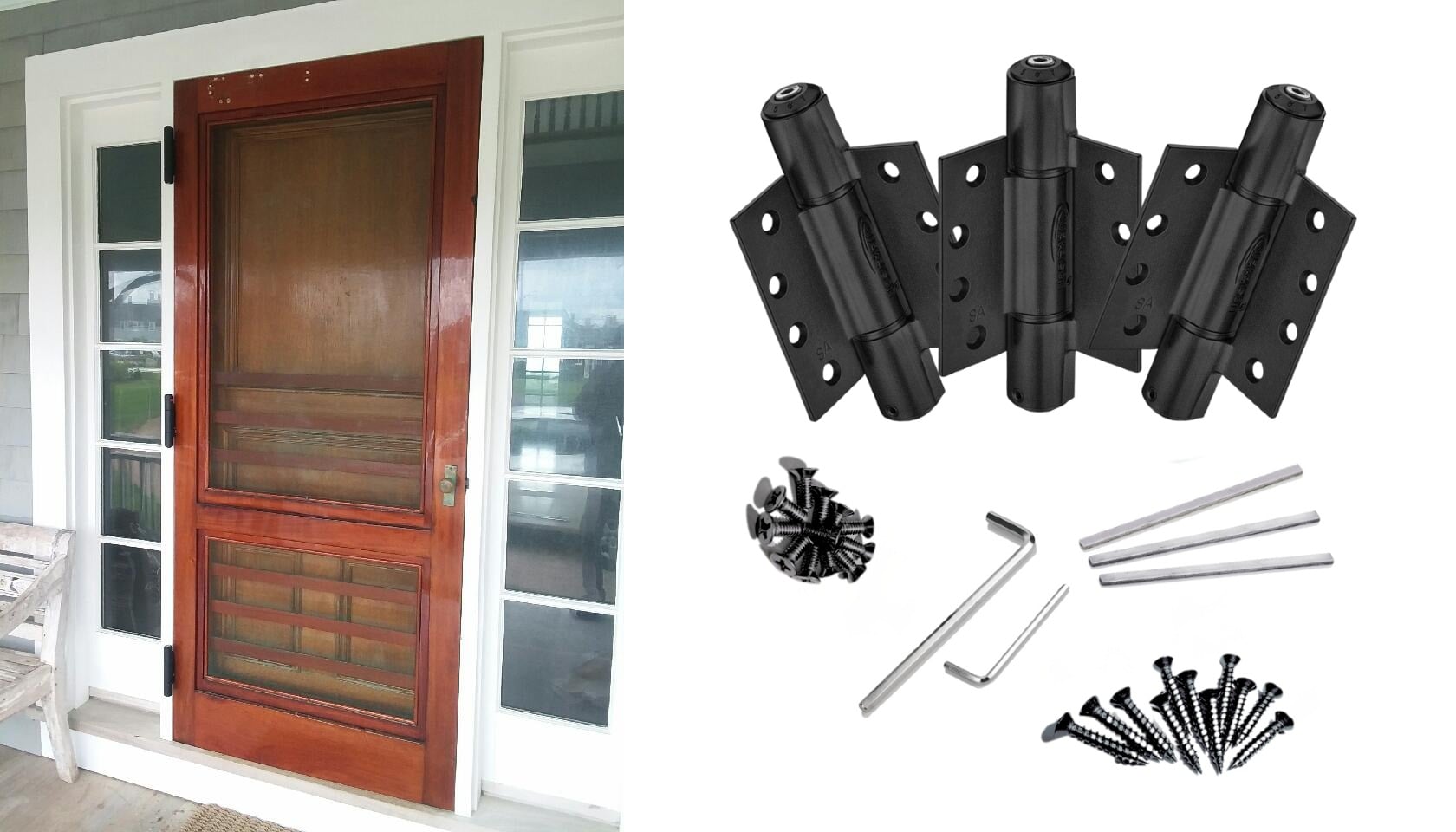
How Do You Adjust a Self Closing Storm Door Hinge?
What you can control depends on which model you have:
K51M-400-A3 (Mechanical only)
- Spring tension (S): controls how hard the door pulls itself shut
- Swing speed (A): controls closing speed from 90 degrees to 20 degrees
- Latch speed (A1): controls the final snap from 20 degrees to 0 degrees
K51M-400-B3 (Hydraulic Hybrid)
- Spring tension (S): same as above
- Swing speed (A) and latch speed
- Hydraulic damper strength (H2): controls how much resistance the door gets across the full arc
- Hydraulic zone position (H1): adjusts where damping kicks in, useful for heavy latch doors
For storm doors in windy conditions, start by slowing swing speed first. If the door still doesn’t latch reliably, increase spring tension one step at a time. Do not set tension beyond 5, it shortens spring life and voids the warranty.
Is There Anything a Self Closing Hinge Still Cannot Fix?
Wind pressure on a storm door varies by the door’s exact position, exposure angle, and local conditions. No hardware performs identically across every installation.
If your door is in an extreme position, direct coastal exposure, a wind corridor between structures, or a fully exposed corner, two things matter beyond the hinge selection:
- Test on site. Run the door through real wind conditions before assuming the spec is dialed in.
- Consider a dual system. In extreme cases, pair the Waterson hinge with a concealed closer for an additional layer of speed control.
The right hinge eliminates most storm door slamming problems. Site conditions tell you if you need to go further.
Waterson Stainless Steel Storm Door Hinges Self Closing
Waterson storm door hinges combines the function of an overhead closer and a hinge into a single, sleek component—complete with optional hold-open and door-stop features. Designed for commercial openings, gates, and glass doors, these hinges are easy to install and adjust to meet ADA and ICC A117.1 standards for opening force, while ensuring quiet and secure closure. Crafted from durable stainless steel, they are NFPA 80 compliant, UL 3-hour fire-rated, and built to perform reliably in both interior and all-weather exterior environments. See all our features.
In addition to these performance advantages, Waterson offers flexible customization services. As a direct custom hinge manufacturer, we can tailor hinge sizes, finishes, and especially hinge leaf designs to meet the specific structural needs of your doors. This makes our hinges an ideal solution for door manufacturers seeking custom options that integrate seamlessly with their existing frames.
Request For Information
Please note that Waterson Closer Hinges start from a size of 4″x4″. If you’re in need of smaller self-closing hinges, we’d recommend checking out some other resources! Also, we only provide single acting closer hinges. Thank you.
Recent Post
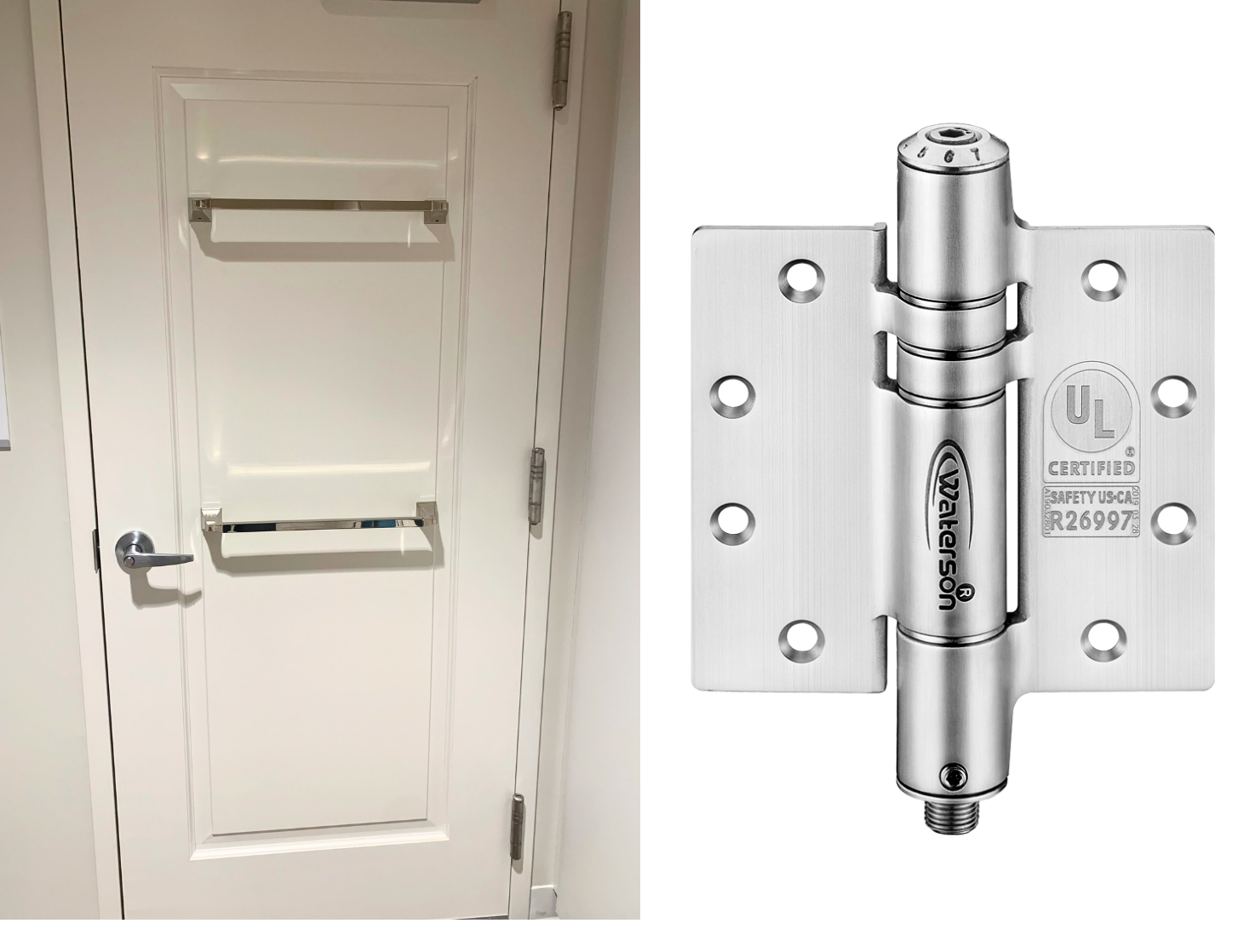
Spring Loaded Door Hinges for Multifamily Residential Buildings
For multifamily buildings, specify self-closing spring hinges listed for use on fire-rated doors and adjustable to ADA closing speed and opening force. They replace a [...]
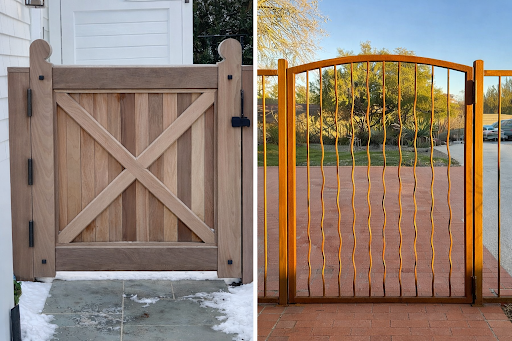
Cold Weather vs Hot Weather Hinges: How to Deal with Seasonal Change?
Most people only notice their Gate hinges when something's already broken. The gate won't close, the latch misses the strike plate, and the hinge squeaks [...]
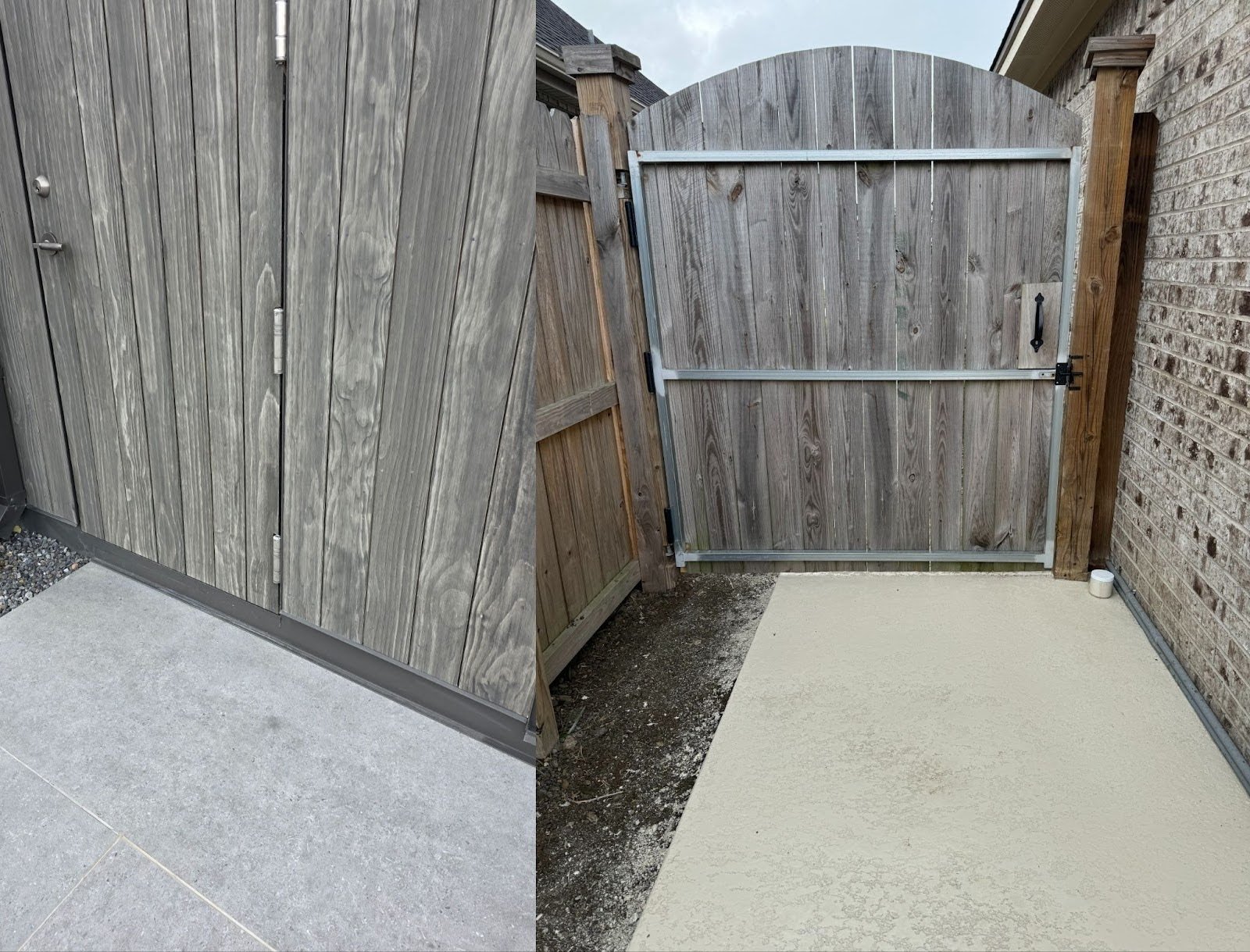
Why Are Doors and Gates Harder to Close in the Winter
Most commercial self-closing hinges still adopt either spring or hydraulic damper for [...]