
Quick Answer
The best self-closing door hinges for LEED buildings close and latch the door reliably every time, meet ADA opening force and closing speed, carry a UL fire rating, pass ANSI/BHMA A156.17 Grade 1 cycle testing, and replace a separate overhead closer to reduce parts and maintenance. LEED does not certify hinges, but the right hinge supports the building’s energy, indoor air quality, and operations goals.
On a LEED project, every door is part of the building’s performance. A guest room door that drifts open, a fire door that stops short of latching, or a closer that starts leaking oil after two years all work against the goals the building was designed for. Yet door hardware is often one of the last items specified. This guide explains what a LEED-oriented project actually asks of a door, which hinge features matter, and how Waterson self-closing hinges have performed in LEED Platinum, Gold, and Silver buildings.

What Is a LEED-Oriented Building?
LEED (Leadership in Energy and Environmental Design) is the green building rating system run by the U.S. Green Building Council (USGBC). Projects earn points across categories such as energy and atmosphere, materials and resources, and indoor environmental quality. Based on total points, a project is certified at one of four levels: Certified, Silver, Gold, or Platinum.
A LEED-oriented building is any project designed around those criteria. That includes buildings already certified, buildings currently pursuing certification, and owners who follow LEED principles as a design standard without formally applying. For hardware decisions, all three groups ask the same practical questions: Will this product help the building perform as designed, and will it keep performing for years without becoming a maintenance burden?
Important to know: There is no such thing as a “LEED-certified hinge.” USGBC certifies buildings, not individual products. Door hardware supports LEED goals indirectly, by keeping doors closed, sealed, accessible, and durable. Be cautious of any product marketed as LEED certified on its own.
Door Hardware Concerns on LEED Projects
On a LEED project, self-closing hardware is usually judged on five points.
1. Energy and air leakage
A door that stops short of the frame leaks conditioned air. Across hundreds of doors, those gaps add HVAC load that the energy model never planned for. The hinge needs enough closing force to pull the door fully shut.
2. Indoor air quality and acoustics
LEED’s indoor air quality strategies have long called for self-closing doors on janitor closets, chemical storage, and copy rooms to keep pollutants out of occupied space. Quiet, controlled closing also supports acoustic comfort in hotels, dorms, and apartments.
3. Materials and durability
Hardware that lasts longer creates less replacement waste. Waterson uses 304 stainless steel for interior and commercial openings, and 316 marine-grade stainless steel for coastal or humid sites.
4. Maintenance
Overhead closers leak oil and get damaged; standard spring hinges lose tension and slam. Combining hinge, closer, and door stop in one component leaves fewer parts to fail.
5. Air pressure
Airtight construction, pressurized corridors, and elevator shafts push against closing doors. This is covered in the next section.
Air Pressure: The Hidden Door Problem in Tight Buildings
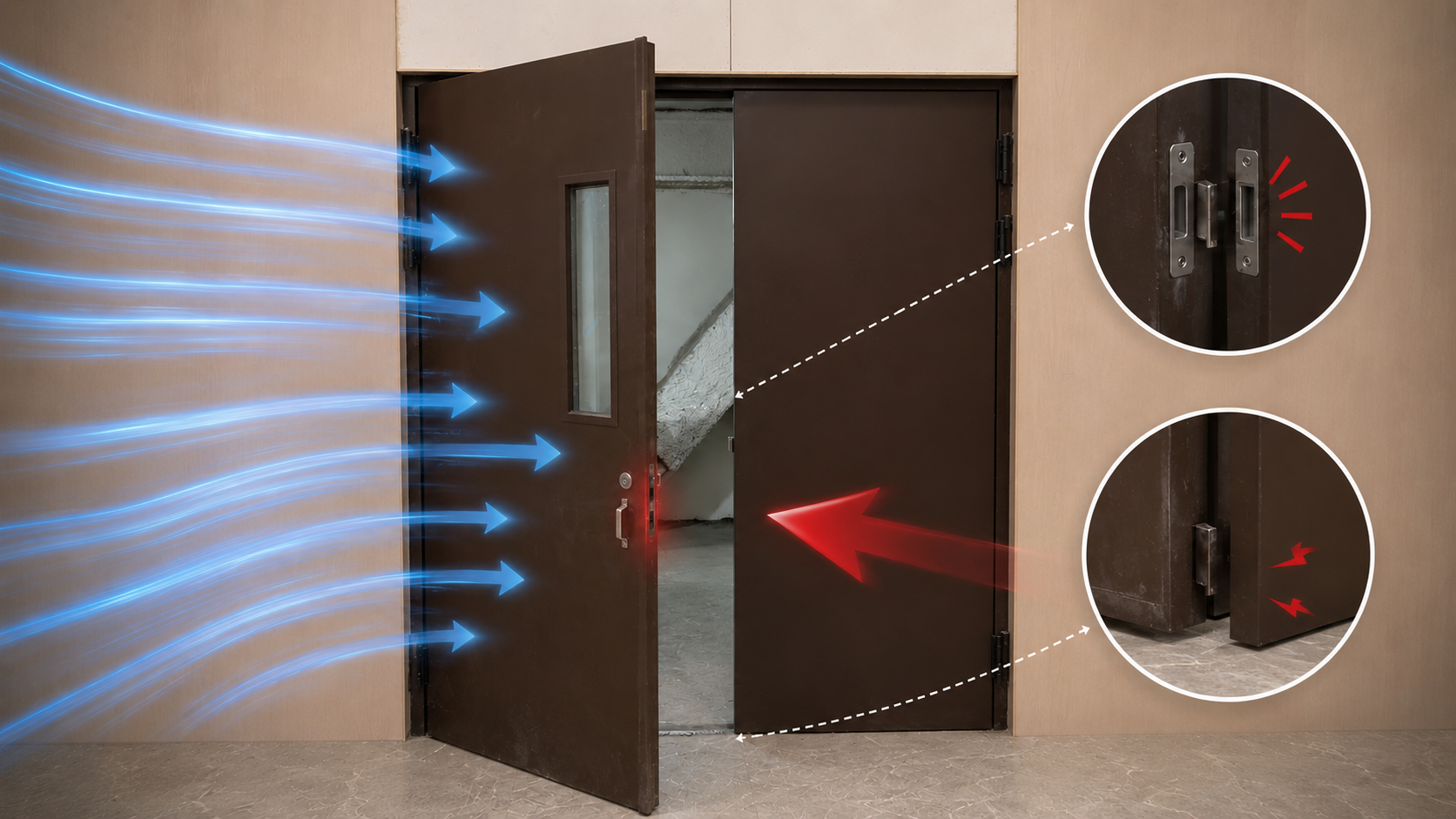
The airtight construction that makes a LEED building efficient can also make its doors harder to close. Pressurized corridors, elevator shafts, and stairwells create pressure differences strong enough to hold a door just short of latching. For a fire-rated door, that is a life safety issue: a door that does not latch cannot contain smoke and fire. Learn more in How to Fix a Door Not Closing Flush.
How Waterson hinges respond
- Numeric tension adjustment: a numbered adjustment panel lets installers fine-tune closing force on site for each opening.
- Mechanical or hydraulic: mechanical for heavy use with no fluid to leak; hydraulic soft-close for quieter closing in hotels and residential corridors.
- Heavy door capacity: heavy-duty models handle doors from 260 to 330 lbs or more with the correct number of hinges.
No single hinge or closer can guarantee results in every building. For pressure-sensitive projects, test on site with the actual door and frame, and in the toughest zones, pair Waterson hinges with a concealed closer. contact tech support so our team can help you.
Real LEED Certified Projects Using Waterson Self Closing Hinges
All four buildings below are LEED certified by USGBC, and each chose Waterson for a different door problem.
| Project | LEED level | Building type | Main door challenge |
|---|---|---|---|
| Encore Boston Harbor, Everett, MA | Platinum | Luxury resort and casino | Premium finish without a visible closer |
| Idyl Fenway Apartments, Boston, MA | Gold | Luxury multifamily | Self-closing at scale within budget |
| EAST Miami Hotel, Miami, FL | Gold | High-rise hotel | ADA clear width on guest room doors |
| Omni Hotel Nashville, Nashville, TN | Silver | Convention hotel | Constant spring hinge failures |
Encore Boston Harbor: LEED Platinum
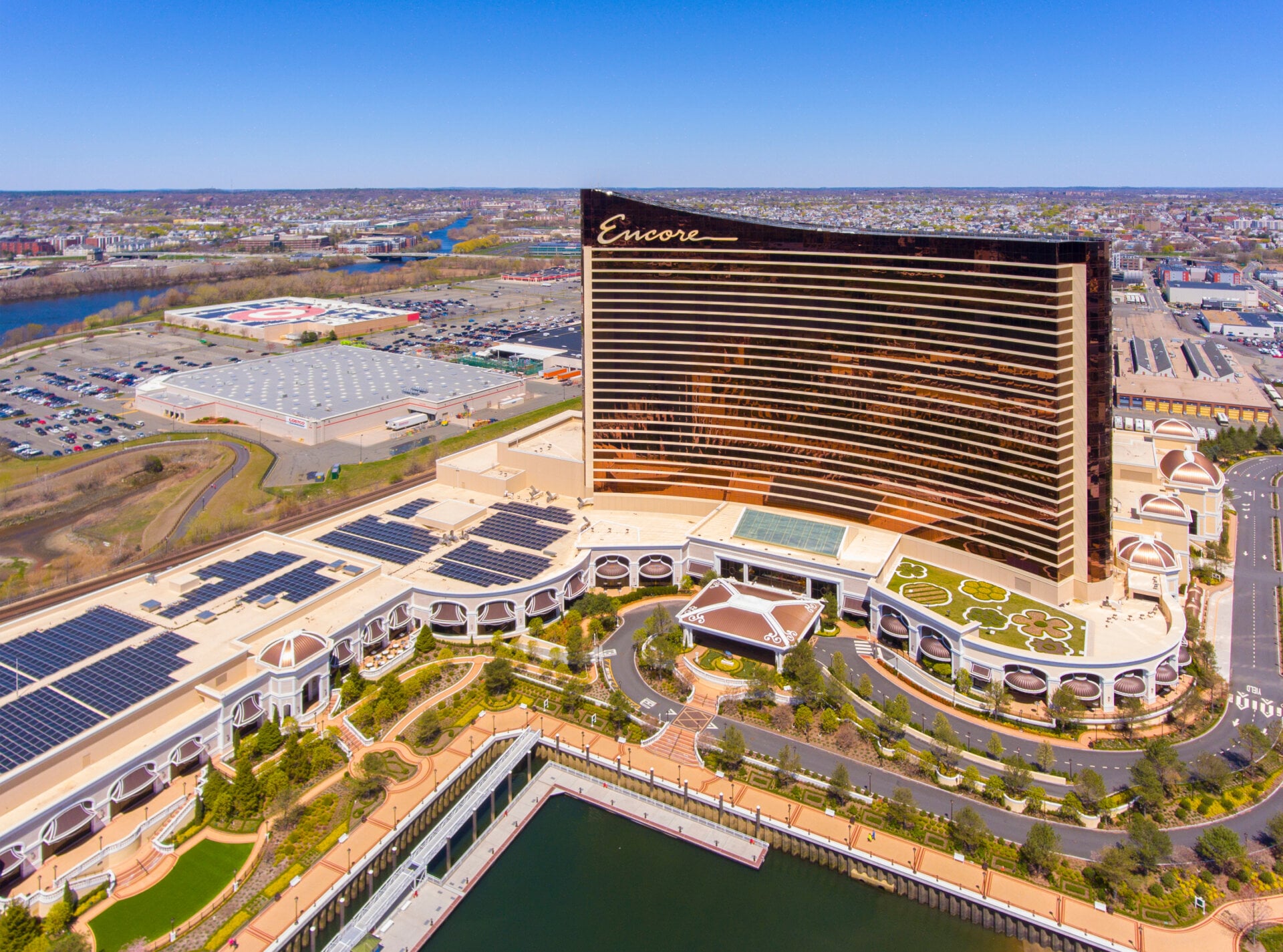
Wynn Resorts’ five-star resort earned LEED Platinum (LEED 2009 New Construction) in December 2019. Its interiors needed self-closing doors without a visible overhead closer.
Solution: Waterson K51M-400-B2-US4 4″ full mortise closer hinge in US4 satin brass, with the closing mechanism hidden in the barrel and tension adjusted on site.
With the closing mechanism hidden in the barrel and tension adjusted on site. The doors meet self-closing requirements while the satin brass finish stays clean and uninterrupted, which is what a high-design LEED project demands.
Idyl Fenway Apartments: LEED Gold
This transit-oriented luxury apartment community at 60 Kilmarnock Street earned LEED Gold (LEED v4 New Construction) in 2025. The distributor needed self-closing hardware for 375 wood doors within budget.
Solution: Waterson K51M-450-A3-US32D self-closing hinges, with no separate closer on each door.
The project got reliable self-closing unit entry doors throughout the building while staying within budget. In multifamily buildings, unit doors need to close fully every time to separate apartments from corridors, limit air leakage, and keep noise down. Doing that across hundreds of doors with a durable, stainless steel hinge keeps both upfront cost and long-term maintenance under control.

EAST Miami Hotel: LEED Gold
The EAST Miami tower in Brickell City Centre earned LEED Gold in 2018. A guest room door remodel needed ADA-compliant self-closing hinges that would not reduce clear width.
Solution: K51L-SWRH-450-A4-US32D swing clear closer hinges, 4.5″ satin stainless steel, UL listed for 3-hour doors, which move the door fully out of the opening.
Guests get a wider, easier passage, and the hotel improved accessibility without adding a separate closer to each door. Because the remodel used the existing doors, the upgrade stayed focused on the hinges instead of a larger renovation. For a LEED Gold building, that is the kind of targeted improvement that adds value while keeping waste and disruption low.

Omni Hotel Nashville: LEED Silver
Omni Nashville earned LEED Silver (LEED 2009 New Construction) in 2014. After just two years, its conventional spring hinges were failing across more than 800 guest room doors.
Solution: Waterson K51M-450-A3-US19 self-closing hinges retrofitted onto the existing doors, at 12 to 15 doors per installer per day.
For a LEED building expected to perform for decades, that means less maintenance labor, fewer replacement parts, and guest rooms that stay in service. Before the retrofit, the engineering team was replacing broken hinges on a regular basis. One year later, the doors were simply doing their job, which is exactly what facility managers want from door hardware.
Choosing Self-Closing Hinges for a LEED Project
Not every self-closing hinge is built for the demands of a LEED building. Use this checklist when reviewing submittals or comparing products: it covers the code, performance, and durability points that matter most, and shows how Waterson hinges meet each one.
| Criteria | Why it matters on a LEED project | How Waterson meets it |
|---|---|---|
| Reliable closing and latching | Keeps conditioned air in and fire doors compliant | Adjustable spring tension, tuned on site with a numeric panel |
| Controlled closing speed | Prevents slamming, meets ADA, supports acoustic comfort | Closing speed over 5 seconds; hydraulic soft-close option |
| Low opening force | ADA compliance; discourages propping doors open | ADA compliant: adjustable to under 5 lbs opening force |
| Fire rating | Required on rated corridors, stairs, and unit entries | UL listed for 3-hour fire-rated doors; meets NFPA 80 |
| Tall door performance | Many hospitality and multifamily projects use 8 ft doors | 4.5″ hinge tested for fire-rated doors up to 8 ft |
| Durability | Longer service life means less replacement and waste | ANSI/BHMA A156.17 Grade One, one million cycle test |
| Warranty | Protects the owner’s investment over the building’s life | 10 years for mechanical hinges; 3 years for hydraulic hinges |
| Corrosion resistance | Coastal and humid sites destroy plated hardware | 304 stainless steel; 316 marine grade available |
| Fewer components | Less material, simpler installation, fewer failure points | Hinge, closer, door stop, and optional hold-open in one |
| Standard prep | Easy retrofit; no new door machining | ANSI/BHMA A156.7 standard hinge template |
Frequently Asked Questions
Not directly. LEED awards points to the building, not to individual hardware. Self-closing hinges support LEED goals by keeping doors closed to protect the building envelope, isolating rooms with chemicals or pollutants, and reducing maintenance over the building’s life.
No hinge is LEED certified, because USGBC certifies buildings rather than products. Waterson hinges are UL listed for 3-hour fire-rated doors, ADA compliant, and ANSI/BHMA A156.17 Grade 1, and they have been installed in LEED Platinum, Gold, and Silver buildings.
Yes. Waterson closer hinges are UL listed for fire-rated doors up to 3 hours and meet NFPA 80 self-closing requirements. Fire door hardware should always be installed by a qualified professional to maintain the rating of the door assembly.
In many cases, yes. Waterson’s numeric tension adjustment lets installers increase closing force to overcome pressure at each opening. However, pressure varies by floor and no single hinge or closer can guarantee results everywhere. Test on site, and in extreme zones combine hinges with a concealed closer.
Use 316 marine-grade stainless steel for coastal, pool, and humid environments. Use 304 stainless steel for interior and general commercial openings.
Typically far less. Closer hinges have no exposed arm to damage, and mechanical models have no hydraulic fluid to leak. At Omni Hotel Nashville, only five of more than 800 retrofitted guest room doors needed minor adjustments in the first year.
Working on a LEED Project?
Send us your door schedule, door sizes, and fire ratings. Our team will recommend the right hinge model, finish, and quantity, and help you plan on-site testing for pressure-sensitive openings.
Request For Quote
Please note that Waterson Closer Hinges start from a size of 4″x4″. If you’re in need of smaller self-closing hinges, we’d recommend checking out some other resources! Also, we only provide single acting closer hinges. Thank you.
Recent Post
Which Self Closing Door Hinges Work Best for LEED Buildings
Quick Answer The best self-closing door hinges for LEED buildings close and latch the door reliably every time, meet ADA opening force and closing speed, [...]
School Door Hinges: What Each Room Needs, from Classroom to Dorm
Quick Answer School door hinges are not one product. Classroom doors need quiet, controlled closing, and they only have to self-close when the corridor wall [...]

Door Closer vs Spring Hinges: How to Save Time and Money in Large Project
Quick Answer Traditional door stops pose a child safety risk because their rubber covers can be pulled off and become a choking hazard, and wall [...]