
Quick Answer
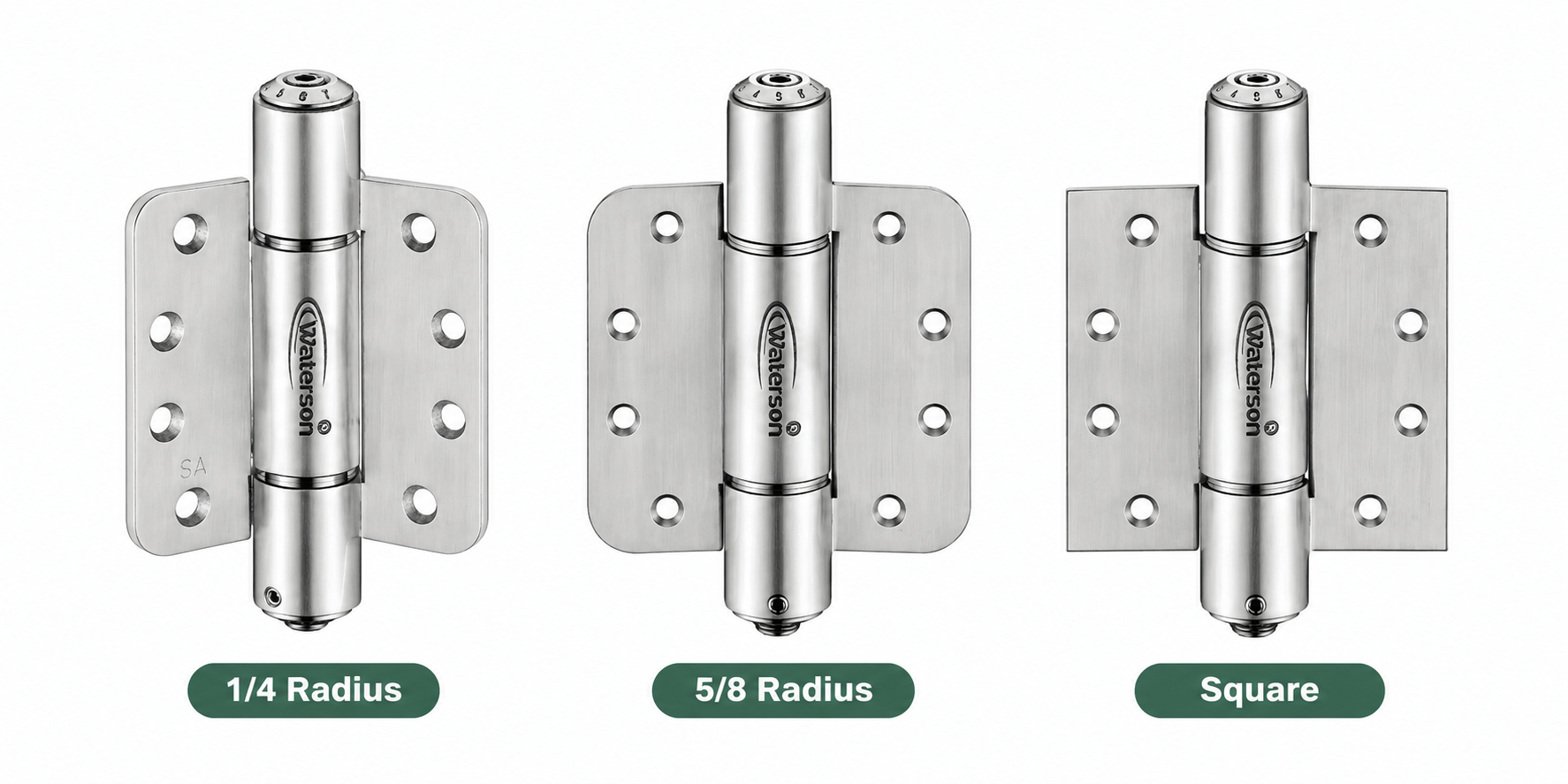
Most 4 inch residential door hinges have one of three corners: square, 1/4″ radius, or 5/8″ radius. A rounder hinge fits a mortise with a tighter corner: a 5/8″ hinge goes into a 1/4″ or square mortise, and a 1/4″ hinge goes into a square mortise. It sits flat and works normally, with small gaps at the corners. For most homes, that is fine. In high-end homes where appearance matters, match the corner exactly so the hinge fills the mortise with no gaps. A tighter hinge will not fit a rounder mortise without chiseling.
A homeowner recently asked us:
“I’m replacing the hinges on our doors. The old ones have rounded corners, and online I see both 1/4″ and 5/8″ radius hinges. They look almost the same to me. How do I make sure I order the right ones?”
It is a fair question. Unless you look closely, the two radii are hard to tell apart. The answer is to check the existing hinge before you order, using the four steps below.
How Do I Know Which Hinge Corner I Have?
Check four things before you order.
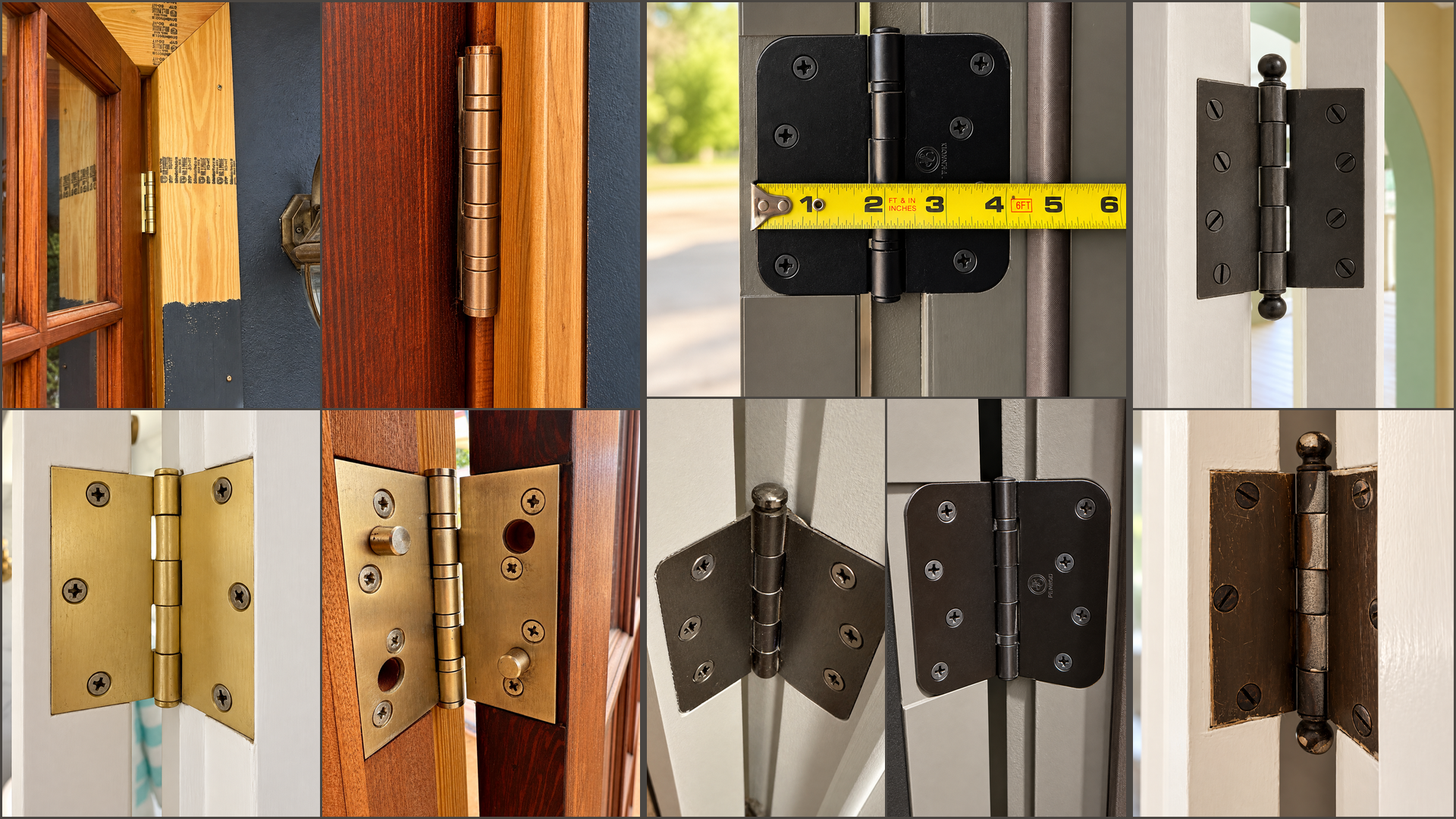
- Confirm the size. Measure the height of the hinge leaf from its top edge to its bottom edge. A 4 inch hinge leaf measures 4″.
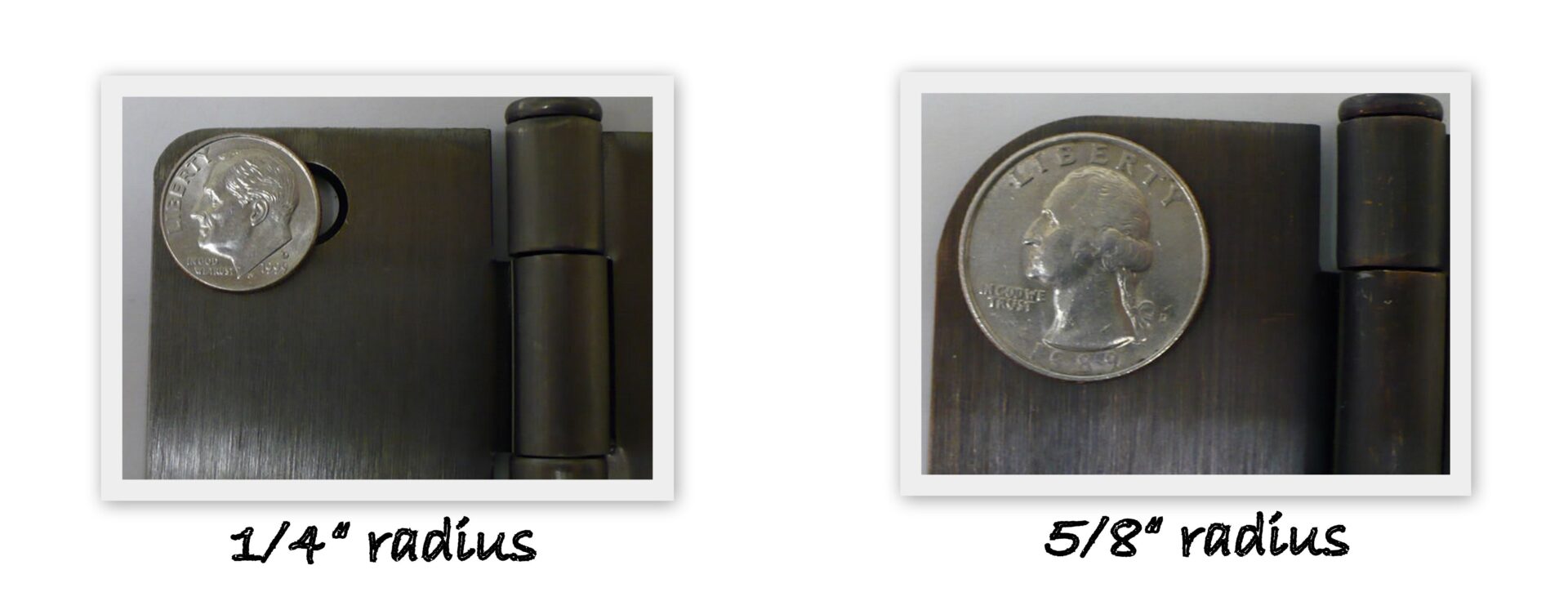
- Check the corner with a coin. Hold a coin against the corner of the hinge leaf. If a dime follows the curve, it is a 1/4″ radius. If a quarter follows the curve, it is a 5/8″ radius. No curve means square. To double-check, measure with a ruler from where the curve begins to where the corner would be if it were square.
- Check both leaves and every hinge. The door and the frame can have different corners, and older homes may mix corners from jamb to jamb.
- Note the screw pattern. Record whether the screw holes are standard or zigzag, so the new hinge lines up with the existing holes.
Not sure how to measure your door and hinges? Follow our 4-step Waterson measuring guide.
Which One to Choose: Square, 1/4”, or 5/8” Radius Hinge?
Choose the hinge radius based on how your door and frame are mortised.
1. Factory or job-site mortising: when doors and frames are mortised, the cutting tool defines the radius, CNC machining creates tight 1/4” corners, while job-site routers naturally produce a 5/8” radius.
2. Matching existing conditions: must match whatever radius already exists on the frame or door to avoid gaps, misalignment, or rework.
Will a New Hinge Fit Your Mortise?
Two things decide whether a new hinge fits your mortise: the corner and the screw pattern.
Start with the corner. A hinge with a larger corner radius fits a mortise with a smaller one. The reverse needs chiseling.
| Your mortise | Square hinge | 1/4″ radius hinge | 5/8″ radius hinge |
| Square | Exact fit | Fits, small corner gaps | Fits, larger corner gaps |
| 1/4″ radius | Won’t fit, corners too big | Exact fit | Fits, small corner gaps |
| 5/8″ radius | Won’t fit, corners too big | Won’t fit, corners too big | Exact fit |
“Won’t fit” means the hinge corners hit uncut wood. Either chisel the mortise corners or order the hinge that matches your mortise.
If your jambs mix 1/4″ and 5/8″ mortises, use 5/8″ radius hinges on every opening. They fit both the 1/4″ and the 5/8″ mortises, so nothing needs to be recut. Expect small corner gaps on the 1/4″ openings.
On painted doors, small corner gaps can be filled and painted. On stain-grade doors, match the corner exactly. If your door and frame have different corners, Waterson can make a hinge with a different corner on each leaf, such as square on one side and radius on the other. See the custom option below.
Then check the screw pattern. Residential 4 inch hinges use either a standard pattern or a zigzag (staggered) pattern. If the new hinge matches, the screws go straight back into the existing holes. If it does not, you have to drill new pilot holes right next to the old ones, which can strip the screws or split the jamb. Waterson radius hinges come in both patterns, so order the one that matches your door.
Should I Use a 4 Inch or 4-1/2 Inch Hinge?
Hinge size is chosen by application, not door thickness alone. Homes see fewer open-close cycles, so even 1-3/4″ residential doors usually use 4″ hinges. The same 1-3/4″ door in a commercial building uses 4-1/2″ hinges.
| 4″ Residential | 4-1/2″ Commercial | |
| Typical doors | Entry, garage entry, heavier interior doors | Office, school, multifamily corridor doors |
| Door thickness | 1-3/8″ or 1-3/4″ | 1-3/4″ |
| Cycle demand | Lower | High |
| Corners | Square, 1/4″ radius, or 5/8″ radius | Mostly square |
| Waterson availability | All three corners | Square in stock; radius custom, 30 to 60 days |
What If No Standard Hinge Matches My Door?
Waterson can make a custom hinge. The most common requests are:
- A different corner on each leaf. For example, square on the frame side and a 5/8″ radius on the door side, for doors where the door and frame were prepped differently.
- 4-1/2″ hinges with a 1/4″ or 5/8″ radius. Our standard 4-1/2″ stock is square, but radius versions are available.
- Custom finish colors. Available on request. For most homes, though, the lowest-cost option is to install a standard finish and spray paint the hinges to match the door and frame.
Lead time for custom orders is 30 to 60 days, depending on the customization and quantity. Contact our sales team with the hinge size, quantity, and photos of both mortises.
Which Doors at Home Could Use Self-Closing Hinges?
A self-closing hinge is not the same as a basic spring hinge. A spring hinge snaps the door shut at full force every time, which is why many homeowners avoid them. A Waterson self-closing hinge has adjustable speed control, so you set how fast the door closes and it latches without slamming. For an even gentler close, soft-closing hinges add a hydraulic damper.
While you are replacing hinges, consider which doors in your home would work better if they closed on their own. The most common are:
- Garage entry doors. The IRC (R302.5.1) calls for self-closing doors between an attached garage and the house, though local adoption varies. See our garage entry door solution.
- Front and back entry doors that slam in the wind or get left open.
- Pool, laundry, and utility room doors that kids and pets should not wander through.
A self-closing hinge fits the same mortise as a standard hinge, so the same corner and screw pattern rules apply.
Waterson 4 Inch Radius Closer Hinges
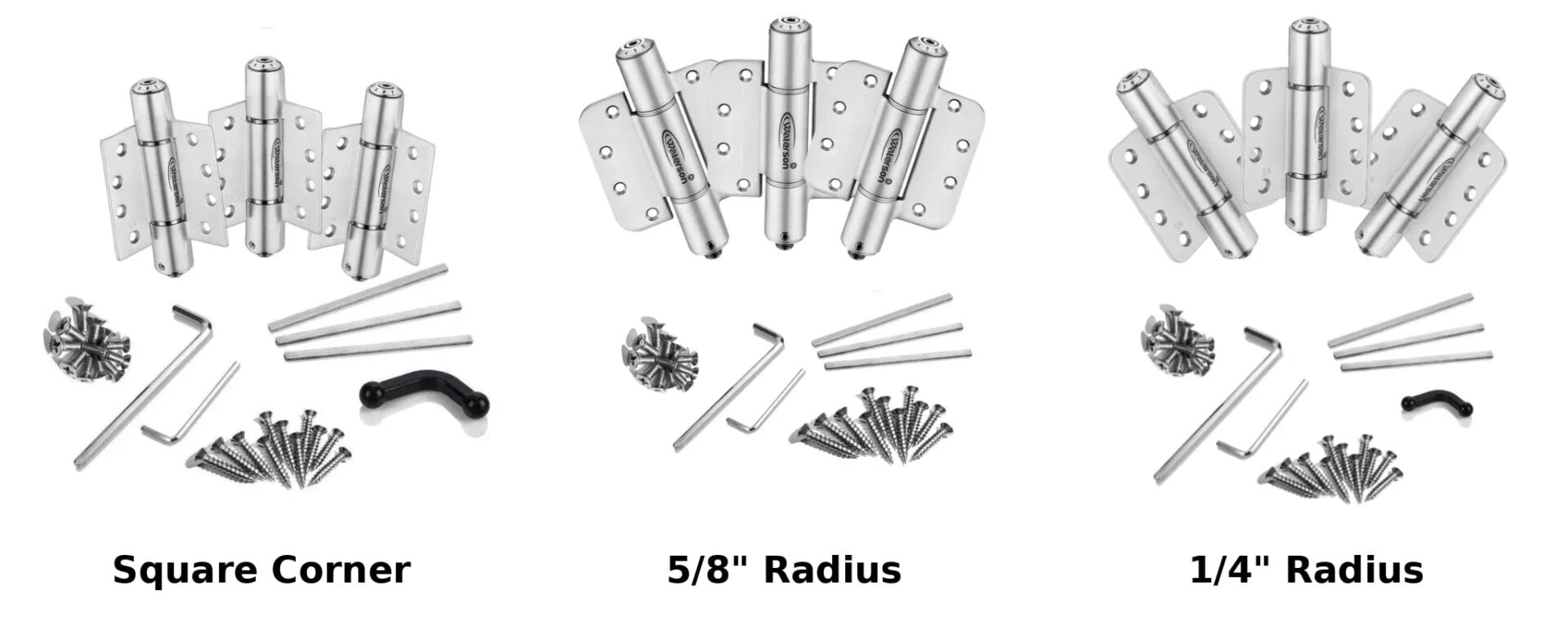
Waterson makes its 4 x 4 closer hinge in all three residential corners, so you match the mortise instead of recutting it.
| Spec | Waterson 4 x 4 Closer Hinge |
| Corners | Square, 1/4″ radius, 5/8″ radius |
| Screw pattern | Standard or zigzag |
| Leaf thickness | 0.130″ |
| Door thickness | 1-3/8″ or 1-3/4″ (residential) |
| Closing | Self-closing with speed control, or soft closing with hydraulic damper |
| Material | 304 or 316 stainless steel |
| Fire rating | UL listed for 3 hours; meets NFPA 80 |
| Accessibility | Adjustable to ADA and ICC A117.1 opening force |
| Durability | ANSI/BHMA Grade 1, 1 million cycles |
| Finishes | US32D, US19, US4, US10, custom |
Shop by corner:
- Square corner 4 inch self-closing hinges
- 5/8″ radius, standard screw pattern
- 5/8″ radius, zigzag screw pattern
- 1/4″ radius, standard screw pattern
- 1/4″ radius, zigzag screw pattern
For commercial openings, see 4-1/2 inch hinges. For the full residential lineup, see 4 inch self-closing door hinges.
What Could Be the Limitation in Waterson K51M 4inch Hinge Barrel Size
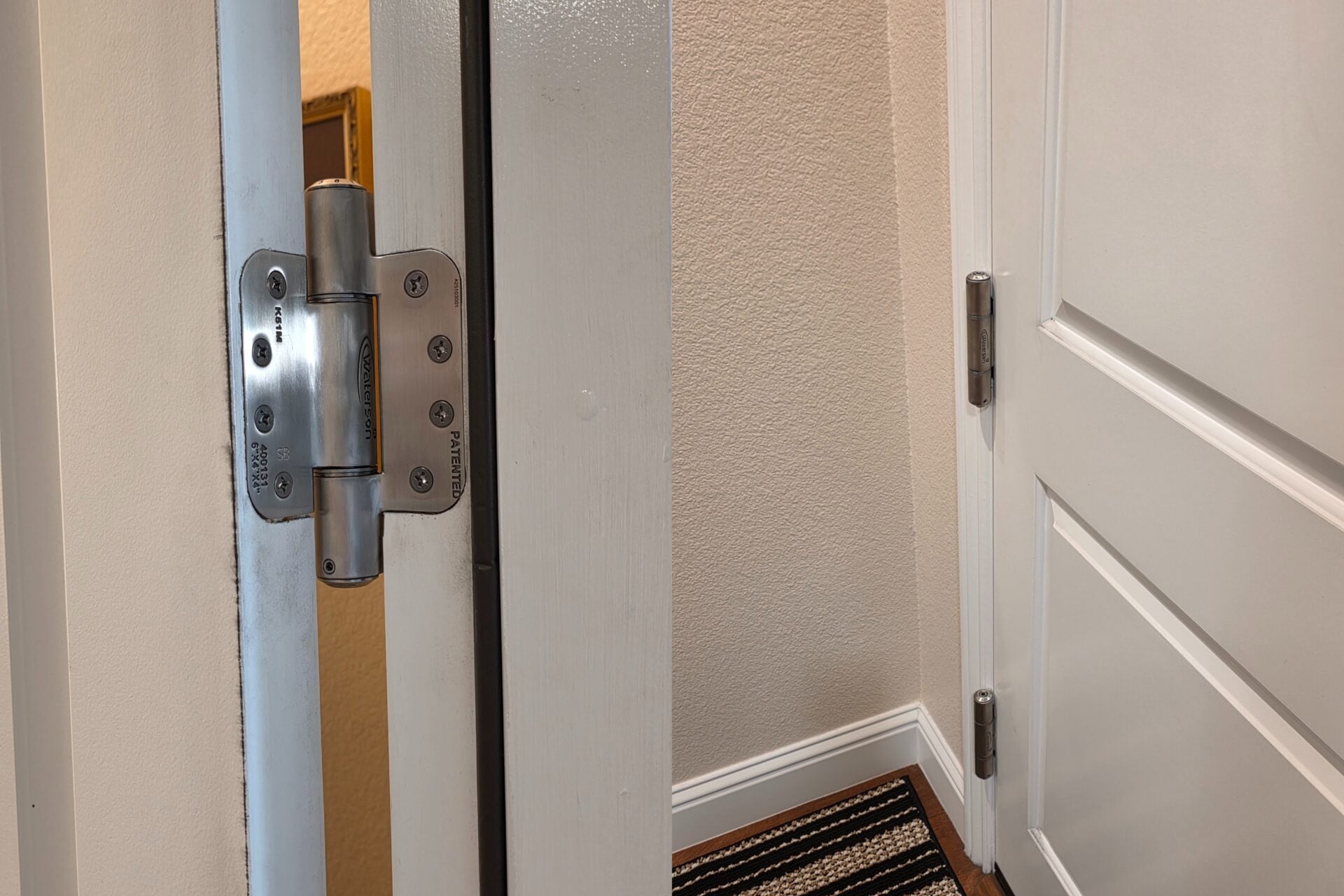
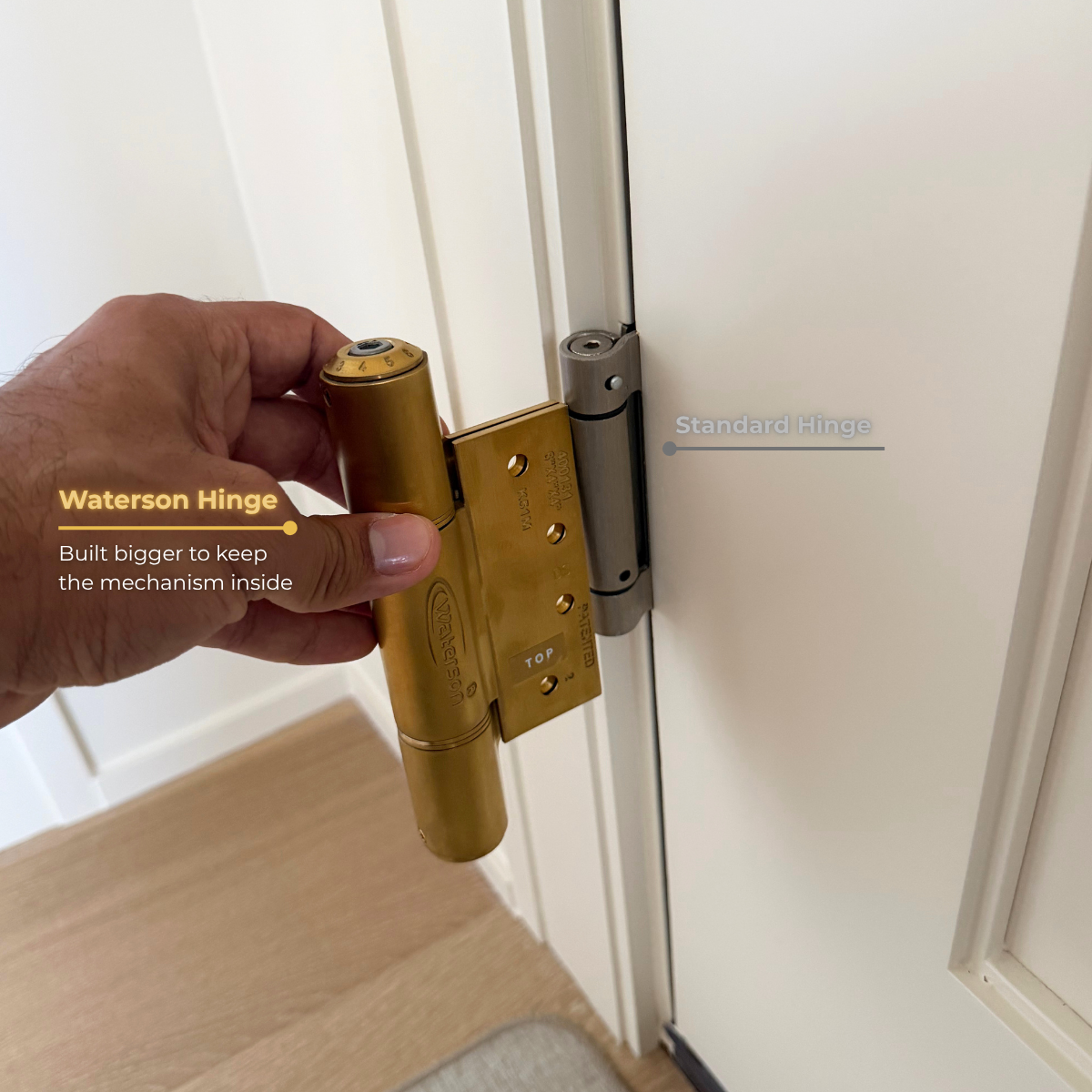
On a retrofit, the Waterson 4×4 uses the same mortise template as a standard 4×4 butt hinge, so the leaves drop into the cutout you already have. The difference is the barrel. It is built bigger to keep the hydraulic mechanism inside, and that thicker barrel moves the pivot further off the door and frame, shifting the door roughly a quarter inch toward the strike jamb.
For most doors, that shift is absorbed by the normal strike side gap, and we have not seen this issue on garage entry doors. It mainly shows up on tight custom doors, where the strike edge can end up touching the frame, and deepening the mortise only helps if there is room on the strike side to take it. If you are retrofitting, check your clearance first, because with this hinge, the barrel diameter, not the leaf size, decides whether it fits.
In short, the issue only comes up when retrofitting an interior door with an uneven or tight gap on the strike side. On new installations, or on any door with an even gap between the door and the frame, the Waterson 4-inch hinge fits and works just like a standard hinge.
On a retrofit, hinge radius is a fit question, not a style choice. Confirm the existing mortise first, specify the radius on the hardware schedule for new work, and remember that a 5/8″ hinge seats in a 1/4″ mortise but not the reverse. Waterson provides many hinge corner options to fit your application.
Request For Quote
Please note that Waterson closer hinges start from a size of 4″x4″. If you’re in need of smaller self-closing hinges, we’d recommend checking out some other resources! Also, we only provide single acting closer hinges. Thank you.
Recent Post
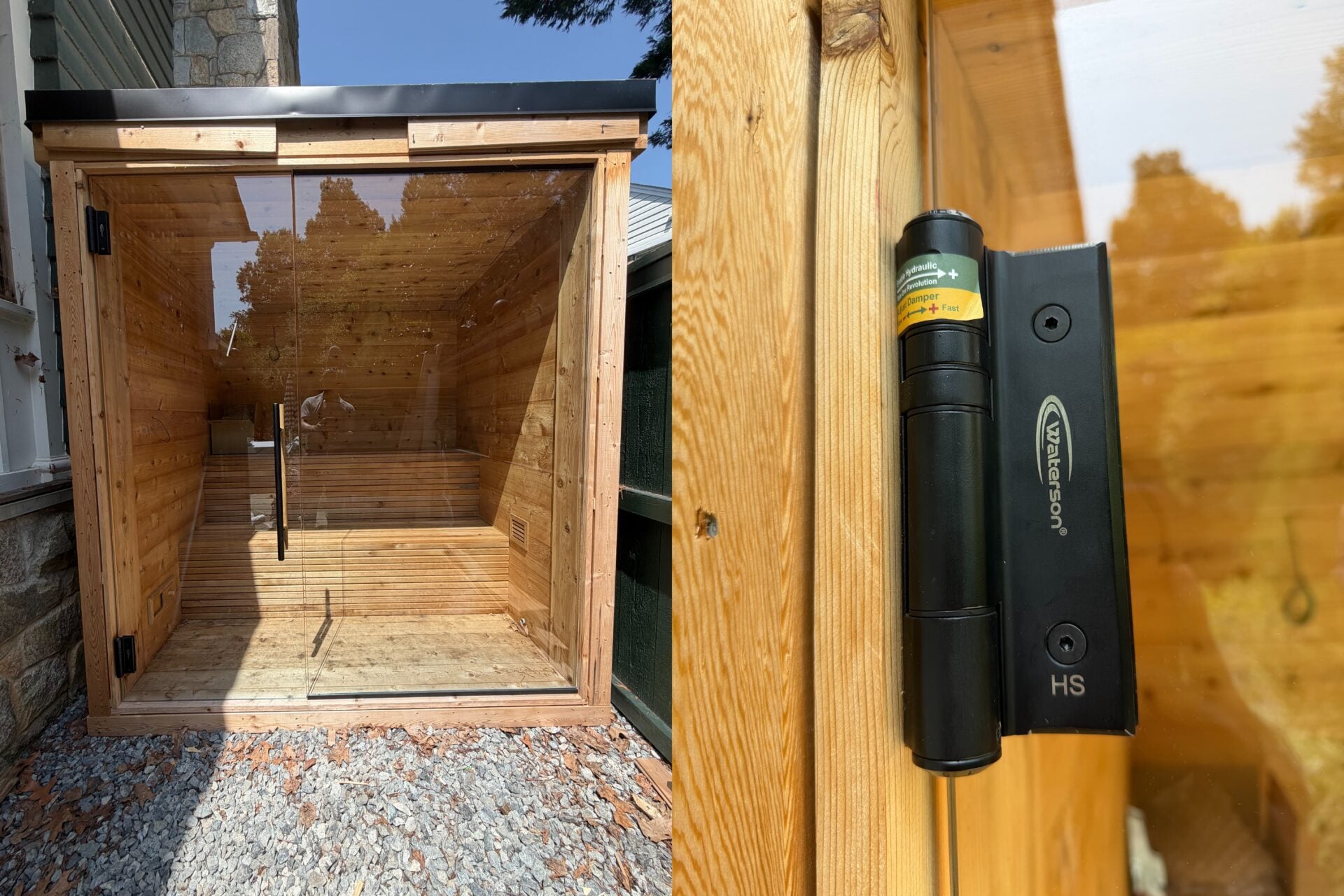
Frameless Glass Sauna Door Hinges: ADA Self Closing Solution for Commercial Saunas
Quick Answer For a frameless tempered glass sauna door that swings from a wall, use the Waterson K51GWL glass-to-wall hinge in the hydraulic hybrid version. [...]

Self Close vs Soft Close Hinges: Two Different Needs, Explained
Most commercial self-closing hinges still adopt either spring or hydraulic damper for [...]
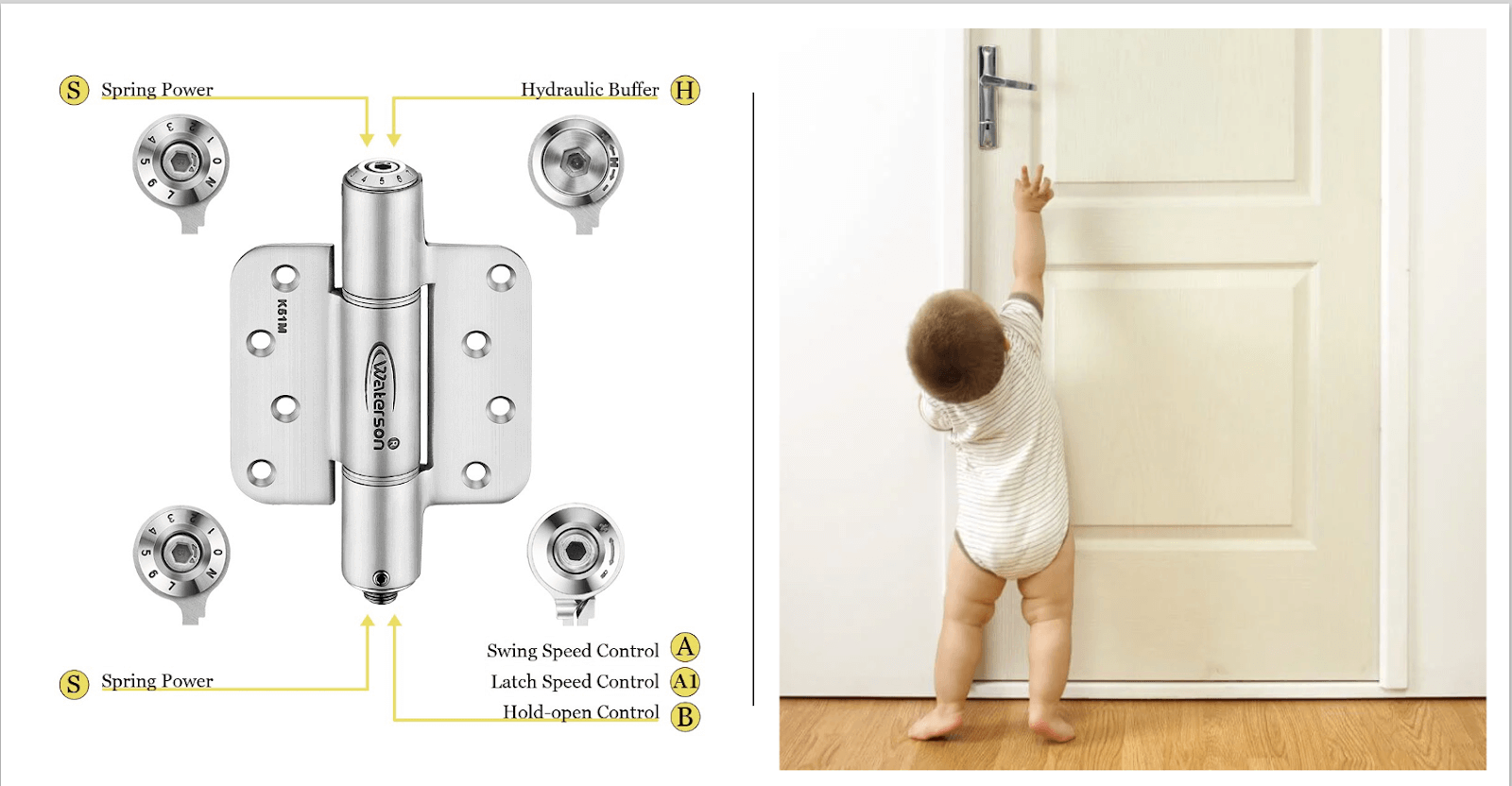
4 Inch Self Closing Door Hinges for Residential & Commercial Doors
Quick Answer Waterson 4-inch self-closing hinges (K51M-400) fit standard 4" x 4" templates on 1-3/8" or 1-3/4" residential doors, in mechanical or hydraulic versions with [...]