
You have a fire-rated door in a hospital corridor. The fire marshal says it must positively latch every single time. The ADA consultant says it must open with no more than 5 pounds of force. You adjust the closer to meet one requirement and immediately violate the other.
This is the most common code conflict in commercial door hardware, and it plays out daily in healthcare facilities, schools, and government buildings across the country. Understanding why these two codes collide, and what hardware actually resolves the tension, is essential for any architect, facility manager, or contractor working on fire-rated openings in accessible buildings.
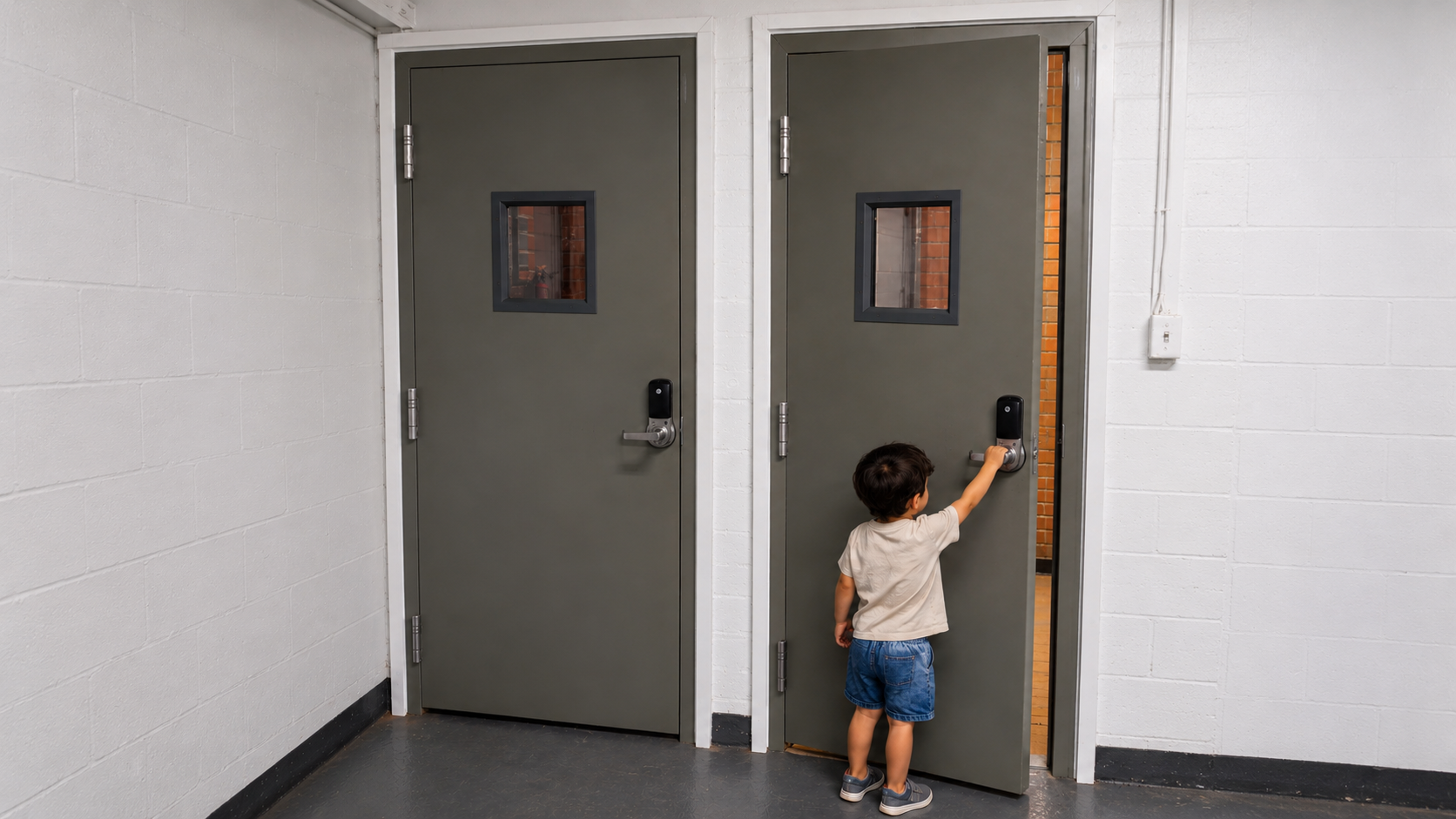
How ADA 5lbs Opening Force and Fire Door Latching Are Creating This Conflict?
ADA Standards for Accessible Design sets the maximum opening force for interior doors at 5 lbf. This threshold protects wheelchair users, elderly occupants, and anyone with reduced upper-body strength from doors that require excessive force to operate.
NFPA 80 Fire Door Latching Requirement, on the other hand, demands that every fire door positively latch each time it closes from an open position. The code specifically recommends that spring hinges achieve positive latching when closing freely from as little as 30 degrees, ensuring the door is never left ajar during a fire event.
The conflict is mechanical. Driving a latch bolt home against weatherstripping, smoke seals, and frame friction demands real spring force, and that same force is what the occupant pushes against on every open. Give the door enough spring to latch reliably, and it fails ADA. Bring it down to 5 lbf, and the fire door stops latching consistently.
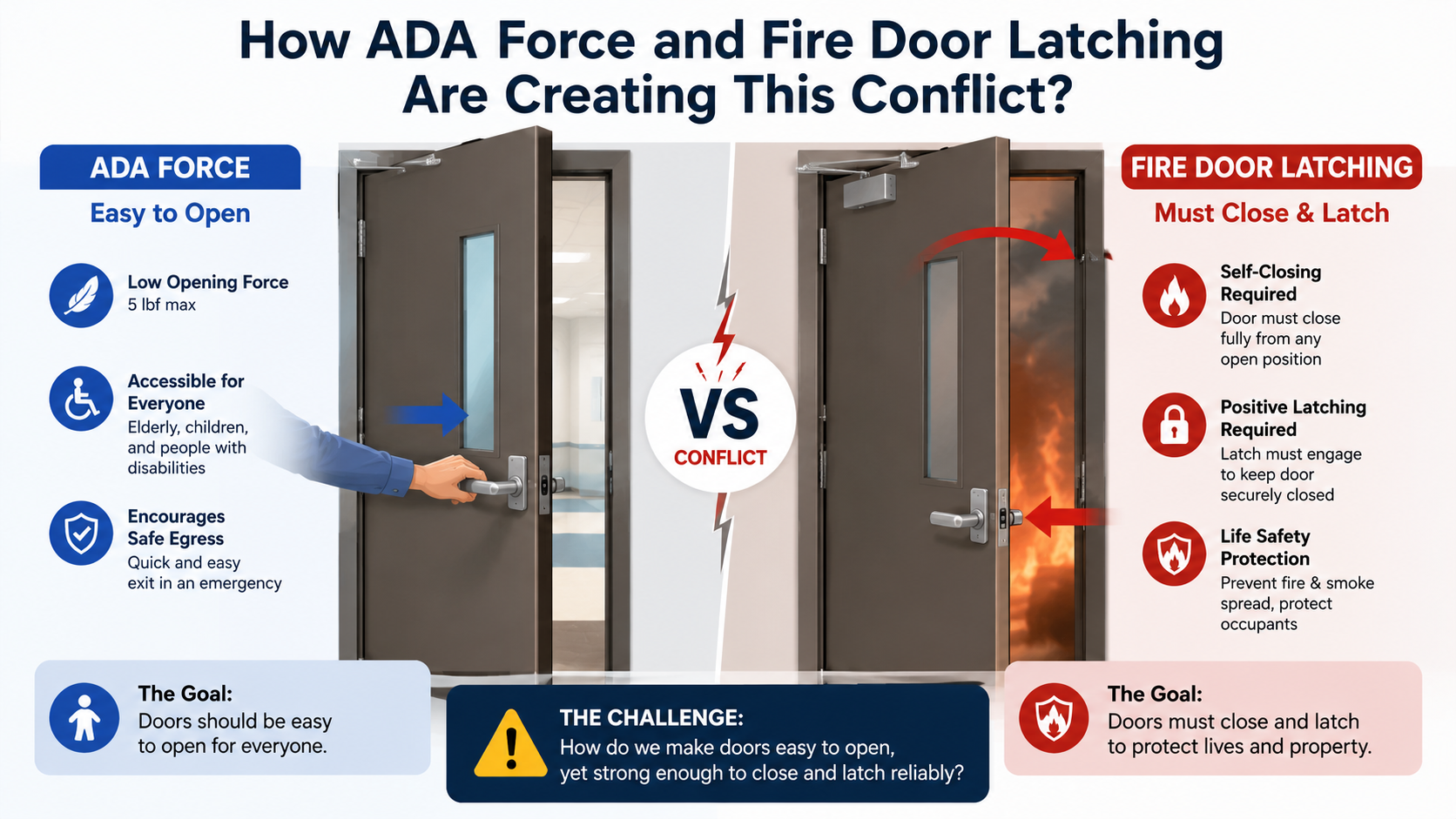
Since ADA and Fire Door Requirements Often Conflict, Can We Just Pick One and Call It Done?
NO. And here is why both matter equally.
Fire doors exist for one reason: to keep people alive when a fire breaks out. But a fire does not discriminate. When smoke fills a corridor, everyone is affected, young, old, able-bodied or not. That means the door that is supposed to save lives needs to actually open for everyone in the building, not just the ones who happen to be strong enough to force it.
Think about it this way. A healthy adult might muscle through a heavy fire door and make it out. But a child, an elderly resident, or someone in a wheelchair does not have that option. If the door takes more force than they can generate, that fire door does not save them. It traps them. So meeting only NFPA 80 while ignoring ADA is not a partial solution. It is a solution that works for some people and fails the ones who need it most.
Both codes have to be met at the same time, on the same door.

Why Overhead Closers Make the Conflict Worse
The traditional solution is an overhead door closer, but that comes with its own set of problems.
On the physical side, a surface-mounted closer projects 4 to 6 inches of arm into the corridor. In a hospital setting, that arm is a real collision risk for crash carts, IV poles, and powered beds moving under urgency. On top of that, the horizontal surfaces, arm channels, and pivot joints all sit above standard cleaning height, making them difficult to disinfect consistently, which is a serious problem in any environment where infection control is non-negotiable.
On the force side, overhead closers actually make the ADA conflict harder to solve. The arm mechanism, track friction, and body resistance all stack on top of the spring tension the occupant has to push against. Dial the closer down toward 5 lbf, and the door starts failing to latch, especially as the closer ages and hydraulic fluid viscosity shifts with temperature.
So the better solution is spring loaded door hinges. But not just any hinge qualifies.
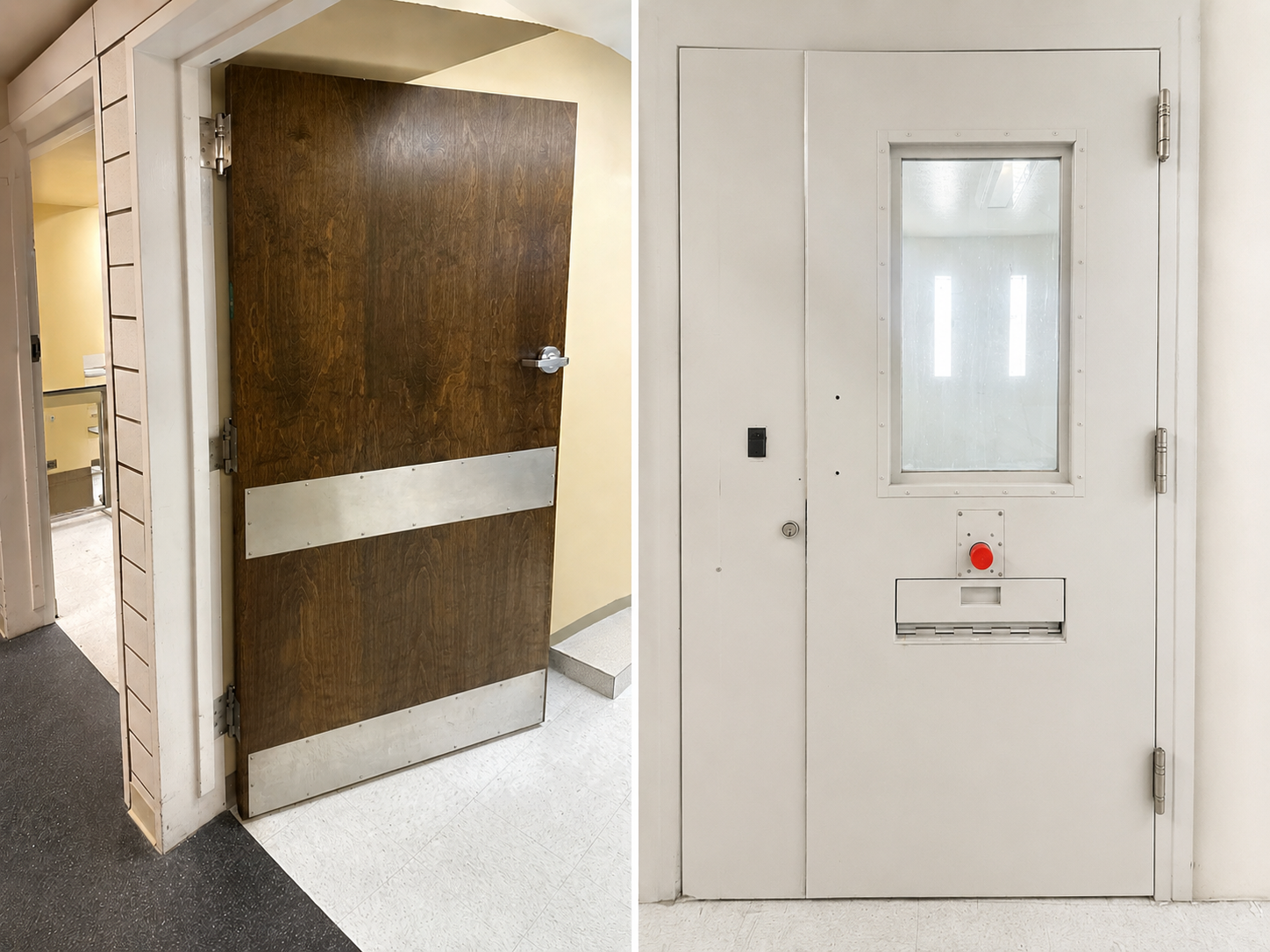
What Does a Spring Loaded Door Hinge Need to Meet Both ADA and Fire Door Compliance?
On the NFPA 80 side, the hinge must:
- Self-close and latch reliably from any open position, every single time, no exceptions (§5.2.1, §5.2.14.1)
- Remain fully operable at all times, with no sag, no barrel play, and no seized knuckles (§5.1.3.1)
- Maintain a bottom clearance of no more than 3/4 inch under the door (§4.8.4.1)
On the ADA side, the hinge must:
- Keep opening force at or below 5 lbf on standard doors, and as low as possible on fire doors (Section 404.2.9)
- Allow a minimum closing sweep of 5 seconds from 90 degrees to within 12 degrees of the latch (Section 404.2.8)
- Preserve a minimum clear width of 32 inches, without the hinge barrel eating into that space (Section 404.2.3)
So which spring-loaded door hinge actually checks both boxes?
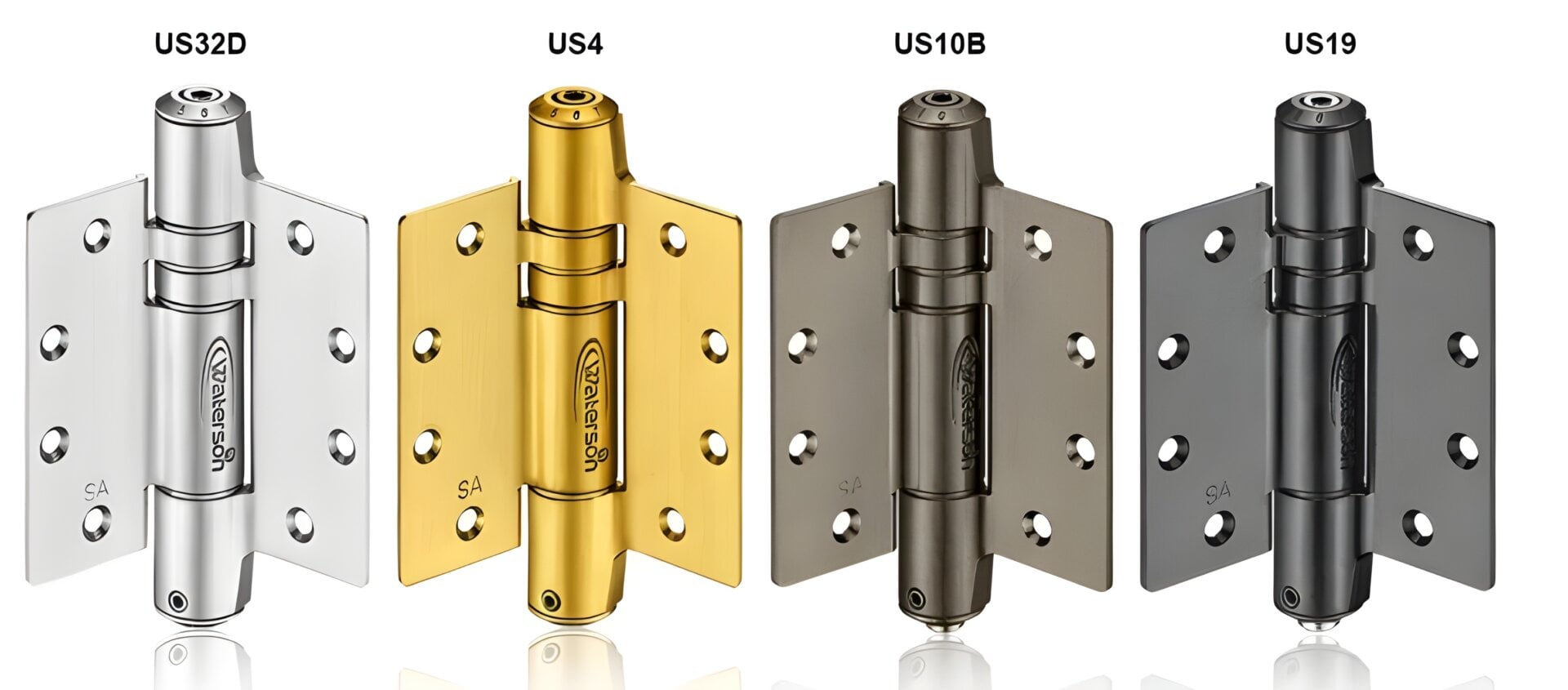
When Waterson Self Closing Spring Hinges Solve the Problem
Waterson self closing spring loaded door hinges address the ADA and fire door conflict at the hardware architecture level, not through adjustment alone.
The entire closing mechanism sits inside the hinge barrel, so there is zero corridor projection and zero exposed surface to worry about. The stainless steel construction handles hospital-grade disinfectants without any degradation, no plastic, no aluminum, nothing that breaks down under repeated cleaning.
Because there is no external arm adding extra resistance, the spring energy goes almost entirely into closing the door and driving the latch. That is what makes it possible to achieve positive latching at a lower opening force than any overhead closer on the same assembly.
Hardware Comparison
| Hardware Type | Opening Force vs. Latching | Corridor Projection | Fire Rating |
|---|---|---|---|
| Overhead door closer | Linked: the same spring controls both closing force and opening resistance | 4 to 6 inches of arm projection | Varies by model and listing |
| Traditional spring hinge | Fixed tension only, no independent speed control | None | Grade 1 models only |
| Waterson self closing spring hinges | Fully independent controls: spring tension, swing speed, and latch speed are each adjusted separately | None, fully concealed in hinge barrel | 3-hour UL Listed. Grade 1 with 1M cycle test |
Key Features of Waterson Self Closing Spring Hinges for Fire Door and ADA Compliance Include:
- ADA Compliant: Opening force under 5 lbf on non-fire-rated assemblies; closing sweep exceeds the 5-second minimum from 90 degrees to 12 degrees from latch.
- UL Listed: Meets NFPA 80 positive-latching requirements for fire-rated door assemblies.
- UL Tested: The 4.5-inch hinge barrel has been tested for fire-rated doors up to 8 feet in height.
- 3-Hour UL Listed Fire Rating: The highest available fire rating for self-closing hinges, covering the most demanding fire door assemblies in healthcare and institutional occupancies.
- Adjustable Closing Speed: Separate swing-speed and latch-speed control zones ensure reliable positive latching from any open position per NFPA 80 §5.2.1.5.
- ADA Compliant Swing Clearance: The concealed barrel profile does not reduce clear width or maneuvering clearance at the opening.
- Warranty: 10-year warranty on mechanical models; 3-year warranty on hydraulic models, covering material and manufacturing defects.
Waterson Stainless Steel Self-Closing Fire Door Hinges with ADA Compliance
Waterson self closing door spring hinges combine the function of an overhead closer and a hinge into a single, sleek component—complete with optional hold-open and door-stop features. Designed for commercial openings, gates, and glass doors, these hinges are easy to install and adjust to meet ADA and ICC A117.1 standards for opening force, while ensuring quiet and secure closure. Crafted from durable stainless steel, they are NFPA 80 compliant, UL 3-hour fire-rated, and built to perform reliably in both interior and all-weather exterior environments. See all our features.
In addition to these performance advantages, Waterson offers flexible customization services. As a direct custom hinge manufacturer, we can tailor hinge sizes, finishes, and especially hinge leaf designs to meet the specific structural needs of your doors. This makes our hinges an ideal solution for door manufacturers seeking custom options that integrate seamlessly with their existing frames.
Request For Quote
Please note that Waterson Closer Hinges start from a size of 4″x4″. If you’re in need of smaller self-closing hinges, we’d recommend checking out some other resources! Also, we only provide single acting closer hinges. Thank you.
Recent Post
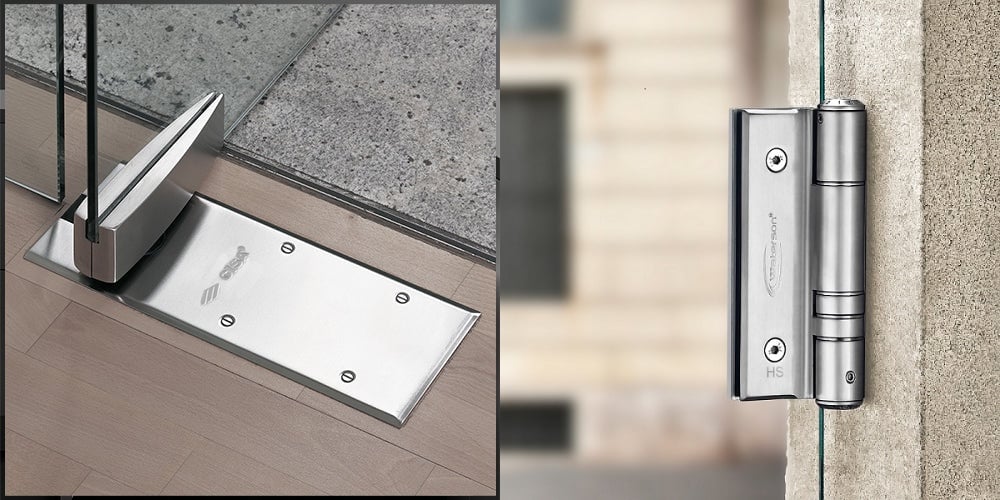
Glass Door Hinges: Floor Spring vs Spring Hinge Compared
Quick Answer Floor hinges (also called floor springs) are hydraulic closers set into the floor slab for center-hung or double-acting glass doors with fully concealed [...]
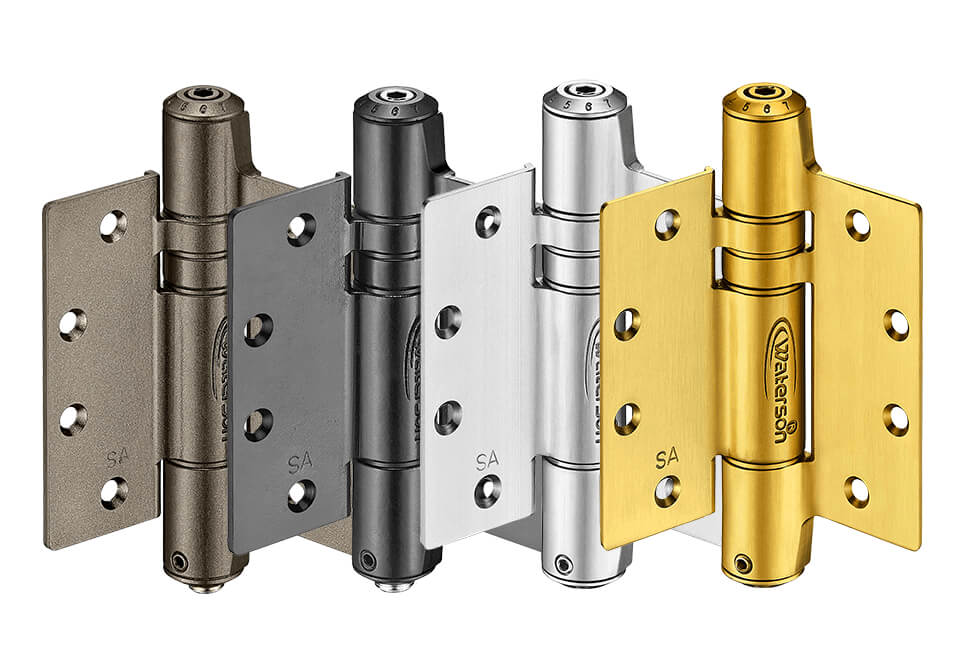
Stainless Steel Spring Hinges: Self-Closing Hinges for Interior and Exterior Doors
Quick Answer A stainless steel spring hinge is a self-closing hinge with a torsion spring inside the barrel, so it swings the door and closes [...]
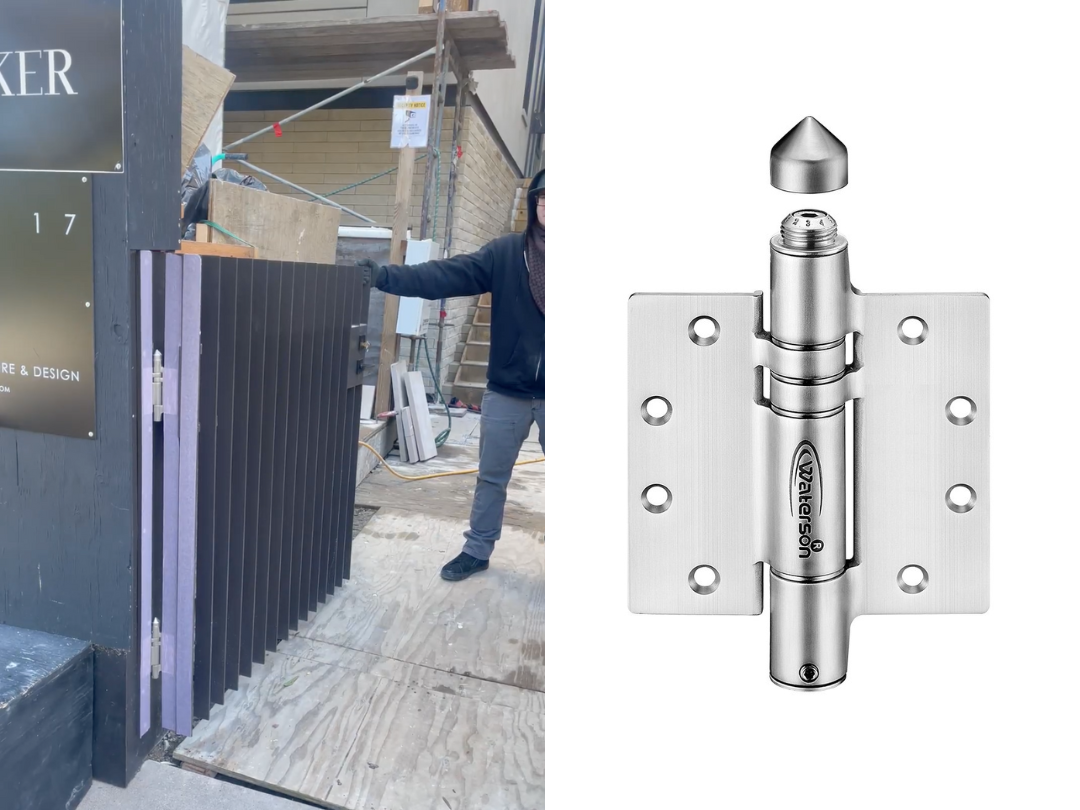
Cold Weather Gate Hinges: How Waterson Performs in Winter
When winter comes, temperatures drop, and outdoor fence gates start to behave differently. Wood absorbs moisture and swells, metal contracts slightly, and hardware components shift [...]