
Your front door is usually the heaviest door in your home and the one you use the most. Every time it slams, the impact goes straight into the hinges, the screws, and the frame. This guide is for homeowners replacing the hinges on one front door: how soft close front door hinges work, how to adjust them, why the Waterson set comes as three, and which model fits your door.
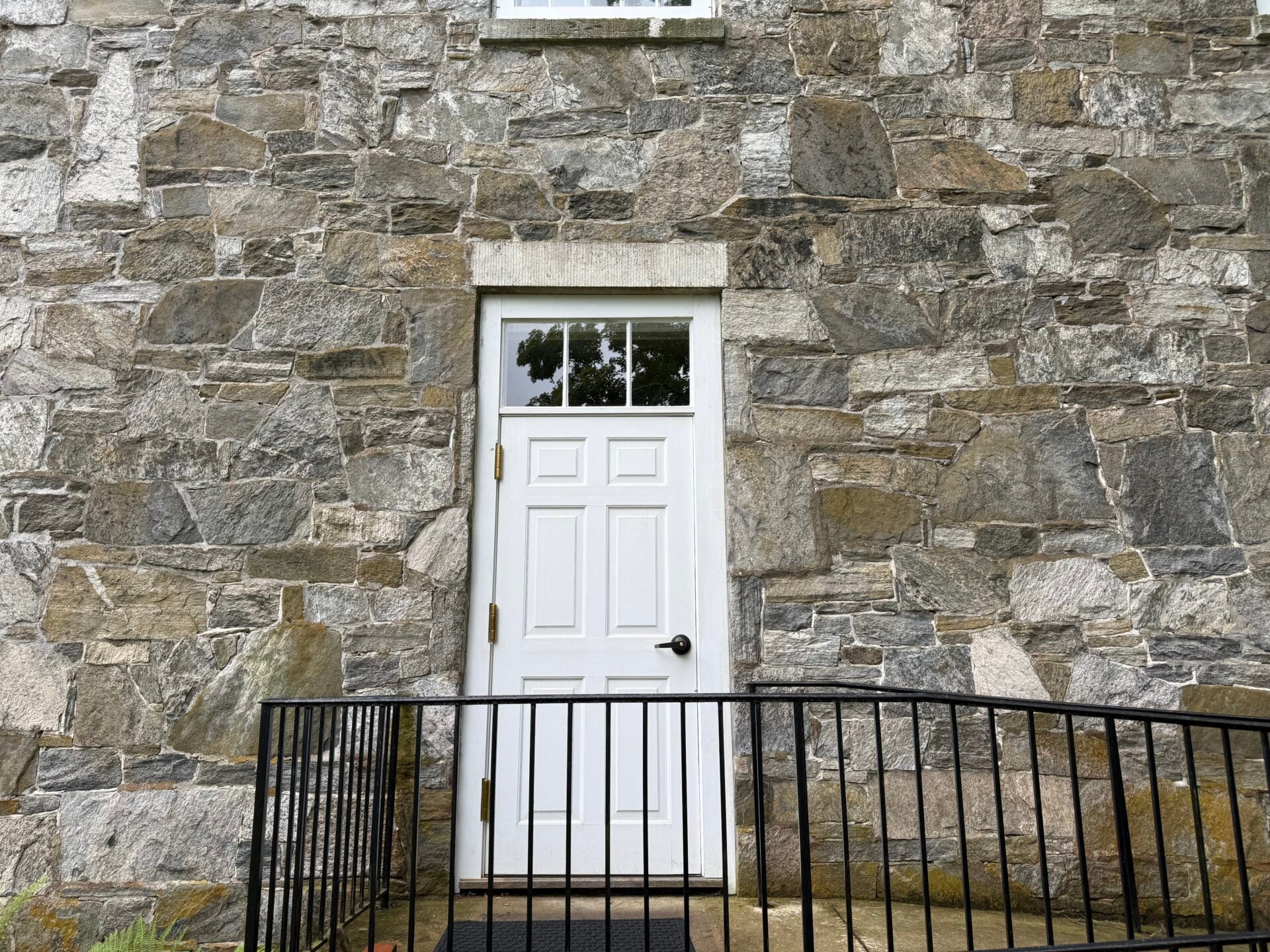
Why a Slamming Front Door Is Actually a Big Problem
A slam is not just noise. Each hard close hammers the strike plate, loosens the hinge screws a little more, and slowly pulls the top of the door away from the frame. That is how a front door starts to sag, rub at the top corner, and stop latching on its own.
Then come the everyday problems. A gust of wind catches the door and throws it into the frame. A child’s fingers get caught at the edge. The door drifts open a few inches and lets the cool air and the dog out. A standard hinge cannot fix any of this, because it only holds the door. It does nothing to control how the door moves.
| Factor | Standard Hinges | Soft Close Hinges |
|---|---|---|
| Closing | By hand, or a separate overhead closer | Built into the hinge |
| Noise | Depends on who closes it and the wind | Quiet, consistent close every time |
| Opening force | Varies | Under 5 lbs (ADA compliant) |
| Fire rating | Not typically rated | UL listed up to 3 hours (Waterson A and B models) |
| Installation | Simple, no adjustment | Same mortise, plus a one-time adjustment |
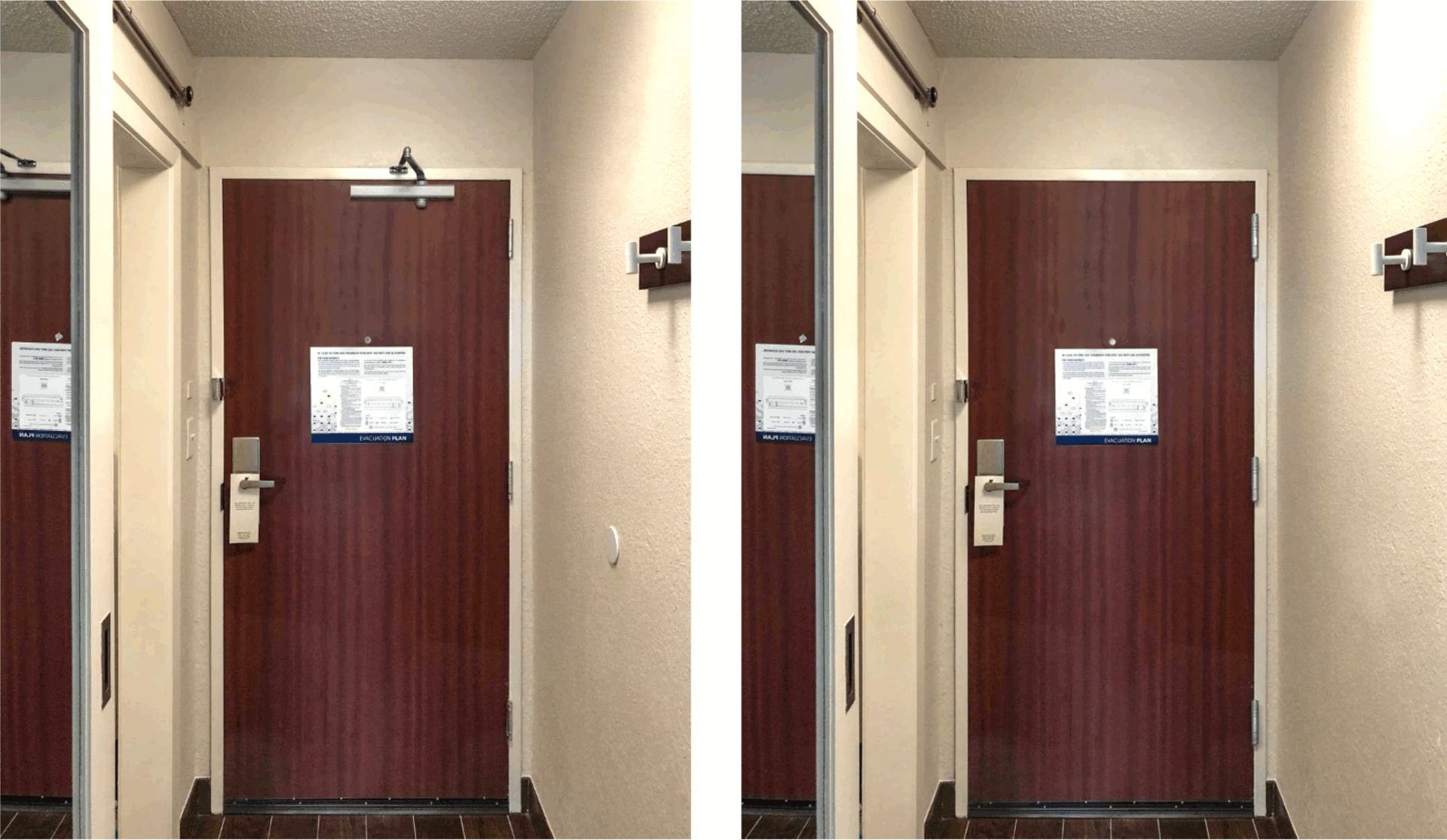
| Appearance | Clean, minimal | Slightly larger barrel, no closer arm on the door |
| Best for | Closets and low-use interior doors | Front doors, garage entry doors, any door you want to close on its own |
How Soft Close Front Door Hinges Work
A Waterson soft close hinge puts two things inside the hinge barrel: a spring that pulls the door closed, and a hydraulic damper that controls how fast it gets there. You get the job of an overhead door closer without an arm bolted to the top of your door.
When you open the door, the spring stores energy. When you let go, that energy brings the door back, while the hydraulic fluid inside the hinge slows the motion so the door glides shut instead of slamming. There are three settings you can adjust, and most homeowners only need to set them once after installation.
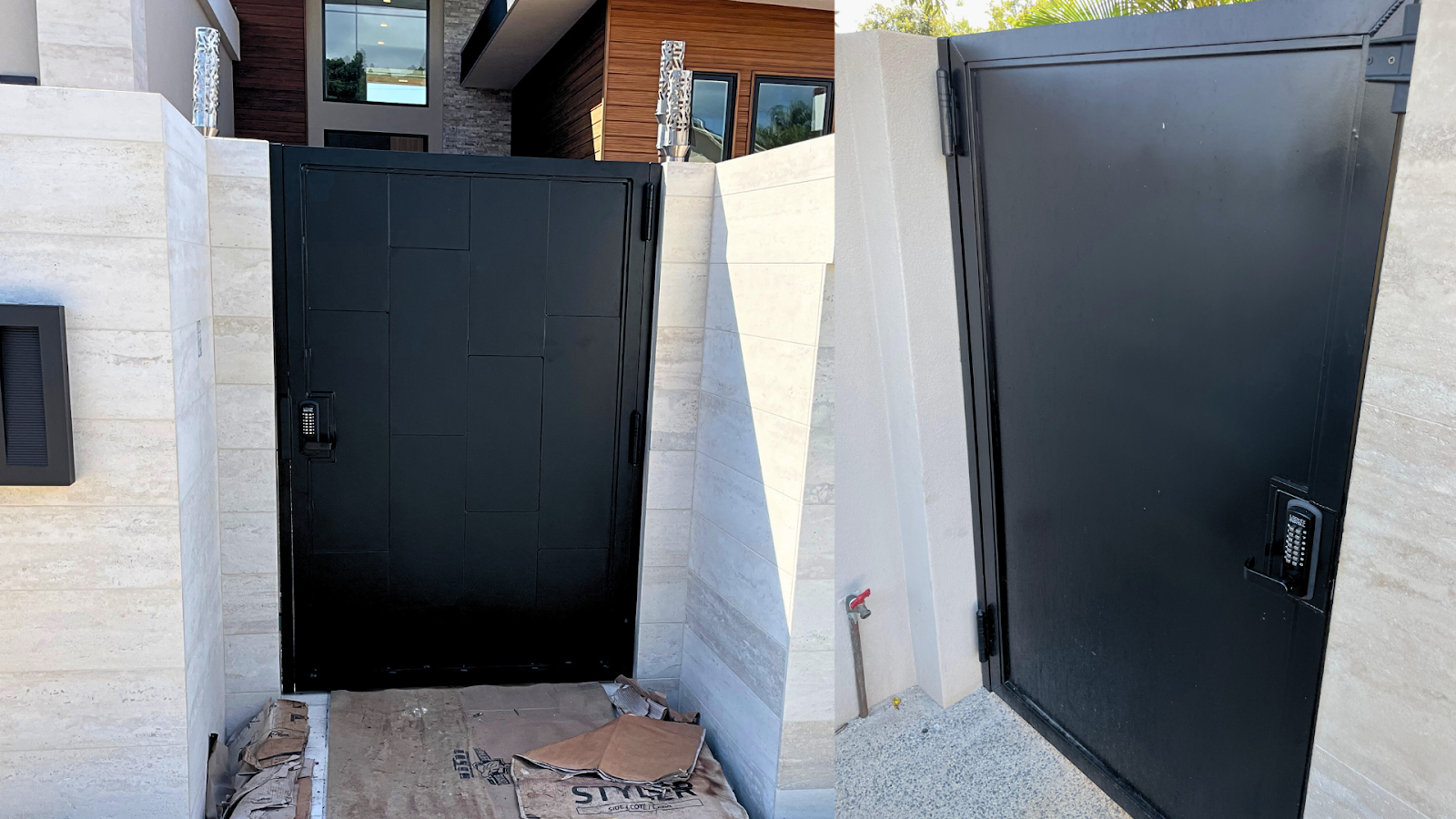
The 4 Adjustments Explained
Recently, an Installation Manager at DOOR WORKS installed our Waterson K51M-450-B4 soft closing door hinges. After that, he noticed a slight sagging and wanted to understand how the tension, swing speed, latch speed, and hydraulic damping work together for precise adjustment.
Question:
– Tension adjustment / is going to be the resistance when I open the door?
– Swing speed / when I let go off the door is how quickly the door will close itself?
– Latch speed / 10 degrees, it can increase or decrease the speed of the latching?
– How does the hydraulic damper change the action of the hinges?
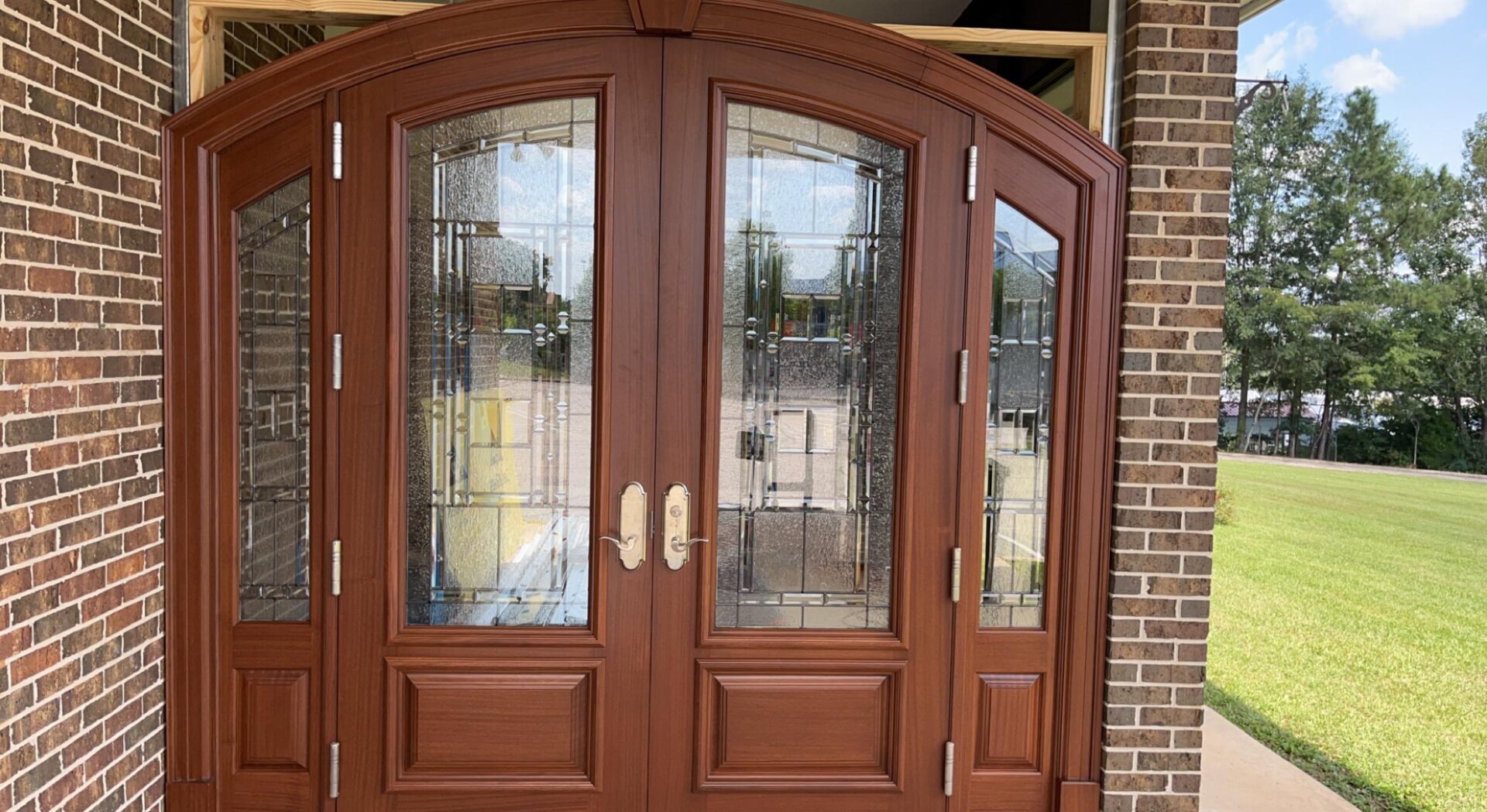
1. Tension Adjustment — Does It Affect Opening Resistance?
No. The resistance you feel when opening the door does not increase, because Waterson hinges are ADA compliant.
The opening force will always be less than 5lbs to meet the standard. Therefore, you do not have to worry about the door get difficult to open when the tension gets stronger.
2. Swing Speed — How Fast Will the Door Close?
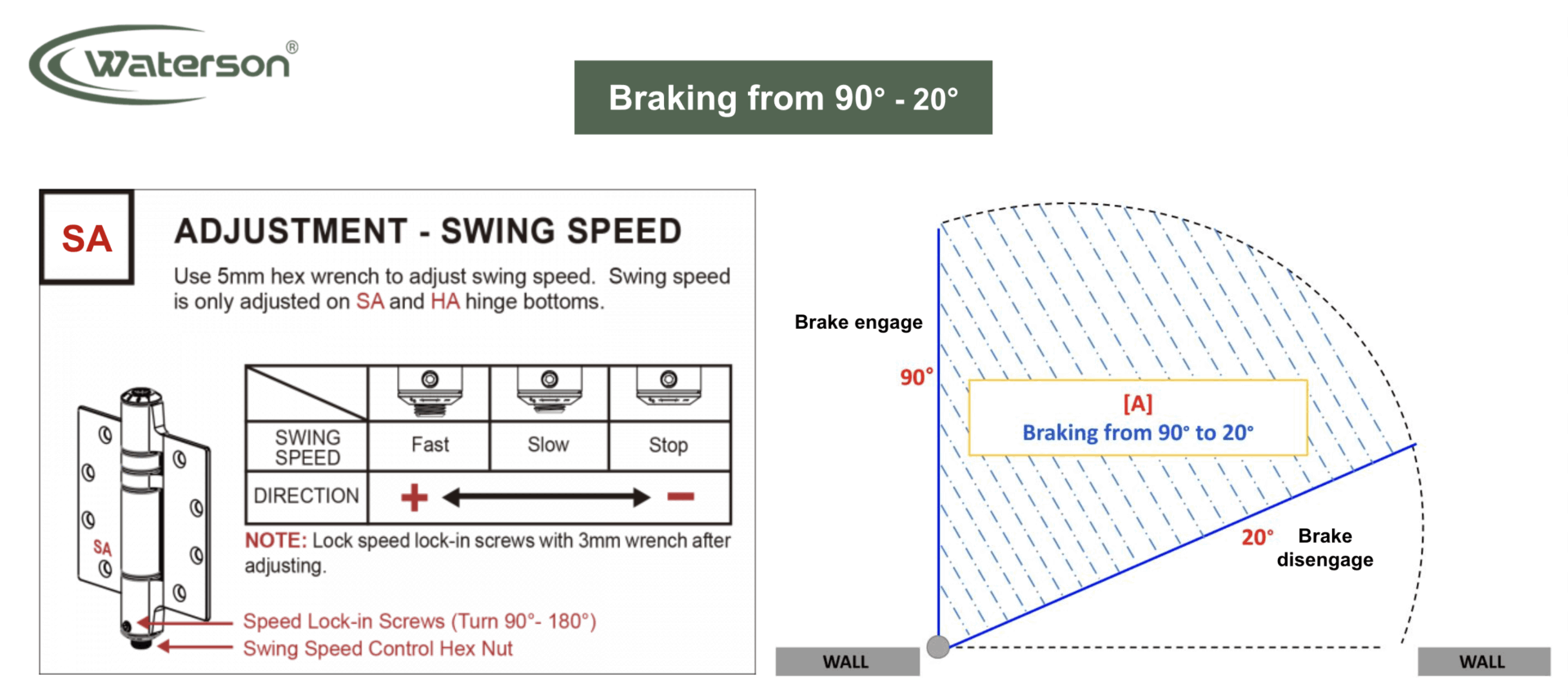
The closing speed is controlled by the strength of tension, swing speed which controls the closing movement between 90° and 20°, where the mechanical buffer regulates the motion to prevent the door from slamming.
3. Latch Speed — Can I Control the Final 10°?
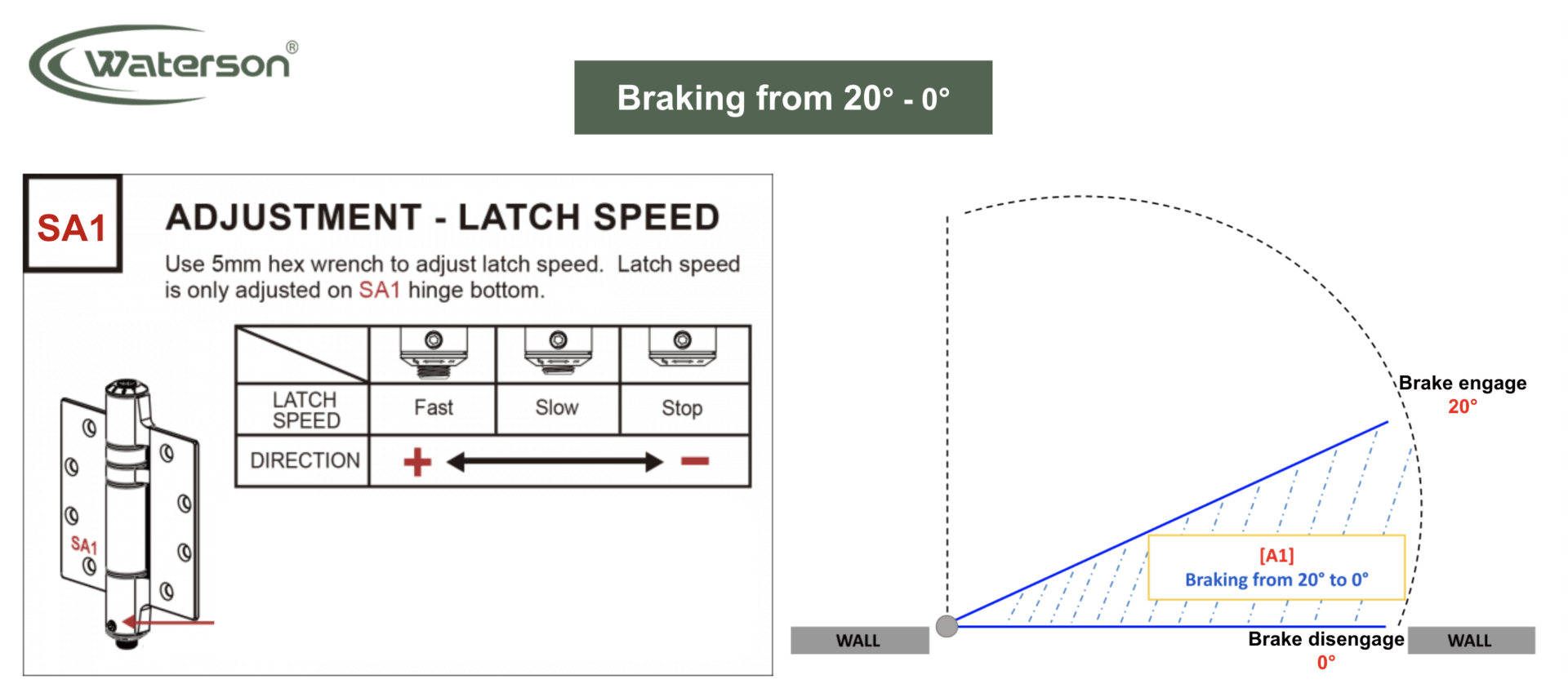
Yes. Latch speed determines the mechanical brake at the last 20° to 0° how firmly the door engages the frame and latch. It is fully adjustable when:
- Turning toward “+” increases closing speed.
- Turning toward “–” slows it down.
This control ensures a clean, complete closure even for heavier or slightly misaligned doors — a small detail that installers appreciate during fine-tuning.
4. How Does the Hydraulic Damper Change the Action?
Waterson’s hydraulic damper uses a fluid system to manage speed and resistance, delivering a soft-closing motion instead of a sudden slam. It’s ideal for front doors and high-traffic entries, where comfort and noise control matter most. You can adjust both buffer strength and the active zone to match your door’s weight and environment.
For step-by-step setup, see our Adjustment Guide.
Soft Close Hinges vs Standard Door Closer: Which Is Right for Your Project?
| Factor | Standard Door Closer | Soft Close Hinges |
|---|---|---|
| Closing mechanism | Manual or separate overhead closer with standard hinges to hold the door | Built-in hydraulic damper |
| Noise on closing | Depends on user and wind | Consistent quiet close |
| ADA compliance | Requires separate closer setup | Built-in, below 5 lbs opening force |
| Fire rating | Not typically rated | UL-listed up to 3 hours (Waterson) |
| Installation complexity | Simple, no adjustment needed | Slightly more, but no overhead hardware |
| Appearance | Clean, minimal | Slightly larger leaf, still clean |
| Best for | Interior doors, low-traffic areas | Front doors, fire-rated entries, commercial use |
For residential front doors, commercial entries, garage-to-home connections, and any fire-rated opening, soft close hinges are the better choice. For interior closet doors or low-use areas where self-closing is not needed, standard hinges are perfectly adequate and more cost-effective.
What Could Be the Limitation in Waterson K51M 4inch Hinge Barrel Size
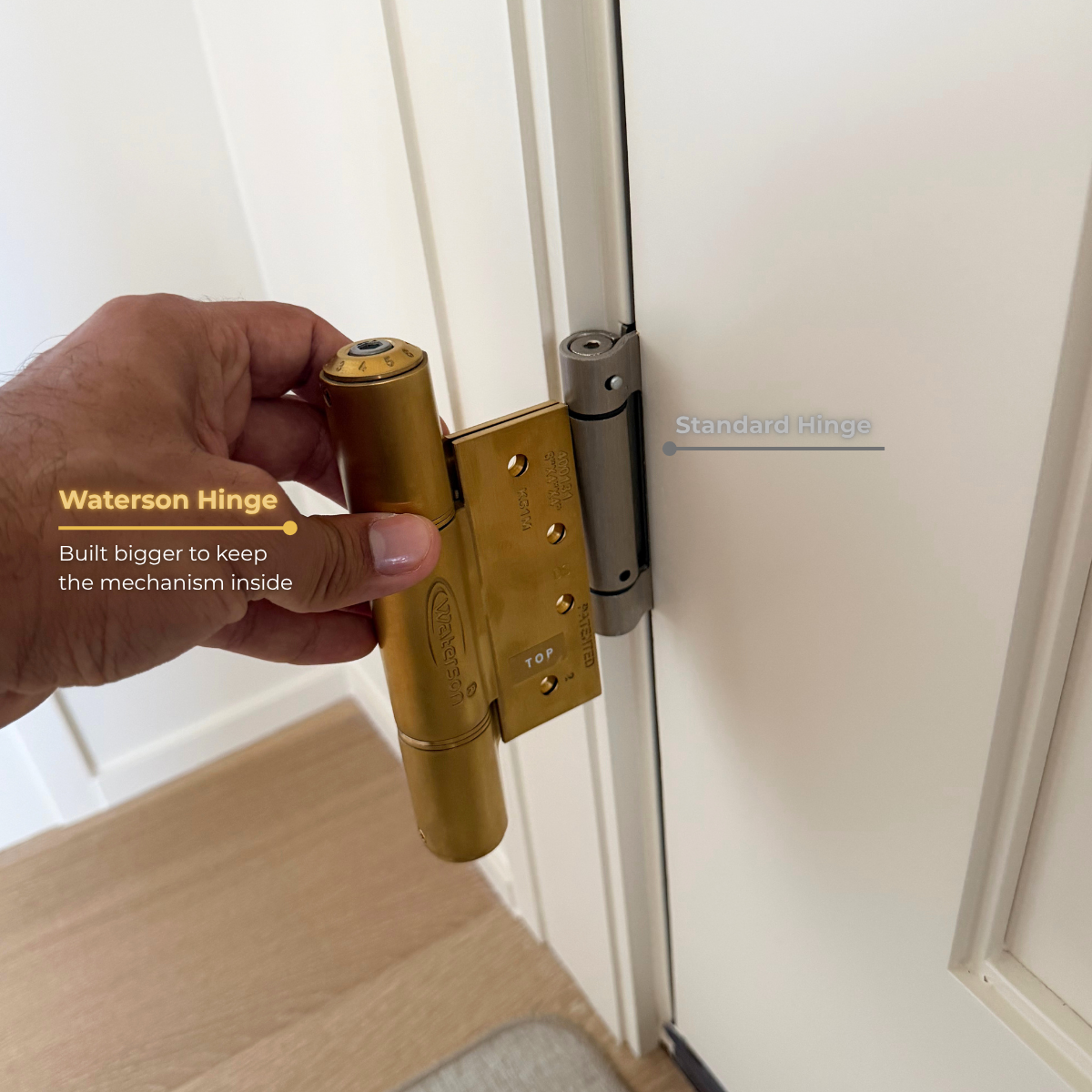
On a retrofit, the Waterson 4×4 uses the same mortise template as a standard 4×4 butt hinge, so the leaves drop into the cutout you already have. The difference is the barrel. It is built bigger to keep the hydraulic mechanism inside, and that thicker barrel moves the pivot further off the door and frame, shifting the door roughly a quarter inch toward the strike jamb.
For most doors, that shift is absorbed by the normal strike side gap, and we have not seen this issue on garage entry doors. It mainly shows up on tight custom doors, where the strike edge can end up touching the frame, and deepening the mortise only helps if there is room on the strike side to take it. If you are retrofitting, check your clearance first, because with this hinge, the barrel diameter, not the leaf size, decides whether it fits.
Which Model Should You Choose: K51M-400-B3, K51M-400Z-B3, or the Hold-Open Versions?
| Model | Screw pattern | Soft close | Hold-open | Best for |
|---|---|---|---|---|
| K51M-400-B3 | Standard | Yes | No | Most front doors with a standard hinge prep |
| K51M-400Z-B3-58R | Zigzag, 5/8″ radius | Yes | No | Doors prepped with 5/8″ radius corners and zigzag screws, common on newer pre-hung doors |
| K51M-400-D3 | Standard | Yes | Yes, at 85° to 90° | Front doors you want to prop open for deliveries or moving day (not fire rated doors) |
| -316 versions | Same as above | Yes | Depends on model | Front doors exposed to rain, salt air, or high humidity |
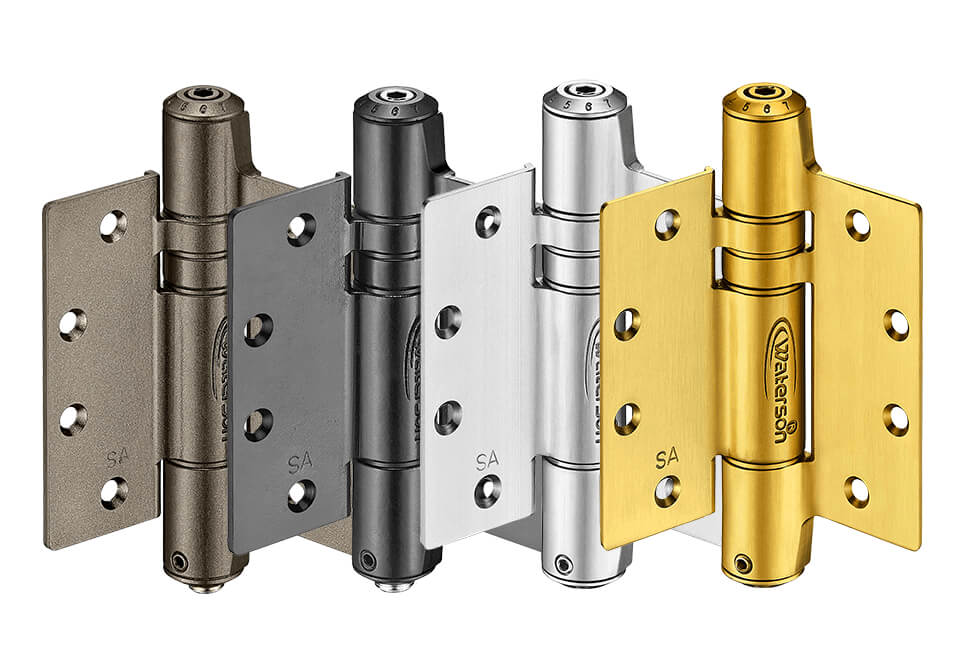
Every K51M set gives you soft closing with hydraulic control for a smooth, quiet close, and a heavy duty build tested to 1,000,000 cycles under BHMA A156.17. It is fire rated, UL listed up to 3 hours on A and B models, and suitable for garage entry doors. The stainless steel comes in SS304 for sheltered doors and SS316 for coastal or exposed doors, with separate adjustments for swing (90° to 20°) and latch (20° to 0°). It is also ADA compliant, with an opening force under 5 lbs, and available in finishes including satin stainless, flat black, dark bronze, and satin brass.
Waterson Adjustable Soft Close Front Door Hinges
Waterson soft closing door hinges combine the function of an overhead closer and a hinge into a single, sleek component—complete with optional hold-open and door-stop features. Designed for commercial openings, gates, and glass doors, these hinges are easy to install and adjust to meet ADA and ICC A117.1 standards for opening force, while ensuring quiet and secure closure. Crafted from durable stainless steel, they are NFPA 80 compliant, UL 3-hour fire-rated, and built to perform reliably in both interior and all-weather exterior environments. See all our features.
In addition to these performance advantages, Waterson offers flexible customization services. As a direct custom hinge manufacturer, we can tailor hinge sizes, finishes, and especially hinge leaf designs to meet the specific structural needs of your doors. This makes our hinges an ideal solution for door manufacturers seeking custom options that integrate seamlessly with their existing frames.
Request For Information
Please note that Waterson Closer Hinges start from a size of 4″x4″. If you’re in need of smaller self-closing hinges, we’d recommend checking out some other resources! Also, we only provide single acting closer hinges. Thank you.
Recent Post
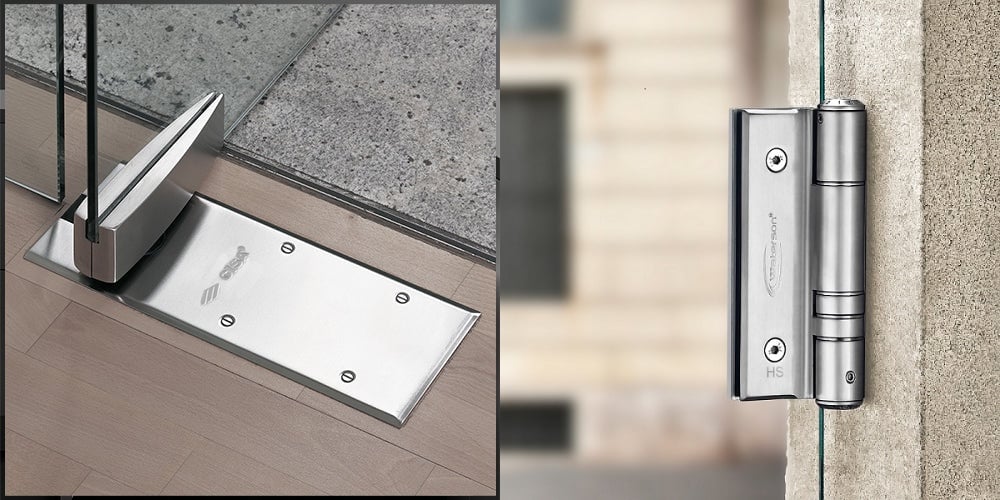
Glass Door Hinges: Floor Spring vs Spring Hinge Compared
Quick Answer Floor hinges (also called floor springs) are hydraulic closers set into the floor slab for center-hung or double-acting glass doors with fully concealed [...]
Stainless Steel Spring Hinges: Self-Closing Hinges for Interior and Exterior Doors
Quick Answer A stainless steel spring hinge is a self-closing hinge with a torsion spring inside the barrel, so it swings the door and closes [...]
Swing Clear Offset Hinges for ADA Doorway Clearance
In hospital corridors, the rushing trolleys need wider door entrance to avoid bumping[...]