
Three model codes govern pool barriers in the U.S. They overlap, cross-reference each other, and local amendments frequently override them all. Before you write a gate specification, you need to know which layer controls your jurisdiction, not just which code sounds familiar.
In short explanation, IRC R4501 covers residential pools, IBC §3109 covers commercial and public pools, and ISPSC is the comprehensive standalone code that supersedes both when locally adopted. But the short answer is rarely enough on a real project.
Why Do Three Pool Gate Code Regulate the Same Gate?
The International Code Council publishes coordinated model codes scaled to building type. Each one was written for a different scope:
ISPSC (International Swimming Pool and Spa Code) is the dedicated pool standard. It covers everything from backyard spas to waterpark attractions, and it is the most detailed of the three on barrier and gate hardware requirements.
IBC §3109 handles pools inside buildings regulated by the International Building Code, hotels, multifamily, recreation centers. It is not self-contained: it frequently cross-references ISPSC for barrier and gate hardware details. When a jurisdiction has adopted both, IBC sets the frame and ISPSC fills in the hardware spec.
IRC R4501 is the residential baseline for single-family and two-family homes.
Which Pool Gate Code Applies to Your Project?
Understanding which code governs your specific project is the first step to writing a compliant gate specification.
1. Residential Pool (Single-Family or Two-Family)
Start with IRC R4501. Check whether your state has adopted ISPSC. If yes, ISPSC may supersede or supplement IRC. Then check local amendments. California mandates 60 inches (5 feet). Arizona mandates 60 inches (5 feet) statewide under A.R.S. §36-1681.
2. Commercial or Public Pool (Hotel, Apartment, Recreation Center, Waterpark)
Start with IBC §3109. Where IBC has gaps, it defers to ISPSC for hardware details. For public pools, IBC requires a minimum 72-inch barrier, nearly 50 percent taller than the IRC residential baseline. Applying the 48-inch residential standard to a hotel pool is one of the most common and costly specification errors in this category.
3. ISPSC Adopted Standalone
When a jurisdiction has adopted ISPSC independently, it governs all pool types directly. Residential builders in those jurisdictions are held to ISPSC, not IRC R4501.
Other Options
When codes conflict, the more restrictive requirement governs. IRC R4501 is a floor, not a ceiling.
What Do the Three Pool Gate Code Actually Require
Here is a side-by-side comparison of the key requirements across all three model codes:
| Requirement | ISPSC 2024 | IBC §3109 | IRC R4501 |
|---|---|---|---|
| Applies to | All pool types | Commercial / public pools | Residential only |
| Min. barrier height | 48 in. (residential) | 72 in. (public pools) | 48 in. |
| Gate direction | Outward from pool | Outward from pool | Outward from pool |
| Self-closing | Required | Required | Required |
| Self-latching | Required | Required | Required |
| Latch below 54 in. | Pool side, min. 3 in. below top | Pool side, min. 40 in. above grade | Pool side, min. 3 in. below top |
| Max opening (sphere) | 4 in. barrier / 0.5 in. near latch | 4 in. | 4 in. |
| Bottom clearance | 2 in. max | 2 in. max | 2 in. max |
| Horizontal member spacing | 45 in. min. vertically | Per ISPSC reference | 45 in. min. vertically |
What Does Your State Actually Require on Pool Gate Hinges
Model code adoption varies significantly. The PHTA reports more than 30 states have adopted ISPSC in some form, but “adoption” ranges from mandatory standalone to a simple IBC cross-reference.
Key state positions worth knowing before you spec:
- California: 60-inch residential minimum under Health and Safety Code §115920. New pools also require a combination of two out of seven drowning prevention features (the “2-of-7” rule under SB 442). Commercial public pools: 72 inches under IBC §3109.
- Arizona: 60-inch minimum statewide under A.R.S. §36-1681 for residential pools. No horizontal rails within 45 inches of grade (climb prevention). City of Chandler goes further at 72 inches.
- Florida: 48-inch minimum barrier under Florida Building Code §454, but Florida requires four distinct safety devices, fence, door alarm, power safety cover, and pool alarm, rather than raising fence height. A different approach from California and Arizona.
- Texas: 48-inch IRC baseline statewide. Houston, Austin, and San Antonio adopt ISPSC locally, so the controlling standard varies by municipality.
- Georgia: ISPSC adopted statewide alongside IBC §3109.
- Nevada (Clark County): 60-inch residential, 72-inch commercial, both exceeding ISPSC minimums through local amendment.
Always confirm the locally adopted code edition with the Authority Having Jurisdiction before finalizing specifications. Many jurisdictions are still on ISPSC 2018, while others have moved to 2024.
What Does the Pool Gate Code Actually Require at the Gate Hardware Level
All three codes align with the core gate hardware requirements. Here is what the spec needs to address:
Self-closing from any open position. This is the critical language that most specifications get wrong. Hardware that closes only from the fully open position fails in real-world use when a gate rests at a partial angle, which is most of the time. The code requirement is for any open position. Your specification should say exactly that.
Self-latching. The latch must engage automatically when the gate closes. It cannot require manual operation.
Outward swing. All three codes require the gate to open away from the pool. This prevents a child leaning against the gate from pushing it open toward the water.
Latch height placement. If the latch release mechanism is located below 54 inches from the bottom of the gate, it must be on the pool side of the gate and positioned at least 3 inches below the top of the gate. This prevents a child from reaching over the top to trip the latch from outside.
ADA opening force 5 lbf. Gates and doors serving as part of an accessible route shall have a maximum opening force of 5 lbf (22.2 N).
Material and environment. Pool environments are corrosive. Chlorine, salt air, UV exposure, and moisture degrade standard hardware faster than the inspection cycle catches it. Specify corrosion-resistant materials and include a maintenance interval in the specification.
Does Waterson Self Closing Gate Hinges Meet These Pool Gate Code Requirements?
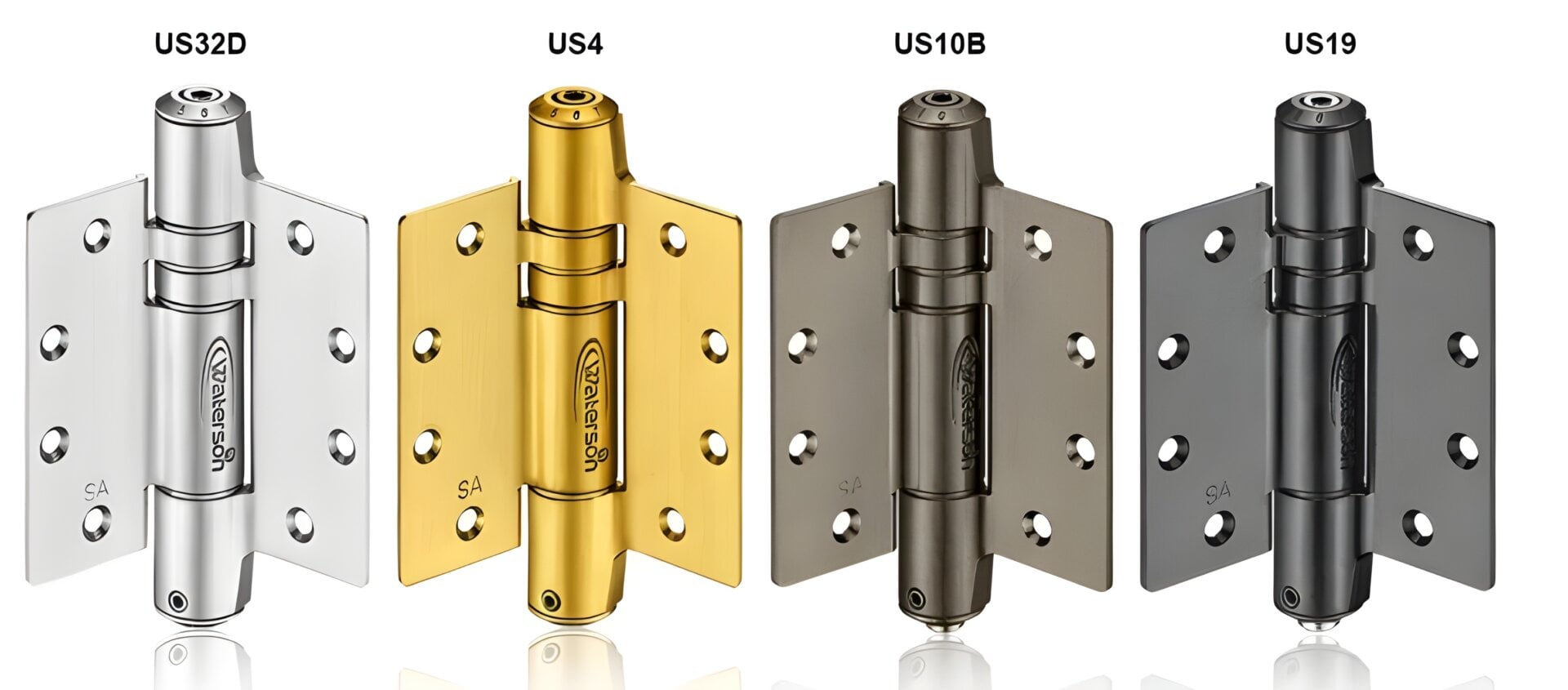
Waterson 316 stainless steel self closing gate hinges are built specifically for pool gate applications. Key compliance points:
- Marine grade 316 stainless steel hinges: Resist chlorine, salt air, and UV exposure, tested beyond ASTM B117 and exceeding ANSI A156.7 at 200 hours in 5% salt concentration, with a five-year track record in commercial seaside applications.
- Speed control: closes the gate from any open position, not just fully open. Three adjustable speed settings allow field calibration without tools beyond a hex wrench.
- Self latching: Compatible with standard pool gate latch hardware, with full adjustability for closing force via the built-in numerical tension panel.
- ANSI/BHMA A156.17: UL-listed to one million cycles at Grade 1, the standard for high-traffic commercial openings.
- ADA and ICC A117.1 compliant for 5 lbf opening force, which matters on pools in facilities covered by the ADA.
Two hinges handle gates up to 60 inches. Three hinges are required for gates between 60 and 90 inches. Weight capacity across three hinges exceeds 260 lbs.
View Waterson 316 Stainless Steel Gate Hinges
Frequently Asked Questions
No. ISPSC §305.3, IBC §3109, and IRC R4501 all require pool gates to open outward, away from the pool.
Writing “self-closing” without specifying “from any open position.” Hardware that only closes from the fully open position passes a spec review but fails in field conditions. The second most common error is applying the 48-inch residential standard to hotel or apartment pools that are subject to IBC §3109’s 72-inch requirement.
The more restrictive requirement governs. A hotel pool in California subject to both IBC §3109 (72 inches) and California’s Pool Safety Act (60-inch residential baseline) is held to 72 inches. The higher standard always controls.
Waterson 316 Marine Grade Stainless Steel Self Closing Gate Hinges
Waterson SS316 self closing gate hinges combines an overhead closer and hinge into one attractive component with optional hold-open and door stop features. These door closers are ideal for commercial openings, gates, and glass doors. The closers are easily installed and adjusted to comply with ADA & ICC A117.1 requirements for opening force and to assure quiet, secure closing. Made with stainless steel, Waterson door closers meet NFPA 80 and are UL 3-hour fire-rated, as well as being one of the best door closers for both interior and all-weather exterior openings. See all our features.
In addition to these performance advantages, Waterson offers custom hinge services. As a direct manufacturer, we can tailor hinge sizes, finishes, and especially hinge leaf designs to meet the specific structural needs of your doors. This makes our hinges an ideal solution for door manufacturers seeking custom options that integrate seamlessly with their existing frames.
Request For Quote
Please note that Waterson closer hinges start from a size of 4″x4″. If you’re in need of smaller self-closing hinges, we’d recommend checking out some other resources! Also, we only provide single acting closer hinges. Thank you.
Recent Post
Waterson Self Closing Hinges Canada Policy
Waterson provides self-closing hinges for architectural and construction projects across Canada. Below is an overview of how we support Canadian customers, from shipping and certification [...]
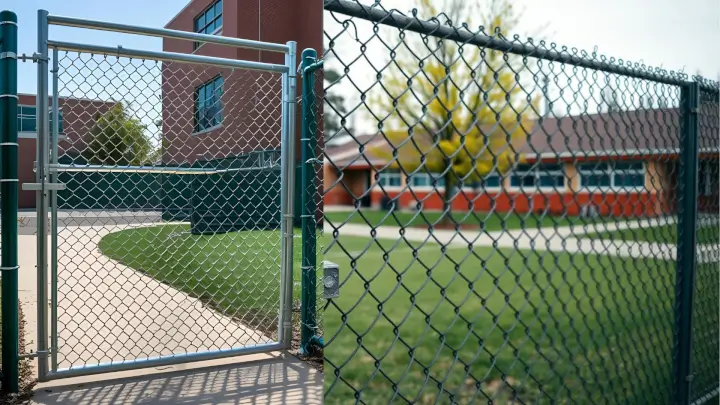
Can Waterson Self Closing Gate Hinges Work on a Chain Link Fence
"Hi, we're closing out a commercial lot and the spec calls for self closing hinges on the entry gates. These are customized metal gates: a [...]
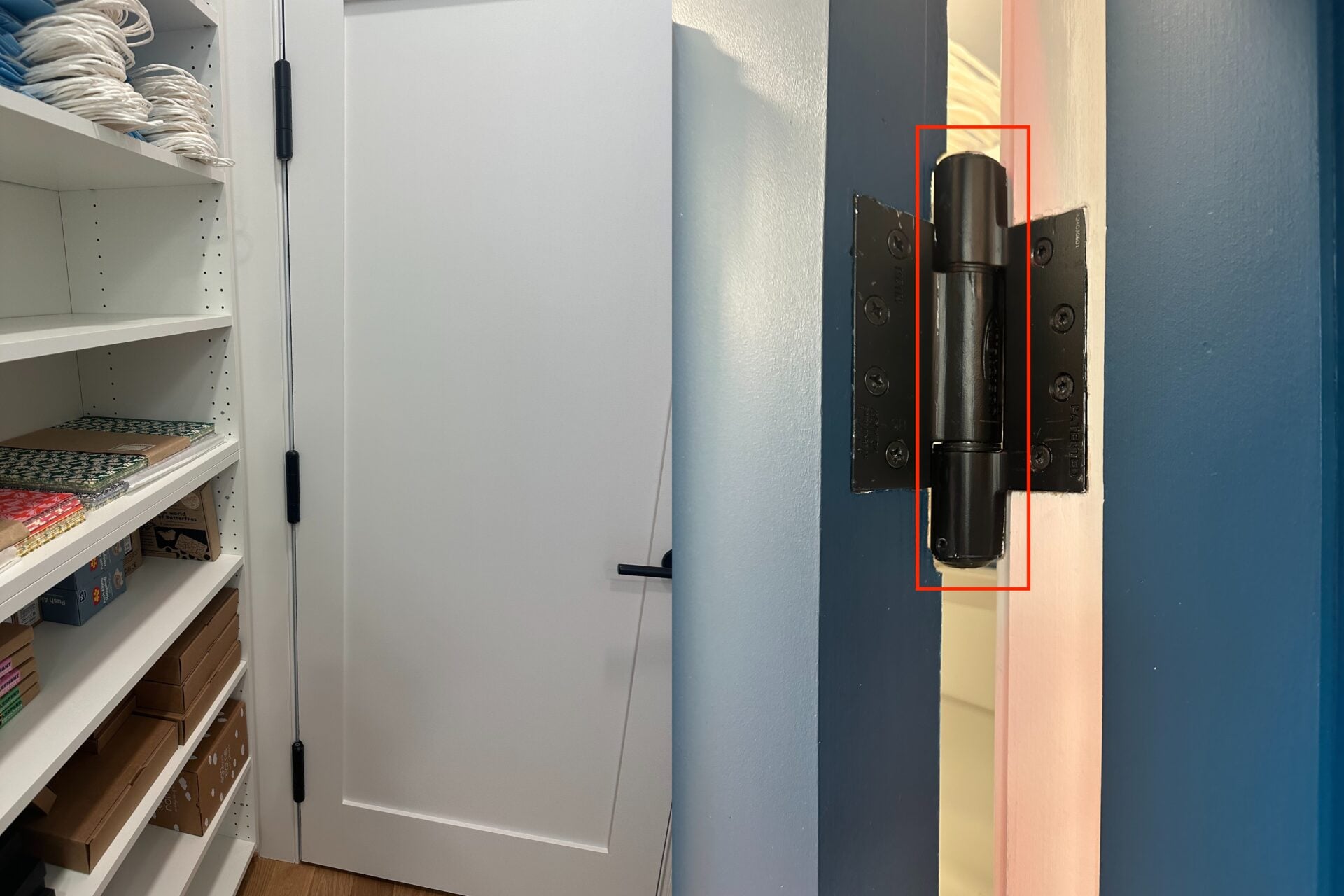
Is Your Door Gap Too Tight for Waterson Self Closing Hinge Barrel?
"I bought these to replace standard 4 inch hinges, which, when open are 4 inches wide x 4 high. The Waterson hinges are 4 5/16 [...]