
“We have a client with a 6-foot solid hardwood gate, but every hinge is set low, near the bottom of the gate. Is it even possible to make a gate like that self-close?”
When this question reached us, the constraints were obvious at a glance: a heavy leaf, a hinge layout that looks wrong for any closer, and no header to bolt one onto. On paper, self-closing a gate like this looks close to impossible. So, how does a leaf set up this way still close on its own, and land softly the way any properly hung gate should?
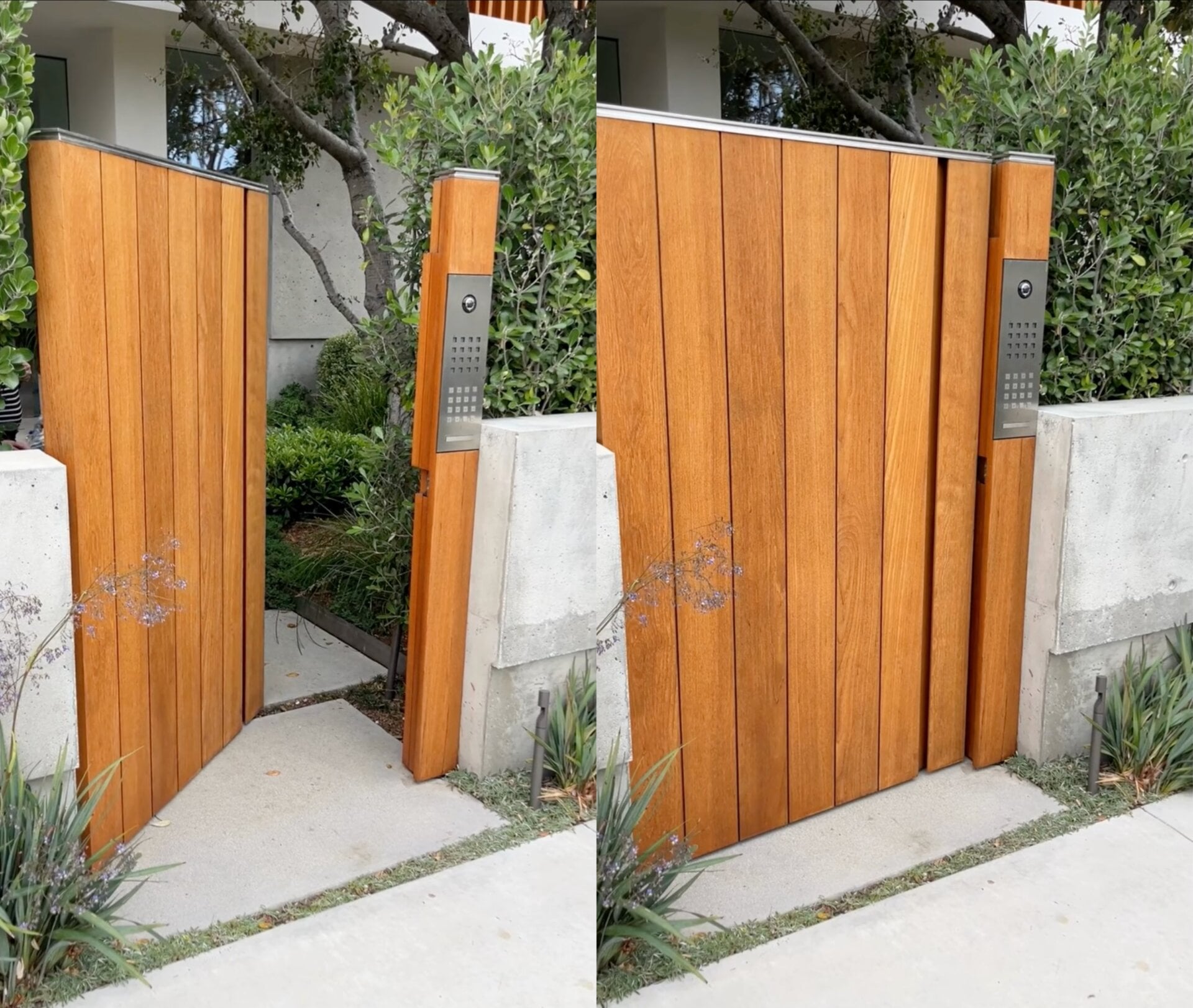
The Weight Problem: a 6-foot Hardwood Gate is Not a Lightweight Door
Start with the honest constraint. A 6-foot solid hardwood gate carries real mass, and hardwood gains weight as it takes on moisture through the season. That mass sits on a single vertical pivot line, so the hinges are fighting gravity, seasonal movement, and the daily habit of people pushing through and walking away.
Any self-closing solution on a gate like this has to do three jobs at once: carry the load without sagging, pull the leaf back to the jamb every time, and land it into the latch without a slam that loosens the fasteners over months of use. A light-duty spring hinge will not survive that duty cycle, and it will not close a leaf this heavy in a controlled way.
Why Hinge Height Does Not Decide Self Closing
A self-closing hinge produces its closing force as a moment about the pivot axis. Every hinge on the gate shares that same vertical axis. That means a hinge mounted low on the leaf and a hinge mounted high on the leaf contribute the same closing torque about that axis.
In plain terms: the hinges sitting only at the bottom does not, by itself, reduce the gate’s ability to self-close. Vertical position along the pivot line is not what drives closing performance.
What does drive it is straightforward and measurable:
- Total closing torque from the self-closing hinges has to beat the gate’s swing resistance, plus any wind load on a solid leaf.
- Load support and plumb. Enough hinge capacity, spaced sensibly, to carry the weight and keep the leaf from racking or dropping out of square. On a tall leaf, keeping the top corner from warping is a load question, not a closing question.
- Sizing by weight and width, not by height. Gate width sets the lever arm that wind and mass act through, so specification comes from the leaf’s weight and width, then the count and rating of the self-closing hinges.
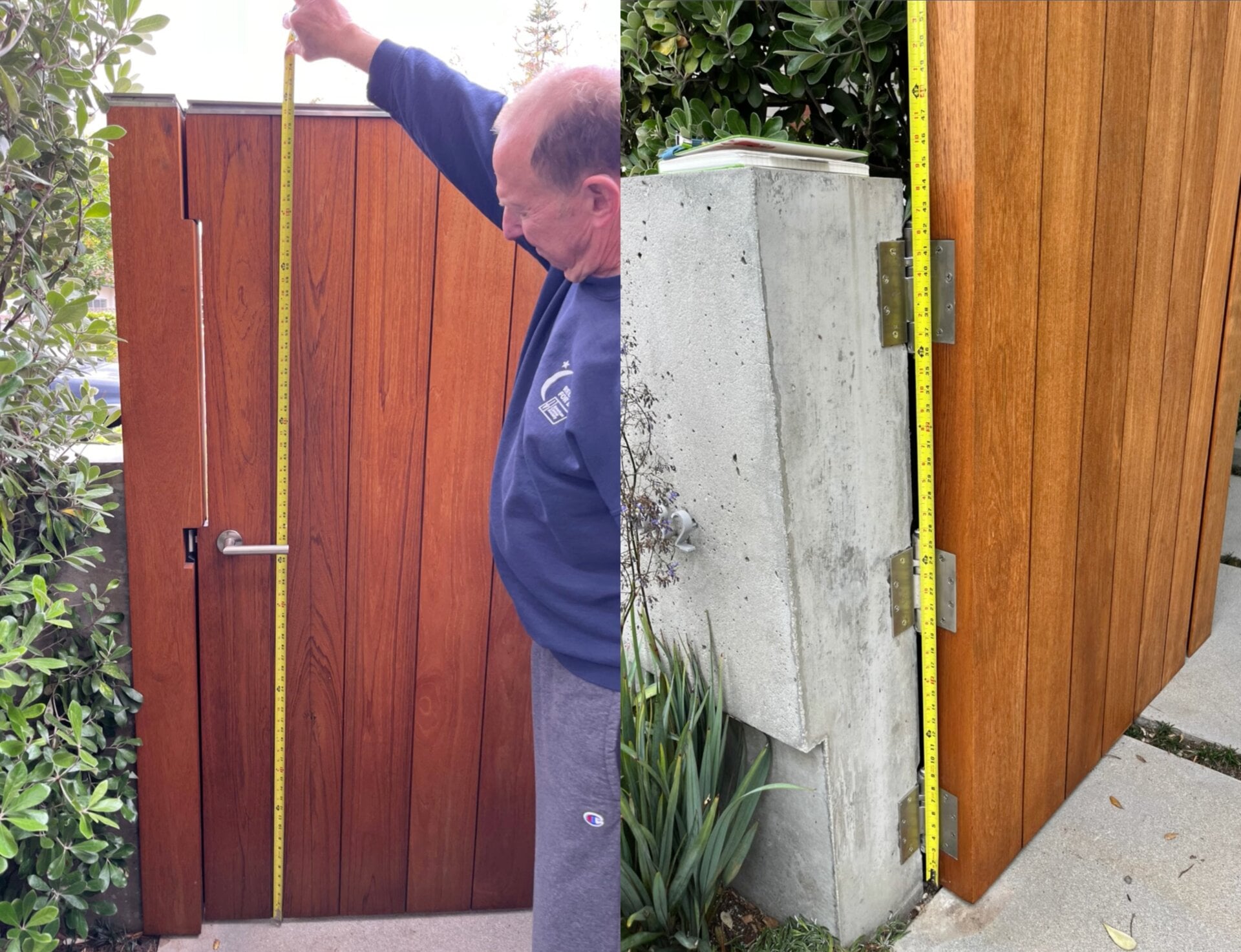
Exterior Exposure: Corrosion, Movement, and Callbacks
This gate lives outside against a concrete pier, exposed to sun, rain, and coastal air. Two things fail on jobs like this. First, ordinary hardware corrodes, seizes, and streaks the timber. Second, an add-on closer bolted to a gate looks like an afterthought and becomes a maintenance item the client resents.
For an exterior hardwood gate, the hardware needs to be corrosion resistant and self-contained, with no exposed arm or overhead unit to catch weather, snag, or get kicked. It also has to hold adjustment through temperature swings, because a closer that drifts out of tune every season is a callback waiting to happen.
The Safety and Code Problem: Controlled Closing and Reliable Latching
If this gate protects a pool, a play area, or a street frontage, “it swings shut eventually” is not good enough. Safety-rated self-closing and self-latching means the leaf returns and latches on its own, every time, from a defined opening angle, at a speed that is firm but not violent.
A slam is not just noise. On a heavy leaf it hammers the latch, backs out screws, and shortens the life of every fastener on the gate. Controlled, two-stage closing (a steady sweep, then a slower latching action) is what keeps a heavy hardwood leaf latching reliably for years.
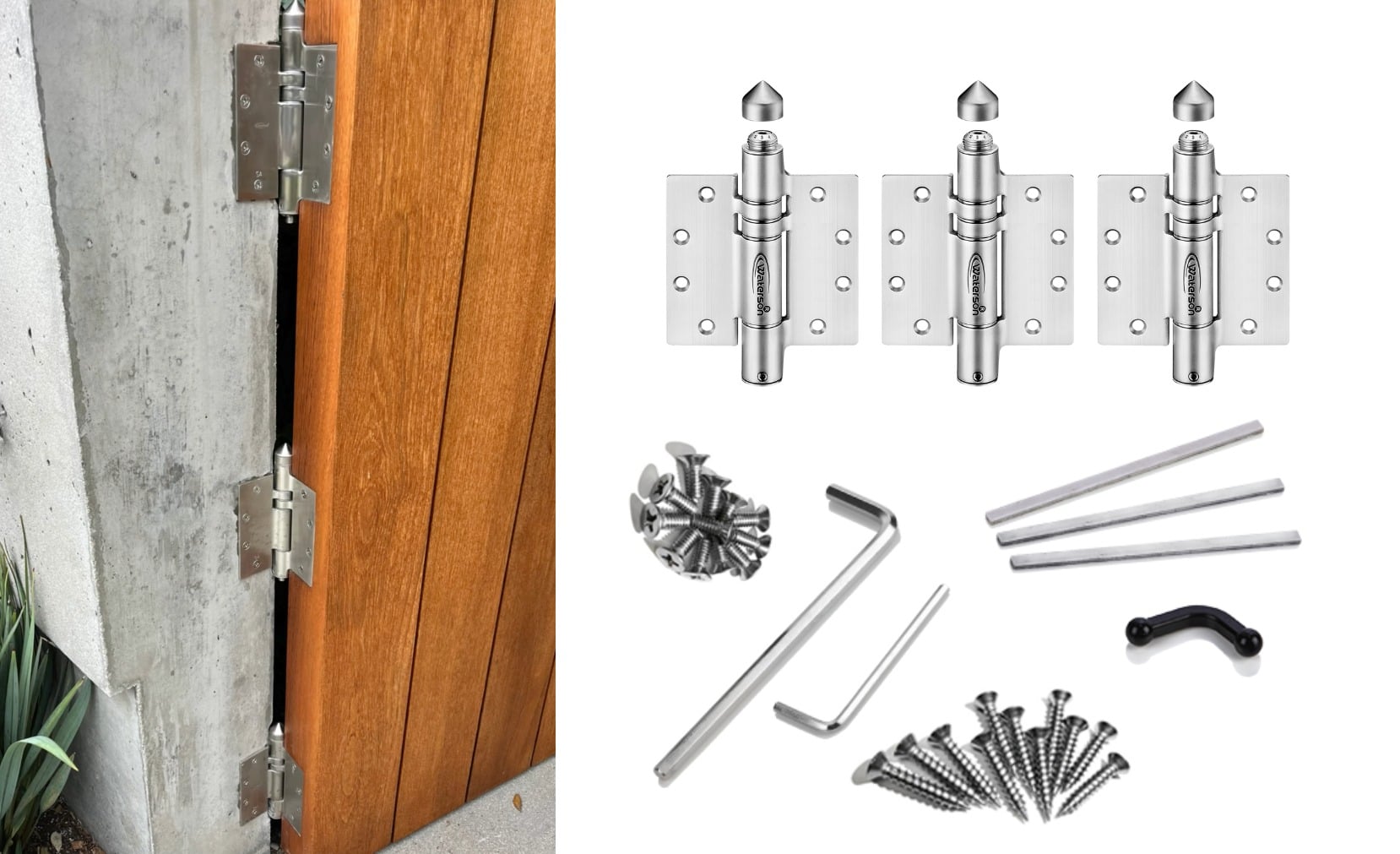
Where Waterson Fits This Exact Gate
Waterson self-closing gate hinges are built for exactly this situation: a heavy exterior leaf, no header for a closer, and a hinge layout you would rather not fight. The closing mechanism is hydraulic and lives inside the hinge barrel, so it replaces the existing hinges rather than adding hardware to the gate. Here is how the feature set maps to this job:
- Stainless Steel: Corrosion resistant for an exterior, coastal gate, so it holds up against weather and will not streak the hardwood.
- Self Closing: the closing force comes from the hinges themselves, on the shared pivot axis, regardless of how low they sit.
- Soft Closing: The hydraulic closer is inside the hinge, so there is no overhead closer and no floor spring. That is what makes a low, bottom-set hinge layout workable
- Adjustable closing and latching speed: Tune the sweep and the final latching action to the gate’s weight so it lands into the latch firmly, without slamming.
- Heavy duty: Sized to the gate’s weight and width, with the hinge count set to carry the load and keep a tall leaf plumb.
- Durability: Meets ANSI/BHMA A156.17 Grade One, one million cycles test
- Hold-open option: Useful when a client wants the gate to stay open for deliveries, then resume self-closing.
- Warranty: Backed by a 3-10 year warranty
Waterson Stainless Steel Hydraulic Bottom Set Gate Hinges
Waterson self closing gate hinges combine the function of an overhead closer and a hinge into a single, sleek component—complete with optional hold-open and door-stop features. Designed for commercial openings, gates, and glass doors, these hinges are easy to install and adjust to meet ADA and ICC A117.1 standards for opening force, while ensuring quiet and secure closure. Crafted from durable stainless steel, they are NFPA 80 compliant, UL 3-hour fire-rated, and built to perform reliably in both interior and all-weather exterior environments. See all our features.
In addition to these performance advantages, Waterson offers custom hinge services. As a direct manufacturer, we can tailor hinge sizes, finishes, and especially hinge leaf designs to meet the specific structural needs of your doors. This makes our hinges an ideal solution for door manufacturers seeking custom options that integrate seamlessly with their existing frames.
Request For Quote
Please note that Waterson closer hinges start from a size of 4″x4″. If you’re in need of smaller self-closing hinges, we’d recommend checking out some other resources! Also, we only provide single acting closer hinges. Thank you.
Recent Post
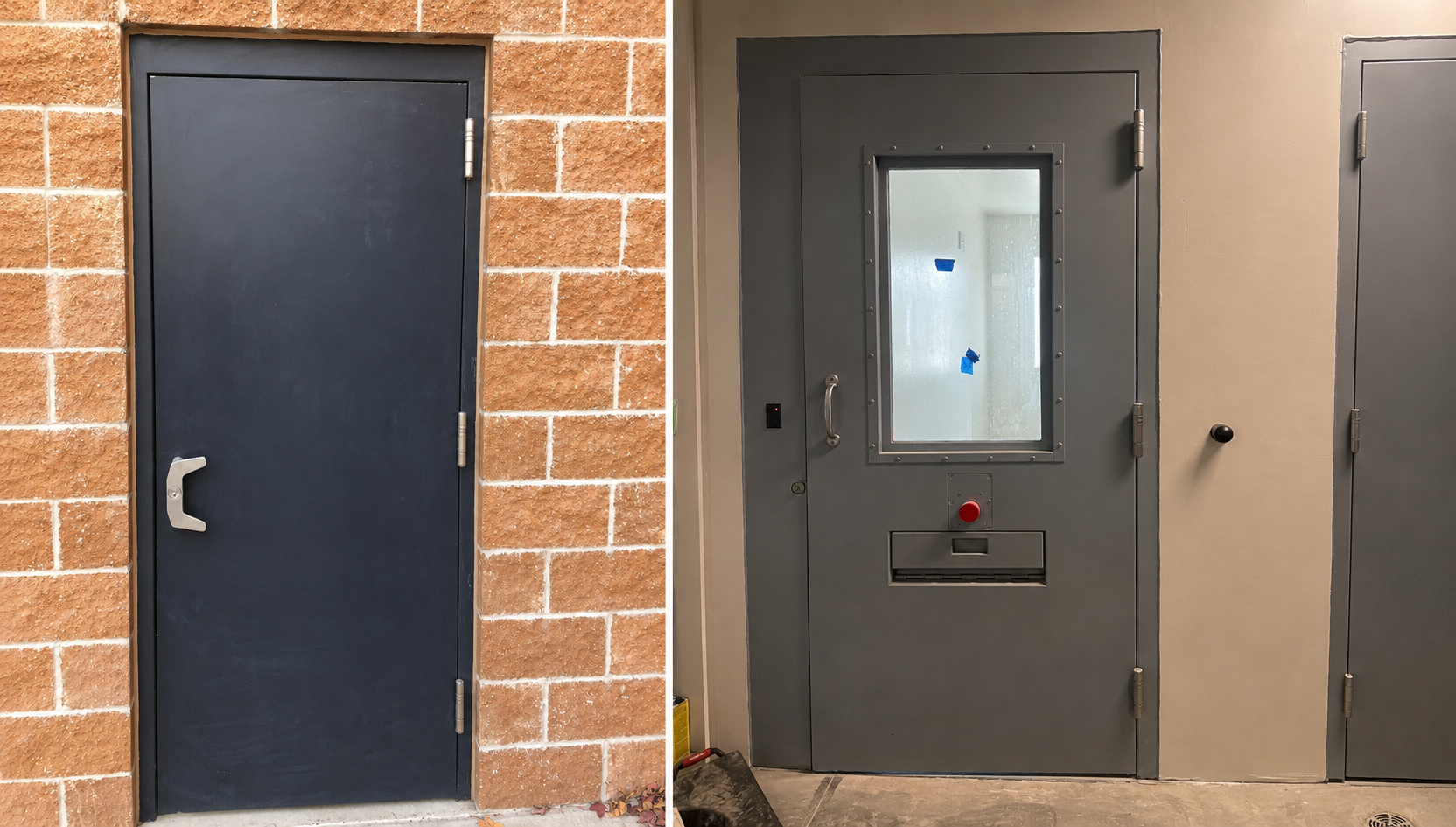
How Many Self Closing Hinges Per Door? The NFPA 80 Rule vs. Waterson Sets for Fire & Arched Doors
Quick Answer Choosing a Waterson self-closing hinge set takes two steps. First, door height sets how many Waterson hinges you need: 2 for a 6 [...]
NFPA 80 Residential Fire Door Requirements: 13 Point Inspection Checklist
Quick Answer NFPA 80 is the standard that defines minimum requirements for fire door installation, inspection, and maintenance in buildings. It requires fire doors to [...]
Unequal Double Door Hinges: How to Self Close Both Leaves with No Overhead Closer
Quick Answer An unequal double door is a pair with one wide active leaf and one narrow inactive leaf, sized so the active leaf alone [...]