
When winter comes, temperatures drop, and outdoor fence gates start to behave differently. Wood absorbs moisture and swells, metal contracts slightly, and hardware components shift under cold and tension. That’s why a hinge that can adapt to these changes, without binding, dragging, or failing to close, matters.
Quick Answer
Cold weather gate hinges are self-closing hinges that keep closing reliably below freezing. Spring-based mechanical hinges hold steady closing force in sub-zero temperatures, while hydraulic hinges slow down as their fluid thickens. For exterior gates in cold climates, specify a mechanical stainless steel model with adjustable tension and post extenders, and plan one seasonal adjustment.
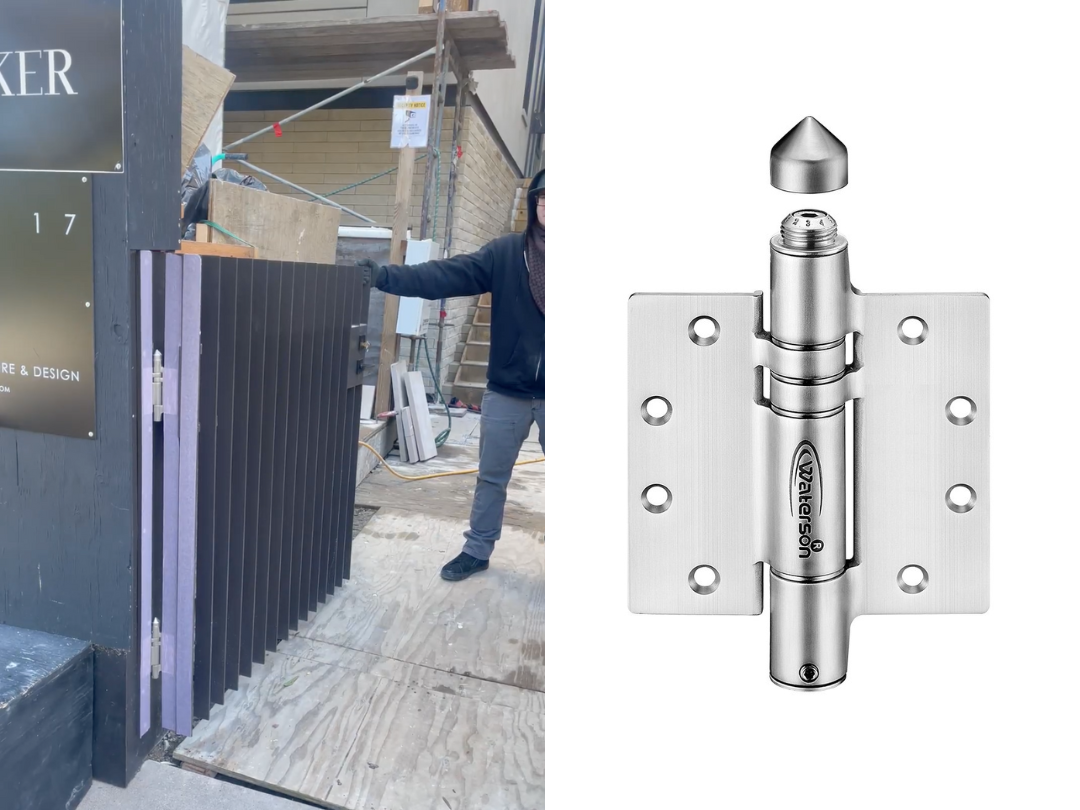
What Are Cold Weather Gate Hinges?
Cold weather hinges, as their name suggests, are hinges designed to operate reliably in low temperatures without binding, slowing down, or failing to close.
They work by using mechanical self-closing systems (instead of temperature-sensitive fluids) and adjustable components that compensate for material movement. When something’s wrong, the hinge can be manually adjusted on site to restore proper closing performance, making it suitable for exterior fence gates exposed to winter conditions.
What Cold Weather Does to Outdoor Gates
When temperatures fall, different materials react in different ways, and those reactions directly affect alignment and closing behavior.
- Wood gate panels absorb moisture and swell
- Steel posts and frames contract slightly in cold temperatures
- Gate hardware experiences tension shifts as materials move
As wood swells, clearances tighten, and fence gates may begin to bind against posts or latch hardware. At the same time, metal contraction can introduce small alignment gaps, transferring stress to hinge arms, pins, and mounting points. In cold climates, most gate issues are not caused by temperature alone, but by alignment issues across the entire gate system.
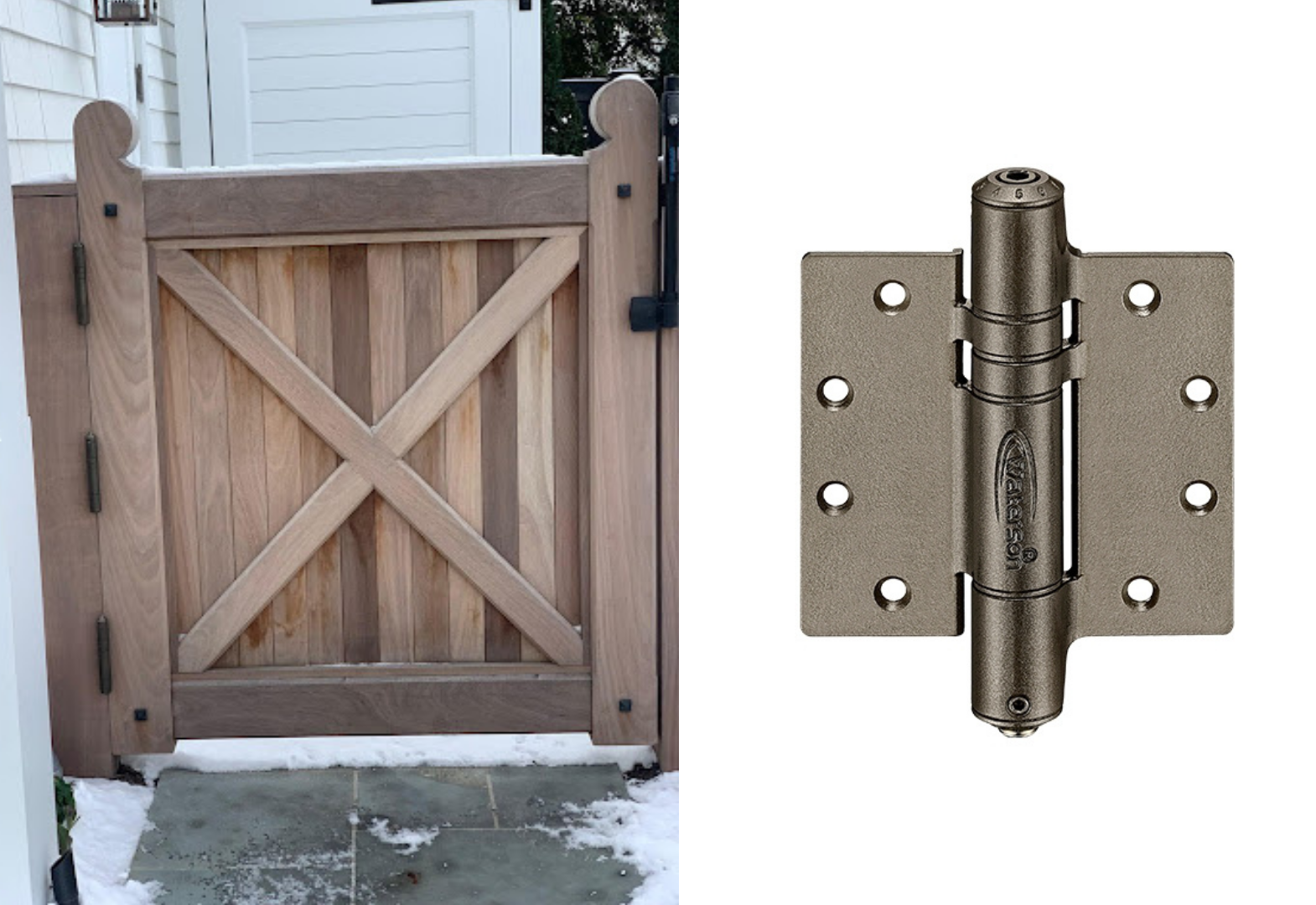
How Waterson Adjustable Hinges Respond to Material Changes
Waterson cold weather fence gate hinges are designed with multiple extender sizes to maintain proper geometry as conditions change.
Extenders are available for 2″, 3″, and 4″ steel square posts, allowing installers to correct offset, thickness variation, or seasonal misalignment caused by wood expansion. This reduces hinge binding, uneven load transfer, and drag, common failure points in cold-weather installations
Besides, with the built-in tension and closing controls, Waterson self closing spring hinges allow on-site fine-tuning as materials expand or contract, keeping self-closing performance consistent. In most cases, a seasonal adjustment is sufficient, no rehanging, modification, or hinge replacement required.
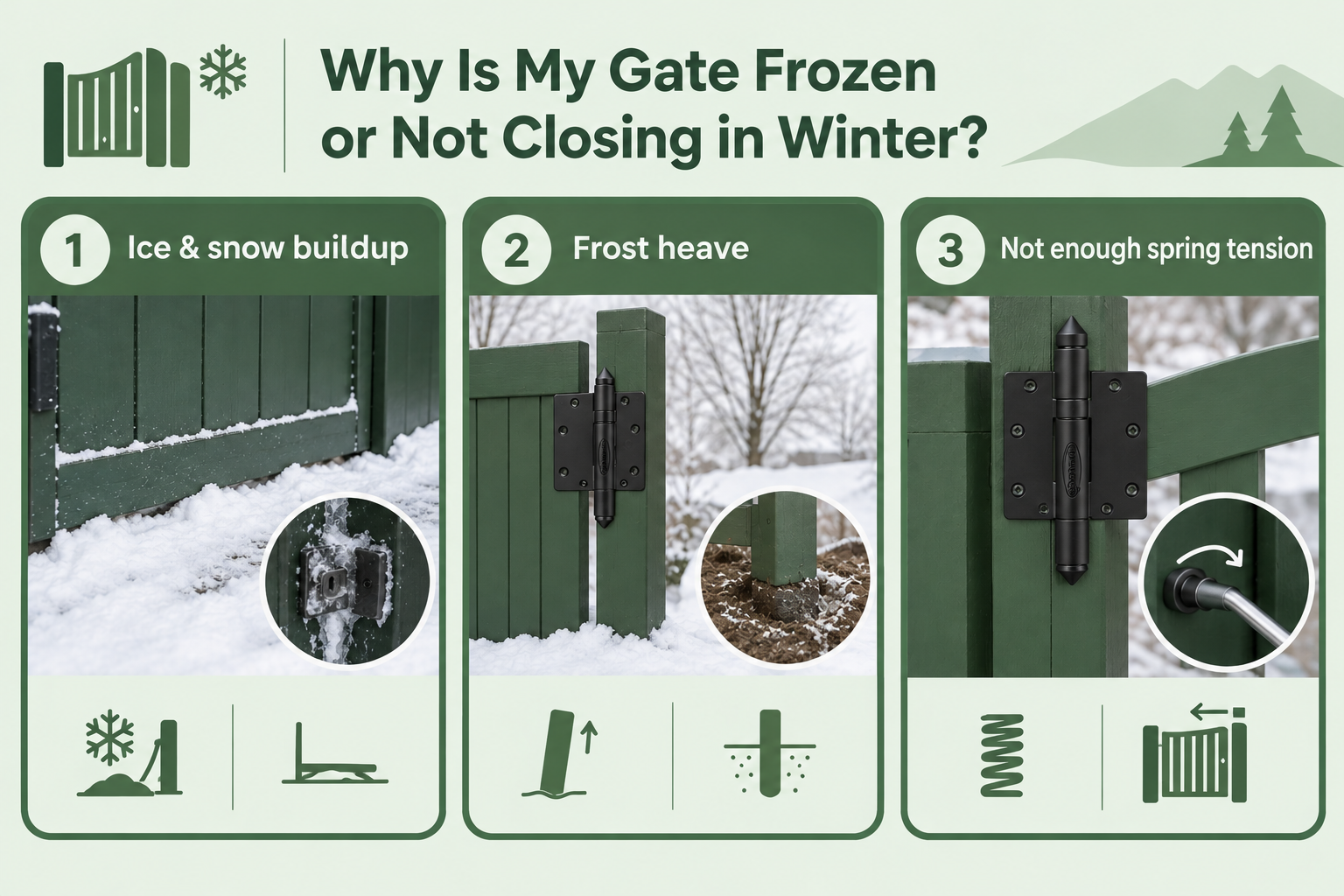
Why Is My Gate Frozen or Not Closing in Winter?
When a gate stops closing in winter, the hinge is rarely the root cause. Check these three site conditions first.
1. Ice and snow buildup at the gate bottom or latch
Packed snow under the gate leaf or ice in the latch keeper blocks the last few inches of travel, so the gate stops short of latching. Clear the swing path and latch keeper, and where drifting is common, set the gate with extra bottom clearance during installation.
2. Frost heave shifting the gate post
Freezing soil can lift or tilt a post set above the frost line, throwing the hinge side out of plumb and dragging the latch side down. Check the hinge post with a level; correct minor offset with the post extenders, and reset the post below the local frost depth if the shift returns every winter.
3. Spring tension set during summer is no longer enough
Tension that closed the gate easily in warm weather may not overcome stiffer latches, swollen wood, or wind load in winter. Increase spring tension in small steps using the closer hinge adjustment guide, then confirm the gate closes and latches fully from 90°.
What Features Matter in a Cold Weather Gate Hinge?
Waterson cold weather gate hinges use a mechanical spring closer with adjustable tension and speed, so installers can keep the gate closing and latching as materials move through the seasons.
- Stainless steel construction: 304 stainless steel as standard for general exterior use, with 316 marine-grade stainless steel available per order for gates exposed to de-icing salts, coastal air, or pool chemicals.
- Self-closing and anti-slam: The spring closer mechanism returns the gate to the closed position with controlled speed, making it a good match for self-latching gate latches.
- Adjustable closing and latching speed: Fine-tune closing behavior for seasonal temperature changes and gate weight. See the hinge adjustment guide.
- Post extenders: Multiple leaf support sizes fit 2″, 3″, and 4″ square steel posts, correcting offset, gate thickness variation, or seasonal misalignment.
- Load capacity: Three hinges support over 260 lbs; four hinges support up to 440 lbs.
- Dry bearing design: No grease to stiffen or freeze, suited to freeze-thaw cycles. For fluid-damped options, see hydraulic gate closers and their temperature limits.
- Outdoor durability: Passed a 3-year outdoor field test at a pool gate installation, with a top protection cap on capped models to shield the closer mechanism.
- Code and standards: Tested to ANSI/BHMA A156.17 Grade 1 (1,000,000 cycles). Adjustable closing speed allows installers to meet ADA 2010 Section 404.2.8 (minimum 5 seconds from 90° to 12°).
- Mounting options: Full-surface and mortise gate hinge configurations for surface mounting on square posts, installation between posts, or uneven planes.
- Models and finish: K51P (full surface), K51MP (butt hinge with protection cap), and K51M (heavy duty, no cap), in US32D / 630 satin stainless steel.
Together, these features give exterior gates consistent self-closing performance through winter, combining mechanical strength with controlled, anti-slam closing.
Mechanical vs Hydraulic Hinges in Cold Temperatures
Not all self-closing hinges behave the same in winter. The difference comes down to how the closing force is generated, and how that mechanism reacts when temperatures drop.
| Categories | Mechanical (Self-close Type) | Hydraulic (Soft-close Type) |
|---|---|---|
| Closing mechanism | Spring-based mechanical force | Fluid-controlled hydraulic system |
| Performance in cold weather | Stable across temperature swings; minimal impact from cold, including sub-zero conditions | Slower in cold, faster in heat; performance affected by temperature changes |
| Temperature sensitivity | Not affected by fluid viscosity | Sensitive to fluid thickening in low temperatures |
| Recommended temperature range | No specific lower limit | Above 32°F (0°C) |
| Closing consistency in winter | Predictable and reliable | May become inconsistent; seasonal adjustment often required |
| Best use case | Exterior gates requiring reliable self-closing year-round | Interior doors or mild-climate, controlled environments |
We have many customers in the United States, Canada, and other regions with harsh and extremely cold winters. To date, we have not received reported negative feedback regarding hinge performance in cold weather conditions. See our warranty.
When Should You Specify a Cold Weather Gate Hinge?
Specify a mechanical self-closing gate hinge whenever an exterior gate must close and latch reliably through freezing temperatures. Three applications make it a requirement rather than a preference:
- Pool barrier gates: Pool codes require access gates to be self-closing and self-latching. Pair the hinge with a self-latching latch and confirm latching at the coldest seasonal setting.
- Gates on an accessible route: ADA 2010 Section 404.2.8.1 requires a gate closer to take at least 5 seconds to move from 90° to 12° from the latch. Adjustable closing speed lets installers hold that setting as temperatures change.
- Gates near roads, sidewalks, or parking areas treated with de-icing salt: Specify 316 stainless steel (available per order) instead of standard 304 to resist chloride corrosion.
Retrofit Considerations
Waterson gate hinges can replace existing hinges on posts already in place. Multiple leaf support sizes fit 2″, 3″, and 4″ square steel posts, so the new hinge can absorb offset or gate thickness differences without resetting the post. Before ordering, record the gate height, width, weight, and thickness, plus a photo of the existing hinge, and follow the how to purchase checklist. Note that Waterson closer hinges start at 4″x4″ and are single acting only.
Yes, all-mechanical spring hinges keep closing below freezing because the closing force comes from a spring, not fluid. Waterson hydraulic (hybrid) hinges are rated only for temperatures above 32°F (0°C), and their fluid slows as it cools. For exterior gates in cold climates, specify an all-mechanical hinge set and check the tension setting once each season.
Yes, Waterson gate closer hinges adjust on site without removing the gate. Spring tension is set on a numbered panel from 0 to 7 with a 5mm hex wrench, and swing or latch speed is adjusted at the hinge bottom with the same wrench, then locked with a 3mm wrench. Before winter, raise tension one number at a time until the gate latches fully; settings above 5 may shorten spring life.
Compliance depends on the installed gate, not the hinge alone. ADA 2010 Section 404.2.8.1 requires a gate closer to take at least 5 seconds to move from 90 degrees to 12 degrees from the latch, and adjustable closing speed lets installers meet that. The 5-pound opening force limit in Section 404.2.9 covers interior hinged doors and gates, so exterior gates follow the local authority having jurisdiction.
Specify a self-closing hinge paired with a self-latching latch, because ISPSC Section 305.3 requires pedestrian pool gates to be self-closing, self-latching, and to open outward away from the pool. In freezing climates, choose an all-mechanical hinge in 316 stainless steel (available per order; 304 is standard) for chlorine and de-icing salt exposure, and test latching at the coldest seasonal setting.
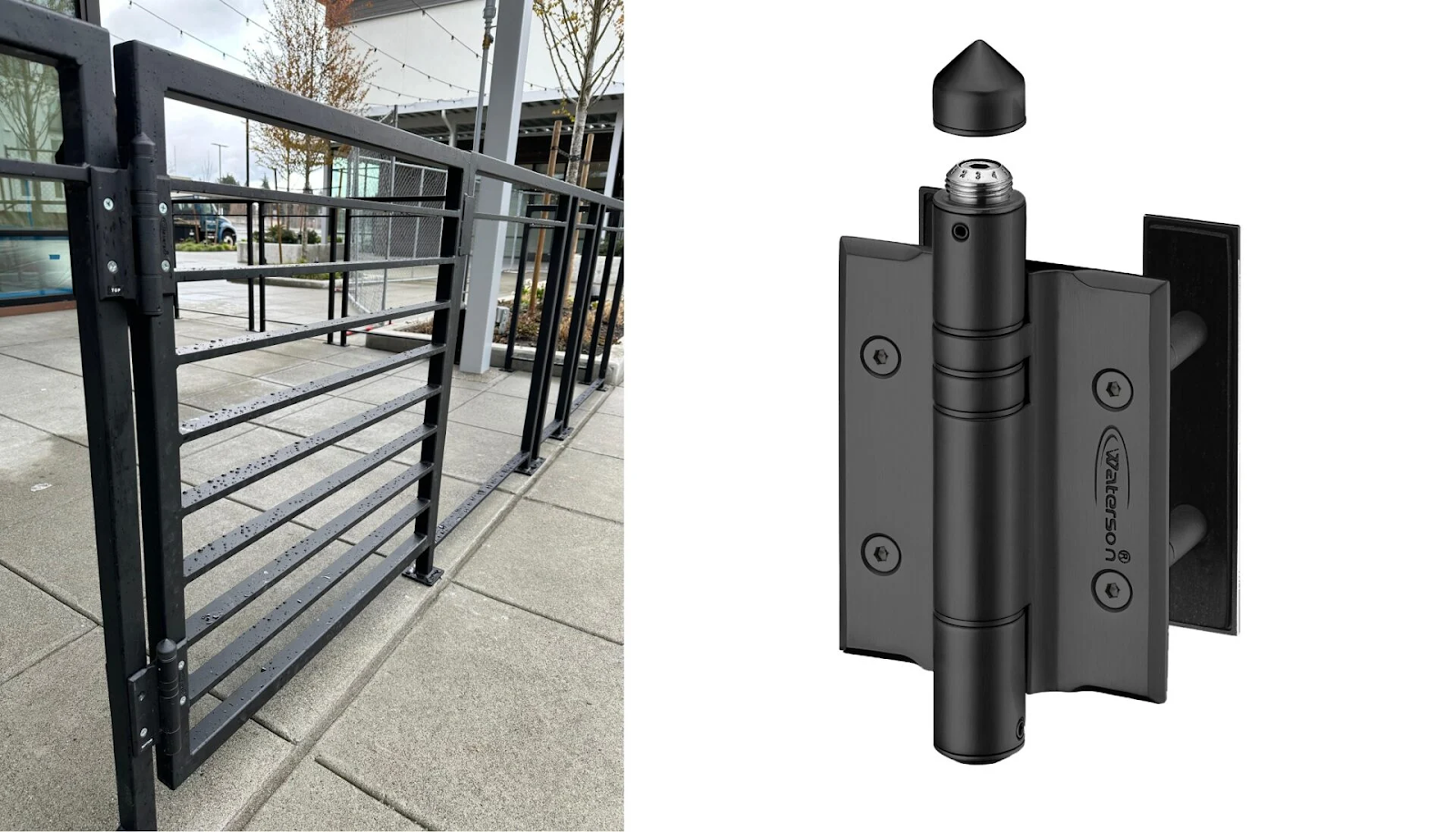
Request For Information
Please note that Waterson Closer Hinges start from a size of 4″x4″. If you’re in need of smaller self-closing hinges, we’d recommend checking out some other resources! Also, we only provide single acting closer hinges. Thank you.
Recent Post
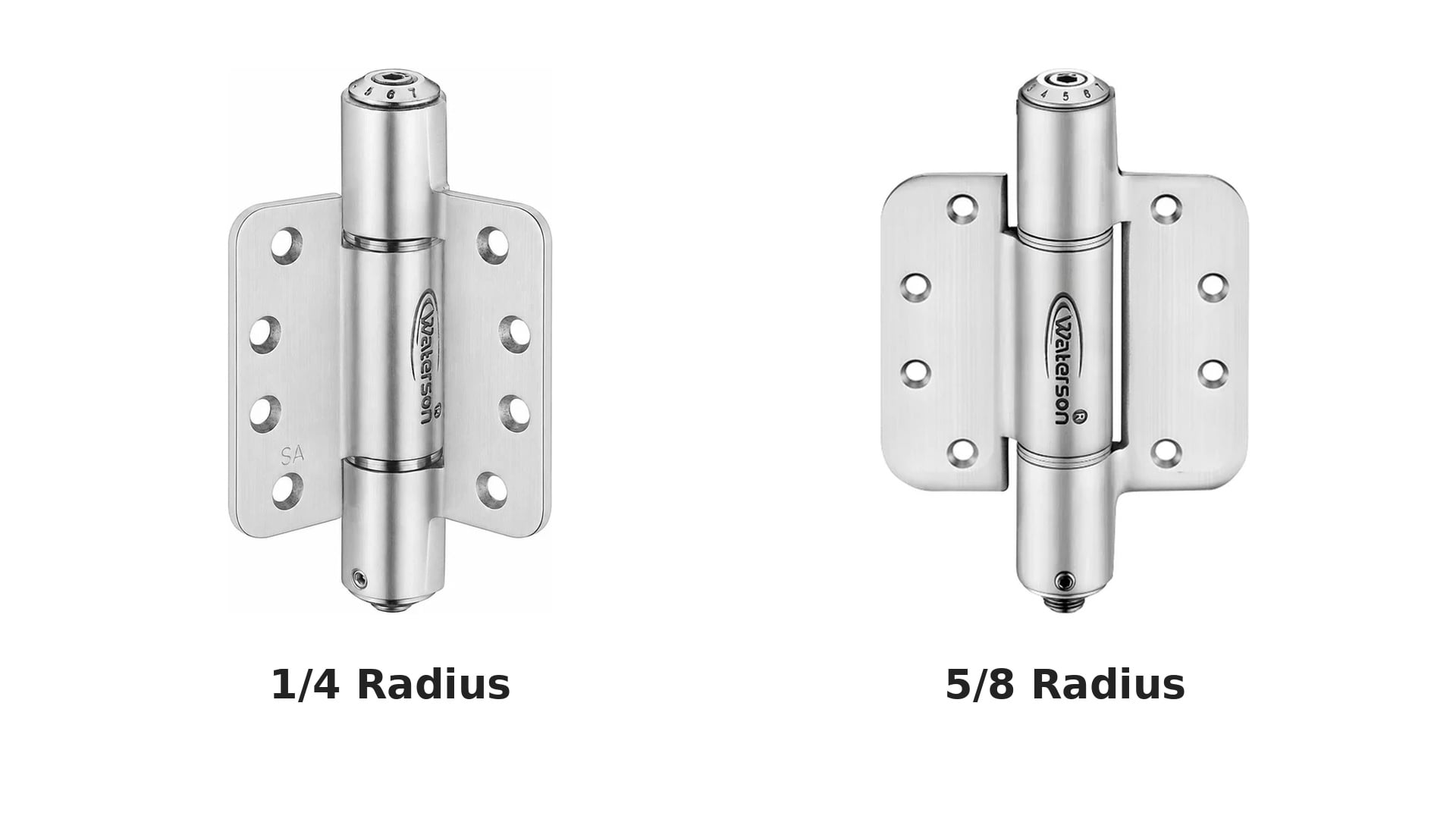
Replacing Door Hinges: 1/4 vs 5/8 Radius vs Square Corners
Quick Answer Most 4 inch residential door hinges have one of three corners: square, 1/4" radius, or 5/8" radius. A rounder hinge fits a mortise [...]
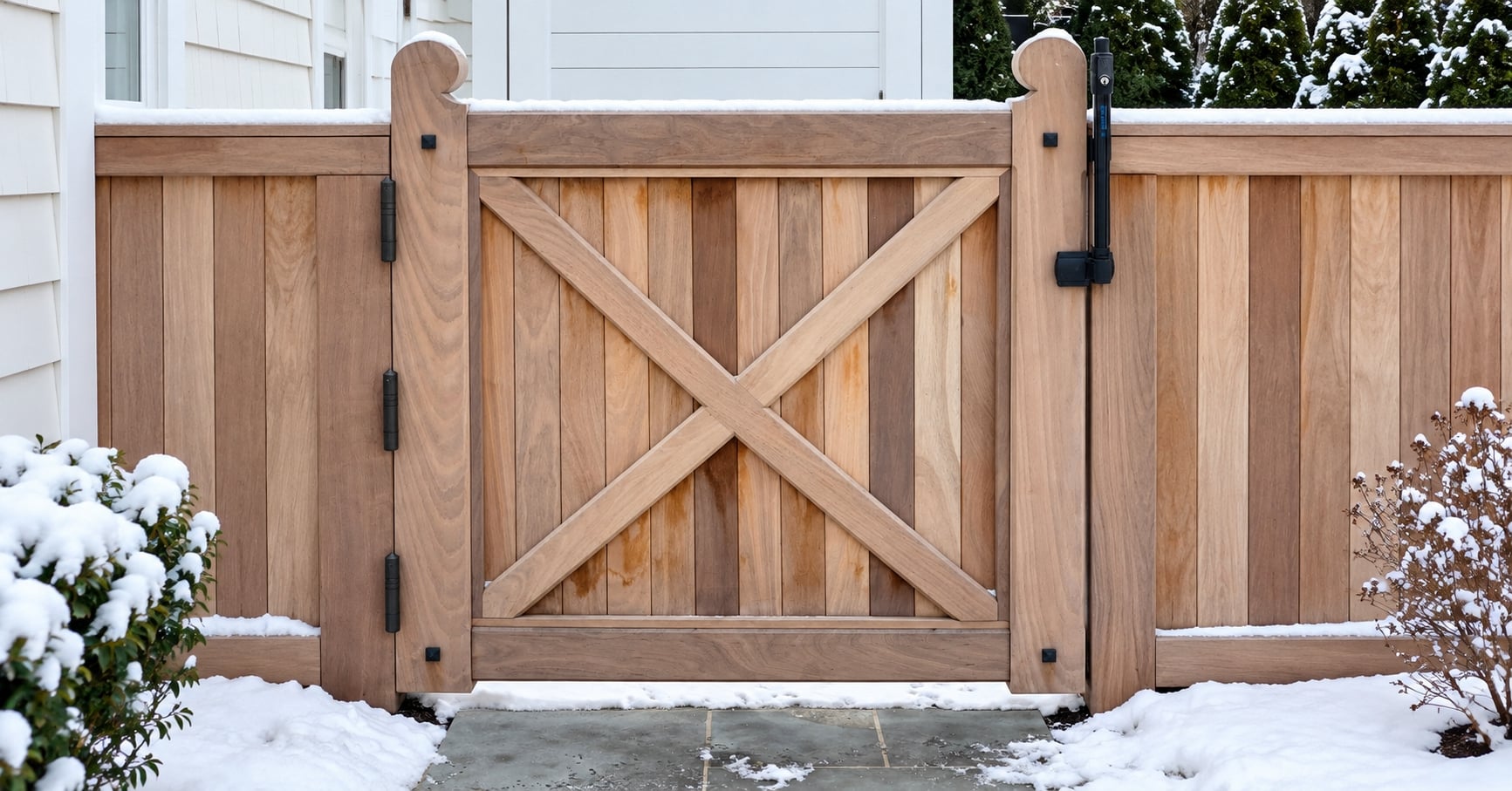
Why Won’t My Self Closing Door Hinges Close in Cold Weather
Quick Answer An exterior door that closes fine in summer but won't latch in winter is usually affected by two things: weather stripping that stiffens [...]

Soft Closing Hinges: 9 Most Frequently Asked Questions
Since the AIA in 2018, there has been an increased interest in Waterson hinges for many different projects. We have been inundated with questions by [...]