
“I bought these to replace standard 4 inch hinges, which, when open are 4 inches wide x 4 high. The Waterson hinges are 4 5/16 inches wide x 4 high. This means the door was shifted towards the strike plate side by at least a quarter inch. That meant the door hit the outside of the frame.
I couldn’t simply deepen the mortise on the hinge side because I didn’t have enough gap on that side to pull the door over without the door binding against the frame…there was no clearance. I would have had to shave the door down substantially and adjust all of the latching hardware. Since this is a custom door with a custom edge, I chose not shave all of that edge off.”
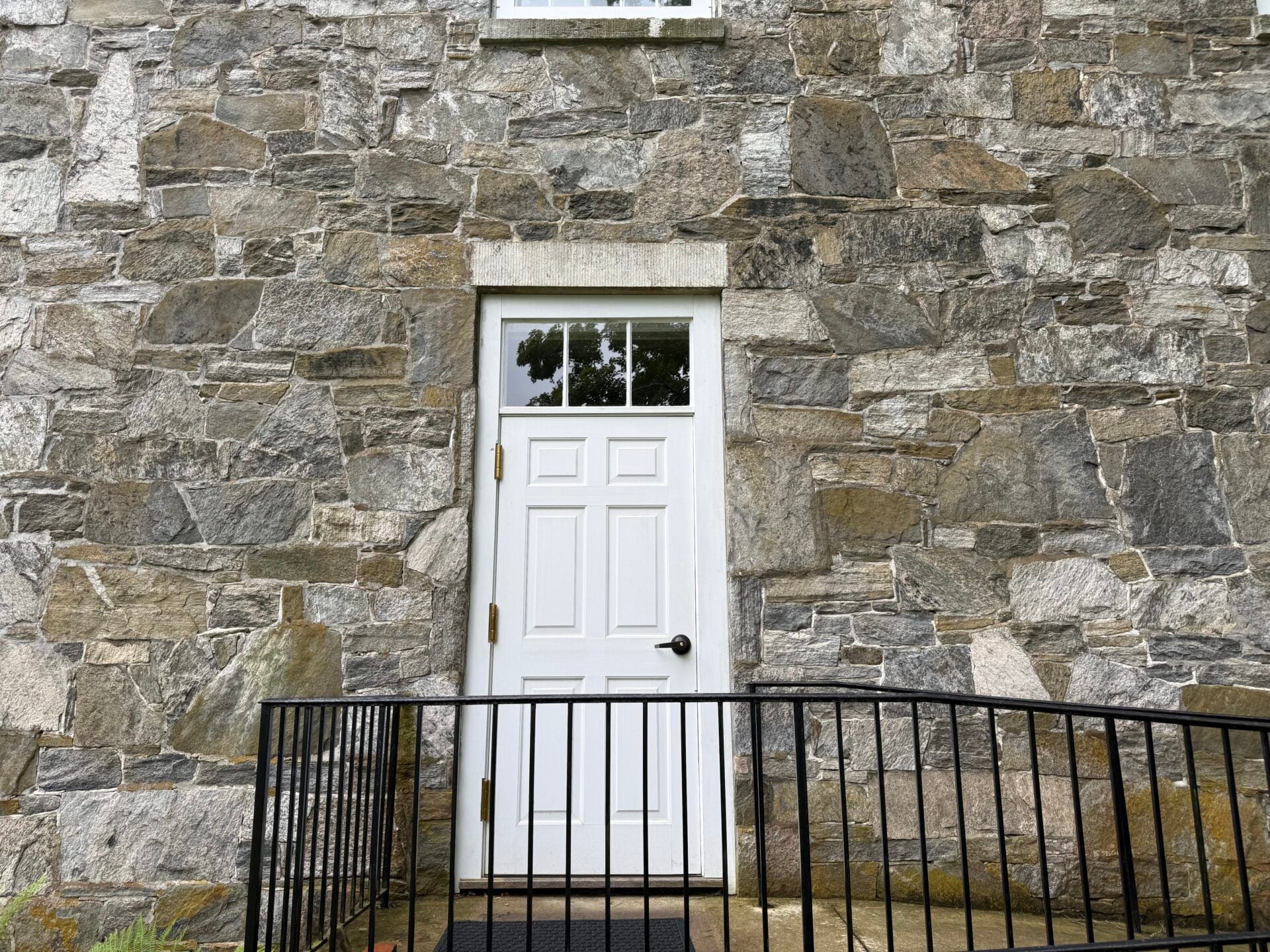
Why Does Waterson Self Closing Hinge Shift the Door Toward the Strike Plate?
On a retrofit, the mortise template on a Waterson 4×4 matches a standard 4×4 butt hinge, so both leaves drop into the same cutout you already have. What differs is the barrel diameter sitting on the hinge line. A thicker barrel moves the pivot axis further off the door and frame faces, and that relocated pivot carries the door leaf toward the latch side as it hangs.
Here is the sequence the reviewer described on his retrofit, in order:
- The thicker barrel sets the door roughly a quarter inch closer to the strike jamb.
- The strike edge now contacts the frame instead of the strike side gap.
- Deepening the mortise to pull the door back only works if the strike side has room to receive it. On a tight custom door, that room does not exist.
On this hardware, the barrel diameter (not the leaf size) sets your door hinge decision.
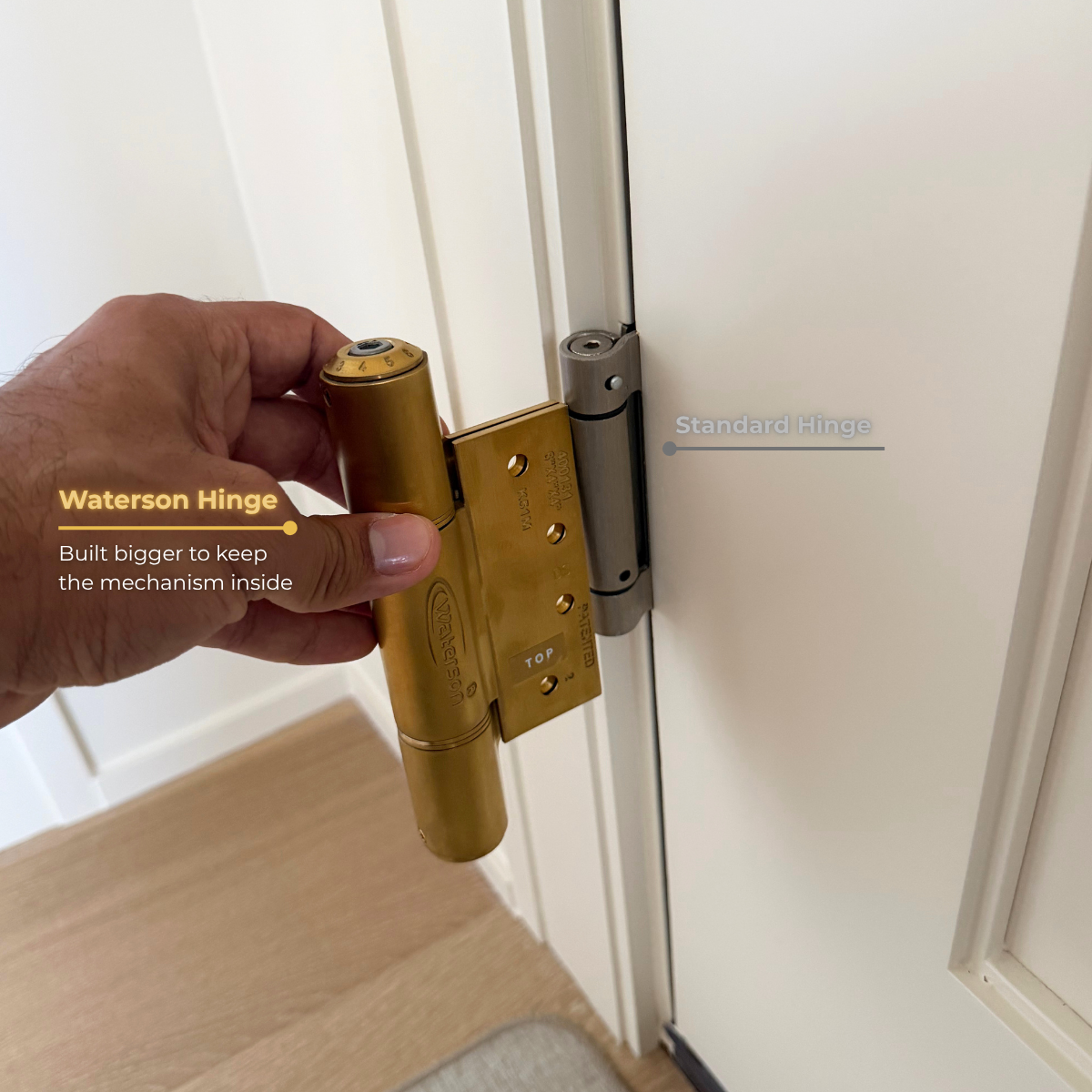
Why Is a Waterson Barrel Thicker Than a Standard Butt Hinge?
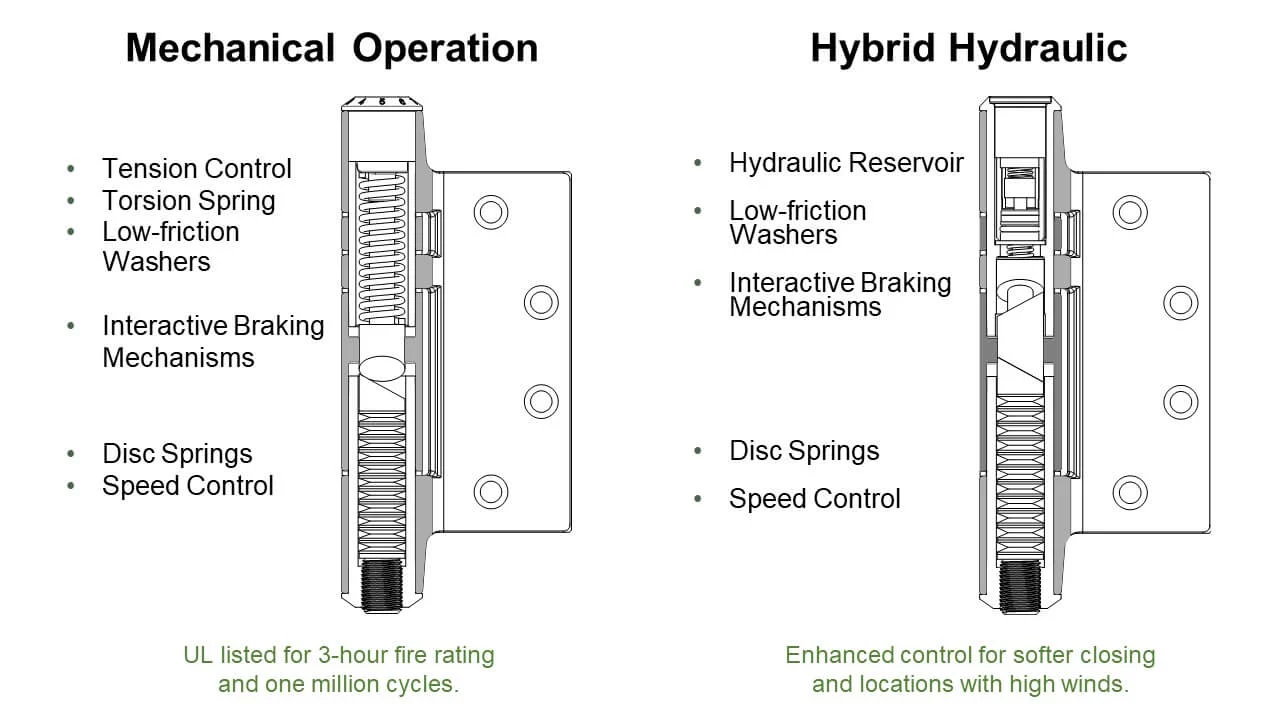
A standard butt self closing barrel hinge holds one thing, a pin. A Waterson barrel is a working assembly. Everything a surface closer would normally bolt to the face of the door is instead packed inside that cylinder, so more function on the inside means more diameter on the outside.
| Component inside the barrel | Standard butt hinge | Waterson closer barrel |
|---|---|---|
| Hinge pin | Yes | No |
| Spring tension mechanism | No | Yes, numerically adjustable |
| Closing speed control | No | Yes, mechanical or hydraulic |
| Hold open detent | No | Optional on some of the models |
| Barrel diameter | Approx. 0.55″ (14 mm) | 1.122″ (28.50 mm) |
When you gain an overhead closer, a spring hinge, an optional hold open, and a stop in one mortised unit, you have to pay for this oversized barrel diameter. It is the same reason a surface closer body is bulky. The mechanism has to live somewhere, and here it lives in the barrel.
What Are Your Options When the Door Gap Is Too Tight for a Self Closing Hinge Retrofit?
Before committing to the retrofit, measure the strike side gap with the door in its current hung position. That number, not the leaf size, tells you whether the opening can absorb a thicker barrel. From there you have two real paths.
Path 1: Recover the clearance
- Deepen the hinge side mortise so the leaf sits further in. Works only when the strike side has room to let the door travel back.
- Use the steel shims included in the hinge set to fine tune the door to frame gap. Good for small corrections, not for a full quarter inch.
- Plane the strike edge and reset the latch, strike, and any edge hardware. Effective, but it removes material from a finished edge and adds real labor.
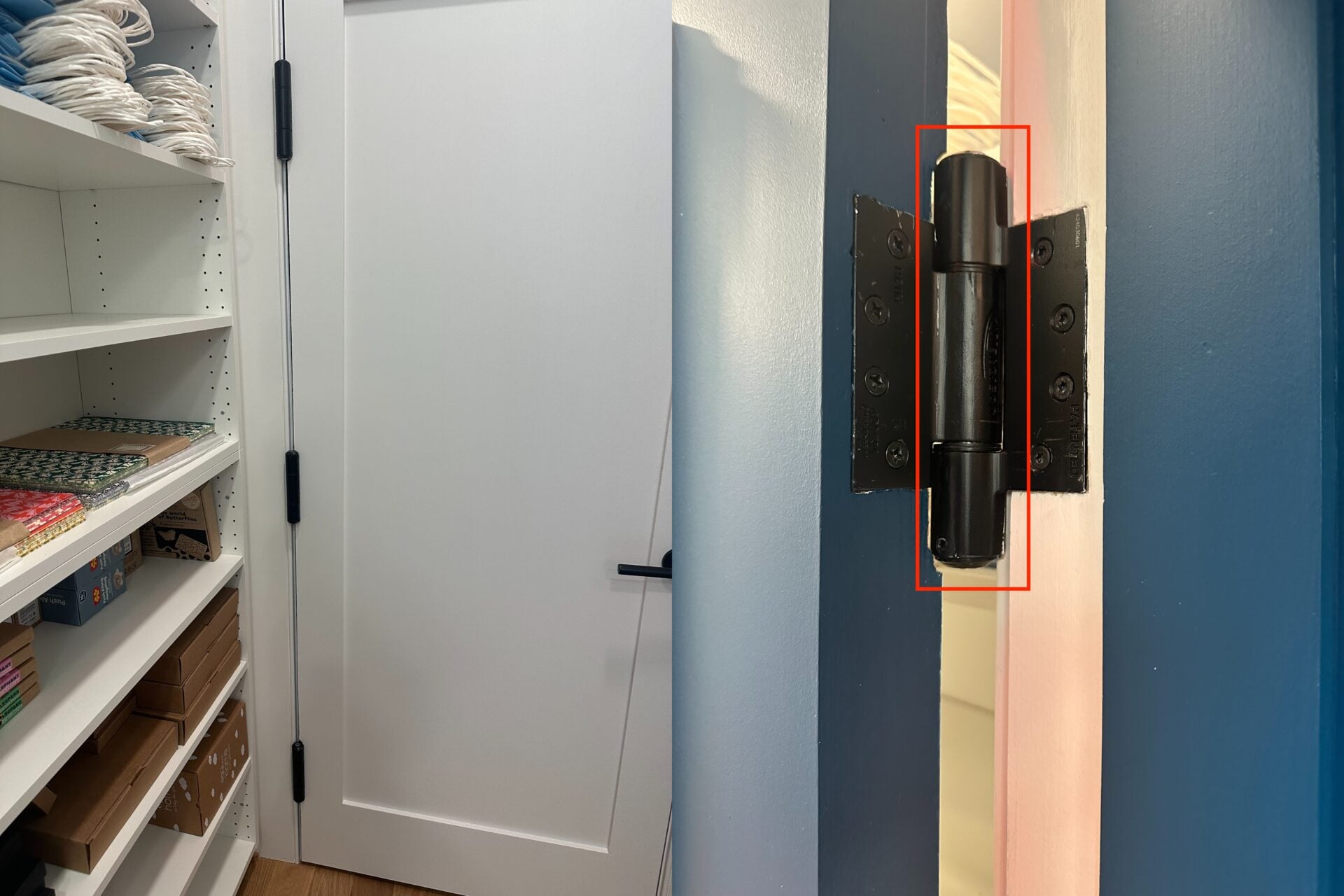
Path 2: Change the hinge option. Waterson is not your solution for this
- On a custom, high value, or shaped edge door, shaving is usually the wrong answer. The reviewer above made the correct call by returning the product rather than cutting into a custom edge.
- For an opening with essentially zero clearance, a barrel integrated closer hinge may not be the right tool. A concealed or surface closer, or a hinge with different offset geometry, can be the better fit.
We would rather tell you this hinge is wrong for one specific opening than sell you a return and a ruined door.
Why Garage Doors Don’t Have This Clearance Problem
Interestingly, Waterson oversized barrel is NOT an issue when it meets the garage door opening.
On a trimmed-out interior retrofit, swapping a standard 4 inch hinge for the larger Waterson barrel often runs into a tight reveal or a heavy casing. That is where the clearance questions come from.
A typical garage door is different. It sits in a plain, square-cut jamb with little or no decorative trim and plenty of room on the hinge side, so the bigger barrel has all the space it needs to seat and swing freely.
That lines up with real customer feedback: of the customers who bought these specifically for a garage door, we get essentially no complaints about barrel clearance. The same part on a tightly trimmed interior retrofit is where the tight-clearance questions show up.
Which Waterson Features Earn Their Keep on a Tight Clearance Custom Door?
Assume the opening can take the barrel. Here is what a Waterson unit brings to a custom interior door, with a straight note on which features decide this specific job and which are simply nice to have.
- Integrated closer and hinge: removes the overhead closer entirely, which keeps a custom door looking like a custom door. This is the main reason to accept the barrel at all.
- Stainless steel SS304 with SS316 available: corrosion resistance and strength for interior and exterior openings, including humid or coastal sites.
- Numerically adjustable spring tension: set closing force to the actual door weight, then repeat that setting exactly across every hinge in the set.
- Adjustable mechanism: control the sweep and the final few degrees, tunable to roughly 5 seconds for ADA force and speed.
- Anti slam and soft close behavior: protects a custom slab and frame from the impact a plain spring hinge would deliver.
- Optional hold open and door stop: no floor stop, no wall stop, no extra plates on a clean door.
- Code coverage: UL 3 hour fire rating, NFPA 80, ANSI and BHMA A156.17 Grade 1, and ICC A117.1. Specify a self closing hinge that already carries the listings your AHJ will ask for.
- Warranty: Backed by a 3+ year warranty, depending on the models
The two features that decide the job are barrel diameter and adjustability. Fire rating and finish do not help if the door will not close against the frame.
- Deepen the hinge side mortise so the leaf sits further in, if the strike side has room for the door to move back.
- Use the included steel shims for small adjustments. They are for fine tuning and won’t fix a full 1/4″ shift.
- Plane the strike edge and reset the latch and strike plate.
If the door has a custom or shaped edge, we don’t recommend planing it. A concealed closer or surface closer may be a better fit for that opening.
Request For Quote
Please note that Waterson Closer Hinges start from a size of 4″x4″. If you’re in need of smaller self-closing hinges, we’d recommend checking out some other resources! Also, we only provide single acting closer hinges. Thank you.
Recent Post
Swing Clear Hinge Retrofit: Can a Right Hand Unit Work on a Left Hand Door
"Hi Waterson Team, we received only right hand hinges for the off set hinges. Is there a way to make this work?" A swing clear [...]
Hydraulic Self Closing Hinges: How They Work & How to Choose
Quick Answer Hydraulic self-closing hinges close a door automatically and control its speed so it never slams. Waterson builds this as a Hydraulic Hybrid set: [...]
Commercial Hinge Template: Why Waterson Hinge Gauge is Thicker, and What to Check Before a Retrofit
"The hinges were not a direct replacement to my existing 4 inch hinges. The bolt pattern was different. This caused me to drill and tap [...]