
Quick Answer
Healthcare door hinges are not one product. Patient rooms need hydraulic self-closing hinges that close heavy doors softly, often in a swing clear version so beds can pass. ER doors may only need a firm stop at 120°. Fire doors must close and latch every time. Lab doors need enough force to beat air pressure. Clinic glass doors need wall-to-glass hinges with hold-open.
“We have 16 patient room doors. They are heavy, they slam, and the old hinges are worn out. Can we replace them without changing the frames?”
We get questions like this from hospitals, clinics, and labs all the time. The answer is usually yes. But before picking a hinge, ask one question: what does this door need to do? In a healthcare building, the answer changes from room to room.

Why Hospital Doors Need More Than a Standard Hinge
A hospital door works harder than most doors in any other building:
- Heavy: Patient room doors are often 4 ft wide and weigh 120 to 150 lbs.
- Busy: Beds, carts, and staff pass through day and night.
- Strictly regulated: Fire doors must close and latch, and accessible doors must still open easily.
- Cleaned constantly: Hardware is wiped with disinfectant many times a day.
Overhead closers can handle some of this, but their arms are bulky, hard to clean, and often lose the fight against heavy doors. The right hinge can do the job with nothing hanging over the door.
Which Hinge Does Each Room Need?
| Room | The door should… | Pick this |
|---|---|---|
| Patient room | Close softly, let beds pass | Hydraulic swing clear hinge |
| Exam room / ER | Stay open, stop at 120° | Hinge with door stop |
| Fire door | Close and latch every time | UL listed self-closing hinge |
| Lab | Close against air pressure | Heavy-duty hinge, adjustable force |
| Clinic glass door | Close gently, hold open | Hydraulic wall-to-glass hinge |
Patient Rooms: Close Softly, No Slamming
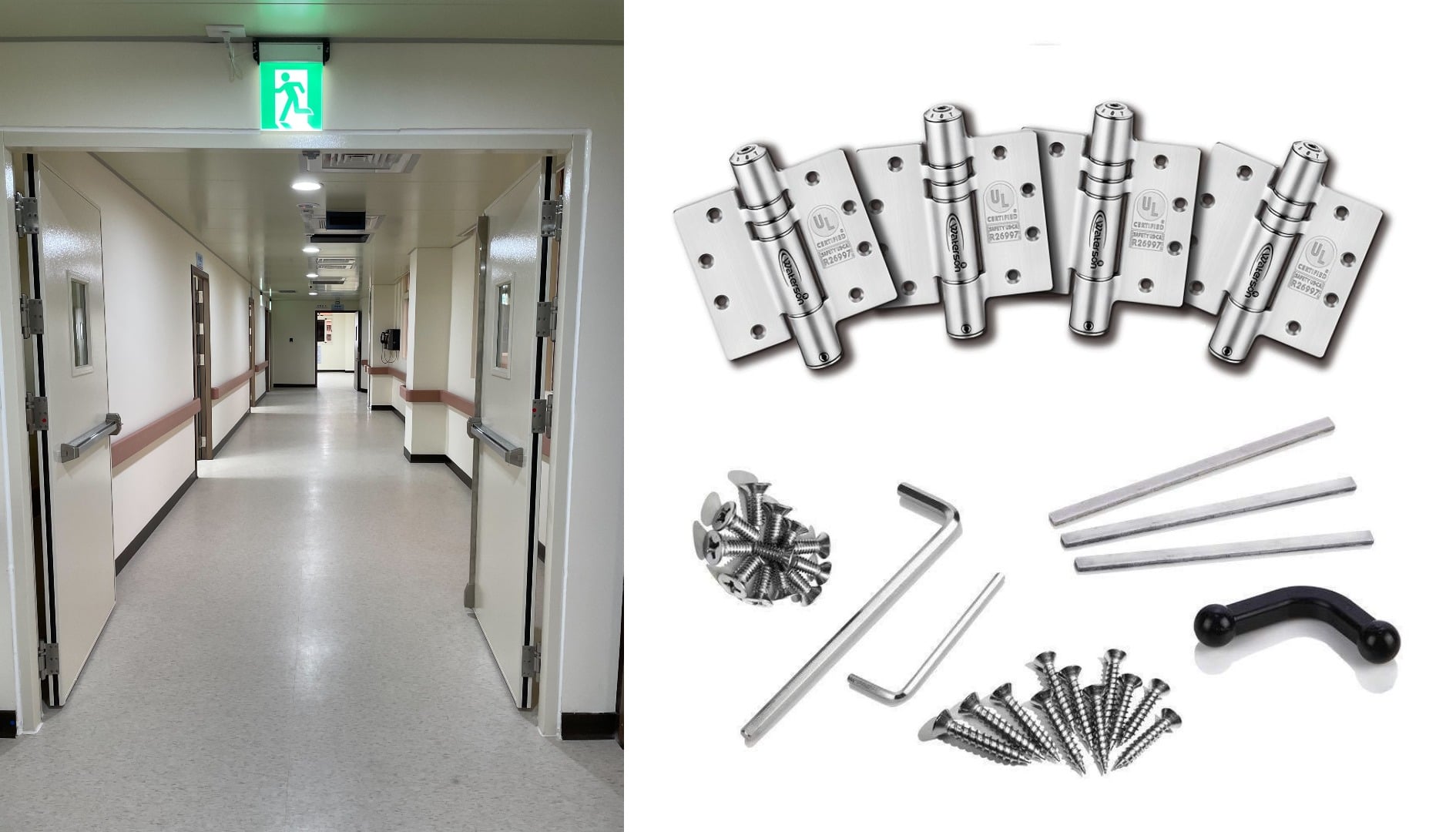
Patient room doors need to close on their own for privacy and safety. But a heavy door that bangs shut next to a resting patient is the last thing a hospital wants.
Real project: Chinese Hospital, San Francisco, CA
Chinese Hospital needed new hinges for 16 doors that could close softly without slamming. The doors measure about 4′ x 7′, 1-3/4″ to 2-1/4″ thick, and weigh 120 to 150 lbs each. The installation team replaced the old hinges with Waterson hydraulic swing clear hinges, using the existing frames, and the rooms got quiet, reliable doors.
How the soft close works
Waterson hydraulic self-closing hinges give you control over the whole close:
- Swing speed: how fast the door travels back toward the frame.
- Latch speed: how the door finishes the last part of the close.
- 30° hydraulic zone: the cushion that slows the door. You can shift this zone so the door either closes firmly into the latch or settles in gently on a latchless door.
Everything is adjusted on site with a hex wrench. Our adjustment guides walk you through each step.
Why swing clear matters
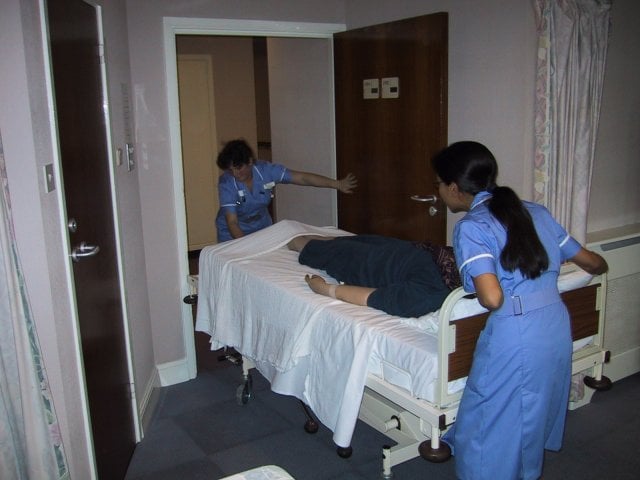
A standard hinge leaves the door’s thickness sitting in the opening. A swing clear hinge moves the door completely out of the way, so beds, stretchers, and wheelchairs get the full width. Learn more about swing clear hinges.
Caution: Hydraulic hinges work best from 0° to 120°. Opening beyond 120° can damage the hinge and void the warranty. In hospitals, beds and carts often push doors wide open, so add a door stop if your doors can swing past 120°.
Exam Rooms and ER: Stop, Don’t Close
Here is something many specs miss: not every healthcare door should close itself.
Real request: Baptist Health ER & Urgent Care, Kentucky
Baptist Health asked us about hinges for exam room doors: 36″ x 84″, 1-3/4″ thick, on hollow metal frames. Their request was simple: “We need them to just stop the door swing at 120 or 125.”
No self-closing. No hold-open. Just a controlled stop.
The reason makes sense. In fast-moving clinical areas, a door that pulls itself closed gets in the way of stretchers and staff. And a door that swings to 180° can hit the wall and the medical equipment mounted on it.
A Waterson stopper fits on the hinge barrel and stops the door at 90° or 120°, every time. It protects the wall, protects the equipment, and keeps the door out of the way. See how the 120 degree door stop works.
Fire Doors: Close and Latch, Every Time
Corridor and stairwell doors in healthcare buildings are usually fire-rated. Under NFPA 80, a fire door must close and latch on its own. A door that stops an inch short fails inspection, and it is one of the most common problems inspectors find.
What to look for:
- UL listing: the hinge must be listed for fire-rated doors.
- Latch control: enough force at the end of the close to engage the latch.
- Steady force: the same closing performance after years of use.
There is one more challenge. ADA limits how hard a door can be to open, while fire doors need enough force to latch. Here’s how to balance ADA force and fire door latching. For the full code picture, see our guide to NFPA 80 fire door requirements.
Labs: Close Against Air Pressure
Labs, isolation rooms, and cleanrooms are kept at positive or negative pressure. That pressure pushes on the door, sometimes hard enough to stop it from closing fully.
Real project: Xencor Lab, Buena Park, CA
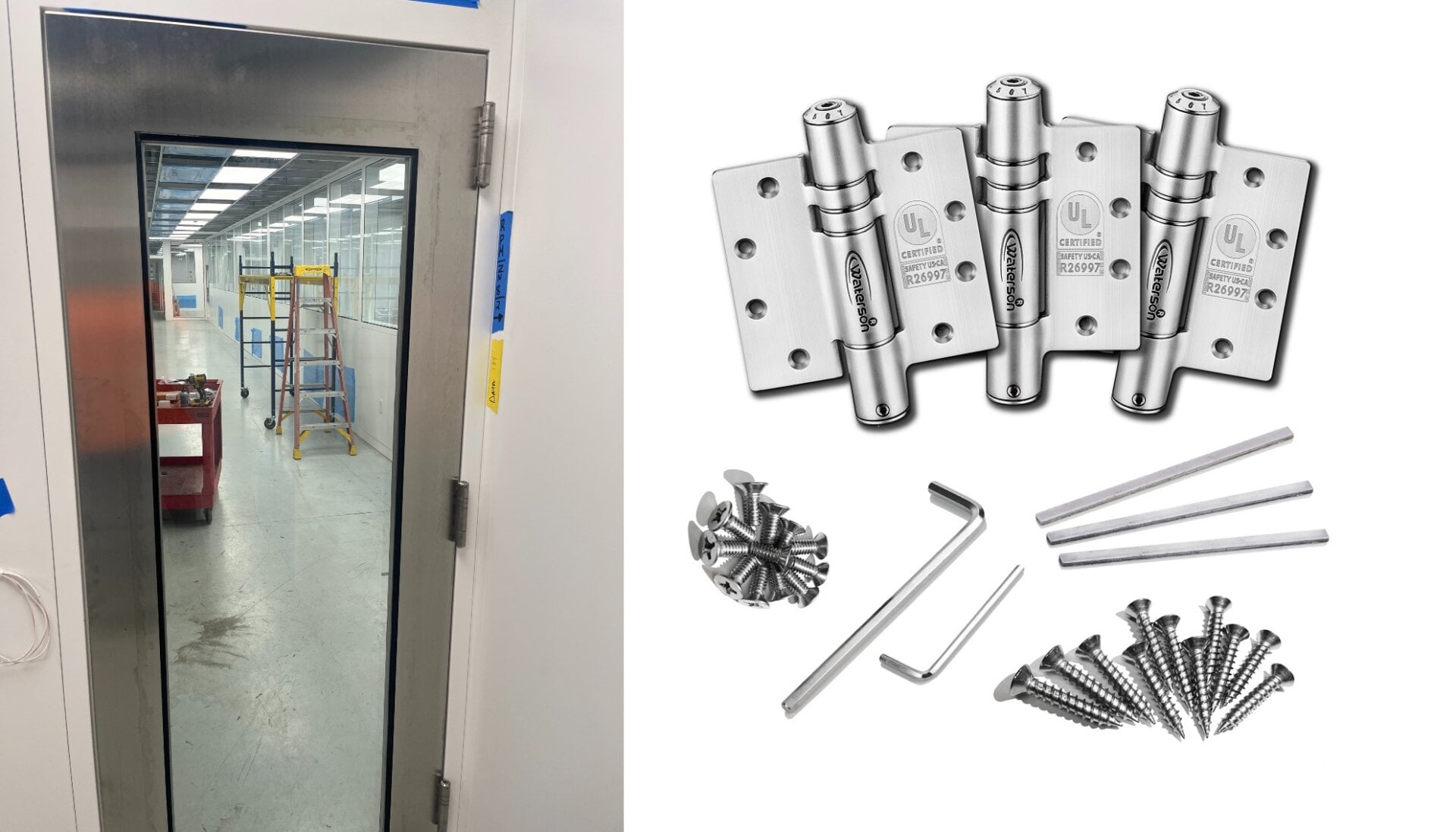
Xencor, a pharmaceutical company developing antibody-based drugs, had lab doors that would not close properly because of air balance issues, even with a surface closer installed. The project manager switched to Waterson hinges:
- K51M-450-A3-US32D: 4.5″ x 4.5″, heavy-duty, 3-hour fire-rated
- K51M-500-A3-US32D: 5″ x 5″, adjustable speed and closing force
With adjustable force, the doors now close fully against the pressure, with no closer arm on top.
Both hinges are 304 stainless steel, which also holds up to strong disinfectants used every day. Curious what a treatment room really needs? See our guide to hygienic door hinges.
Clinics: Glass Doors That Close Gently
Medical offices and dental clinics often use frameless glass doors to keep the space bright and open. These doors still need to close on their own, and they are heavier than they look.
Real project: Summer Creek Dental, Humble, TX
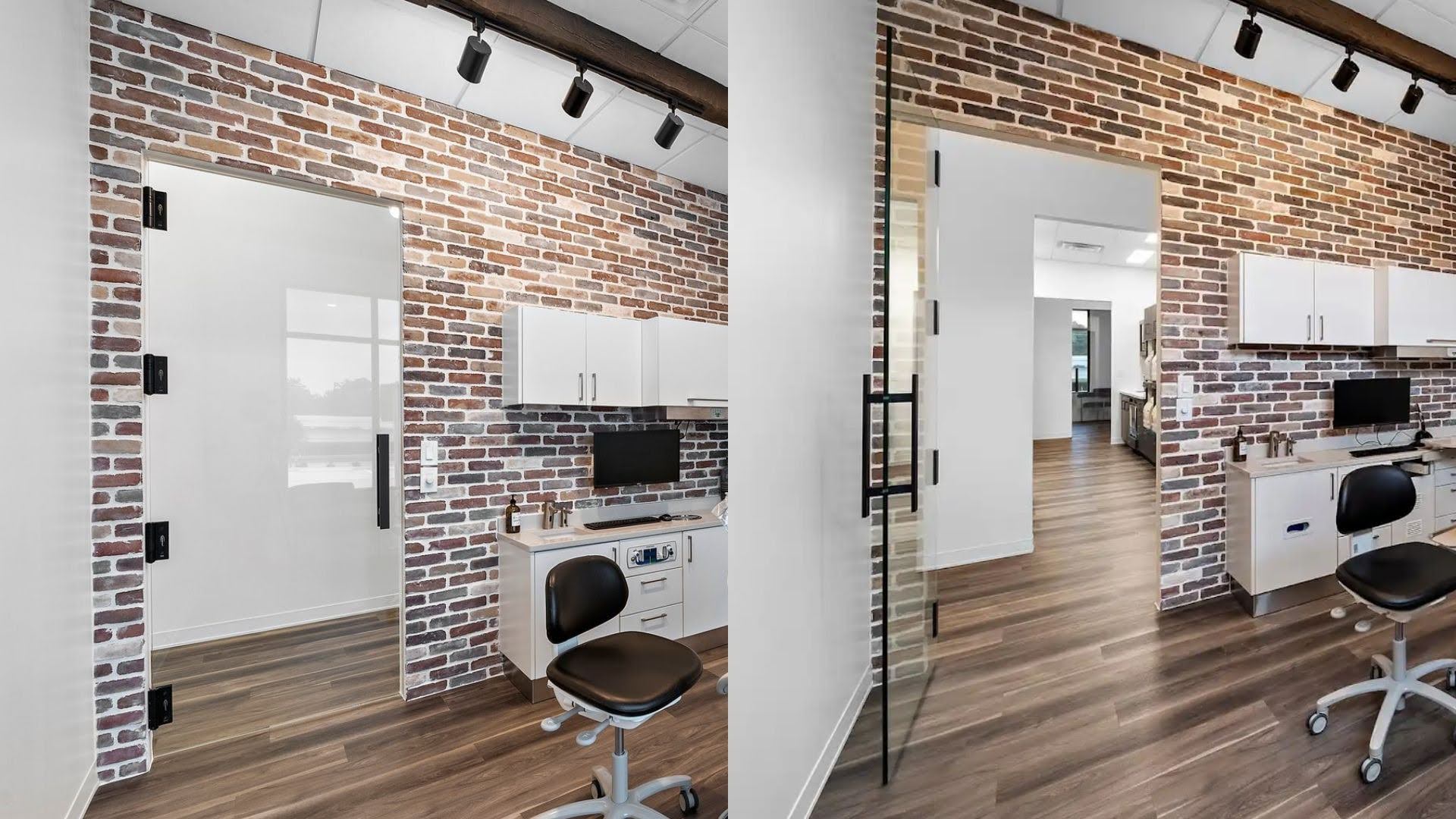
After moving into its new facility, Summer Creek Dental needed hinges for 15 frameless glass doors, each 4.5′ x 4.5′ x 1/2″ thick and about 157 lbs. The doors mount directly to the wall and needed hold-open.
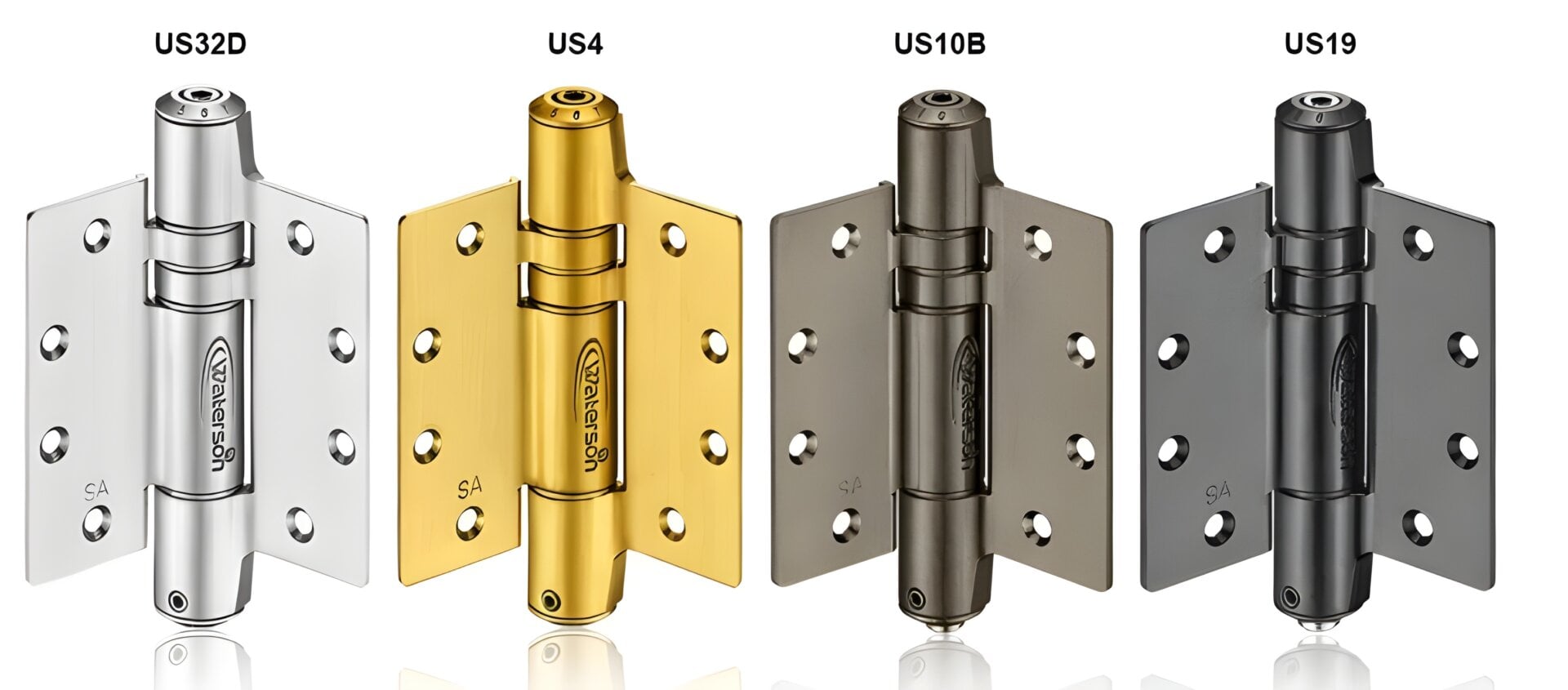
The clinic chose K51GWL-600-D4-US19: 6″ x 6″, hydraulic closing with speed control, hold-open, 304 stainless steel, in flat black. The result is a clean, modern look and glass doors that close gently and stay open when staff need them. See our wall-to-glass hinges.
Before You Specify: Quick Checklist
Have these details ready. They decide which hinge fits:
- Door size and weight: width, height, thickness, approximate weight.
- Fire rating: is the door rated, and for how long?
- Latch: latched or latchless? This changes the hydraulic setting.
- Opening angle: will it swing past 120°? If so, plan a stop.
- Hold-open: should the door stay open on its own?
- Air pressure: is the room positive or negative pressure?
- Frame type: hollow metal, wood, or wall-mounted glass.
- Clear width: do beds need the full opening? Consider swing clear.
Frequently Asked Questions
In most cases, yes. They close the door without an overhead arm, so there is less to clean and nothing hanging over the opening. For very heavy doors, check the weight with us first.
Yes, as long as the hinge is UL listed for fire doors and closes and latches the door every time.
A swing clear hinge. It moves the door fully out of the opening, giving you the full clear width.
The usual causes are air pressure or too little closing force. A self-closing hinge with adjustable force and latch control usually fixes both.
Hydraulic hinges work best from 0° to 120°. Beyond that, add a door stop to protect the hinge.
Find the Right Hinge for Your Project
A hospital has hundreds of doors, and each one has a different job. When the hinge matches the room, patient rooms stay quiet, ER doors stay out of the way, fire doors latch, and lab doors close every time.
Planning a hospital, clinic, or lab project? Send us your door details and we’ll recommend the right hinge for each opening. Architects, contractors, and distributors can also request a trade discount for their project.
Request For Quote
Please note that Waterson Closer Hinges start from a size of 4″x4″. If you’re in need of smaller self-closing hinges, we’d recommend checking out some other resources! Also, we only provide single acting closer hinges. Thank you.
Recent Post
Healthcare Door Hinges: How to Choose from Patient Rooms to Labs
Quick Answer Healthcare door hinges are not one product. Patient rooms need hydraulic self-closing hinges that close heavy doors softly, often in a swing clear [...]
How to Provide Your Door Information to Waterson to Get Product Recommendations
If you're new to Waterson Hinges and not sure how to get started, this page is for you. We get a lot of inquiries every [...]
Self Close vs Soft Close Hinges: Two Different Needs, Explained
Self close hinges shut the door on their own. Soft close hinges only slow the door so it won’t slam. Learn how to choose.