
“I don’t want to put a… a regular door closer on it cuz it’ll be ugly. You know, in the hallway. Plus that thing sits way up on top of the door, who’s ever gonna wipe it. I need the self closer one, it’s going on my treatment rooms.”
That came from a clinic operator looking for the right door hardware from us. Beyond wanting a door closing hardware that looks good in the hallway, he also brought up hygiene and cleanability. And for a treatment room, that matters more than anything else, because this is a medical space.
So, what is the key here? Which features decide whether a treatment room door is both hygienic and successful in daily operation? And what is the best solution?
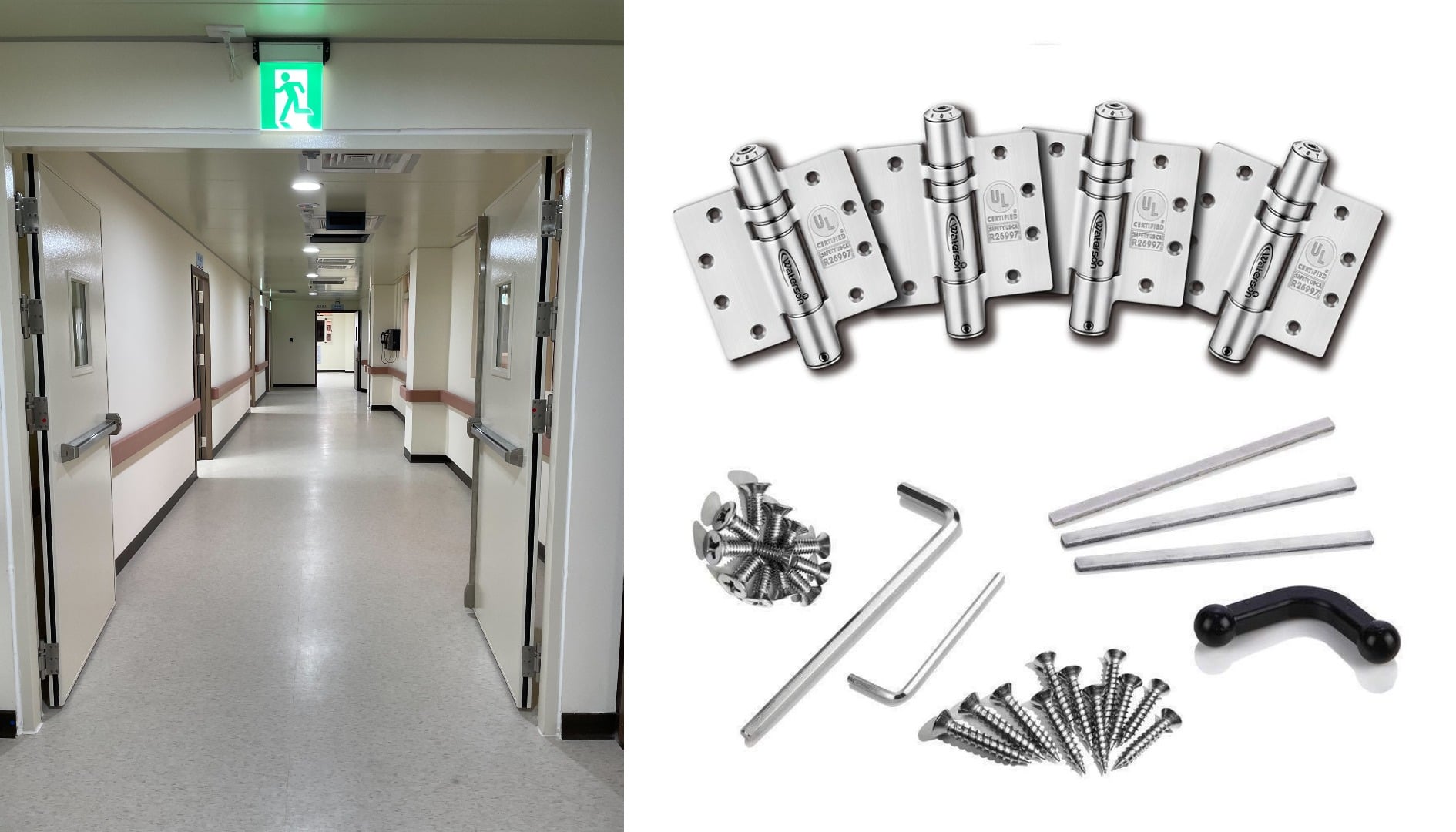
Hygiene: The Thing We Have to Talk About First
Let’s start with simple arithmetic. A treatment room sees about twenty encounters a day, times roughly two hundred and fifty operating days a year, which means the room gets a chemical wipe-down about 5,000 times a year. After every patient, every surface gets wiped. Except one: the door closer sitting on top of the door.
Exactly as our customer put it, that thing sits way up there, and who’s ever gonna wipe it. It is a horizontal ledge collecting dust all day, out of reach of the cleaning cloth, and on nobody’s cleaning checklist. In a corridor where every other surface gets disinfected constantly, that is no longer a question of ugly or pretty. That is the definition of an infection control problem.
And here is something most people miss: an inpatient room only gets a terminal clean at discharge, while an outpatient treatment room gets wiped with chemicals after every single encounter. Which means the treatment room is the harsher chemical environment in the building. Its hinges have to survive those 5,000 wipe-downs, year after year.
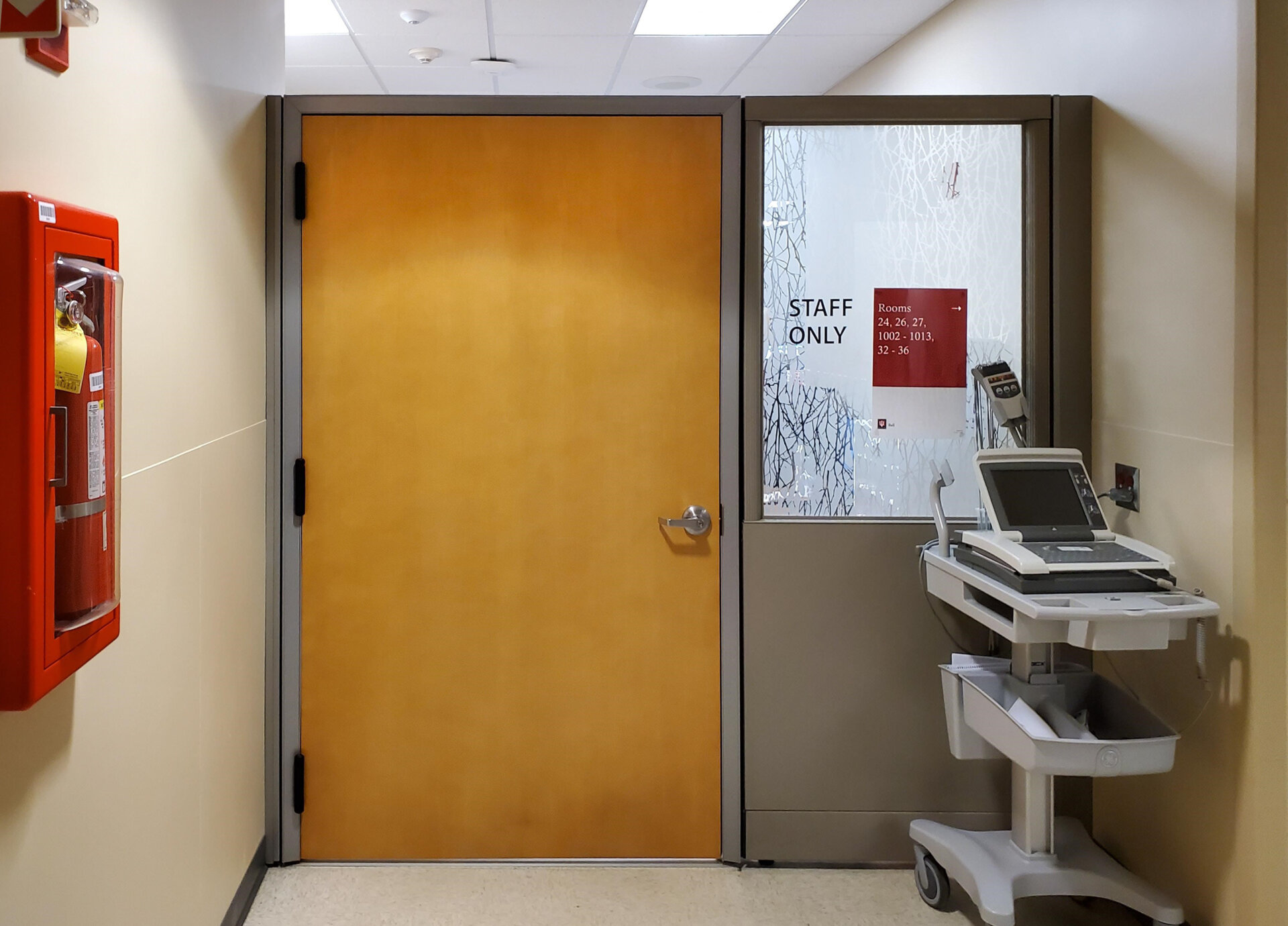
So What Does “Hygienic” Actually Mean? Is It the Same as Killing Bacteria
NO, and this is exactly where a lot of people get sold the wrong thing.
When you go looking for a solution, you notice something interesting: no major hardware manufacturer offers a hinge with an active bacterial kill claim. They treat levers, pulls, and push plates, and they all stop at the hinge. Why? Not laziness, but engineering:
- Copper alloy is too soft. A kill claim needs at least 60% copper, and at that composition the alloy cannot hold the knuckle bearing surface through half a million rotations under load.
- Galvanic corrosion. Copper surfaces meeting steel fasteners, in a humid room with a sink in it, is a textbook failure mode.
- Finish conflict. Copper and bronze tones fight the stainless palette most healthcare corridors are designed around.
So what you should specify is a hygienic hinge, and the difference is not semantics:
| Hygienic | Active kill claim | |
|---|---|---|
| What it does | Resists corrosion, wipes clean, survives harsh disinfectants | Kills or suppresses bacteria on contact |
| Mechanism | Passive chromium oxide layer | Releases copper or silver ions |
| Between cleanings | Nothing | Still working |
| Does 304 / 316 stainless qualify? | Yes | No |
| Regulatory burden | No claim to defend | EPA registration or treated-article exemption |
Let’s be clear: stainless steel does not kill bacteria, and anyone selling it that way is overreaching. The passive layer that makes stainless durable is the very layer that stops it releasing ions, so the two properties exclude each other by mechanism. In the copper ICU studies everyone quotes, stainless was the control surface, not the winner. But what stainless gives you is a substrate that survives a 5,000-wipe-a-year cleaning protocol, and that is the platform.
Beyond Hygiene, What Else Does a Treatment Room Door Demand
A treatment room is not an inpatient room, and it is not an operating room. Confusing the three is why most healthcare hardware specifications go wrong.
| Room type | Typical rating | Hold open permitted? | Dominant stress |
|---|---|---|---|
| Patient room / inpatient corridor | Fire or smoke barrier | Electromagnetic only | Continuous slow traffic |
| Outpatient treatment room | Usually non-rated | Yes | Disinfectant, hard latch cycles |
| Operating room | Often automatic | Not applicable | Air pressure, automation |
The treatment room is where the hinge still decides the outcome. What it demands:
- Positive latching every time, because patient privacy is not optional
- Hold open during turnover, when carts and wheelchairs move through
- Survival under disinfectant, as covered above
- Clear width that survives the hardware
- Visual discipline in a corridor lined with these doors
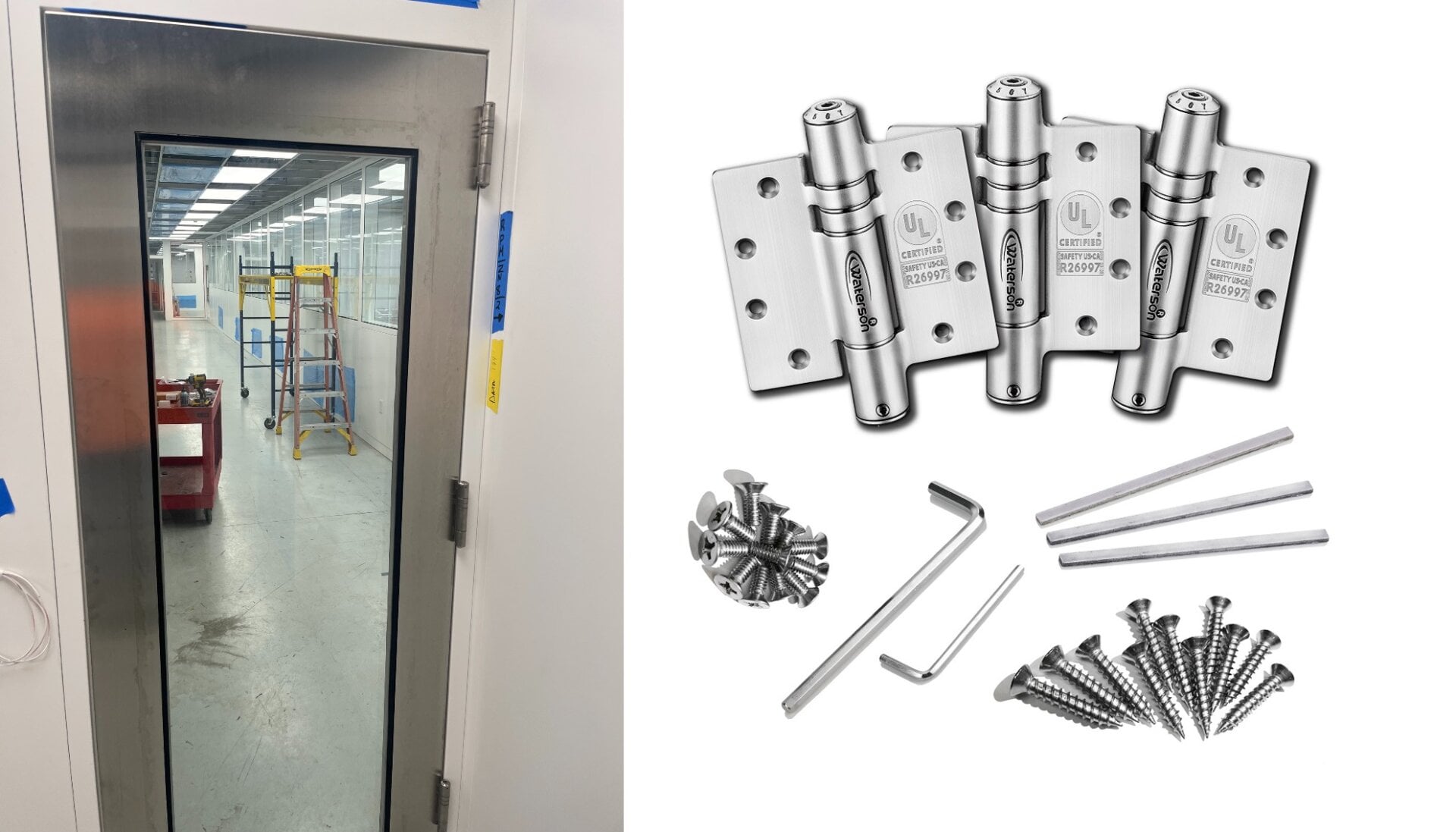
Why Is Hold Open Needed Here
Many people think surgical staff need a light-push door because their hands are sterile. Wrong. Scrubbed-in personnel do not touch doors at all: they use hips, elbows, foot controls, or automatic operators.
The real condition is not sterile hands, it is occupied hands. A medical assistant carrying a specimen tray with a laptop cart, where is the free hand supposed to come from? Same for a tech pushing portable imaging, same for a patient propelling a wheelchair.
And when the hardware does not hold open, what happens? Staff prop the door with something. That rubber wedge is the worst object in the room: it lives on the floor, it moves by hand or by shoe, it travels between rooms, and it appears on nobody’s cleaning checklist.
Now the constraint, because getting this wrong in front of an AHJ ends the conversation. NFPA 80 does not permit mechanical hold open devices on fire doors; the only compliant hold open is electromagnetic, released by the fire alarm system. That is exactly why Waterson does not offer hold open on its fire rated models, and it is also why this conversation belongs to the non-rated treatment room, not the inpatient corridor.
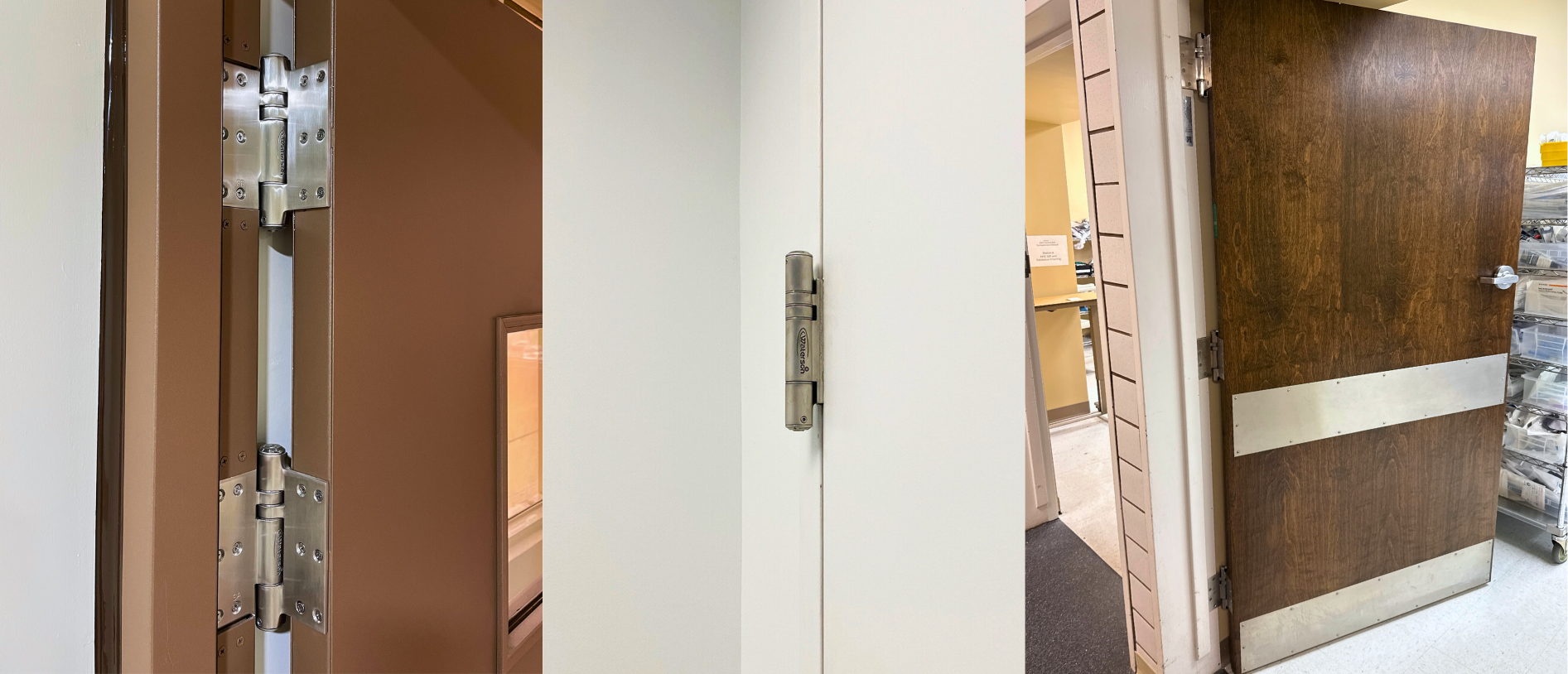
Do Hygienic Door Hinges Need Heavy Duty
Yes, but not for the reason most people assume. Count actual door events per encounter, not per patient:
| Event | Cycles |
|---|---|
| Patient in, patient out | 2 |
| Medical assistant in and out for vitals | 2 |
| Provider in and out | 2 |
| Tech in and out | 2 |
| Housekeeping turnover | 2 |
| Per encounter | ~10 |
Twenty encounters a day is about 200 cycles daily, 50,000 a year, and half a million over a ten year life. That surprises people, because everyone assumes inpatient doors work harder. But an inpatient door is often left open, while a treatment room door is a hard, discrete open-and-latch event repeated all day long.
Weight is the other half. A 3’0″ x 7’0″ solid core wood or hollow metal leaf runs roughly 90 to 110 lbs, and dental or diagnostic imaging rooms may be lead lined. That is exactly where undersized spring hinges fail first.
But remember: the binding constraint is still chemistry, not mechanics. A hinge can be flawless at half a million cycles and still be pitted by year three, simply because nobody checked the finish against the facility’s disinfectant list.
When Waterson Self Closing Hygienic Door Hinges Meet all Needs
Waterson delivers self closing and hygienic door hinges, with all the heavy duty needed for a crowde. What it solves is the treatment room’s problem, on the very substrate any future antimicrobial coating would have to sit on:
- Stainless steel: Specify 316 for chloride exposure or aggressive wash-down, 304 for standard interior clinic work.
- Self closing mechanism: Nothing sits above the door, no closer body becomes the dust ledge that nobody ever wipes.
- Optional hold open: Staff stop wedging doors with objects nobody cleans. Non-rated openings only.
- Integrated door stop: No floor stop for housekeeping to mop around, no wall stop chewing into corridor drywall.
- Anti slam: Hydraulic damping on the final degrees of travel, which turns a quiet latch into a privacy feature rather than a comfort feature.
- Heavy duty: 1.000.000 cycle tested with ANSI/BHMA A156.17. Confirm the model against actual leaf weight, especially on lead lined rooms.
- Fire rated: 3-hour fire rated with self closing function. However, hold open is deliberately not offered on them per NFPA 80.
- Powder coating manufacturing: under the same roof as stainless production. Exactly the infrastructure a coated hinge would require.
- 3-5 year warranty
Waterson Self Closing Stainless Steel Hygienic Door Hinges for Treatment Room
Waterson hydraulic soft closing hinges combine the function of an overhead closer and a hinge into a single, sleek component—complete with optional hold-open and door-stop features. Designed for commercial openings, gates, and glass doors, these hinges are easy to install and adjust to meet ADA and ICC A117.1 standards for opening force, while ensuring quiet and secure closure. Crafted from durable stainless steel, they are NFPA 80 compliant, UL 3-hour fire-rated, and built to perform reliably in both interior and all-weather exterior environments. See all our features.
In addition to these performance advantages, Waterson offers flexible customization services. As a direct custom hinge manufacturer, we can tailor hinge sizes, finishes, and especially hinge leaf designs to meet the specific structural needs of your doors. This makes our hinges an ideal solution for door manufacturers seeking custom options that integrate seamlessly with their existing frames.
Request For Quote
Please note that Waterson Closer Hinges start from a size of 4″x4″. If you’re in need of smaller self-closing hinges, we’d recommend checking out some other resources! Also, we only provide single acting closer hinges. Thank you.
Recent Post
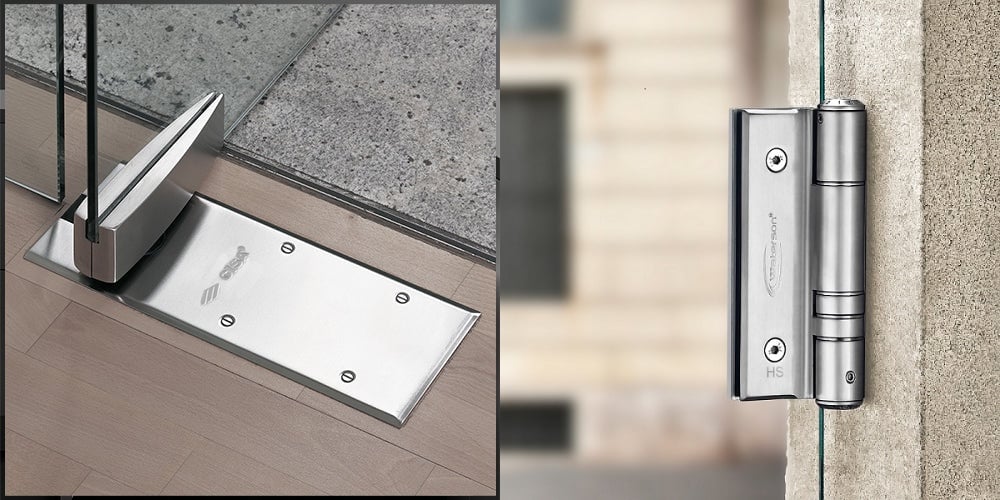
Glass Door Hinges: Floor Spring vs Spring Hinge Compared
Quick Answer Floor hinges (also called floor springs) are hydraulic closers set into the floor slab for center-hung or double-acting glass doors with fully concealed [...]
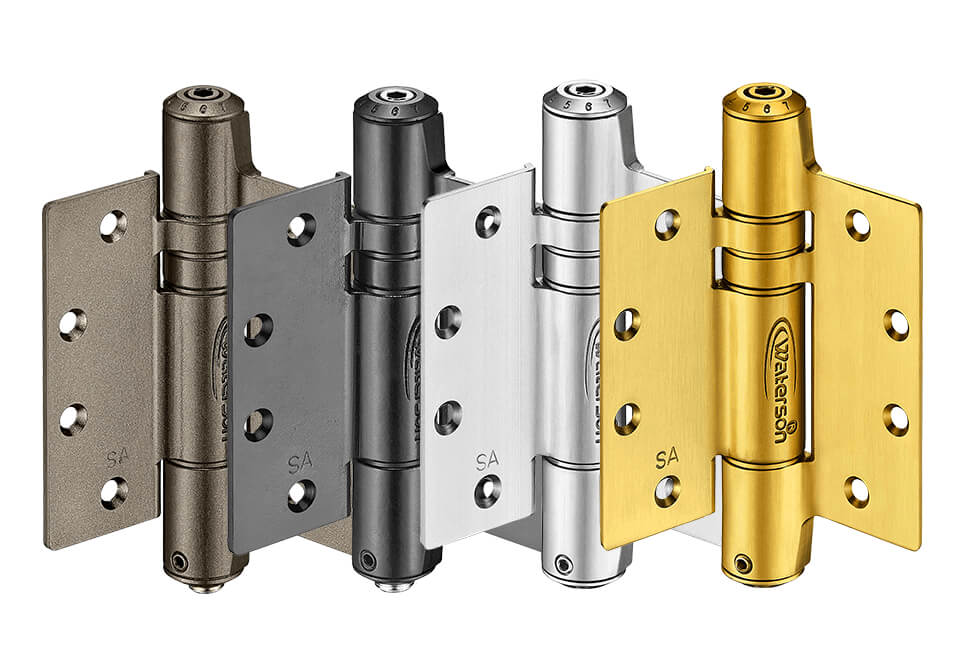
Stainless Steel Spring Hinges: Self-Closing Hinges for Interior and Exterior Doors
Quick Answer A stainless steel spring hinge is a self-closing hinge with a torsion spring inside the barrel, so it swings the door and closes [...]
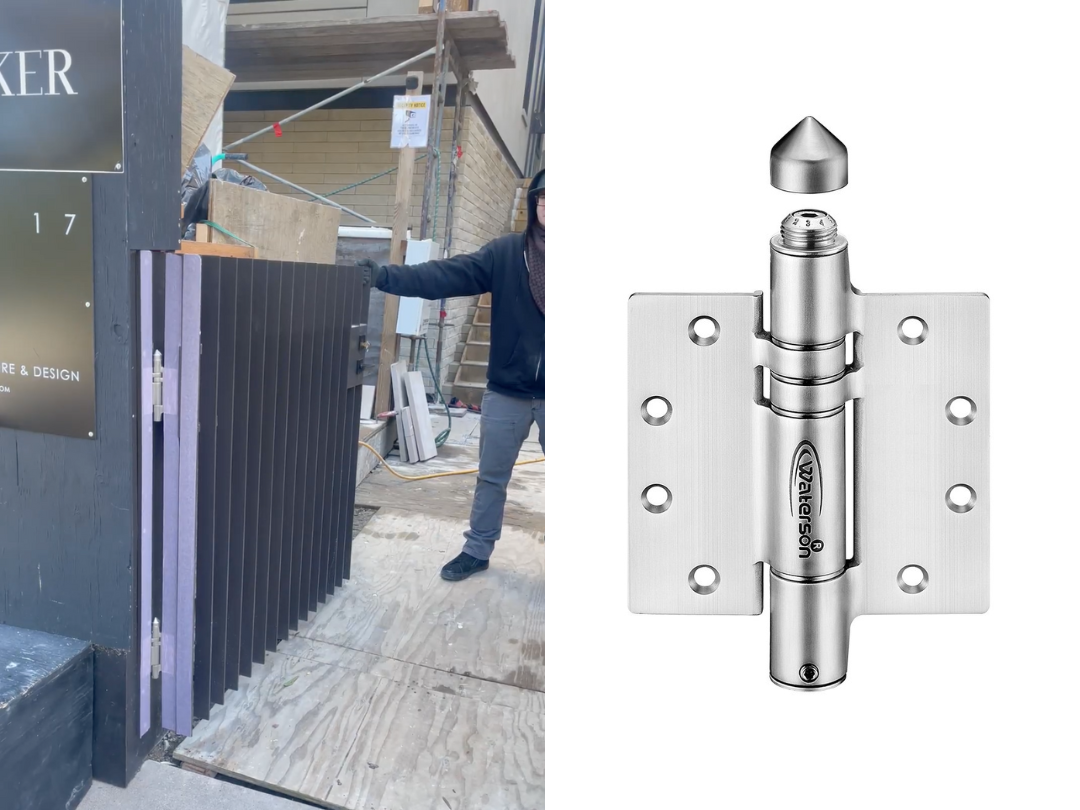
Cold Weather Gate Hinges: How Waterson Performs in Winter
When winter comes, temperatures drop, and outdoor fence gates start to behave differently. Wood absorbs moisture and swells, metal contracts slightly, and hardware components shift [...]