
“We manage a retail plaza with twelve tenant entrances. The doors are three years old and we are already replacing hinges on the busiest units. What should we be specifying instead?”
“Wear” is rarely one failure mode. It is usually one of four distinct mechanisms stacked on top of each other: grade, load path, closer adjustment, and corrosion class, and each one has a different fix. So what actually causes premature wear in commercial door hinges on storefronts, and what would a hinge need to get right on all four fronts at once to stop generating callbacks for years instead of months?
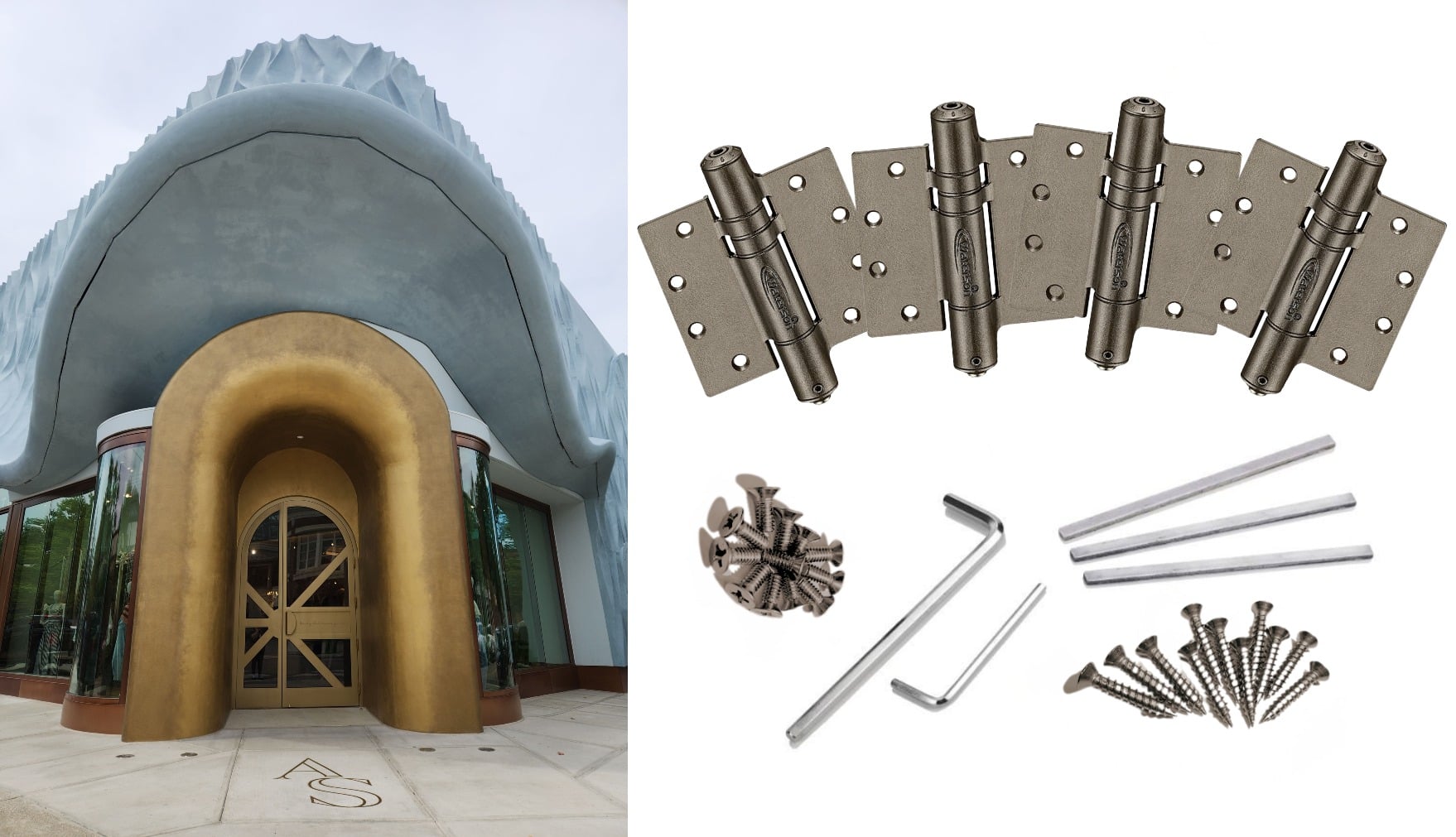
Grade, Cycle Rating, and Why the Wrong Spec Fails Fast
ANSI/BHMA A156.1 grades hinges by cycle testing, not by price point:
| Grade | Cycle test | Typical fit |
|---|---|---|
| Grade 1 | 1,000,000+ cycles | Storefront, heavy commercial entrances |
| Grade 2 | 500,000+ cycles | Office, light commercial interior doors |
| Grade 3 | 250,000+ cycles | Residential, light-use interior doors |
A busy storefront entrance runs 300 to 600 cycles per day. At 400 cycles a day, six days a week, that is roughly 125,000 cycles per year, so a Grade 2 or 3 hinge can hit its tested limit in two to four years, matching the failure window in the inquiry above. This is a spec problem before it is a maintenance problem: if the hardware schedule called for Grade 2 on a storefront leaf, the hinge did exactly what it was tested to do.
Separately, self closing wall to glass hinges are tested under ANSI/BHMA A156.17, typically rated to 1,000,000 open and close cycles as a spring-loaded assembly, not just a pivot point. That distinction matters when comparing a plain butt hinge to a self closing hinge on the same schedule line.
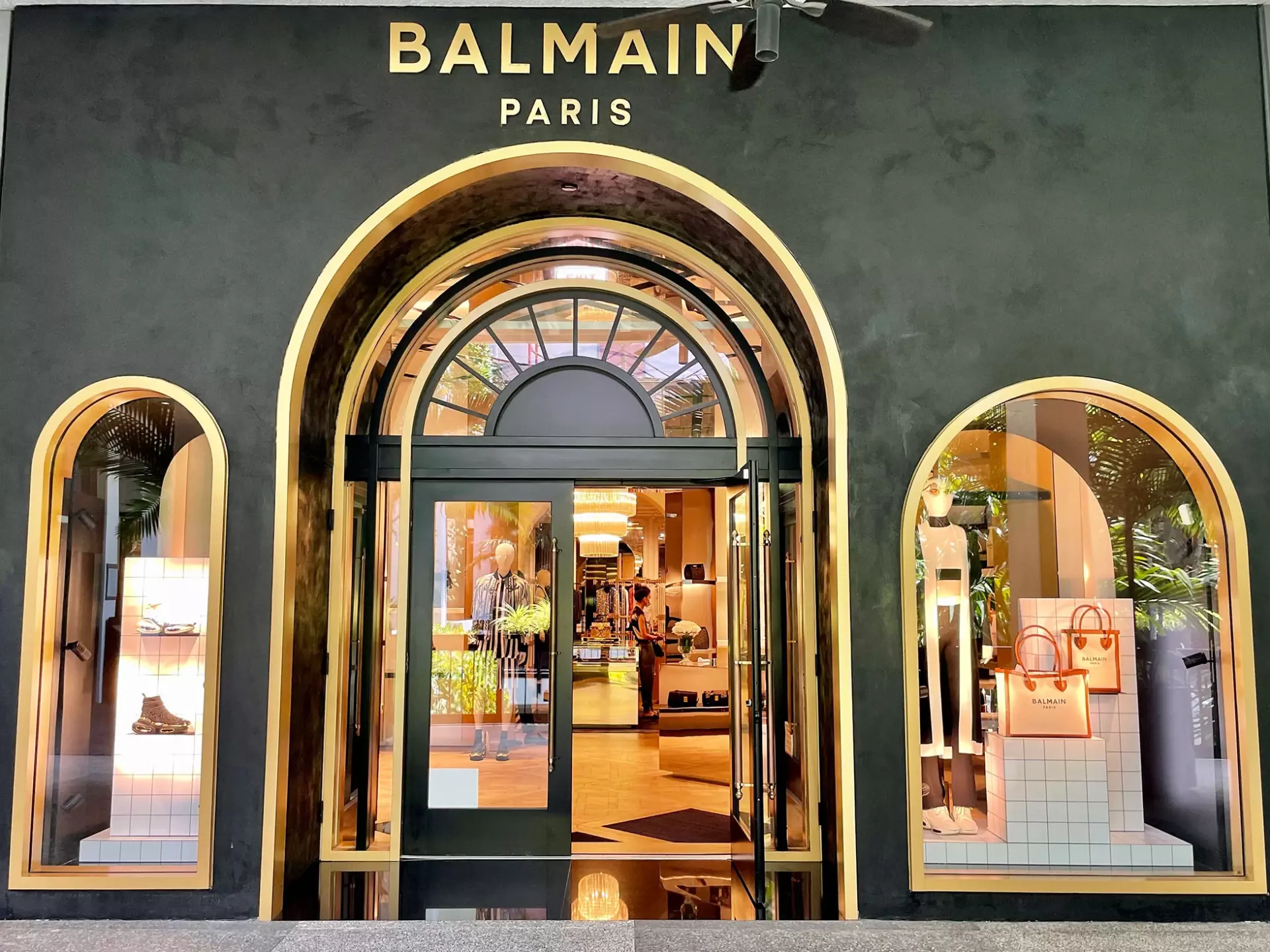
What Load Path Failures Are Actually Wearing the Hinge?
Aluminum and glass storefront leaves commonly run 150 to 260+ lbs once a closer and exit device are mounted. Three things determine whether the hinge actually carries that load without deforming:
- Bearing type: Ball bearing hinges hold alignment under sustained load far longer than plain bearing hinges. On any door over roughly 100 lbs or seeing more than 100 cycles a day, plain bearing hinges are the wrong spec, full stop.
- Load distribution across hinge count: A two-hinge set carries the full leaf weight through two points. Moving to three or four hinges is not overkill, it is load sharing. As a reference point, Waterson’s wall to glass hinge line rates two hinges to 150 lbs, three hinges to 260 lbs, and four hinges to 440 lbs, which tracks the standard practice of adding a hinge roughly every 40 inches of door height on heavy leaves.
- Fastener engagement: In aluminum stile construction, hinges must land on internal reinforcement, not just the extruded skin. Self-tapping screws into unreinforced aluminum will back out or strip the thread under cyclic load, which is what actually causes the “elongated screw hole” wear pattern most techs attribute to the hinge itself.
Why Do Some Door Hinges and Closers Slam, Lag, or Stop Latching Over Time?
For self-closing door closer or hinges on storefront doors, most in-field complaints trace to one of four adjustable functions, not to hardware failure:
- Sweep speed: governs motion through the main swing arc.
- Latch speed: controls the final few degrees, where enough force is needed to seat the latch without slamming.
- Backcheck: cushions the door near full open so wind or an aggressive push does not drive it into the stop or the frame.
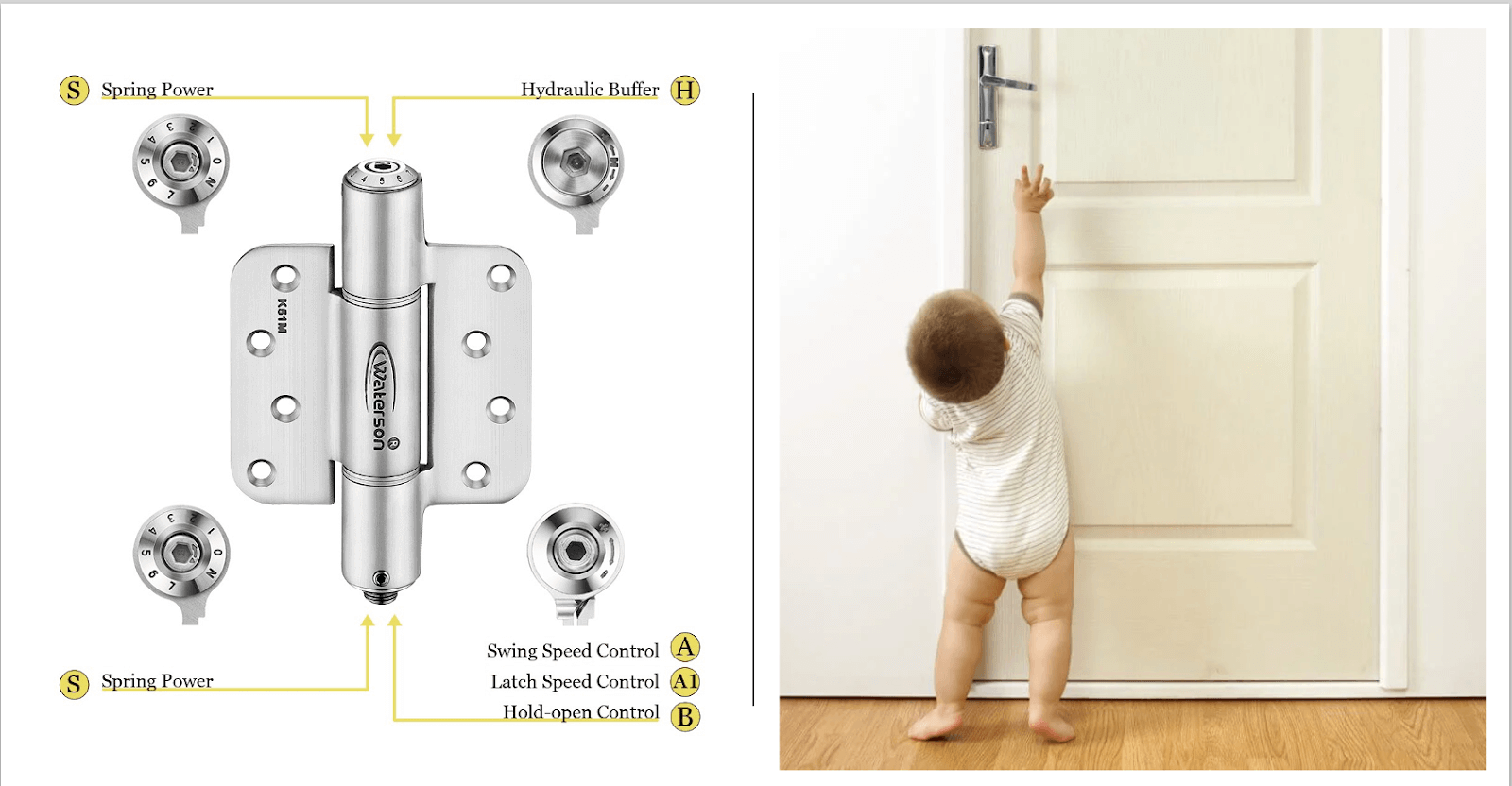
- Spring tension: sets closing force and, by extension, opening effort. On Waterson’s hinge line this is a numbered adjustment (N through roughly 5 for standard use, with 6 and 7 reserved for heavier or higher-wind applications); pushing past the rated range shortens spring life and can void warranty coverage.
A door that slams almost always needs lower sweep, latch speed, or tension, in that order, adjusted one setting at a time. A door that fails to latch needs the opposite. Guessing at all three simultaneously is the fastest way to mask the real problem and burn a service call.
Does the Spec Still Hold Up Against Code and Corrosion?
Three compliance points come up on nearly every storefront submittal:
- Opening force: ADA and ICC A117.1 both call for a maximum of 5 lbf to open an interior door and roughly 5 lbf for exterior doors under standard conditions (this can be higher where fire doors require positive latching, so verify against the specific code cycle and AHJ). Hardware exceeding this fails accessibility inspection regardless of how well it closes.
- Fire rating: Where a storefront vestibule or corridor door carries a listing, NFPA 80 and the applicable UL fire door standard govern positive latching, closing speed, and hardware listing. A self closing hinge used on a rated opening needs its own listing documentation, not just a manufacturer claim of “fire rated.”
- Corrosion class: 304 stainless resists typical interior and mild exterior exposure; 316 stainless adds molybdenum for better resistance to chloride, rain, wind, and UV exposure at a sidewalk entrance. Specifying 304 where 316 is warranted is a common source of pitting that stiffens the bearing surface years ahead of schedule.
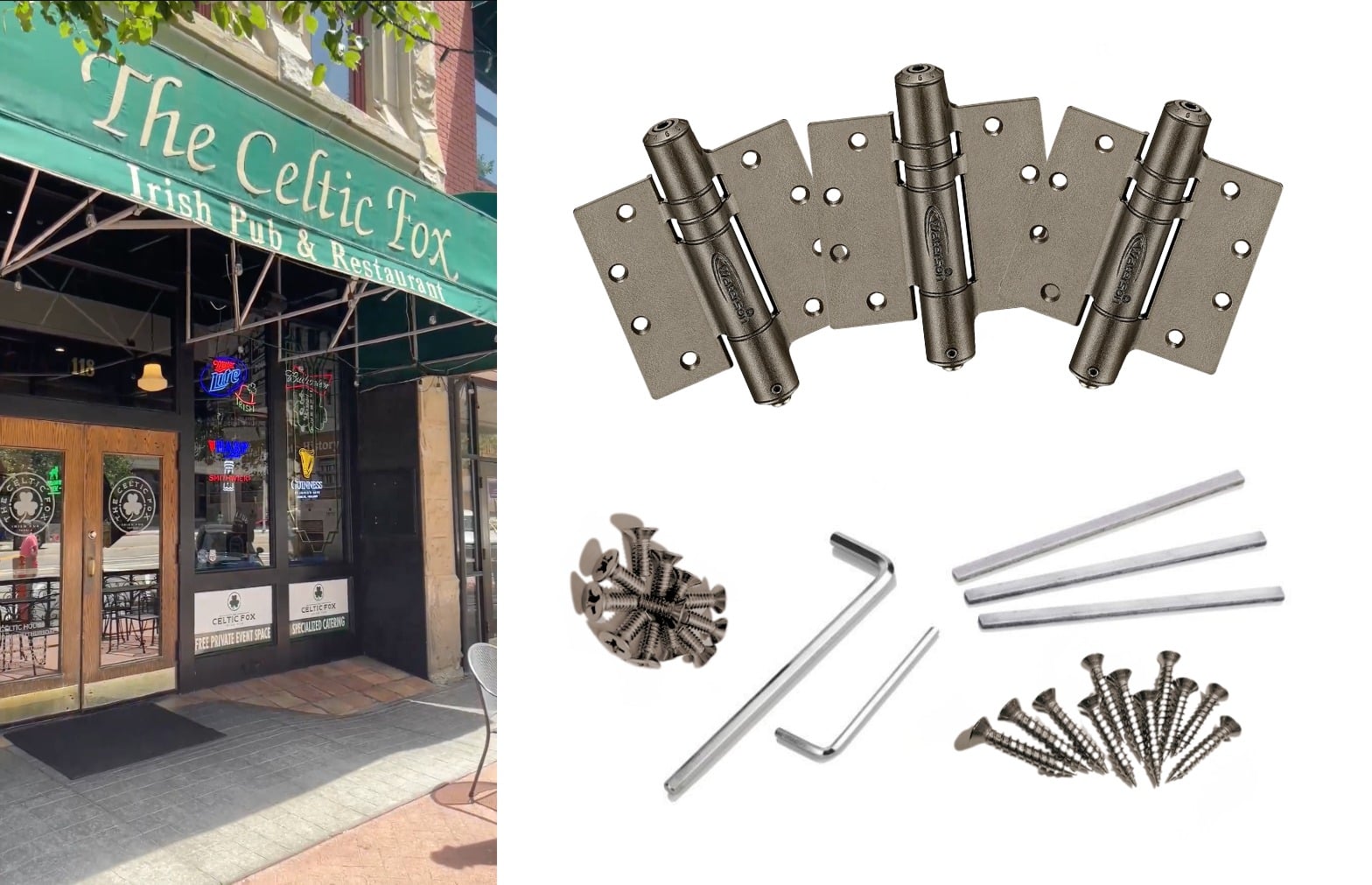
Is There a Hinge Built to Solve All Four Mechanisms at Once?
Waterson’s storefront-oriented self-closing door hinges are built to the technical points above rather than around them. With the investment casting built process, Waterson self-loosing hinge offer:
- Stainless Steel: 304 and 316 options for interior versus coastal/salt exposure.
- Door Stops: Integrated 90°/120° swing limiters that function as mechanical backcheck without a separate wall or floor stop.
- Hold Open: Field-adjustable hold open angle, engineered to ADA opening force even with the hold open engaged.
- Self Closing Mechanism: Independent sweep, latch, and hydraulic damper adjustment, spring tension numbered N through the rated maximum.
- Heavy Duty: ANSI/BHMA A156.17-tested to 1,000,000 cycles; three-hinge and four-hinge sets rated to 260 lbs and 440 lbs respectively.
- Anti Slam: Adjustable damping to absorb wind-assisted closing without transmitting shock into the glass or frame.
- Fire Rated: NFPA 80 compliant, UL 3-hour listed for corridor and vestibule applications.
- Warranty: 5-10 years manufacturer coverage.
Premature wear is diagnosable: grade against actual cycle count, bearing type against actual leaf weight, sweep/latch/backcheck tuned to the opening, corrosion class against actual exposure. Four checks, four root causes. Send us the door schedule, weight, and exposure, and we will match hardware to the numbers, not the catalog default.
Waterson Self Closing Hinges for Storefront Door
Waterson self closing door hinges stainless steel combine the function of an overhead closer and a hinge into a single, sleek component—complete with optional hold-open and door-stop features. Designed for commercial openings, gates, and glass doors, these hinges are easy to install and adjust to meet ADA and ICC A117.1 standards for opening force, while ensuring quiet and secure closure. Crafted from durable stainless steel, they are NFPA 80 compliant, UL 3-hour fire-rated, and built to perform reliably in both interior and all-weather exterior environments. See all our features.
In addition to these performance advantages, Waterson offers flexible custom hinge services. As a direct manufacturer, we can tailor hinge sizes, finishes, and especially hinge leaf designs to meet the specific structural needs of your doors. This makes our hinges an ideal solution for door manufacturers seeking custom options that integrate seamlessly with their existing frames.
Request For Quote
Please note that Waterson closer hinges start from a size of 4″x4″. If you’re in need of smaller self-closing hinges, we’d recommend checking out some other resources! Also, we only provide single acting closer hinges. Thank you.
Recent Post
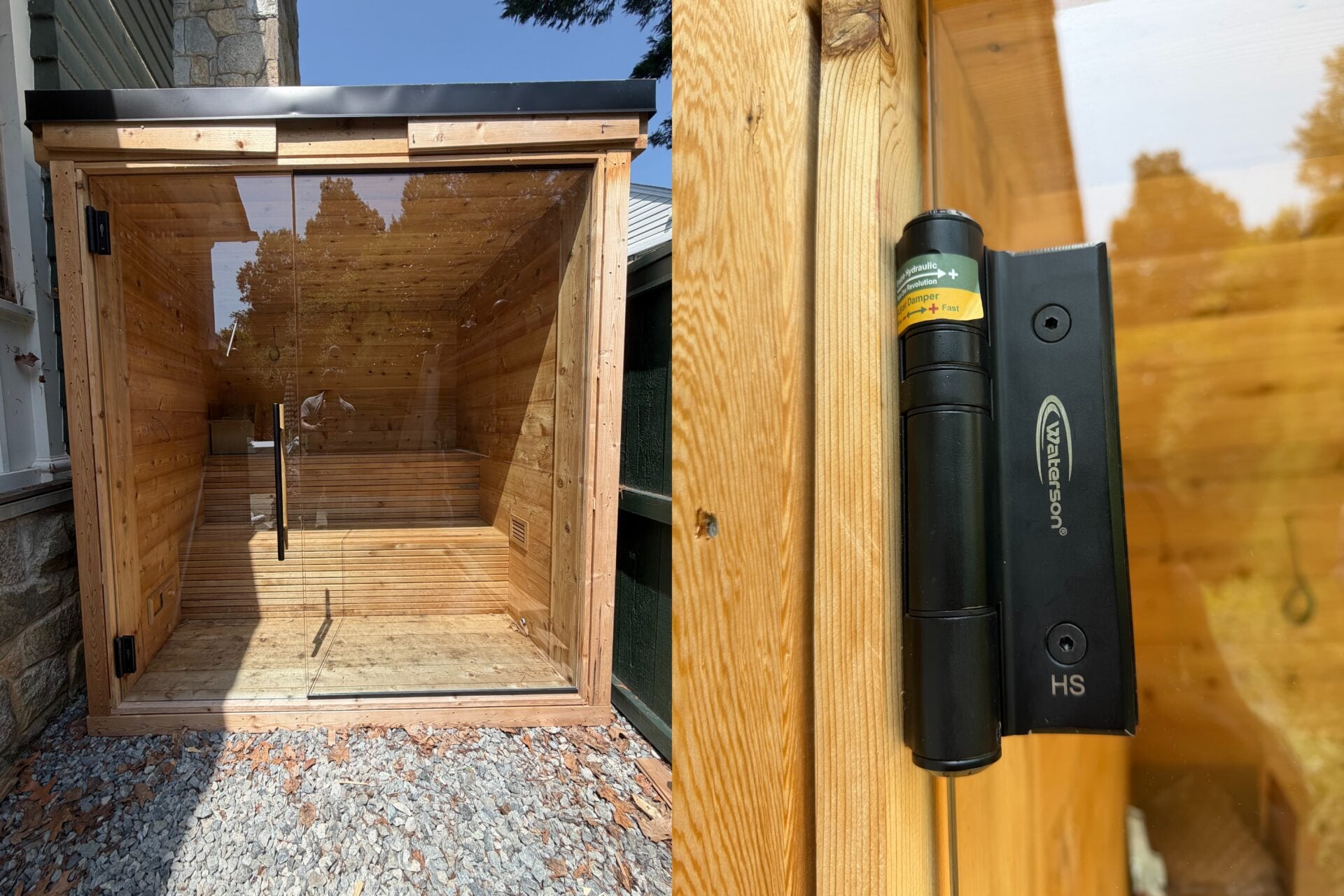
Frameless Glass Sauna Door Hinges: ADA Self Closing Solution for Commercial Saunas
Quick Answer For a frameless tempered glass sauna door that swings from a wall, use the Waterson K51GWL glass-to-wall hinge in the hydraulic hybrid version. [...]

Self Close vs Soft Close Hinges: Two Different Needs, Explained
Most commercial self-closing hinges still adopt either spring or hydraulic damper for [...]
4 Inch Self Closing Door Hinges for Residential & Commercial Doors
Quick Answer Waterson 4-inch self-closing hinges (K51M-400) fit standard 4" x 4" templates on 1-3/8" or 1-3/4" residential doors, in mechanical or hydraulic versions with [...]