
What if a project calls for a heavy door that needs controlled swing but no self-closing or soft-closing function? Some special applications—such as this hospital case—only require one job done well: 120 degree door stop, not close it and not hold it open.
“We don’t need them to hold open, because we don’t want them to be self-closing. We need them to just stop the door swing at 120 or 125. Do you have a standard hinge that just functions as a stop and not a closer?”
In situations like these, the door hinges must stay entirely neutral—no tension, no detent, just a precise mechanical stop that protects workflow and eliminates unnecessary motion.

A Healthcare Project in Kentucky
Recently, an inquiry came from Baptist Health ER & Urgent Care in Kentucky asking for the door hinges of their exam room doors. The door specs include:
- 36″ W × 84″ H
- 1-3/4″ thick plastic-laminate doors from VT Industries
- Mounted on hollow metal frames
Their requirement was very clear: a hinge solution that stops the door at 120–125° with no self-closing and no hold-open function. In short, they needed standard hinges that act purely as a controlled door stop—nothing more.
This requirement is more common in healthcare than in other sectors. The design priority is swing control, uninterrupted passage, and zero interference with clinical workflow.
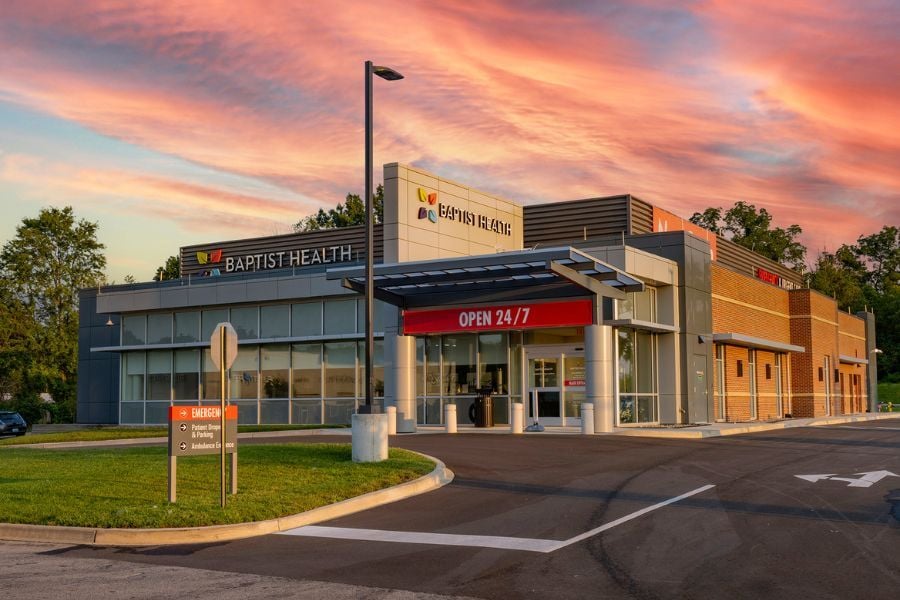
Cre: Baptist Health
But Why Self Closing Is Not Preferred in This Situation
In healthcare and hospitals, every second matters. A self-closing function, while essential on fire doors, becomes an obstacle in fast-moving clinical areas.
Just imagine: A staff member is pushing a 250-lb emergency stretcher through a corridor. If every door is self-closing, the movement becomes a constant stop-and-push cycle—especially when the door pulls back at 3–5 seconds per close. Multiply that across multiple rooms, and you’ve added avoidable delay in a pathway where response time is the most critical.
A wide, fixed 120° opening allows:
- Cleaner stretcher clearance
- Reduced collision risks
- Less physical strain for staff
- Faster patient movement between rooms
The facility’s choice to avoid self-closing hinges is therefore consistent with clinical workflow demands. They need the door to stay neutral, not fight the user.
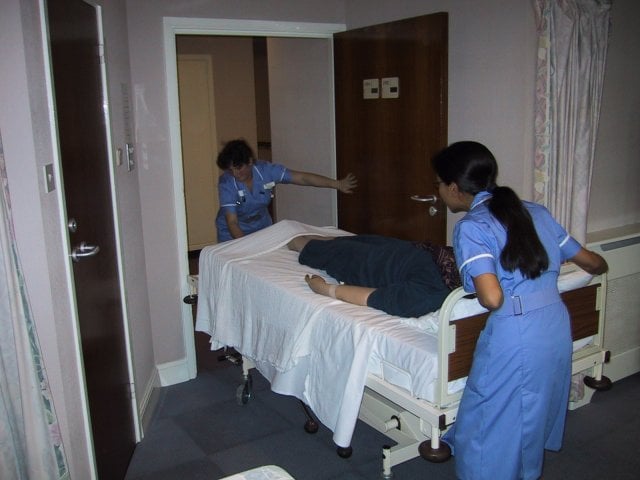
When a 120° Door Stop Meets (and Exceeds) the Requirement
“We need them to just stop the door swing at 120 or 125.”
Exam rooms, diagnostic rooms, and clinical suites often require wide but controlled door openings. Many exam rooms have:
- Diagnostic machines
- Otoscope/ophthalmoscope panels
- Bed lights
- Computer monitors
- Cabinets and supply stations
If the door swings to 180°, it can hit and damage these components. A fixed 120° stop limits the swing, protects the wall, and reduces impact on critical equipment.
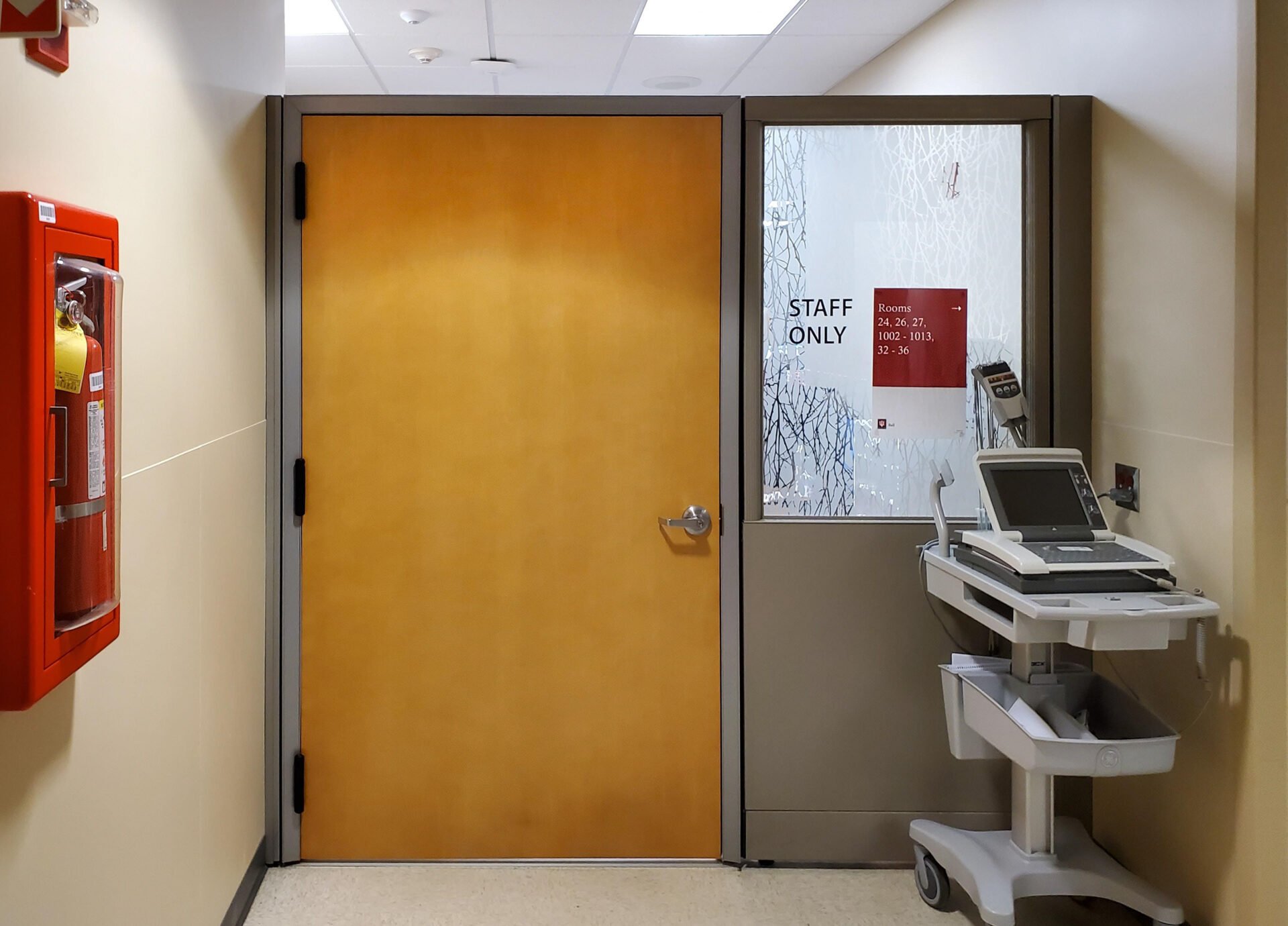
To meet that demand, the Waterson door stopper can be added directly to the hinge barrel. This add-on is engineered to:
- Stop the swing at 120°
- Prevent the door from over-rotating into the wall
- Eliminate the need for external wall or floor stops
- Maintain clean sightlines—especially important in clinical interiors
- Provide a mechanical, non-closing, non-holding function
For applications where the door must open wide but stay controllable, this is often the most efficient door hardware choice.

Any Other Solutions That Can Achieve a 120° Stopping Angle
You can meet a 120° stop in several ways:
A. Concealed overhead stops for projects that prioritize a clean aesthetic;
B. Wall or floor stops if the space allows for extra components;
C. Hinge-integrated stops when you want the control built directly into the hardware line.
However, when the goal is to maintain full clearance, avoid overhead hardware, and keep the entrance free of bulky components that could interfere with patient movement, a door stop on hinge remains the most reliable and safest choice. It keeps the opening clean, protects the wall, and provides a precise stopping angle without adding anything that disrupts clinical workflow.

Can Waterson Door Stopper Work with Other Manufacturers’ Door Hinges?
No. The Waterson door stopper is engineered as an integrated component of the Waterson hinge system and relies on the hinge’s internal structure and geometry for proper engagement and load transfer. It is not a surface-mounted or universal accessory, and therefore cannot function correctly with standard butt hinges or other manufacturers’ hinges.
For predictable performance and code-aligned operation, the stopper must be used with compatible Waterson hinge models only.
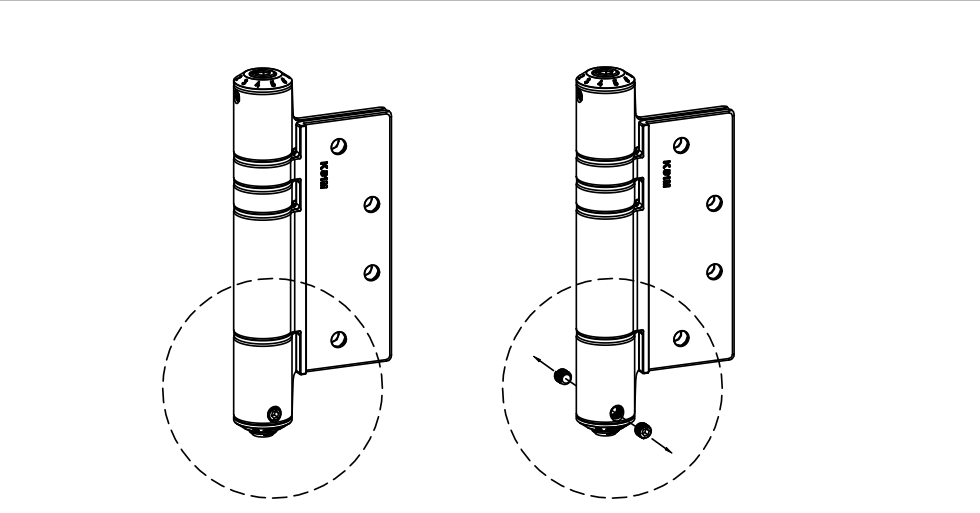
Waterson Stainless Steel Door Stop on Hinge
For projects wanting hinge-integrated solutions, Waterson door stop on hinge delivers consistent stopping performance at 90° and 120°, designed for:
- ADA door swing clearance swing paths
- Wall damage prevention
- High-traffic commercial environments and/or hospital environments
- 304 & 316 stainless steel durability in healthcare and industrial facilities
By embedding the stopping feature into the hinge line, the system removes the need for bulky or unsightly external stops, keeps the frame clear, and ensures the door stops exactly where the design requires.
Request For Information
Please note that Waterson Closer Hinges start from a size of 4″x4″. If you’re in need of smaller self-closing hinges, we’d recommend checking out some other resources! Also, we only provide single acting closer hinges. Thank you.
Recent Post
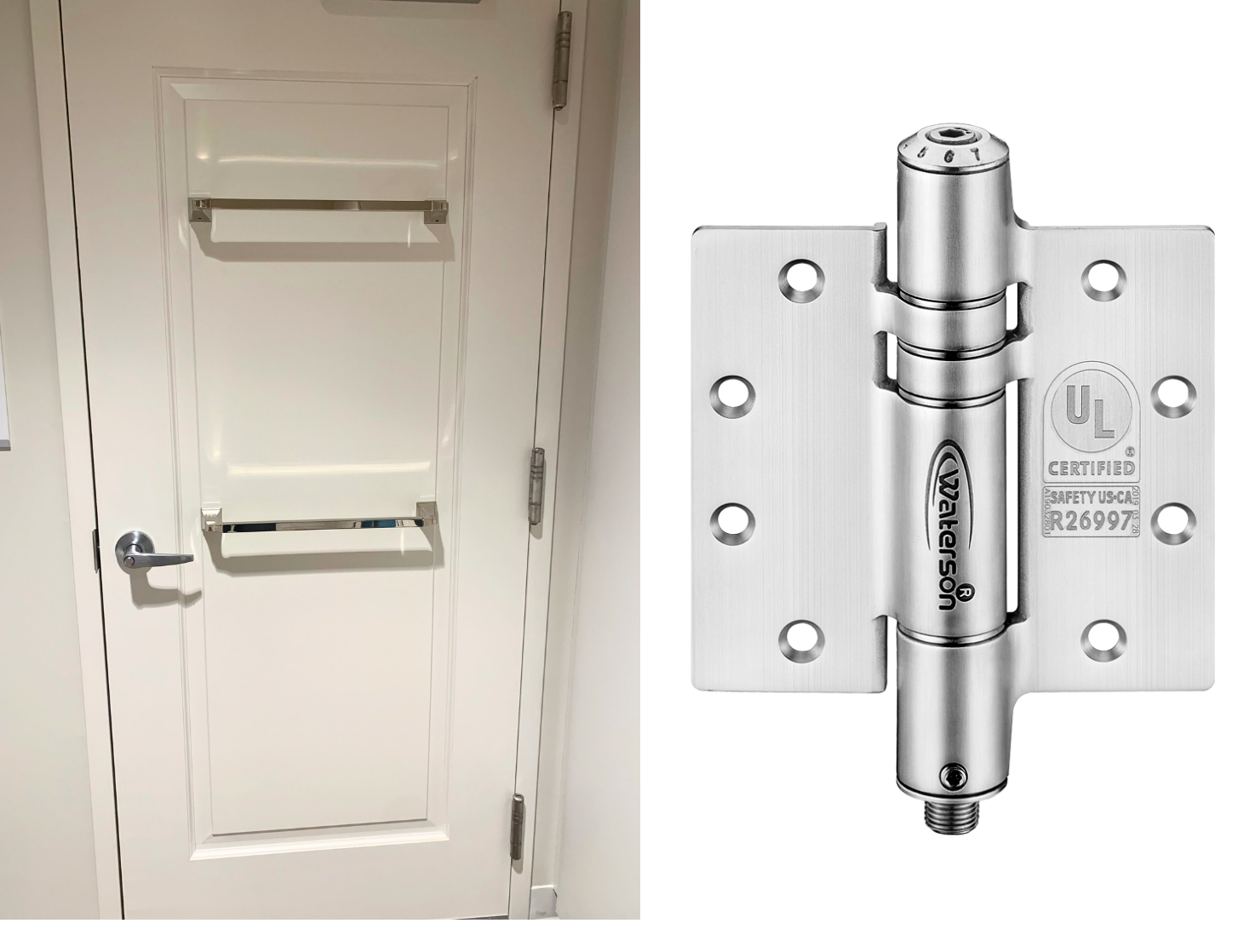
Spring Loaded Door Hinges for Multifamily Residential Buildings
For multifamily buildings, specify self-closing spring hinges listed for use on fire-rated doors and adjustable to ADA closing speed and opening force. They replace a [...]
Cold Weather vs Hot Weather Hinges: How to Deal with Seasonal Change?
Most people only notice their Gate hinges when something's already broken. The gate won't close, the latch misses the strike plate, and the hinge squeaks [...]
Why Are Doors and Gates Harder to Close in the Winter
Most commercial self-closing hinges still adopt either spring or hydraulic damper for [...]