
Quick Answer
A 90-degree stop hinge limits a door’s swing to a right angle so it cannot hit walls, equipment, or people in an adjacent path. On Waterson closer hinges, the limit comes from a 90° door stop mounted on the hinge barrel, usually on the top and bottom hinges. Closer hinges should never open past 120°.
For specifiers, the useful question is not which hinge “opens 90 degrees,” but how the swing is limited, how much door the hinge can carry, and whether the door needs to stay open. This guide covers all three.

Why Is 90° Recommended Over 120° or 180°?
“I have searched for a month already, but could only find hinge that only opens 90 degrees. For the other angles like 120 or 180, some manufacturers do supply, but do not recommend. Why is that?”
With a closer hinge, the closing mechanism sits inside the barrel. Opening a closer hinge beyond 120° can shorten its service life and void the warranty, which is why manufacturers limit the swing. A 90 degree stop hinge setup goes further: it keeps the door from hitting an adjacent wall or swinging into a corridor. It also matches how ADA measures clear width, which is taken with the door open 90° (32 in minimum).
Built for Heavy Commercial Doors
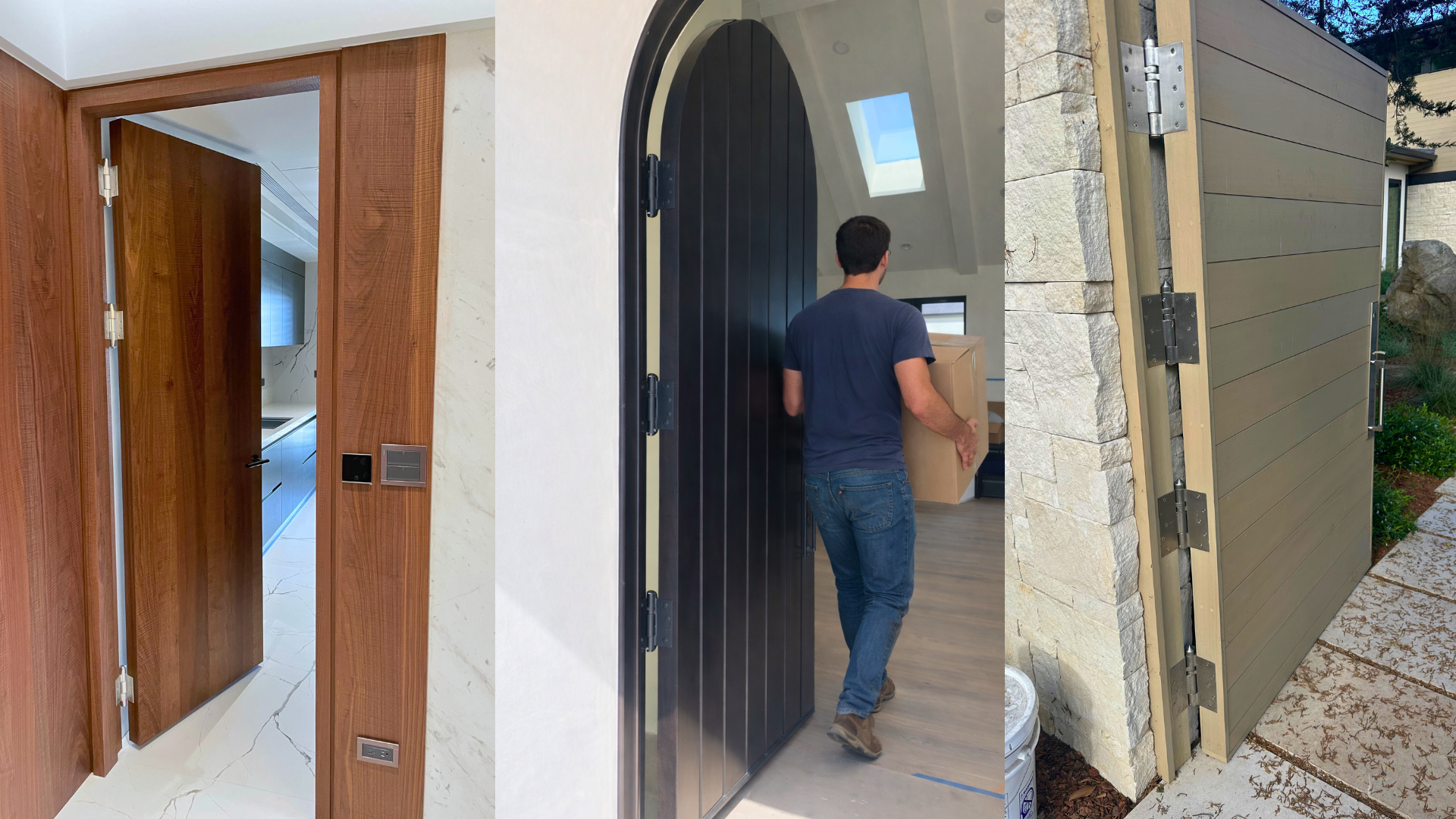
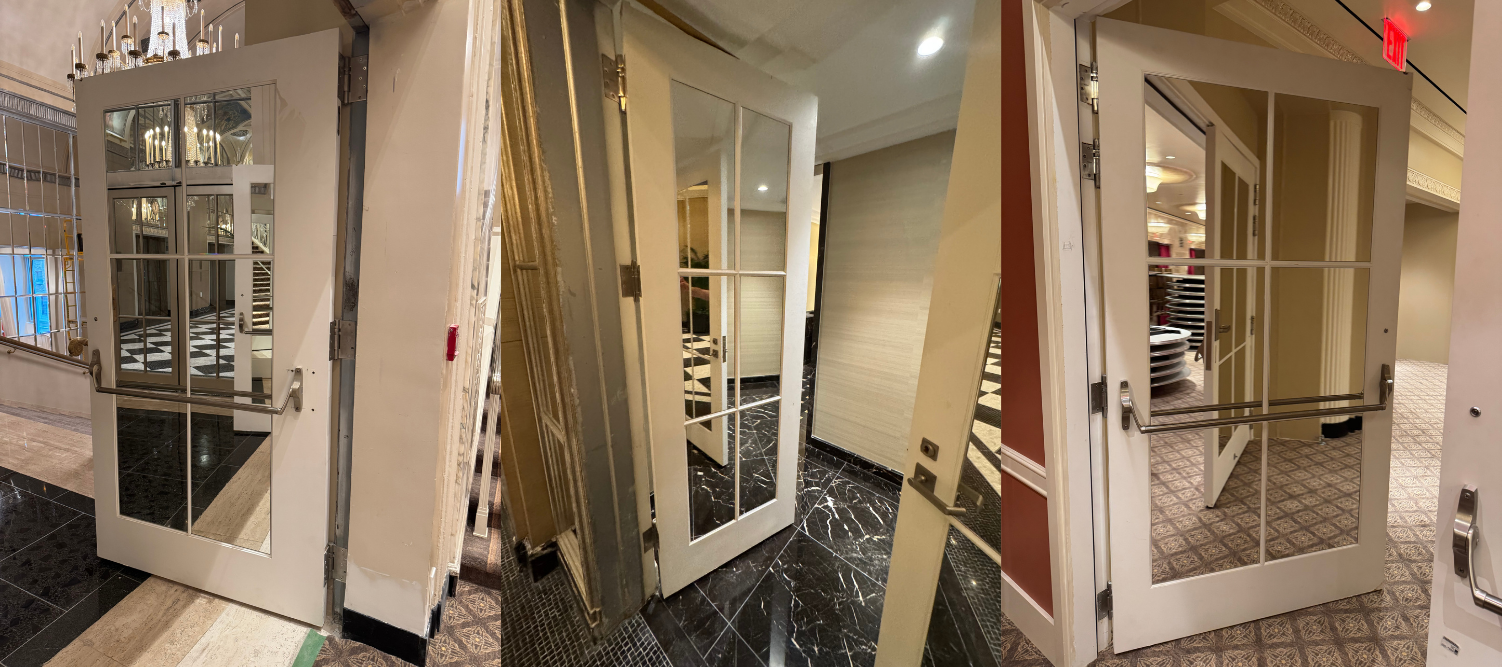
Commercial doors see far more cycles than residential ones, so the hinge has to carry the closing function and the load. Waterson K51M closer hinges are made from Type 304 stainless steel as standard, with Type 316 optional for corrosive sites. A three-hinge set handles doors up to 4 x 7 ft and 260 lb, and a four-hinge set handles doors up to 4 x 8 ft and 330 lb. All-mechanical models are UL listed for fire doors up to 3 hours and meet NFPA 80 fire door requirements when supplied without hold-open. Closing force and speed are field adjustable to meet ADA requirements, and optional barrel-mounted door stops limit the swing to 90° or 120°.
Can 90° Stop Hinges Also Soft Close?
Yes. Hybrid closer hinges add a small hydraulic reservoir for a softer, quieter close, which suits offices, courtrooms, cafes and churches. Two limits apply: hybrid models are for interior use only (avoid locations where the temperature swings more than 20°F), and they cannot close a fire-rated door on their own. For frameless glass doors, Waterson glass door closer hinges (K51G series) offer 90°, 110° and 120° door stops.
Learn more about 90 degree stop hinges and barrel-mounted door stops.
Which 90° Stop Options Fit Your Door?
| Feature | K51M Full Mortise | K51G Glass Door |
|---|---|---|
| Door stop options | 90° or 120°, mounts on the hinge barrel (see door stop accessories) | Glass to wall (GWL): 90° or 110°. Glass to glass (GG) and glass to frame (GM): 90° or 120° |
| Stops per door | Most doors need stops on the top and bottom hinges. Learn how to stop a door from swinging open | One stop for a 2-hinge set, two stops for a 3 or 4-hinge set |
| Hold-open | 85° ±5°, C and D sets, not for fire doors. See when to specify a hold open hinge | D sets, with hybrid soft closing hinges |
| Max door | 4 x 7 ft, 260 lb (3 hinges); 4 x 8 ft, 330 lb (4 hinges). More on heavy duty soft close door hinges | Self-closing on glass 5/16 to 9/16 in thick |
| Fire rating | All-mechanical models UL listed up to 3 hours. Check the NFPA 80 fire door inspection checklist | Not fire rated |
| Material | Type 304 standard, Type 316 optional | Type 304 standard, Type 316 optional |
When Should You Use Hold-Open Instead of a 90° Stop?
A stop limits how far the door swings. A hold-open keeps the door parked open at 85° ±5° until a gentle push releases it. Use hold-open on non-fire doors that need to stay open during busy periods, such as office suites, break rooms, conference rooms, or cafe service doors. Waterson builds hold-open into C sets (mechanical) and D sets (hybrid), and the feature can be set in the field.
Never use hold-open closer hinges on fire-rated doors. If a fire door must stand open, specify an approved hold-open device that releases automatically on alarm, as permitted under NFPA 80, and keep the door on all-mechanical closer hinges without hold-open.
What Are the Most Common Mistakes With 90° Stop Hinges?
- Confusing a stop with a hold-open. A stop physically limits the swing. A hold-open keeps the door at about 90° until a gentle push releases it. Order the one the opening actually needs.
- Putting hold-open on a fire door. Hold-open closer hinges (C and D sets) are for non-fire doors only.
- Ordering one stop for a heavy door. Most doors need stops on the top and bottom closer hinges so the load is shared.
- Using a floor or wall stop instead. Barrel stops are not a trip hazard and don’t get in the way of floor cleaning.
- Letting the door pass 120° where no stop is installed. This can shorten service life and void the warranty.
If you are retrofitting an existing interior door with 90° stop closer hinges, check one more dimension first.
What Could Be the Limitation in Waterson K51M 4inch Hinge Barrel Size
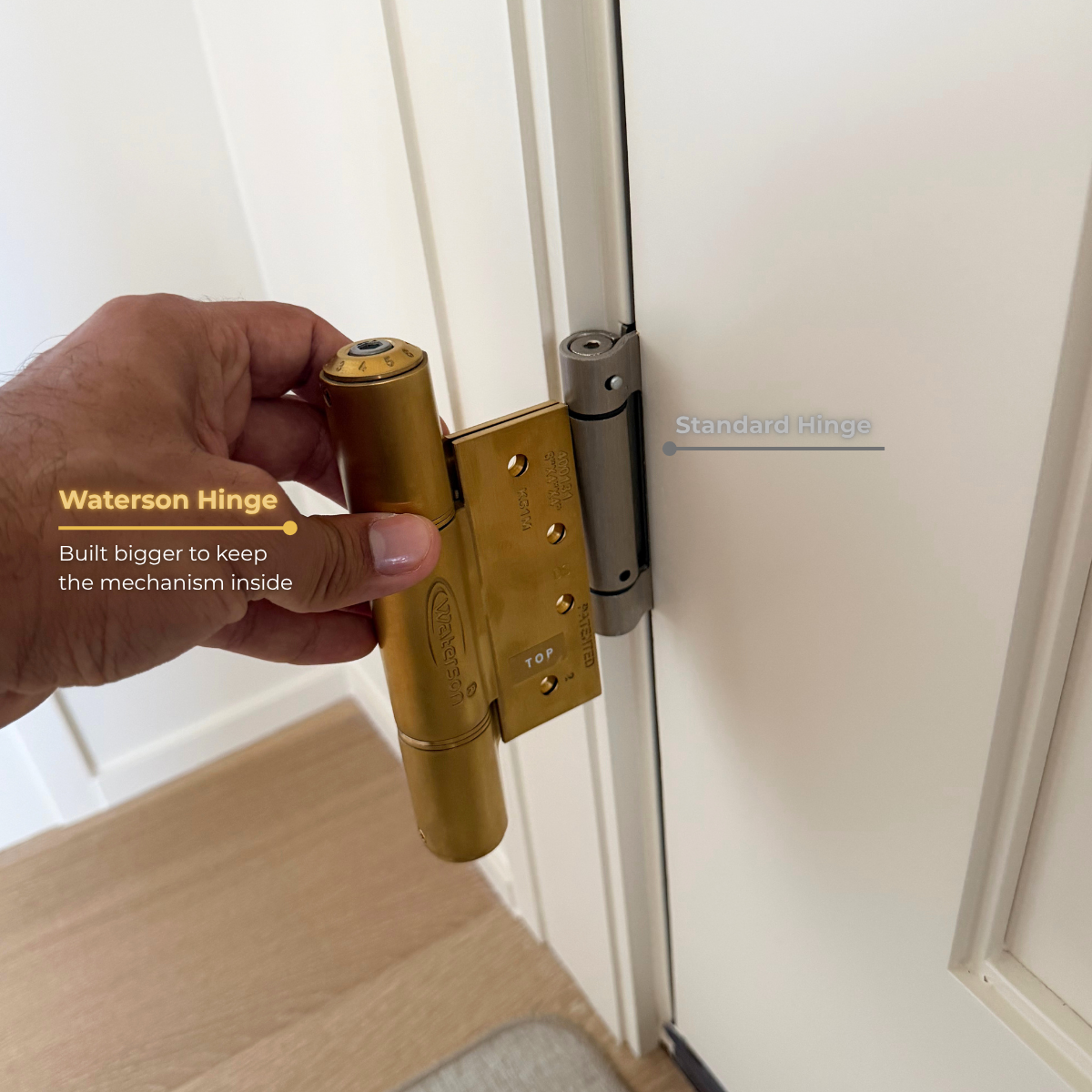
On a retrofit, the Waterson 4×4 uses the same mortise template as a standard 4×4 butt hinge, so the leaves drop into the cutout you already have. The difference is the barrel. It is built bigger to keep the hydraulic mechanism inside, and that thicker barrel moves the pivot further off the door and frame, shifting the door roughly a quarter inch toward the strike jamb.
For most doors, that shift is absorbed by the normal strike side gap, and we have not seen this issue on garage entry doors. It mainly shows up on tight custom doors, where the strike edge can end up touching the frame, and deepening the mortise only helps if there is room on the strike side to take it. If you are retrofitting, check your clearance first, because with this hinge, the barrel diameter, not the leaf size, decides whether it fits.
Final Thoughts
A true 90-degree hinge setup is a closer hinge plus a barrel-mounted stop. It protects walls and corridors, keeps the hinge inside its 120° limit, and replaces separate floor stops. Choose all-mechanical sets for fire doors, hybrid sets for quiet interior openings, and hold-open sets only where a non-fire door needs to stay open.
Download K51M spec sheets and CAD files, see the K51M door stop installation guide, or request a quotation and a product specialist will help you build the right set for each door.
Frequently Asked Questions
Add a 90° door stop to the hinge barrels. Waterson K51 series stops mount directly on the closer hinge barrel, and most doors need stops on the top and bottom hinges. They can be installed at the factory or on site. If you order them separately, specify which closer hinge models they will be used with.
Because the closing mechanism sits inside the barrel. Opening Waterson closer hinges beyond 120° can shorten their service life and void the warranty. Where walls or furniture allow the door to travel further, install a 120° stop to prevent over-opening, or a 90° stop to keep the door from hitting an adjacent wall.
A door stop physically limits how far the door swings, while a hold-open keeps the door open at about 85° ±5° until a gentle push releases it. Stops are an add-on accessory. Hold-open is built into C and D closer hinge sets and must not be used on fire-rated doors.
Yes, with all-mechanical sets. Waterson K51M all-mechanical models are UL listed for fire-rated doors up to 3 hours and comply with NFPA 80 when supplied without hold-open. Hybrid hinges cannot close a fire door on their own, but they can be used in a fire-rated set combined with certified mechanical closer hinges.
Request For Information
Please note that Waterson Closer Hinges start from a size of 4″x4″. If you’re in need of smaller self-closing hinges, we’d recommend checking out some other resources! Also, we only provide single acting closer hinges. Thank you.
Recent Post
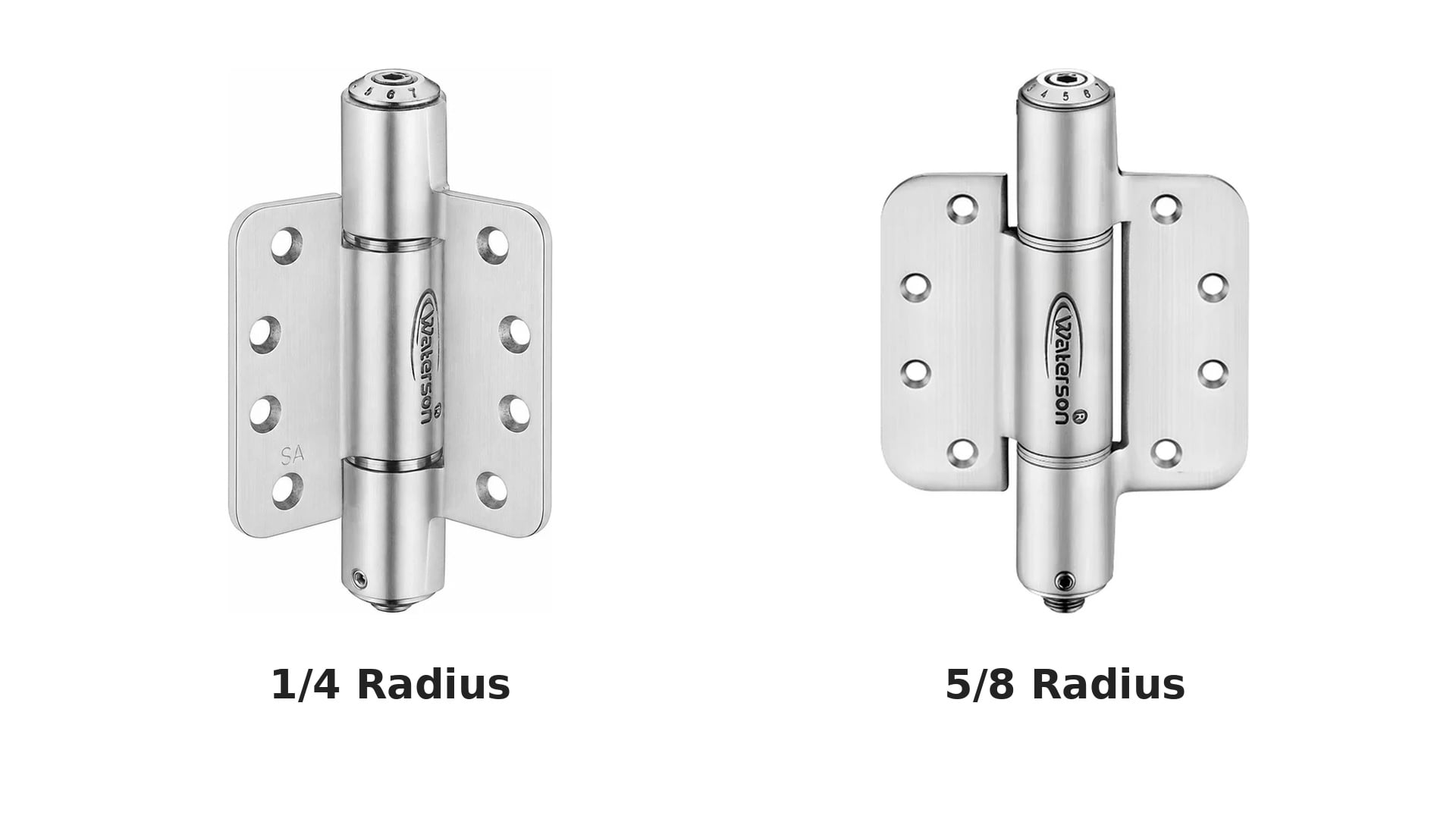
Replacing Door Hinges: 1/4 vs 5/8 Radius vs Square Corners
Quick Answer Most 4 inch residential door hinges have one of three corners: square, 1/4" radius, or 5/8" radius. A rounder hinge fits a mortise [...]
Why Won’t My Self Closing Door Hinges Close in Cold Weather
Quick Answer An exterior door that closes fine in summer but won't latch in winter is usually affected by two things: weather stripping that stiffens [...]

Soft Closing Hinges: 9 Most Frequently Asked Questions
Since the AIA in 2018, there has been an increased interest in Waterson hinges for many different projects. We have been inundated with questions by [...]