
“We have a batch of aluminum interior doors in an office renovation. The frames cannot be routed, and the client rejected surface-mount closers. Someone suggested butterfly hinges because they mount flat. Will those hold up?”
Both hinges in this question mount without a mortise, and on a submittal sheet they can look interchangeable. Yet one of them was never designed to carry a door at all. So before comparing hardware, it is worth asking a more basic question: what is this opening actually demanding from the hinge?
What Would a Non Mortise Door Retrofit Need From These Hinges?
Strip the renovation scenario down, and the hinge has four jobs. Not three. Four:
- Carry the leaf without sag. A standard 40 to 50 mm interior slab, typically 25 to 55 kg, cycled daily.
- Mount flush to existing surfaces. No routing on an aluminum profile or a finished frame.
- Close the door on its own. The client already rejected overhead closers, so the closing force must live inside the hinge.
- Respect the existing gap geometry. A true non-mortise install needs at least 8.5 mm between door and frame, with a closed gap of 3.5 to 5 mm. If the reveal must be tighter, a shallow frame-side mortise (38.5 mm wide, 3.5 to 5 mm deep) brings the closed gap under 1.5 mm without touching the door.
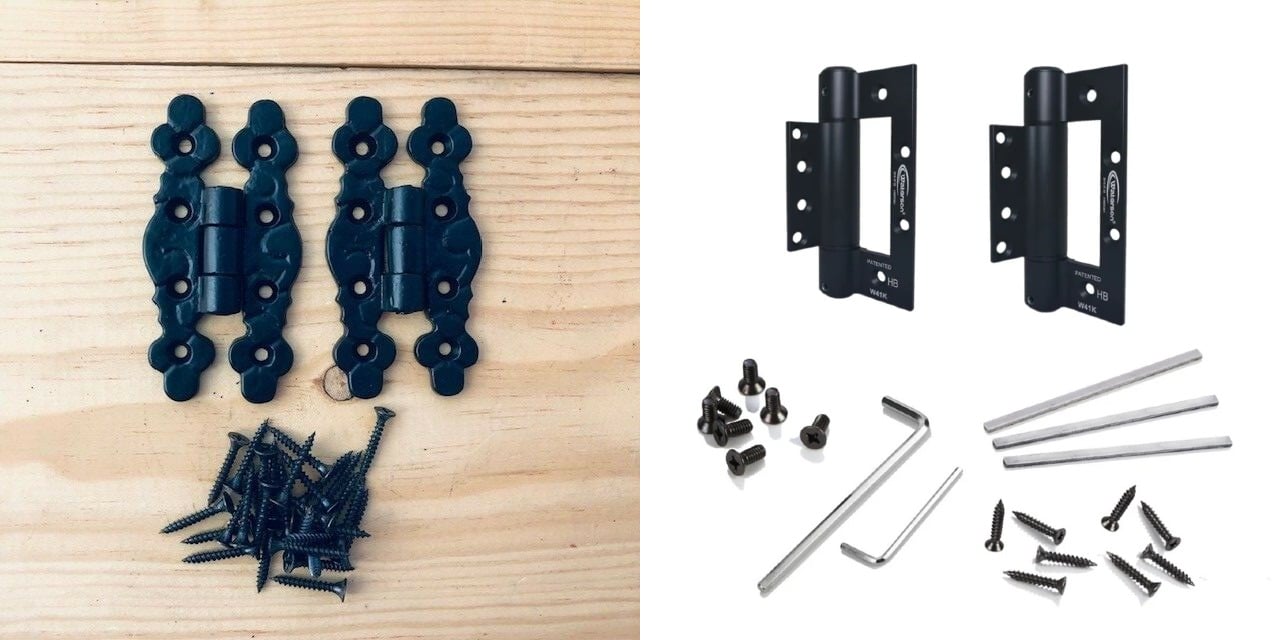
You already know where this is going. A butterfly hinge satisfies exactly one of the four. It mounts flush. Everything else on the list is outside its design brief, and that is not a criticism of the product. It is a category error in the spec.
Why Is Self Closing With Hold Open Needed Here?
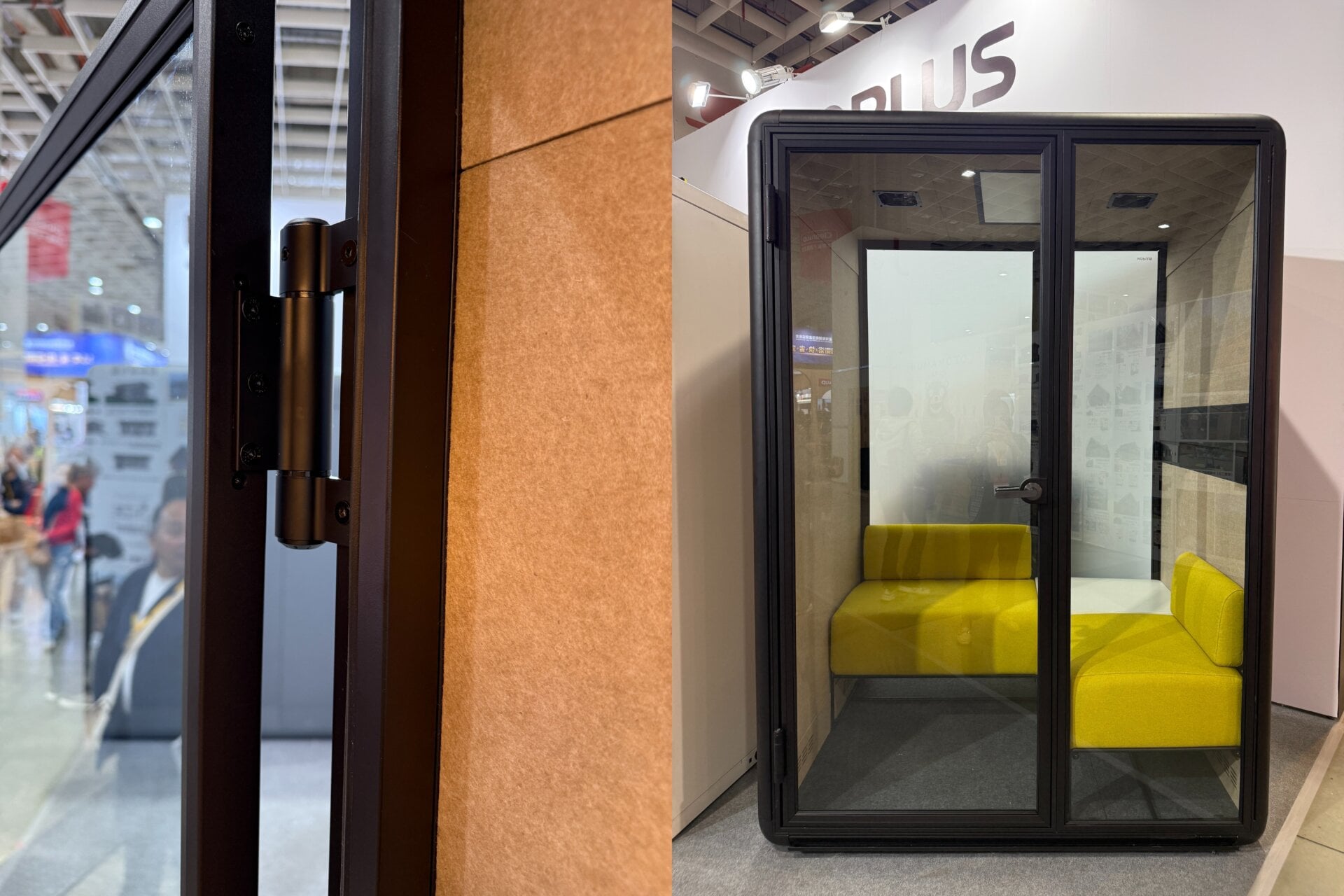
Because a passive hinge is only half a commercial interior spec. Corridor and office doors in occupied buildings need to return to closed for HVAC zoning, acoustics, and traffic discipline. At the same time, your facilities team will fight any door that cannot be parked open during move-ins, cleaning, and deliveries. If the hinge cannot do both, the building will improvise: rubber wedges, kick-down stops, and gouged door bottoms within the first year.
The mechanism matters here, not the marketing. A mechanical hold-open at roughly 85 degrees, released with a light pull, replaces the wedge. A hydraulic buffer governing closing speed through the 20 to 90 degree swing replaces the slam. A butterfly hinge carries neither, because it carries nothing: no spring, no damper, no hold-open. It is a free-swinging decorative plate.
Butterfly Hinge vs Interfold Hinge
This is where the butterfly hinge vs interfold hinge comparison gets quantitative, and where an honest answer cuts both ways.
| Butterfly hinge | Waterson Interfold hinge | |
|---|---|---|
| Designed for | Cabinets, chests, decorative millwork | Interior, lightweight, and aluminum doors |
| Typical construction | Stamped plate, approx. 1 to 1.5 mm | Aluminum interfold body wrapping the door edge |
| Load envelope | Cabinet-class, no published door rating | Up to 70 kg leaf, 2150 mm height, 1050 mm width |
| Door thickness | Not specified for doors | 40 to 50 mm |
| Mortise required | No | No (optional shallow frame mortise for tight reveals) |
| Self-closing | No | Yes, adjustable spring dial 0 to 7 |
| Hold-open | No | Yes, 85° ± 5° (SB configuration) |
| Closing speed control | No | Hydraulic buffer, active 20° to 90° (HS, HA) |
| Clearance at hinge line | Minimal | 28.5 mm |
Does This Application Need Heavy Duty Hardware
First, no, this application does not need heavy duty hardware. A 25 to 55 kg interior leaf sits comfortably inside the W41K envelope, and paying for stainless heavy duty capacity here is paying for headroom the opening will never use. What the opening does need is repeatable cycling under spring load, which is a different kind of durability than raw weight rating, and it is precisely the load case that wallows out a stamped butterfly knuckle within months.
Second, know where the aluminum line ends. Over 70 kg, or on a fire-rated assembly, the W41K is the wrong product, and Waterson’s stainless steel closer hinge series is the right one. We would rather state that plainly than watch the aluminum hinge get value-engineered into an opening it was never rated for.
Is There a Good Solution for the Door You Cannot Mortise
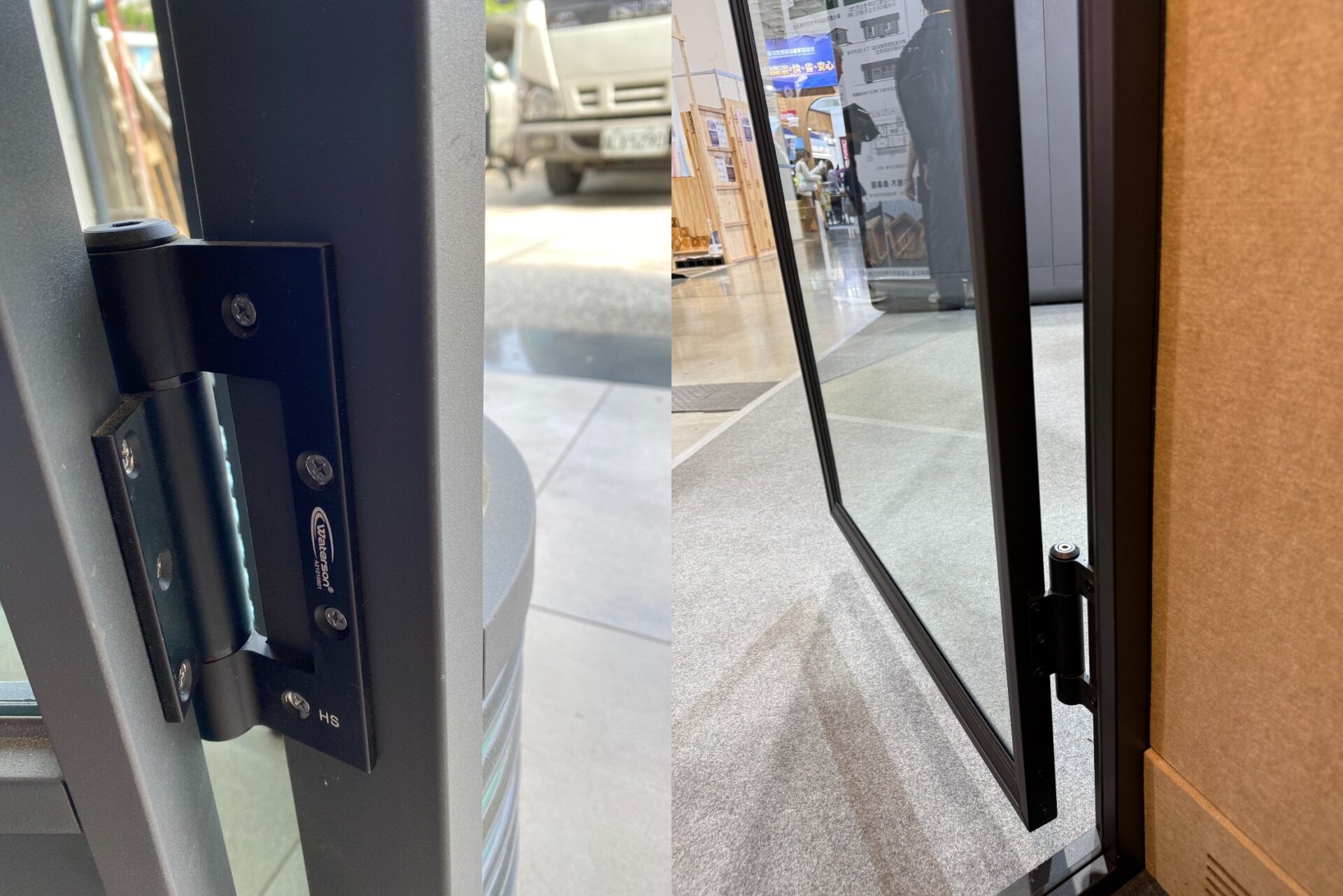
There is, and it is the reason the interfold category exists. The Waterson W41K interfold hinges packs the entire closer function into the hinge barrel. The assembly asks for 28.5 mm of clearance at the hinge line, so it retrofits where an overhead closer arm never could: no header reinforcement, no arm projecting into the corridor, no routing on either the slab or the profile.
- Aluminum interfold body: Purpose-built for interior, lightweight, and aluminum doors from 40 to 50 mm thick, within 70 kg, 2150 mm, and 1050 mm.
- Non-mortise retrofit installation: Fully surface-mounted, or with a 3.5 to 5 mm frame-only mortise when the project demands a sub-1.5 mm closed gap.
- Self-closing mechanism: Spring power adjusted on a 0 to 7 dial with a hex key after the door is hung, tuned per opening instead of per catalog.
- Hold open: The SB configuration parks the door at 85 degrees, plus or minus 5, and releases with a pull.
- Anti-slam hydraulic buffer: The HS and HA configurations govern closing speed through the 20 to 90 degree range, so the door settles shut.
- Configurable per opening. DS for maximum closing power, HS for damped closing, SB for hold-open, HA for buffered non-latching openings, all in one footprint.
- Heavy duty: Covered by Waterson’s stainless steel closer hinge series, intentionally not by the aluminum line.
Butterfly hinges belong on the millwork, where their appearance is the point and the load is trivial. The doors you actually warranty need a hinge that carries, closes, holds, and buffers, inside 28.5 mm and without a router. If you need any assistance from W41K interfold hinges, send us the door schedule for your next retrofit.
Waterson Aluminum Self Closing Interfold Door Hinges
Waterson aluminum interfold door hinges combine the function of an overhead closer and a hinge into a single, sleek component—complete with optional hold-open and door-stop features. Designed for commercial openings, gates, and glass doors, these hinges are easy to install and adjust to meet ADA and ICC A117.1 standards for opening force, while ensuring quiet and secure closure. Crafted from durable stainless steel, they are NFPA 80 compliant, UL 3-hour fire-rated, and built to perform reliably in both interior and all-weather exterior environments. See all our features.
In addition to these performance advantages, Waterson offers flexible custom hinge services. As a direct manufacturer, we can tailor hinge sizes, finishes, and especially hinge leaf designs to meet the specific structural needs of your doors. This makes our hinges an ideal solution for door manufacturers seeking custom options that integrate seamlessly with their existing frames.
Request For Quote
Please note that Waterson closer hinges start from a size of 4″x4″. If you’re in need of smaller self-closing hinges, we’d recommend checking out some other resources! Also, we only provide single acting closer hinges. Thank you.
Recent Post
Which Gate Hinges Do Commercial Specifiers in Canada Use for Exterior Gates?
Most commercial self-closing hinges still adopt either spring or hydraulic damper for [...]
Which Steam Room Door Hinges Survive Commercial Heat: Mechanical or Hydraulic?
"Door size is 84" x 36" x 1.5" thick. Solid cedar with a 3.5" hinge stile and glass insert. It is for a commercial steam [...]
Patio Door Hinges: How to Stop Your Door from Slamming in the Wind?
"I'd like to order a set of these for my patio door hinges. Our discussion is below. Winds are getting heavy and I need something [...]