
Most people never think about their door hinges until something goes wrong. The door starts squeaking. It drags on the floor. It swings too fast and slams into the wall. Or worse, it just stops closing properly altogether.
With the right hinge material, a basic maintenance routine, and a few simple adjustments, your hinges can perform smoothly for decades, not just years. However, how to choose the right hinges before you even buy them, and how to keep them in peak condition for the long haul? Let’s find out.
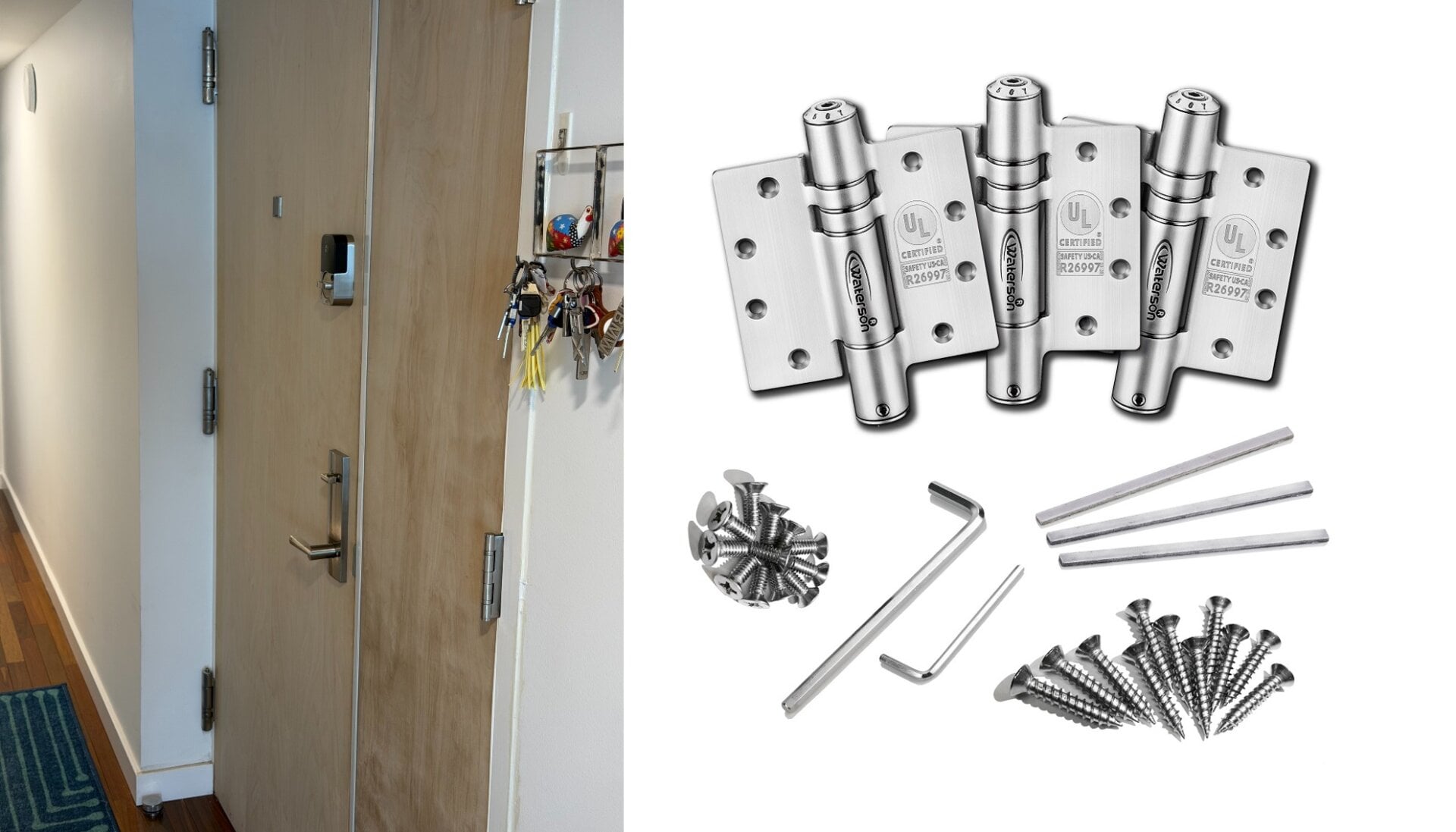
What Should You Look for in a Door Hinge Before You Even Buy One?
Maintenance does not start after installation. It starts the moment you choose your hardware.
The material your hinge is made from determines how resistant it is to rust and wear, and how often you will need to service it. Here is a quick breakdown:
| Material | Best For | Lifespan |
|---|---|---|
| Stainless Steel | All environments, especially humid or coastal | 10+ years |
| Brass | Light-traffic interior doors | 5-7 years |
| Zinc / Plated | Dry indoor use only | 2-3 years |
Beyond material, the single most overlooked factor is adjustability. A fixed hinge gives you no control when the door starts closing too fast or too hard. An adjustable hinge lets you tune performance without touching the door at all.
What Warning Signs Are Your Hinges Already Sending You?
Your hinges communicate. You just need to know what to look for.
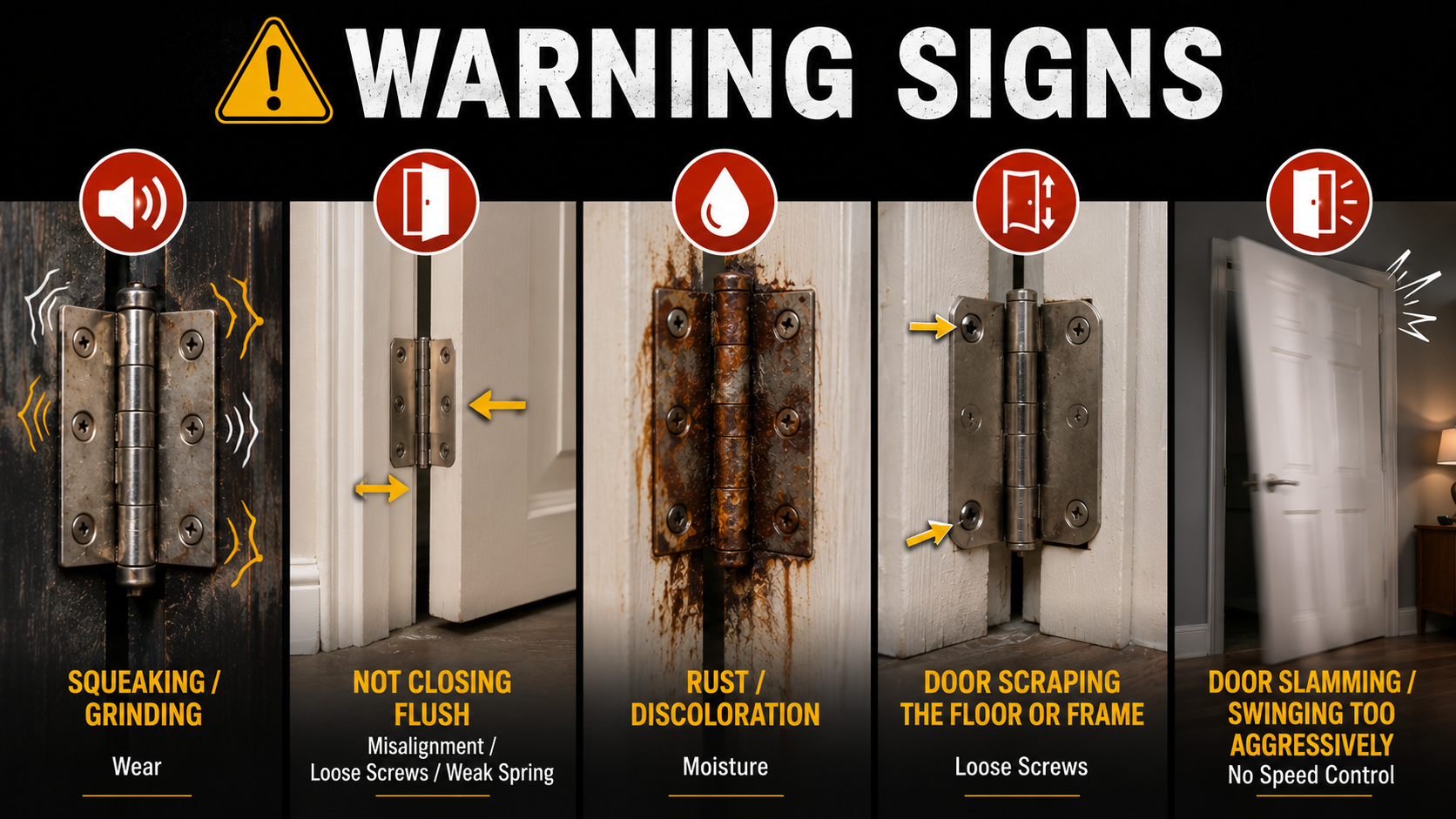
- Squeaking or grinding: means the barrel is dry and metal is wearing against metal.
- Door not closing flush: usually means hinge tension has shifted from loose screws or a fatigued spring.
- Visible rust or discoloration: means moisture has gotten in. Catch it early and you can clean it. Miss it and you are replacing the hinge.
- Door scraping the floor or frame: means the hinge leaf has shifted from loosened screws.
- Door slamming or swinging too aggressively: is a speed control problem. On a fixed hinge, the only fix is replacement.
How Do You Clean and Lubricate a Door Hinge Properly?
Dirt and dried lubricant inside the barrel build up over time, create friction, cause noise, and accelerate wear. Clean before you lubricate.
Wipe down each hinge leaf and barrel with a dry cloth, then scrub the knuckle and pin area with a damp brush. Dry everything completely before applying lubricant directly to the pin and barrel. Open and close the door a few times to work it in, then wipe off any excess.
For lubricant, white lithium grease lasts the longest on heavy or high-traffic doors. Silicone spray works fine for light interior doors. Avoid anything that evaporates quickly as a long-term solution.
How Do You Fix a Loose Door Hinge?
Start by tightening every screw on every hinge leaf. If a screw spins without catching, the hole is stripped. Fill it with wooden toothpicks and wood glue, let it cure, then re-drive the screw. For doors that keep shifting, switch to longer screws that anchor into the door frame stud behind the jamb.
Always check all three hinges, not just the one that looks loose. Load is shared across the full set, and if one is failing, the others are already under extra stress.
How Do You Adjust Swing Speed and Latch Speed on an Adjustable Hinge?
On a fixed hinge, you have no control over how fast or how hard the door closes. When something changes, replacement is your only option.
On an adjustable closer hinge, both can be tuned in under 10 minutes with two hex wrenches.
Swing speed controls how fast the door moves through the main arc of its travel. Use the 5mm wrench on the swing speed control nut at the hinge bottom. Turn toward + to speed up, toward – to slow down. Lock with the 3mm wrench when done.
Latch speed controls the final few degrees before the door fully closes. Adjusted separately with the 5mm wrench on the latch speed control nut, same + and – logic.
Tension controls how firmly the spring pulls the door shut. Higher numbers mean a stronger close, but keeping tension above 5 shortens spring life. Use only as much as the door actually needs.
So, What If Your Hinge Could Just Handle Most of This Automatically?
Standard hinges are passive. They hold the door. That is all they do. Every squeak, slam, and alignment issue eventually comes back to the same gap: the hinge has no ability to compensate for wear, weight changes, or daily use over time.
This is the exact problem Waterson self-closing door hinges are built to solve.

How do Waterson Self-Closing Door Hinges Reduce the Maintenance Level?
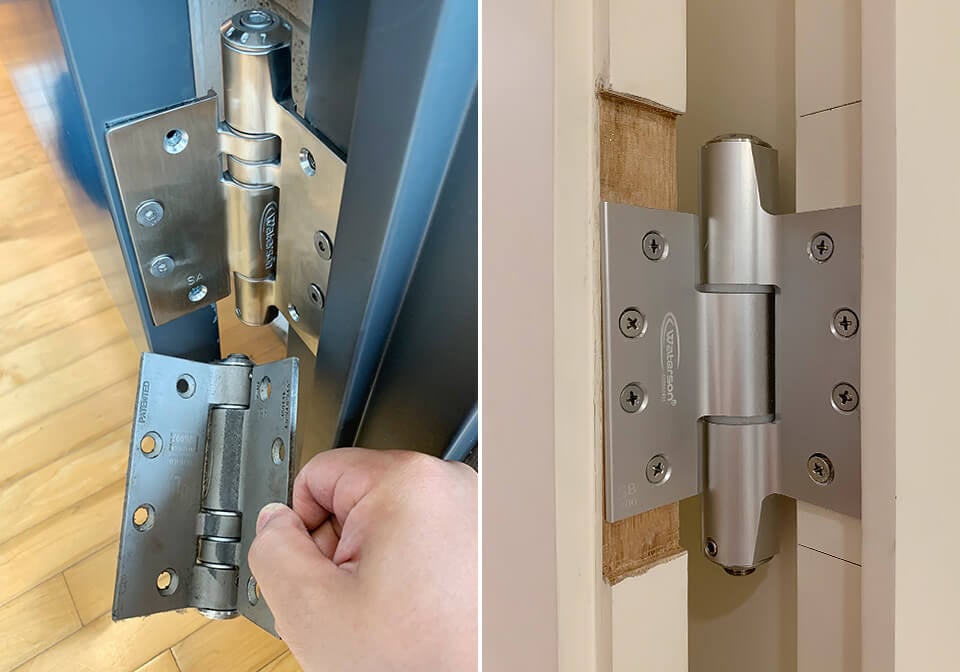
Waterson integrates the closer mechanism directly into the hinge barrel. No bulky arm on the frame, no separate hardware to maintain, no second installation. The door closes itself, quietly and reliably, every single time.
What makes maintenance practically zero:
- Swing speed, latch speed, and closing tension: are all adjustable at the hinge bottom using the 3mm and 5mm hex wrenches included in the box
- Self-closing and soft-closing in one unit: means the door pulls itself shut every single time, no manual closing, no slamming
- Stainless steel: resists corrosion in humid, coastal, and high-traffic environments without regular treatment
- Tested to 1,000,000 cycles: under BHMA A156.17, built to outlast the door it is mounted on
- ADA and ICC A117.1 compliant: with opening force under 5 lbs and closing speed over 5 seconds, so accessibility is built in, not bolted on after
- UL listed and NFPA 80 fire-rated: for up to 3 hours, covering fire door requirements without a separate overhead closer
- Hold-open and door-stop: (optional) included so you get full door control from a single piece of hardware
- Warranty: 10 years for mechanical self closing, 3 years for hydraulic soft closing
For fire-rated doors, high-traffic commercial entries, or any door that needs to stay reliably closed, Waterson removes the maintenance equation almost entirely.
How to Adjust Waterson Self Closing Door Hinges?
It’s simple. All you need is the 3mm and 5mm hex wrenches that come included in the box.
- Tension (S): Use the 5mm wrench on the numerical panel at the top of the hinge. Turn up to increase closing force, press down and turn to a lower number to decrease it. Keep it under 5 to protect spring longevity.
- Swing Speed (A): Use the 5mm wrench on the control nut at the hinge bottom. Turn toward + for faster, toward – for slower. Lock it in with the 3mm wrench when done.
- Latch Speed (A1): Same process, separate control nut, controls only the final few degrees before the door fully closes. Fast, slow, or stop, your call.
That’s it. No removing the door. No calling anyone. Two wrenches, under 10 minutes.
How Often Should You Maintain Your Door Hinges?
| Frequency | What to Do |
|---|---|
| Every 6 months | Wipe down, check and tighten all screws, listen for new sounds |
| Once a year | Full clean, re-lubricate, check alignment, re-calibrate speed settings |
| Every 3 to 5 years | Inspect barrel and pin for wear, check mounting holes, confirm hinge is still rated for door weight |
High-traffic doors should be checked every 3 months and lubricated every 6.
The work you put in now is the slam that never happens, the inspection the fire door passes without issue, the front entry that still swings perfectly five years from now. But if you start with the right hardware, most of that work disappears on its own.
That is exactly what Waterson is built for. Maintain it on a schedule. Adjust when needed. Let the hinge do the rest.
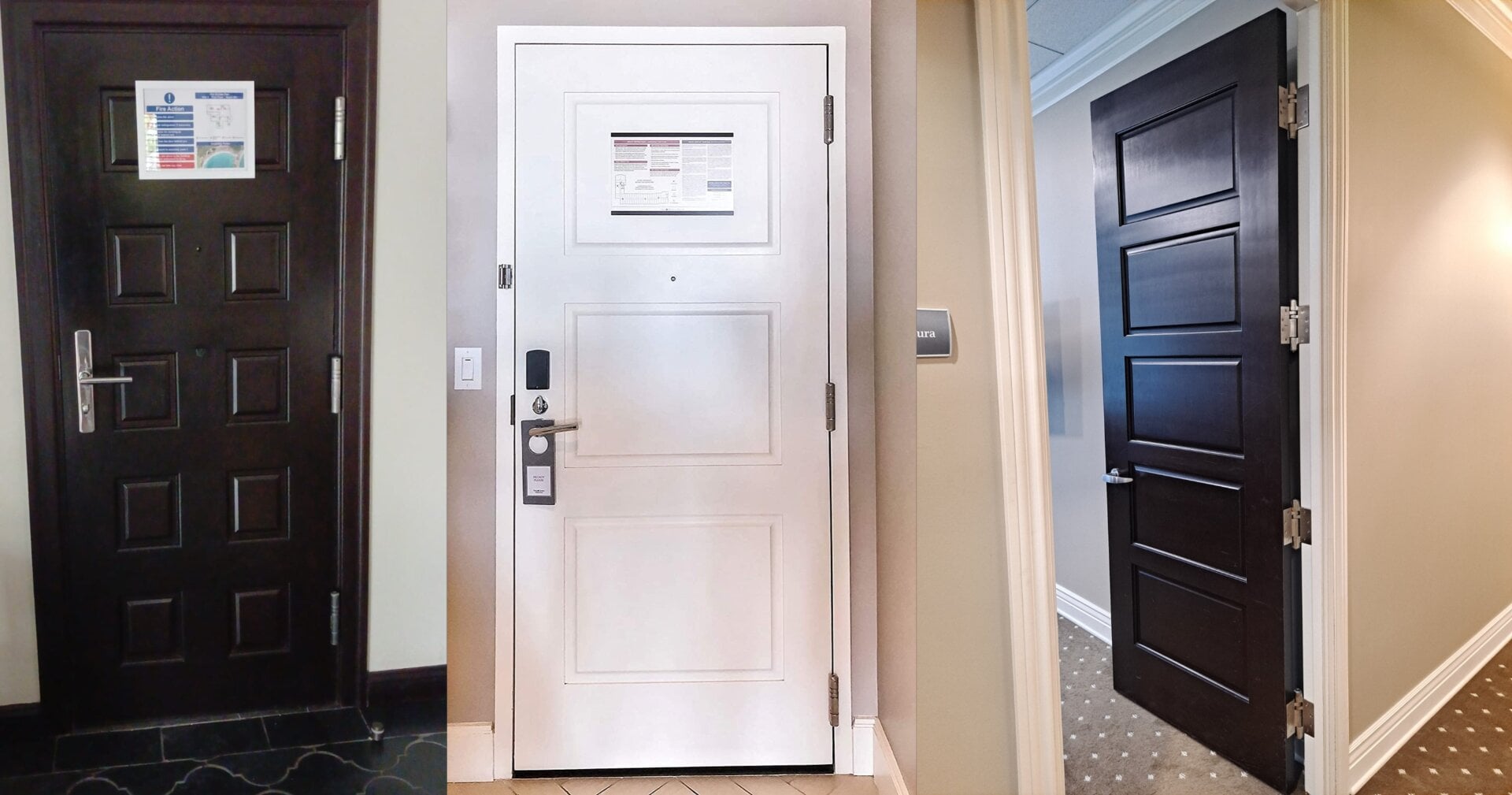
Waterson Commercial Stainless Steel Self Closing Door Hinge with Long Term Use
Waterson commercial self closing door hinges combine an overhead closer and hinge into one attractive component with optional hold-open and door-stop features. These hinges are ideal for commercial openings, gates, and glass doors. The hinges are easily installed and adjusted to comply with ADA & ICC A117.1 requirements for opening force and to assure quiet, secure closing. Made with stainless steel, Waterson soft close door hinges meet NFPA 80 and are UL 3-hour fire-rated, as well as being suitable for both interior and all-weather exterior openings. See all our features.
In addition to these performance advantages, Waterson offers flexible customization services. As a direct manufacturer, we can tailor hinge sizes, finishes, and especially hinge leaf designs to meet the specific structural needs of your doors. This makes our hinges an ideal solution for door manufacturers seeking custom options that integrate seamlessly with their existing frames.
Request For Quote
Please note that Waterson closer hinges start from a size of 4″x4″. If you’re in need of smaller self-closing hinges, we’d recommend checking out some other resources! Also, we only provide single acting closer hinges. Thank you.
Recent Post
Glass Door Hinges: Floor Spring vs Spring Hinge Compared
Quick Answer Floor hinges (also called floor springs) are hydraulic closers set into the floor slab for center-hung or double-acting glass doors with fully concealed [...]
Stainless Steel Spring Hinges: Self-Closing Hinges for Interior and Exterior Doors
Quick Answer A stainless steel spring hinge is a self-closing hinge with a torsion spring inside the barrel, so it swings the door and closes [...]
Cold Weather Gate Hinges: How Waterson Performs in Winter
When winter comes, temperatures drop, and outdoor fence gates start to behave differently. Wood absorbs moisture and swells, metal contracts slightly, and hardware components shift [...]