
When sourcing replacement hinges, most buyers check size, radius, and finish, then assume the screw holes will simply line up. In practice, the screw hole layout is its own variable, and two patterns dominate the market: the aligned pattern, also called the standard or template pattern, and the staggered pattern, also called the zigzag pattern.
The layout looks like a small manufacturing detail, but it often decides whether a hinge installs cleanly into an existing wood door or a factory-prepped metal frame. How is each pattern built, the engineering reason behind it, and which type of project typically calls for one over the other?
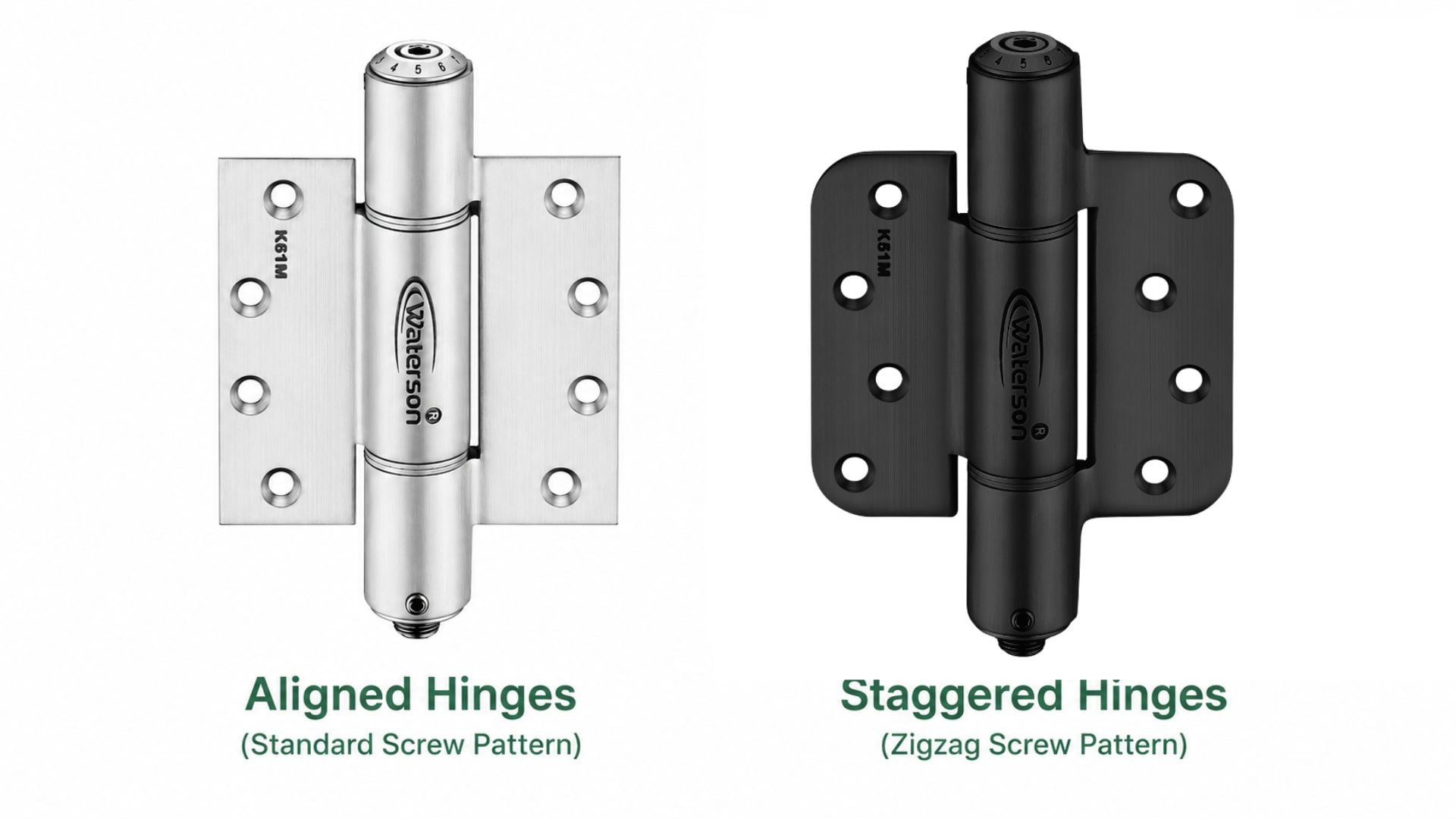
What Is an Aligned Hinge (Standard Screw Pattern)?
An aligned hinge places its screw holes in a single straight line running down the center of each leaf, sometimes referred to as the architectural or template pattern. Hole spacing on this pattern tends to follow common industry templates, so the placement stays fairly consistent from one hinge brand to the next. That consistency is the main appeal: an installer can usually swap an aligned hinge for one from a different manufacturer without re-drilling the door or frame, since the holes line up to the same factory prep.
Why Commercial Projects Favor Aligned Hinges
Commercial buildings typically use hollow metal or aluminum doors and frames that are factory prepped to standard templates rather than hand mortised on site. Because the aligned pattern is the more standardized of the two, a commercial property can usually source replacement hinges from a different supplier later in the building’s life and still have the holes line up to the original prep.
Aligned patterns are also more common on heavier, four hole hinges built for the higher daily cycle counts typical of offices, retail entries, and other high traffic commercial doors.
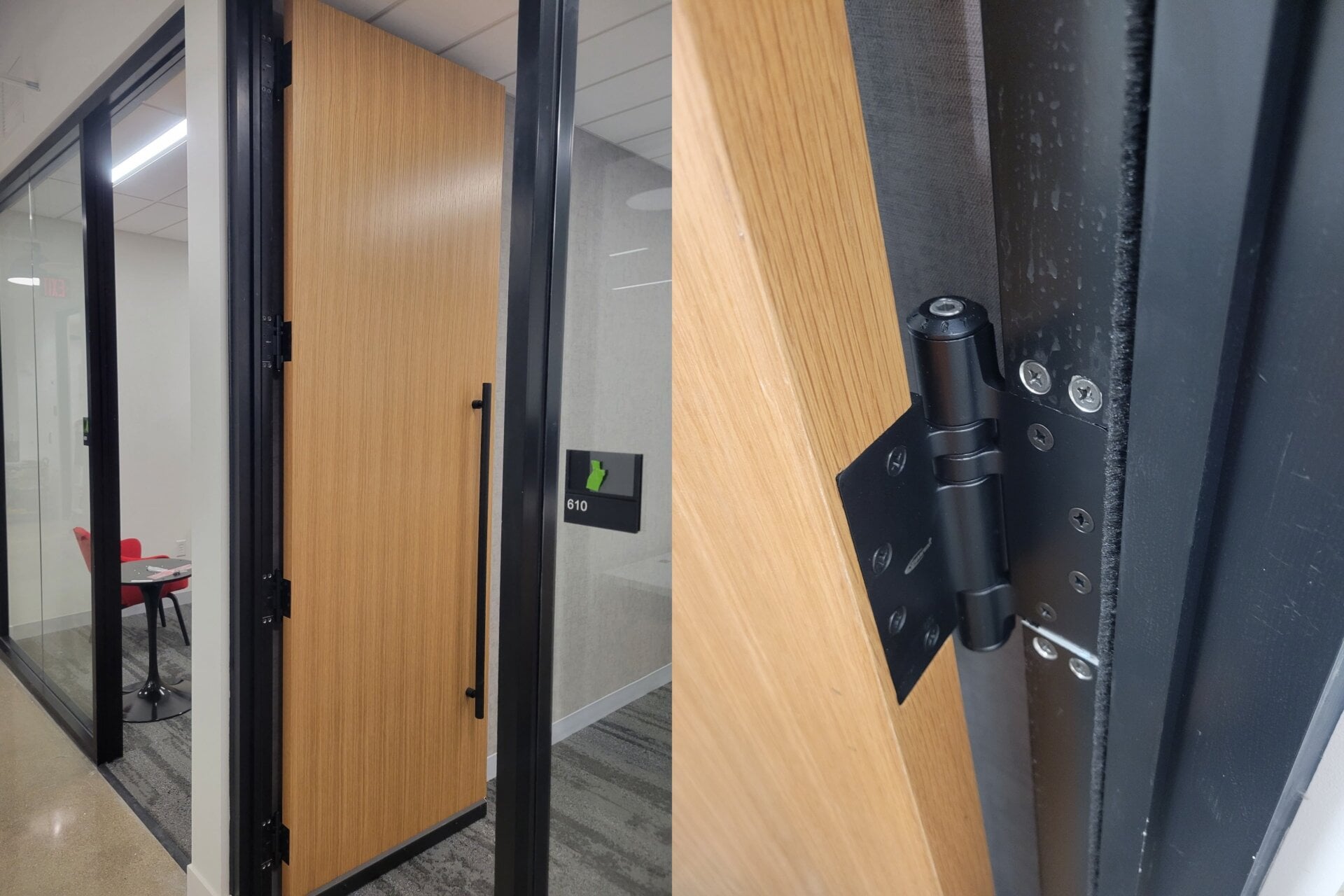
What Is a Staggered Hinge (Zigzag Screw Pattern)?
A staggered hinge replaces the single straight column with holes that alternate position down the leaf, closer to the pin on one hole and closer to the outer edge on the next, repeating in a zigzag down the length of the hinge. This pattern is less standardized across brands than the aligned pattern. Hole spacing, and even whether the zigzag mirrors or repeats between the two leaves, can vary by manufacturer and model. That makes exact pattern matching more important when a staggered hinge is being swapped into an existing residential door or jamb.
Staggered Hinges: Why Residential Projects Favor Them
Most residential interior doors are solid wood or wood composite, often around 1-3/8 inch thick, and many residential jambs arrive from the factory already prepped with a zigzag pattern cut into the wood. Matching that existing pattern keeps a one for one hinge replacement simple and avoids introducing new screw holes into a jamb that may already show wear from years of use.
Because the staggered layout reduces wedge style splitting along the grain, it remains the more reliable choice for wood substrate even on heavier residential entry doors.
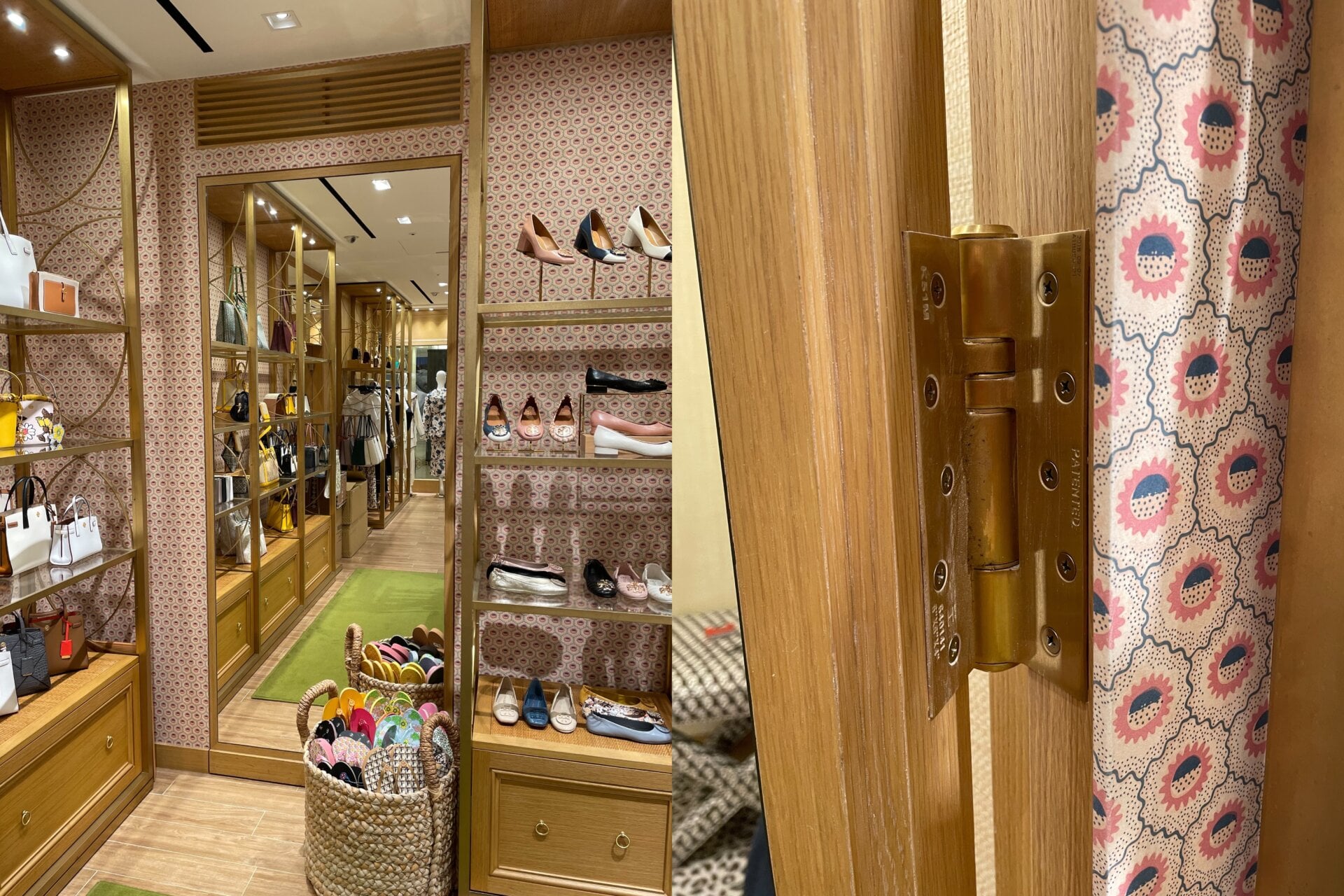
Aligned Hinges vs Staggered Hinges Comparison Table
| Aspect | Aligned (Standard) Pattern | Staggered (Zigzag) Pattern |
|---|---|---|
| Hole layout | Straight line down each leaf | Alternating offset, zigzag down each leaf |
| Other names | Standard, template, architectural pattern | Zigzag pattern |
| Consistency across brands | High, holes generally match common templates | Lower, spacing varies more by manufacturer |
| Best substrate | Metal or aluminum doors and frames | Solid wood doors and jambs |
| Wood splitting risk | Not relevant on metal, possible on wood | Minimized, even along the grain |
| Typical setting | Commercial buildings, offices, retail | Houses, apartments, residential entries |
| Typical door thickness | 1-3/4 inch and heavier commercial doors | 1-3/8 inch to 1-3/4 inch residential doors |
| Replacement ease | Easier across different commercial hardware brands | Requires close match to existing hole spacing |
When Waterson Self Closing Door Hinges Engineered for Both Patterns
Waterson self closing door hinges are built to support both the aligned and staggered screw patterns, so the same closer hinge line can be specified across wood residential doors and metal commercial frames without forcing a compromise on one or the other. Waterson supplies self closing and soft closing hinge solutions for residential, commercial, and industrial buildings and projects.
Key features include:
- Stainless Steel: 304 (standard) / 316 (weather resistant option)
- Construction: full mortise spring closer, heavy duty
- ADA Compliance: opening force of 5 lbs or less, closing time of 5 seconds or more, maintains accessible swing clearance
- Hold Open (Optional): adjustable mechanical hold open at approximately 85 to 90 degrees
- Fire Rated: meets NFPA 80 requirements, used on fire rated door assemblies
- Cycle Performance: 1,000,000 cycle tested, ANSI/BHMA Grade 1 equivalent
- Adjustability: numerical tension adjuster with multi stage speed control
- Closing Performance: smooth self closing action with controlled soft close
- Door Fit: available in 4”/ 4.5” / 5” / 6” sizes, templates, and radius preparations
- Primary Use: daily convenience where a controlled hold open improves traffic flow
- Typical Applications: offices, retail stores, hospitality spaces, interior passages
- Ideal Use Case: high traffic place that need a temporary hold open without surface mounted or extra arm hardware
- Warranty: 10 years for mechanical components, 3 years for hydraulic components
Available Hinge Corner and Screw Pattern Options
Waterson offers several corner and screw pattern combinations so the hinge can match an existing door prep rather than requiring new mortising:
- Square self closing door hinges
- 5/8 inch radius hinge, standard screw pattern
- 5/8 inch radius hinge, zigzag screw pattern
- 1/4 inch radius hinge, standard screw pattern
- 1/4 inch radius hinge, zigzag screw pattern
Aligned and staggered patterns solve the same job in different ways. Aligned, standard pattern hinges suit metal and aluminum doors. That is why commercial buildings favor them, while staggered, zigzag-pattern hinges suit solid wood doors and jambs by reducing the risk of splitting, which is why residential settings favor them.
With Waterson offering both patterns and square, 1/4 inch, and 5/8 inch radius options, the right hinge can usually match the existing door prep.
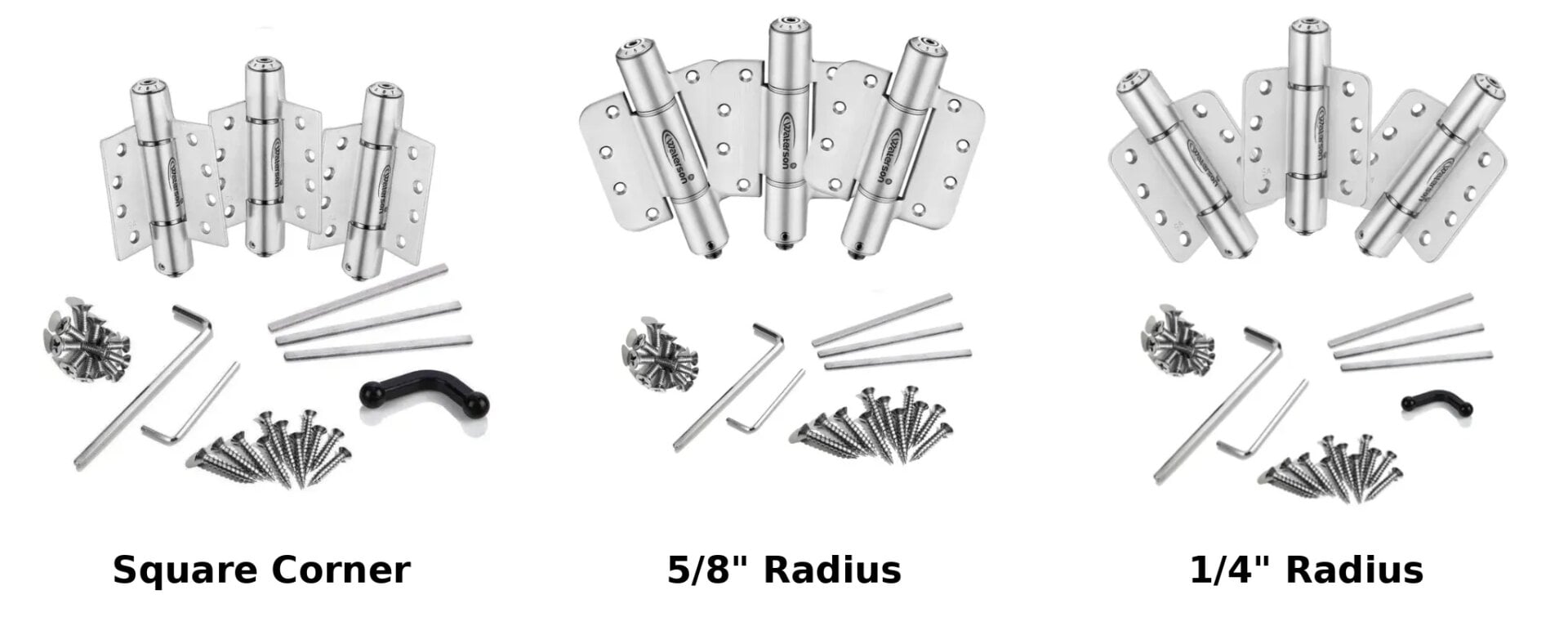
Waterson Stainless Steel Self Closing Aligned Hinges and Staggered Hinges
Waterson Self Closing Door Hinges combine the function of an overhead closer and a hinge into a single, sleek component—complete with optional hold-open and door-stop features. Designed for commercial openings, gates, and glass doors, these hinges are easy to install and adjust to meet ADA and ICC A117.1 standards for opening force, while ensuring quiet and secure closure. Crafted from durable stainless steel, they are NFPA 80 compliant, UL 3-hour fire-rated, and built to perform reliably in both interior and all-weather exterior environments. See all our features.
In addition to these performance advantages, Waterson offers flexible customization services. As a direct manufacturer, we can tailor hinge sizes, finishes, and especially hinge leaf designs to meet the specific structural needs of your doors. This makes our hinges an ideal solution for door manufacturers seeking custom options that integrate seamlessly with their existing frames.
Request For Quote
Please note that Waterson closer hinges start from a size of 4″x4″. If you’re in need of smaller self-closing hinges, we’d recommend checking out some other resources! Also, we only provide single acting closer hinges. Thank you.
Recent Post
How Many Self Closing Hinges Per Door? The NFPA 80 Rule vs. Waterson Sets for Fire & Arched Doors
Quick Answer Choosing a Waterson self-closing hinge set takes two steps. First, door height sets how many Waterson hinges you need: 2 for a 6 [...]
NFPA 80 Residential Fire Door Requirements: 13 Point Inspection Checklist
Quick Answer NFPA 80 is the standard that defines minimum requirements for fire door installation, inspection, and maintenance in buildings. It requires fire doors to [...]
Unequal Double Door Hinges: How to Self Close Both Leaves with No Overhead Closer
Quick Answer An unequal double door is a pair with one wide active leaf and one narrow inactive leaf, sized so the active leaf alone [...]