
Quick Answer
A door coordinator controls the closing sequence of double doors, ensuring the inactive leaf closes first so the active leaf can latch correctly. Without it, double doors can collide, fail to seal, or become fire code non-compliant.
Let’s be honest: after a couple of years, even the best-installed double doors start misbehaving. One leaf shuts too early, the other drags behind, and suddenly the latch doesn’t catch. The frame takes the hit, edges start chipping, and your fire inspector calls it “non-compliant.”
So, what can keep both doors smoothly, right order, and last in the frequently used space?
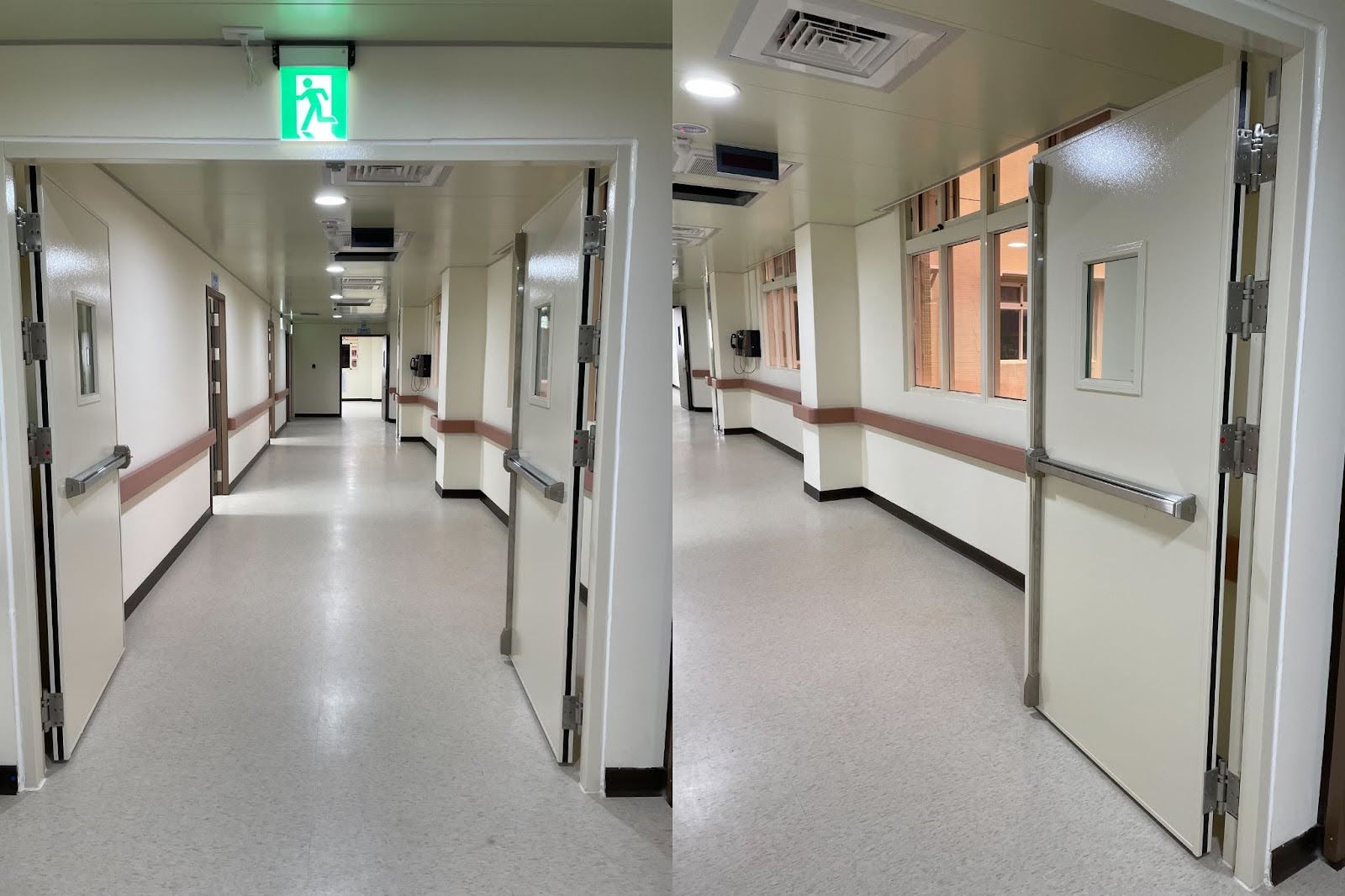
But First, What Does a Door Coordinator Do?
In every double-door setup, one leaf has to wait for the other — that’s where the coordinator steps in. It controls the closing order, making sure the inactive door shuts first and the active one follows cleanly into the latch.
Once aligned, the active door follows and locks smoothly, maintaining full contact and fire-rating integrity. Without this synchronized motion, even a perfectly installed pair of doors can fail to seal or latch correctly.
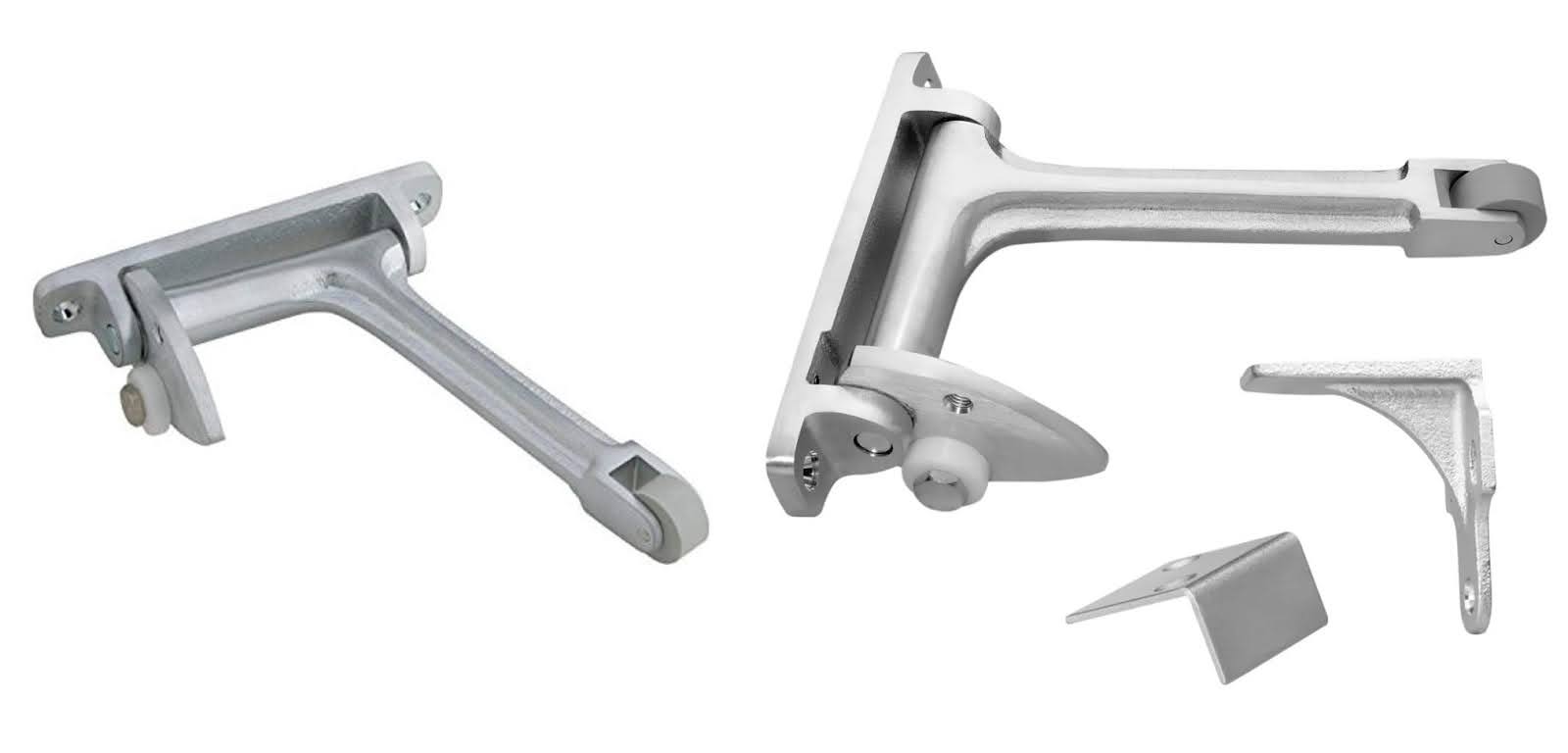
What Is the Difference Between a Door Coordinator and a Door Closer?
The difference is simple. A door closer controls speed and force—how fast and firmly a single door shuts. A door coordinator, on the other hand, manages the sequence—which leaf closes first in a double set. In fire-rated corridor doors or some double-glass door entrances, this combination prevents door collision and ensures a proper latch every time.
However, not every installation can fit an overhead coordinator. Too tight transoms, narrow frames, or aesthetic constraints often leave no mounting space for one. So, what options do you have when you can’t install a traditional coordinator?
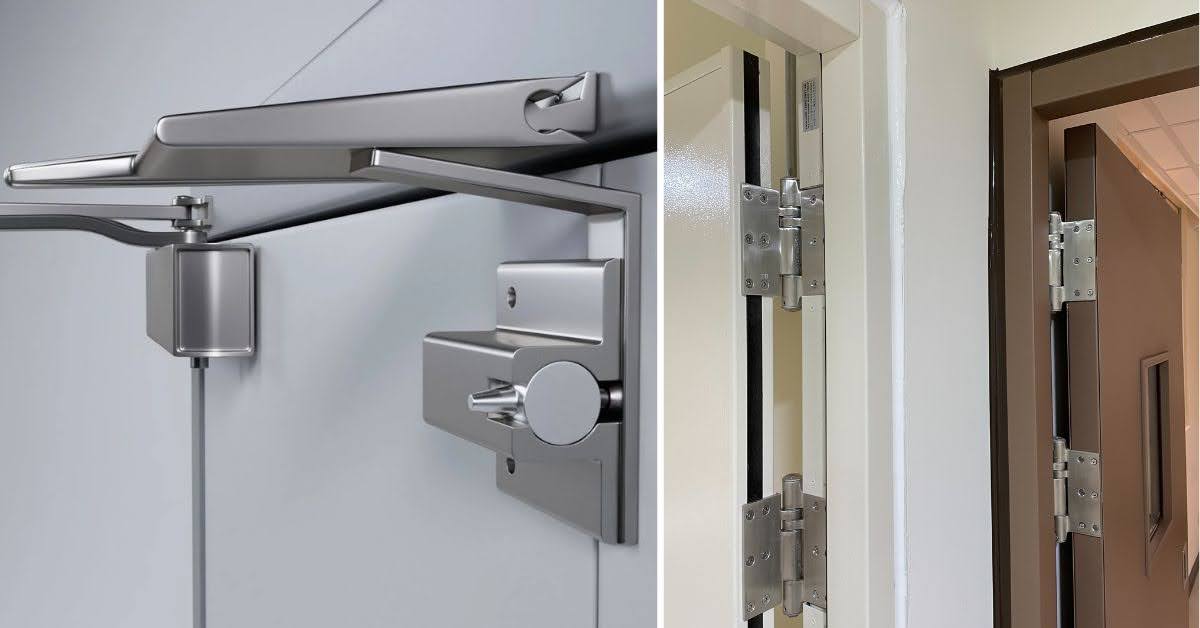
Why Are There Some Cases Where I Cannot Set Up a Door Coordinator?
Sometimes, you won’t see a door coordinator in the architect’s hardware schedule — not because it’s unnecessary, but because the door design doesn’t allow it.
Traditional coordinators require clear header space for installation and movement. But when the opening includes an arched curve, concealed closers, smoke seals, door holders, or tight transom framing, that space simply isn’t available. In other cases, facilities avoid mechanical coordinators altogether to minimize maintenance and simplify fire door inspections.
In such cases, what alternatives can deliver the same coordination without adding more hardware overhead?
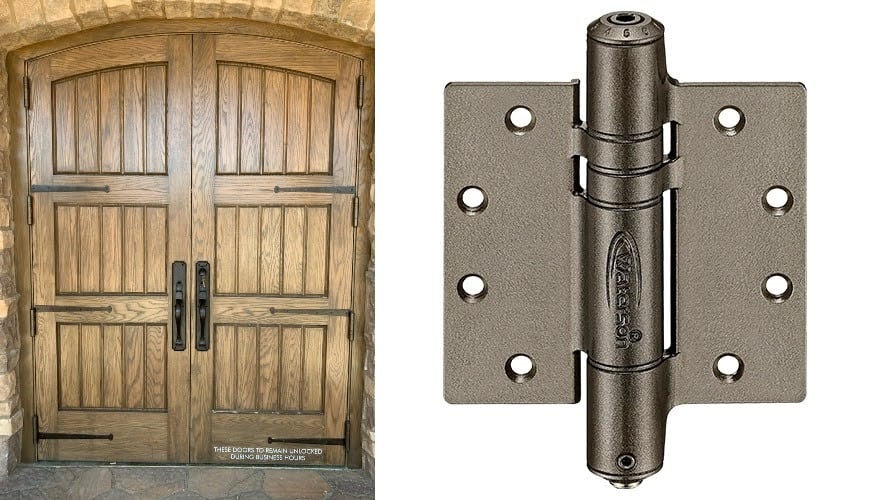
Door Coordinator vs Door Closer vs Spring-Loaded Hinge
| Door Coordinator | Door Closer | Heavy Duty Spring-Loaded Hinge | |
|---|---|---|---|
| Function | Controls closing sequence of double doors | Controls closing speed and force of a single door | Automatically pulls door shut via spring tension |
| Door Type | Double doors only | Single or double doors | Single or double doors |
| Installation | Overhead, on door frame header | Overhead or on door surface | Replaces standard hinge, concealed |
| Adjustability | Limited, sequence only | Speed, backcheck, delayed action | Tension adjustment with swing & latch speed control. Adjustable hydraulic soft closing damper |
| Fire Rated | Yes (when combined with closer) | Yes | Yes (select models) |
| ADA Compliant | Depends on closer used | Yes | Yes |
| Maintenance | Moderate | Moderate | Low |
| Best For | Fire-rated corridor double doors | High-traffic single doors | High traffic 260lbs and heavy doors, clean aesthetic |
Can an Adjustable Door Closer Become a Door Coordinator for Double Doors?
Yes. Waterson adjustable door closer can be adjusted to function as a door coordinator for double doors. By fine-tuning the door closer tension and closing speed on each leaf, you can set the inactive door to close slightly before the active one. This achieves the same coordination effect — no separate hardware, no overhead installation.
In addition, Waterson closers offer key features tailored to door-coordinator applications:
- Self Closing Mechanism: Automatically shuts the door after every use, preventing smoke and fire from spreading.
- Fire Rated: Certified with 3-hour UL-list and NFPA 80 to resist high temperatures and maintain barrier integrity under extreme fire conditions.
- Stainless Steel: Equipped with heat-resistant SST304; maintains structural integrity during prolonged exposure to flame and stress.
- ANSI/BHMA A156.17 Grade 1: Proven durability with over 1,000,000 cycles—guaranteed to function in high-use and high-stress conditions.
- ADA Compliant: Smooth operation for everyone, including children, the elderly, and people with limited mobility—essential during panic evacuation.
- Heavy Duty: Designed for high-traffic, high-impact environments—reliable under real-world fire pressure.
- Concealed Design: Flush-fit hinge design minimizes snagging and keeps emergency routes clear and code-compliant
- Custom Finishes: Satin, Black, Brass, or Bronze to match design intent.
- Durable Warranty: 5–10 years indoor; 3–10 years outdoor.
Together, these adjustable door closer features create a system that controls both speed and sequence — keeping your double doors smooth, compliant, and free of extra hardware.
Some Reminders Before Replacing Your Door Coordinator with Waterson Hinges
- Waterson does not provide door coordinator hardware. Our hinges allow independent speed and latch control on each door leaf, so you can tune both wings to work with your existing coordinator requirements.
- The hinges can open up to 180°, but we do not recommend frequent use at the 180° angle as it shortens the hinge’s lifespan.
For details, refer to: Waterson Door Opening Degree. - Do not jump tension settings directly from “N/0” to “7.” This sudden change can damage the internal spring system.
Waterson Adjustable Self Closing Door Closer for Door Coordinator
Waterson adjustable self closing door hinge combine the function of an overhead closer and a hinge into a single, sleek component—complete with optional hold-open and door-stop features. Designed for commercial openings, gates, and glass doors, these hinges are easy to install and adjust to meet ADA and ICC A117.1 standards for opening force, while ensuring quiet and secure closure. Crafted from durable stainless steel, they are NFPA 80 compliant, UL 3-hour fire-rated, and built to perform reliably in both interior and all-weather exterior environments. See all our features.
In addition to these performance advantages, Waterson offers flexible customization services. As a direct custom hinge manufacturer, we can tailor hinge sizes, finishes, and especially hinge leaf designs to meet the specific structural needs of your doors. This makes our hinges an ideal solution for door manufacturers seeking custom options that integrate seamlessly with their existing frames.
Request For Information
Please note that Waterson Closer Hinges start from a size of 4″x4″. If you’re in need of smaller self-closing hinges, we’d recommend checking out some other resources! Also, we only provide single acting closer hinges. Thank you.
Recent Post
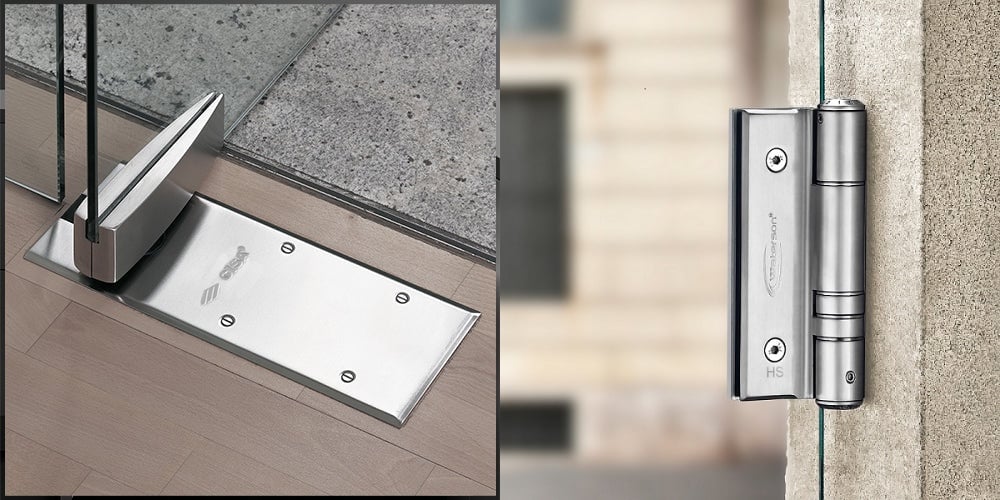
Glass Door Hinges: Floor Spring vs Spring Hinge Compared
Quick Answer Floor hinges (also called floor springs) are hydraulic closers set into the floor slab for center-hung or double-acting glass doors with fully concealed [...]
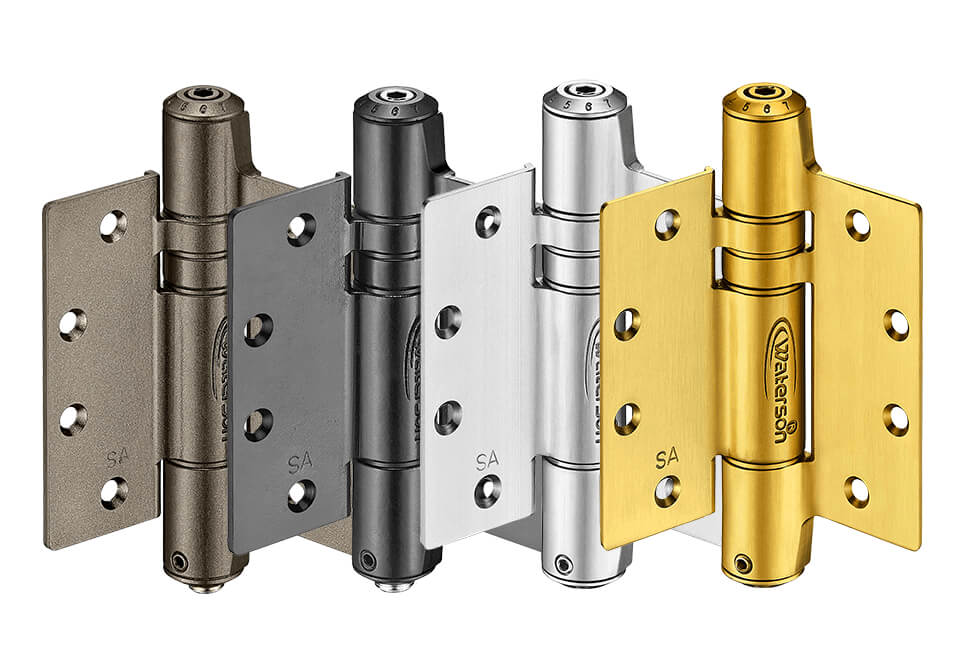
Stainless Steel Spring Hinges: Self-Closing Hinges for Interior and Exterior Doors
Quick Answer A stainless steel spring hinge is a self-closing hinge with a torsion spring inside the barrel, so it swings the door and closes [...]
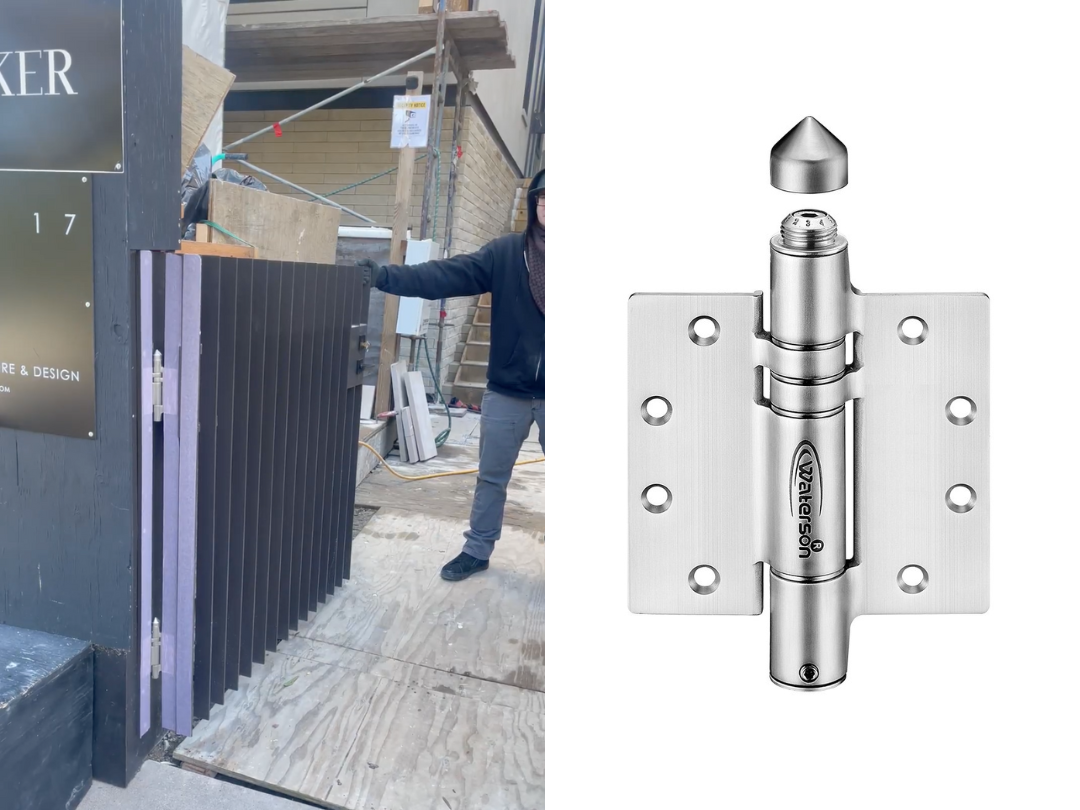
Cold Weather Gate Hinges: How Waterson Performs in Winter
When winter comes, temperatures drop, and outdoor fence gates start to behave differently. Wood absorbs moisture and swells, metal contracts slightly, and hardware components shift [...]