
When planning a new build or renovation, one detail that often gets overlooked is the direction your door swings. Inswing or outswing? It sounds like a minor choice, but it affects safety, space planning, weather resistance, code compliance, and, importantly, the hardware you need.
So how do you know which swing direction is right for your project, and what hardware will actually hold up? Let’s start with the basics.
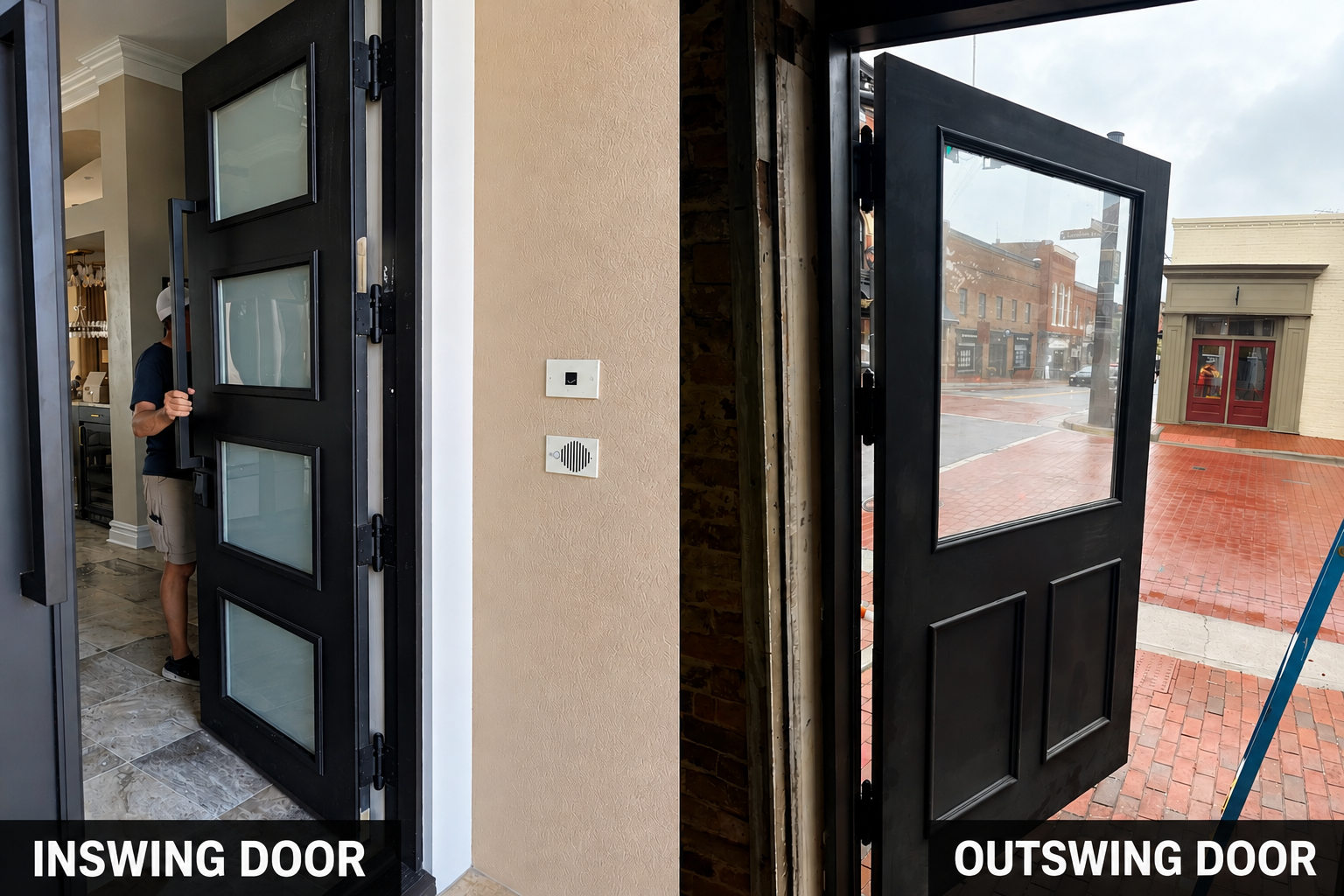
What Is an Inswing Door?
An inswing door opens inward, toward the interior of the room or building. This is the most common configuration for residential entry doors in North America, as well as most interior doors.
Advantages of inswing doors:
- Weather protection for hardware. The hinges sit on the interior side, protected from rain, sun, and tampering.
- Easy to open in emergencies from outside. First responders can force an inswing door open more easily.
- Familiar and convenient. Guests instinctively push the door open as they enter.
Disadvantages:
- Takes up interior space. The swing arc eats into your floor plan, which matters in small rooms, hallways, and tight entryways.
- Weaker against forced entry and wind pressure. Because the door swings inward, extreme winds or a strong kick push the door in the direction it naturally opens.
What Is an Outswing Door?
An outswing door opens outward, away from the room. Outswing doors are standard for commercial buildings, exterior patio doors in hurricane-prone regions, and egress doors where building codes require doors to swing in the direction of travel.
Advantages of outswing doors:
- Superior wind and pressure resistance. Wind pushes the door against the frame instead of away from it, which is why hurricane zones like Florida favor outswing exterior doors.
- Better security against kick-ins. The door stop absorbs the force of an attempted forced entry.
- Saves interior space. No swing arc inside the room, ideal for small bathrooms, closets, and compact commercial spaces.
- Code compliance for egress. Fire and life safety codes typically require exit doors in commercial buildings to swing outward so crowds can push their way out.
Disadvantages:
- Exposed hinges. Traditional hinges on an outswing door face the exterior, creating a potential security weakness unless you use security hinges or non-removable pins.
- Weather exposure. Hardware faces rain, humidity, salt air, and UV, so corrosion resistance becomes essential.
- Clearance issues. The door can swing into walkways, porches, or people approaching the entrance.
Inswing vs Outswing Door Difference Comparison
| Factor | Inswing Door | Outswing Door |
|---|---|---|
| Interior space | Swing arc takes up floor space | Frees up interior space |
| Wind resistance | Weaker, wind pushes door open | Excellent, wind presses door into frame |
| Forced entry | Easier to kick in | Door stop resists kick-ins, but hinges are exposed |
| Hardware exposure | Hinges protected indoors | Hinges face the weather, corrosion resistance required |
| Emergency access | Easier for first responders to force open | Harder to force from outside |
| Typical use | Residential entries, interior doors | Commercial egress, hurricane zones, patios, gates |
Why Door Hinges Are the Deciding Factor for Inswing and Outswing Door
Whichever direction your door swings, the hinge is the component doing all the work. Hinges determine:
- Load capacity: Heavy exterior doors, especially solid wood, steel, or hurricane-rated fiberglass, need hinges engineered for the weight.
- Security: Outswing doors need hinges with non-removable pins or concealed fasteners so intruders can’t simply pop the door off its frame.
- Durability: Exterior hinges must resist corrosion. Stainless steel is the gold standard for coastal and high-humidity environments.
- Closing behavior: Building codes often require exterior and fire-rated doors to be self-closing. Traditionally, that meant installing a bulky overhead door closer in addition to standard hinges.
That last point is where modern hinge technology has changed the game. Instead of pairing plain hinges with an overhead closer, you can now get both functions in one device: the self-closing hinge.
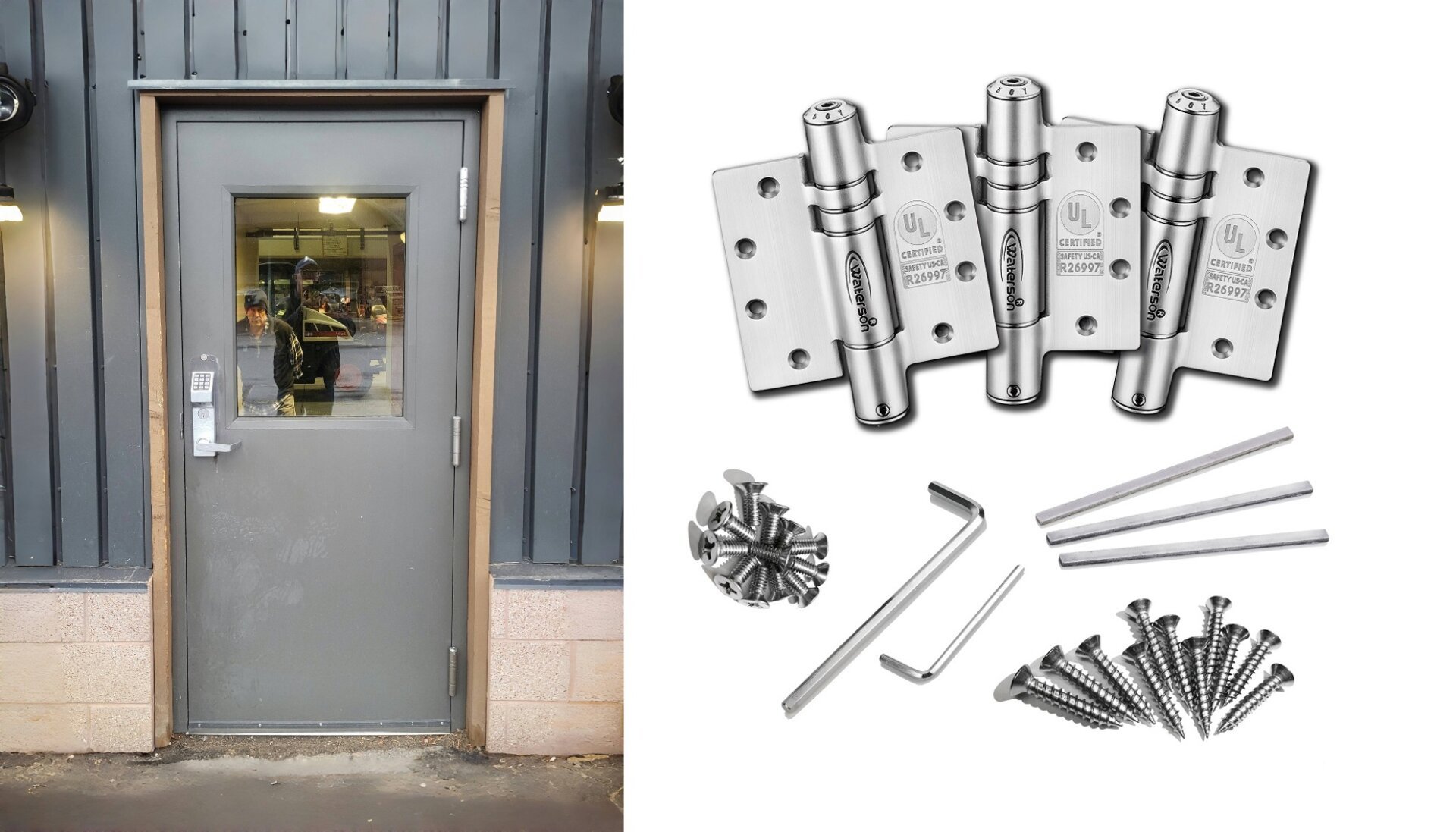
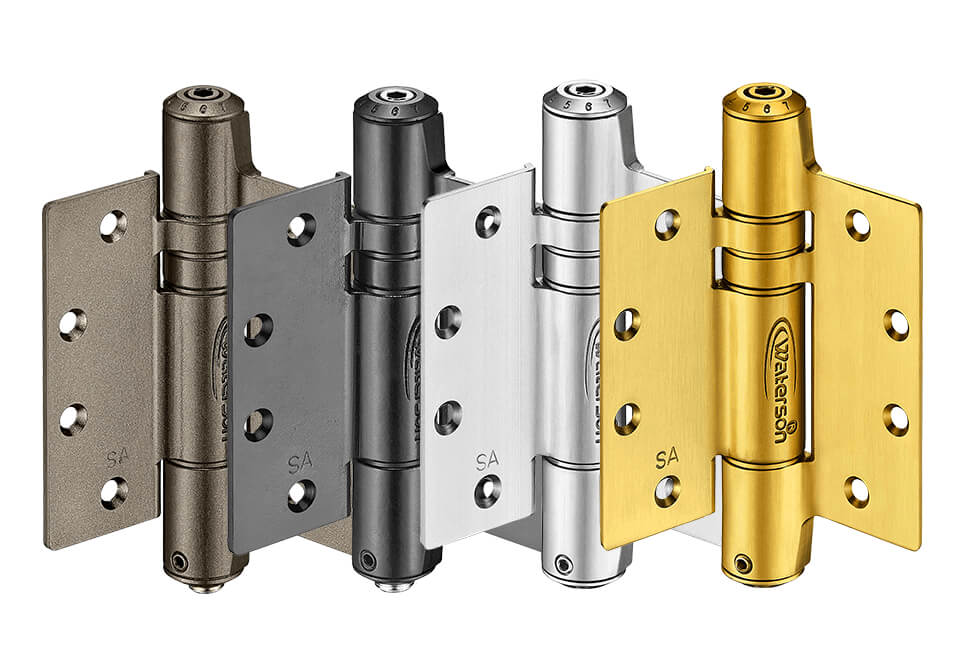
Waterson Self Closing Hinges: Single Action, Self-Closing, Built for Both Swing Directions
Waterson self closing hinges are single action hinges, meaning the door swings in one direction only, either inswing or outswing, and returns to the closed position on its own. This makes them a perfect match for standard door configurations, unlike double action (saloon-style) hinges that swing both ways.
What sets Waterson apart is that each hinge combines three functions in a single, streamlined unit:
- Hinge: Heavy-duty stainless steel construction supports doors up to commercial weights, with models for wood, metal, and glass doors.
- Closer: An integrated spring mechanism closes the door automatically, with adjustable closing speed and force. No overhead closer arm, no unsightly hardware.
- Damper: A hydraulic damping system ensures the door closes gently and quietly, without slamming, even in windy conditions.
Why Waterson single action hinges work for inswing doors
For inswing entry doors, Waterson hinges deliver reliable self-closing performance while keeping the hardware clean and minimal on the interior side. The adjustable closing speed lets you fine-tune the door so it latches securely every time, which is essential for fire-rated doors and energy efficiency.
Why Waterson single action hinges excel on outswing doors
Outswing doors are where Waterson really shines. The 304 and 316 stainless steel construction resists corrosion in coastal, poolside, and outdoor environments. Because the closer is built into the hinge itself, there’s no exposed overhead closer for weather or vandals to attack. And the hydraulic damper keeps the wind from slamming the door shut on fingers, a real hazard with outswing gates and patio doors.
Waterson single action hinges are also UL listed for fire doors, ADA compliant for opening force, and suitable for gates, making them a versatile choice across residential, commercial, and outdoor applications.
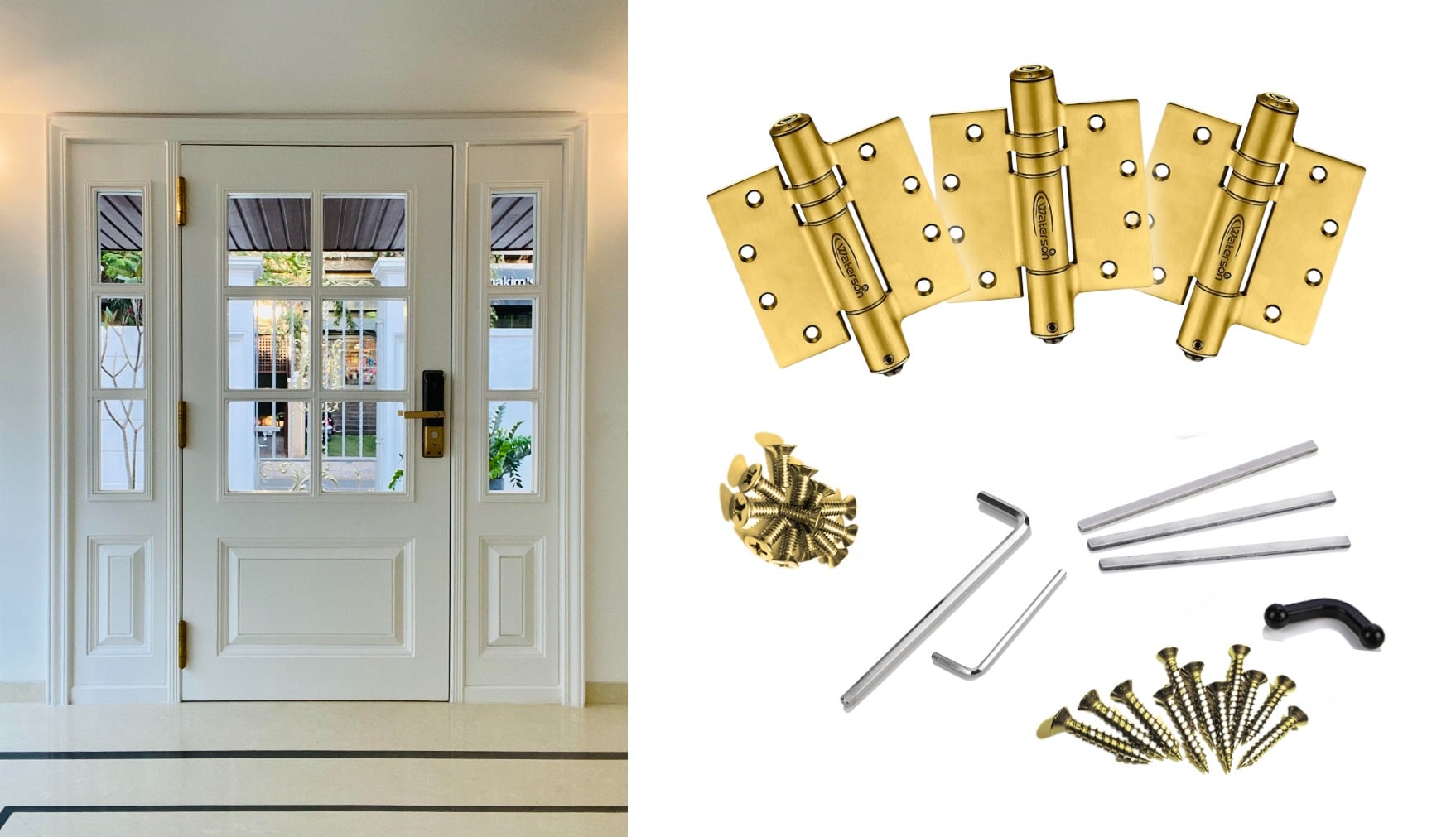
Choosing between an inswing and outswing door comes down to your climate, space, security needs, and local building codes. But whichever direction your door swings, don’t treat the hinge as an afterthought. A quality self-closing hinge simplifies installation, improves safety, and keeps your entrance looking clean.
Waterson Self Closing Single Action Hinges that Support Inswing and Outswing Door
Waterson single action self closing hinges combine the function of an overhead closer and a hinge into a single, sleek component—complete with optional hold-open and door-stop features. Designed for commercial openings, gates, and glass doors, these hinges are easy to install and adjust to meet ADA and ICC A117.1 standards for opening force, while ensuring quiet and secure closure. Crafted from durable stainless steel, they are NFPA 80 compliant, UL 3-hour fire-rated, and built to perform reliably in both interior and all-weather exterior environments. See all our features.
In addition to these performance advantages, Waterson offers flexible customization services. As a direct custom hinge manufacturer, we can tailor hinge sizes, finishes, and especially hinge leaf designs to meet the specific structural needs of your doors. This makes our hinges an ideal solution for door manufacturers seeking custom options that integrate seamlessly with their existing frames.
Request For Quote
Please note that Waterson Closer Hinges start from a size of 4″x4″. If you’re in need of smaller self-closing hinges, we’d recommend checking out some other resources! Also, we only provide single acting closer hinges. Thank you.
Recent Post
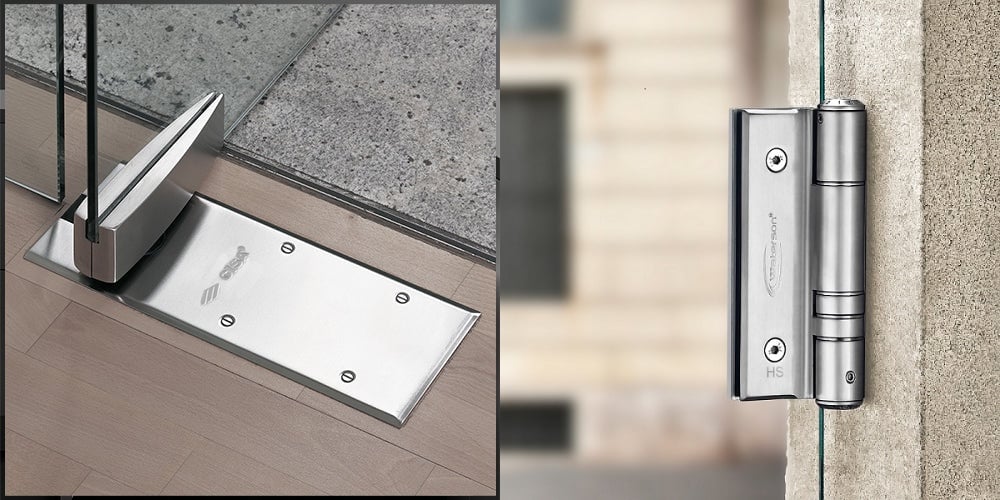
Glass Door Hinges: Floor Spring vs Spring Hinge Compared
Quick Answer Floor hinges (also called floor springs) are hydraulic closers set into the floor slab for center-hung or double-acting glass doors with fully concealed [...]
Stainless Steel Spring Hinges: Self-Closing Hinges for Interior and Exterior Doors
Quick Answer A stainless steel spring hinge is a self-closing hinge with a torsion spring inside the barrel, so it swings the door and closes [...]
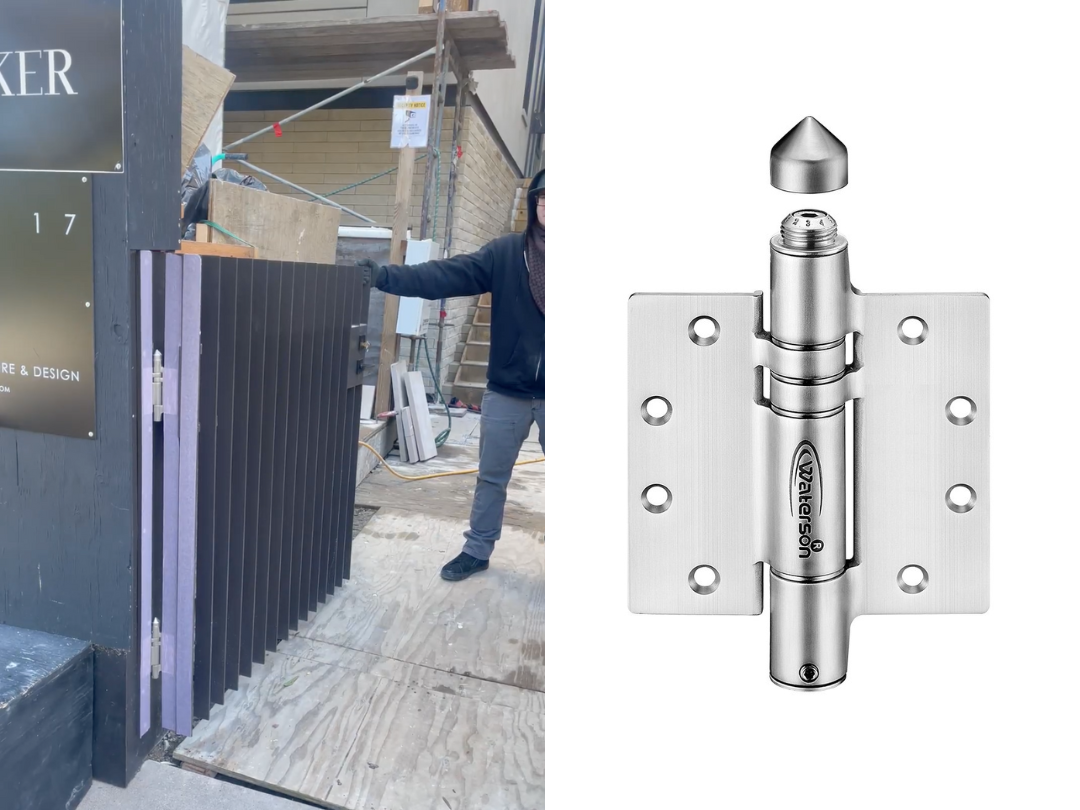
Cold Weather Gate Hinges: How Waterson Performs in Winter
When winter comes, temperatures drop, and outdoor fence gates start to behave differently. Wood absorbs moisture and swells, metal contracts slightly, and hardware components shift [...]