
If your storm door is squeaking, sagging, or slamming shut every time someone walks in, there’s a good chance your hinges are the problem. For that reason, this guide covers everything: what storm door hinges actually are, how to pick the right ones, where to buy them, and how to install and adjust them afterward.
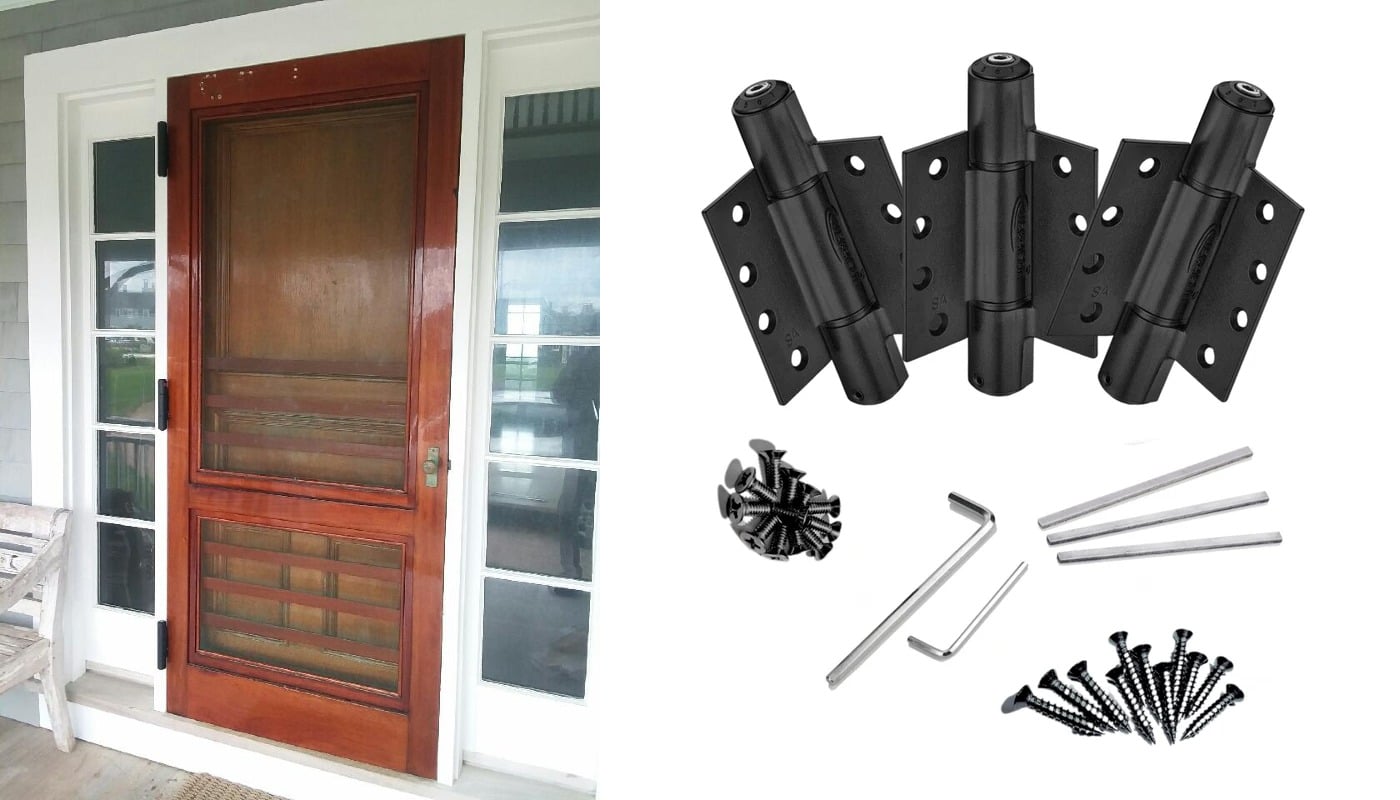
What Are Storm Door Hinges, and What Do They Actually Do?
Storm door hinges are the hardware that connect your storm door to the door frame. They hold the door in place, let it swing open and closed, and take a lot of abuse over time, because storm doors are used constantly, exposed to rain, wind, and temperature changes.
Most storm doors have two or three hinges. They look similar to regular door hinges, but they are built tougher for outdoor exposure. Some hinges are just basic pivot points. Others have built-in closing mechanisms so the door closes automatically without you needing a separate door closer.
How Do I Know If My Storm Door Hinges Need to Be Fixed or Replaced?
Not sure if your hinges are the problem? Here are the most common signs:
- The door drags on the ground or the frame when opening
- You can see a gap between the door and the frame when it’s closed
- The door slams shut instead of closing gently
- Hinges look rusty, bent, or loose
- Screws keep coming out or stripping
Any of these means it is time to either adjust, tighten, or replace your hinges.
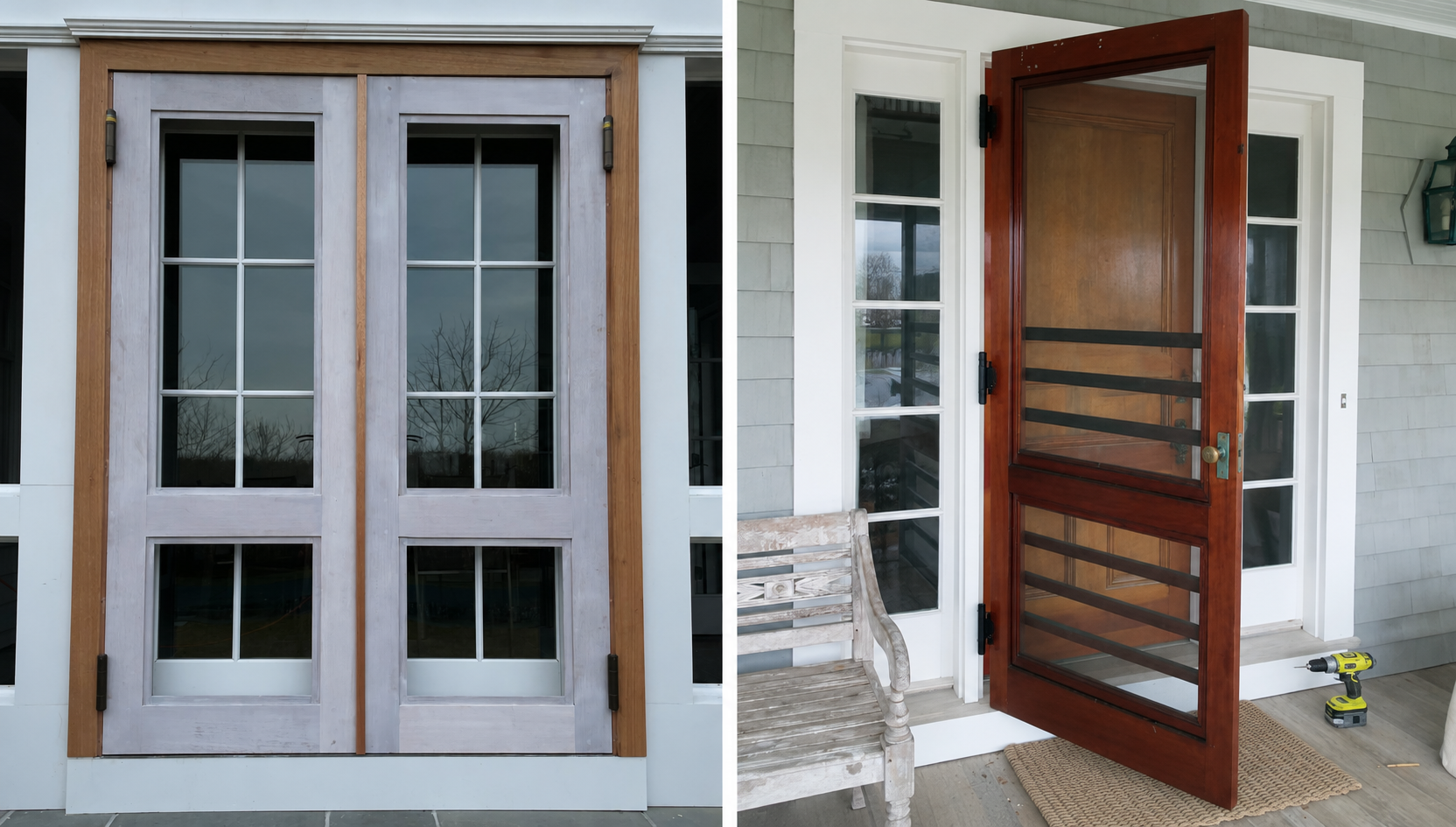
What Are the Different Types of Storm Door Hinges?
1. Standard Butt Hinges
These are the basic type, two metal plates connected by a pin. They hold the door up but do not do anything else. You will need a separate door closer if you want the door to shut automatically.
2. Door Closer
A door closer is a separate device, usually mounted at the top of the door frame, that controls how fast the door swings shut. Unlike spring hinges, it lets you adjust the closing speed so the door does not slam. The tradeoff is that you still need standard hinges on the side to actually hold the door up. So you are installing two separate things instead of one.
3. Hydraulic or Soft-Close Hinges
These use hydraulic fluid inside the hinge body to control closing speed. The door closes smoothly and quietly every single time. No slamming, no extra closer hardware needed. This is the premium option, and if you want a long-term, clean solution, this is it.
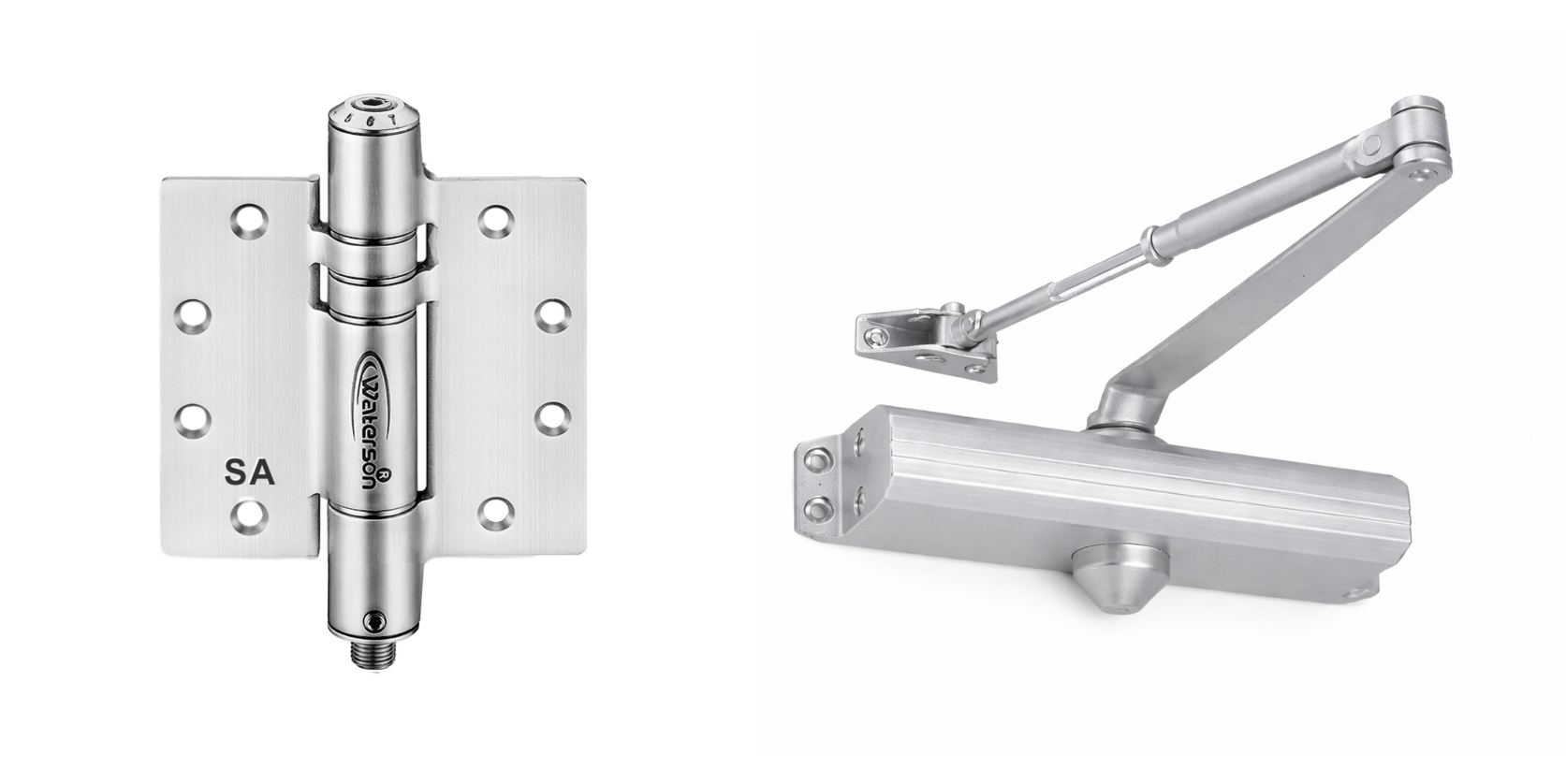
Storm Door Hinges vs. Storm Door Closers: Which One Do You Need?
This is a common question. Both will make your door close automatically, but they work differently.
| Feature | Storm Door Closer | Storm Door Hinges (with soft close mechanism built in) |
|---|---|---|
| Closing mechanism | Separate arm mounted on door frame | Built into the hinge body itself |
| Installation complexity | Moderate, need to mount arm and bracket | Simple, replaces existing hinge |
| Appearance | Visible arm and rod on the door | Clean, minimal look |
| Adjustability | Yes, via tension screw | Yes, via hinge adjustment |
| Maintenance | Arm can bend or loosen over time | Very low maintenance |
| Best for | Existing doors, quick fix | New install or full upgrade |
| Cost | Lower upfront | Higher upfront, better long-term value |
If you just want a quick fix and already have a door closer arm, adjust or replace that. If you want a cleaner setup with no visible hardware, go with hydraulic hinges that have the closer built in.
What to Look for When Choosing Storm Door Hinges?
Before you buy, please check these things:
Door Weight and Size
Hinges are rated for door weight. A heavy solid wood storm door needs heavier-duty hinges than a lightweight aluminum one. Check your door’s weight or size specifications and match the hinge rating.
Material and Corrosion Resistance
Storm doors are outside. Hinges need to handle moisture, humidity, and temperature swings. Look for:
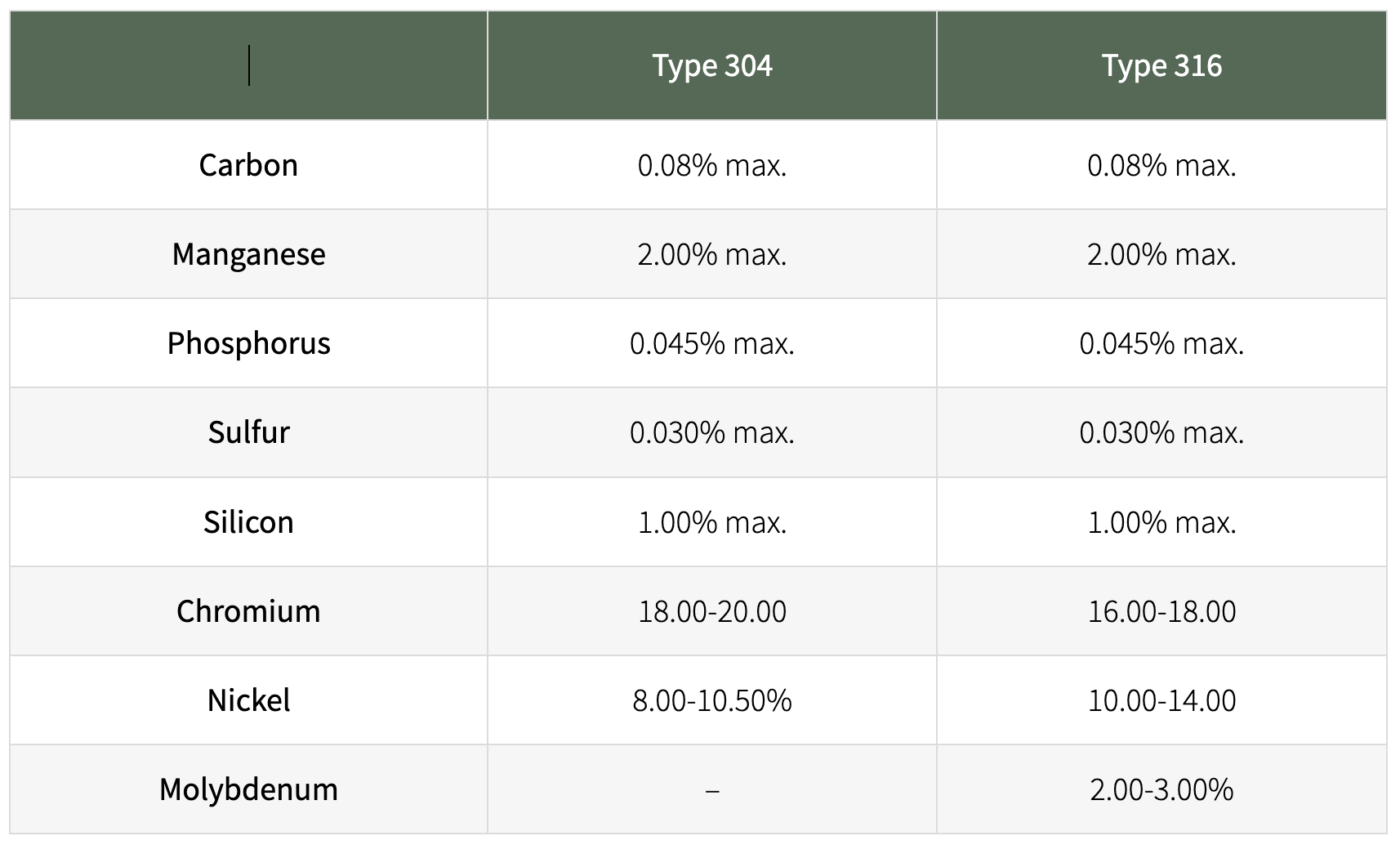
- Stainless steel (SS304 or SS316 for best rust resistance)
- Powder-coated finishes that resist chipping
Avoid cheap zinc or painted steel hinges outdoors. They rust fast.
Hinge Size and Screw Pattern
Measure your existing hinge before ordering. Standard storm door hinges are usually 3.5 inch or 4 inch. The screw hole pattern also needs to match so you are not drilling new holes into your frame.
Which Side the Door Hinges On
This sounds obvious but people get it wrong. Stand outside facing your storm door. If the hinges are on the left, it is a left-hand door. If on the right, it is right-hand. Some hinges are handed (only work one way), others are reversible.
Adjustability
Good hinges let you make small adjustments after installation. This is important because door frames shift over time, especially in older homes. Look for hinges with vertical and lateral adjustment options.
Closing Speed Control
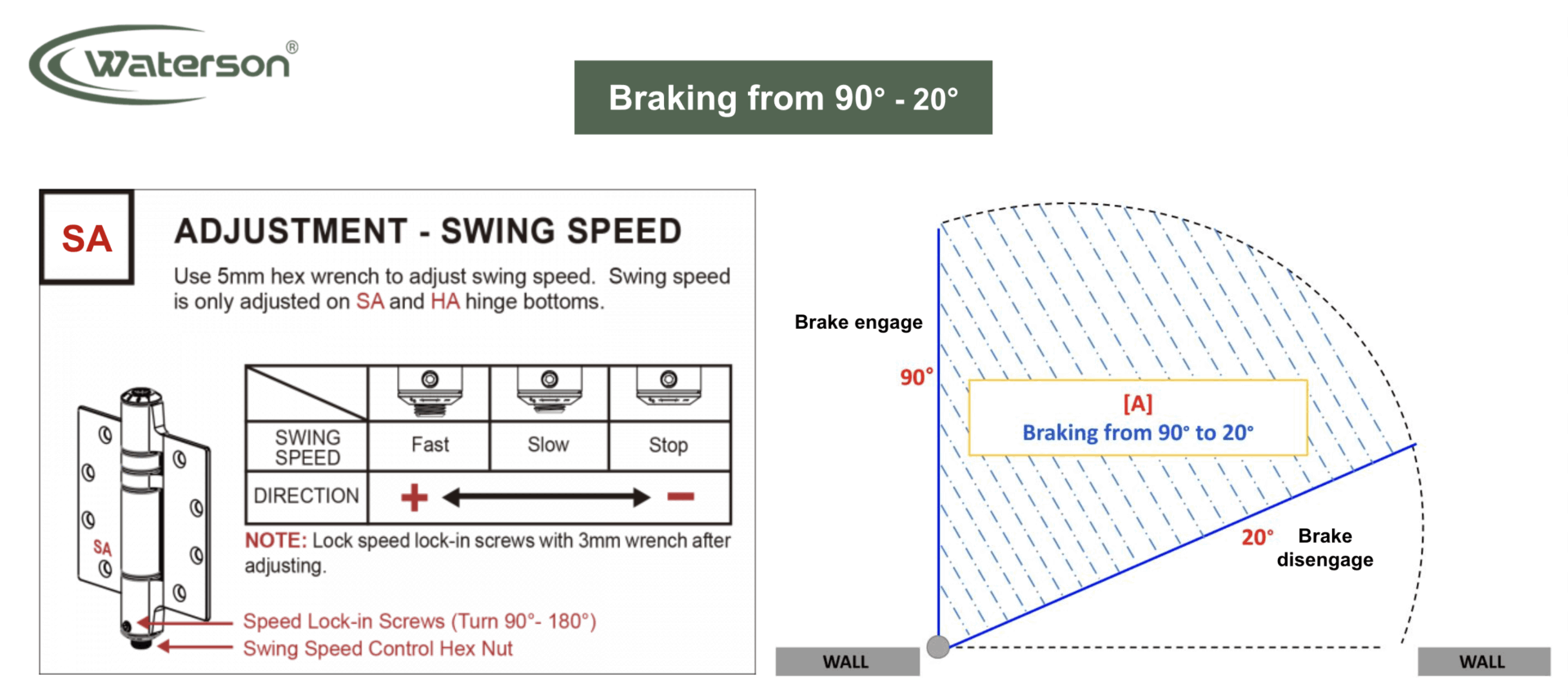
If you are going with a hydraulic hinge, check whether you can adjust the closing speed and the “buffer zone” (how far from closed the door is when the slow-close kicks in).
Where Is the Best Place to Buy Storm Door Hinges?
You can find basic storm door hinges at any hardware store. But if you want something that actually lasts and works well, Waterson is a name that comes up a lot among contractors and homeowners who want quality hardware.
Waterson makes closer hinges, meaning the soft-close mechanism is built directly into the hinge. Here is what makes them stand out:
- Soft Closing: Hydraulic damping controls closing speed so the door glides shut every time, even when wind pushes against it.
- Adjustable Tension: 3 adjustable speed settings plus buffer zone control so you can dial in exactly how the door feels after installation.
- Corrosion Resistant: Precision-cast stainless steel (SS316), the same grade used in marine environments, handles humidity, rain, and cleaning chemicals without rusting or pitting.
- Heavy Duty: Three hinges support over 260 lbs, four hinges up to 440 lbs. Built for both residential and commercial use.
- 1,000,000 Cycle Tested: Rated to last 1,000,000 open-close cycles without performance loss, backed by a manufacturer warranty.
- ADA Compliant: Meets ADA standards with 33-inch clearance, under 5 lbs opening effort, and 5-second closing speed.
- Easy Installation: Drops in where your existing hinges are, no need to modify the door or frame.
- Finish Options: Available in satin, black, brass, and more to match your existing hardware.
- Warranty: 10 years for mechanical self-closing, 3 years for hydraulic soft closing
Looking for self closing and soft closing storm door hinges for your door?
How Do You Install Storm Door Hinges?
What Comes in the Box
Your Waterson package includes everything you need for installation:
- Waterson Closer Hinges
- Standard hex wrench 3mm and 5mm
- Cross head self tapping screws (#12 x 1-1/4″)
- Flat head machine screws (#12-24 UNC, 1/2″)
- Spreader Bar (props the hinge leaves open for easier install)
- Fire-rated stainless steel shims
Step-by-Step Installation
Step 1: Replace the middle hinge first Remove the existing middle hinge and replace it with the non-mechanism Waterson hinge using the provided screws. This is the support hinge, it holds the door without any closing function.
Step 2: Install the top hinge (mechanism hinge) Remove the top hinge. Before mounting, adjust the Waterson closer hinge to the 0 setting, then install it in the top position. Starting at 0 makes the next adjustment steps easier to control.
Step 3: Set the starting tension Adjust both the top and bottom hinges to the #3 setting using the hex wrench. This is the recommended starting point before you test anything.
Step 4: Test the closing force Open the door and let it close from three positions: 20 degrees, 60 degrees, and 90 degrees. The door should close fully and latch from all three angles. If it does not, it needs more adjustment.
Step 5: Fine-tune the closing speed Tighten the bottom hinge set screws to adjust door speed. Do the top screw first, then the bottom screw, alternating between them to keep tension even. Go slowly, small turns make a noticeable difference.
Step 6: Final test Test the door one more time at 20, 60, and 90 degrees. If it still does not close consistently in all positions, adjust hinges one at a time, starting from the top hinge and working down.
How Do You Adjust Storm Door Hinges After Installation?
Start with all hinges at factory default (N position, disengaged). Then follow these 5 steps:
- Check first: Door should swing freely and latch before you touch anything.
- Set tension: Increase one number at a time until the door closes and latches from 20 degrees. Keep all hinges at the same number as tension is cumulative.
- Adjust speed: Swing speed first (Hex Nut A on SA hinge), then latch speed (Hex Nut A1 on SA1 hinge). Always in that order to avoid slamming. Turn (+) for faster, (-) for slower.
- Enable damper: Fine-tune the hydraulic buffer zone if needed (refer to H1 for zone, H2 for damper strength on your hinge).
- Lock in place: Tighten the barrel-side speed lock-in screws on SA, SA1, and HA hinges. Each has two screws, tighten at least one.
If your door slams: Decrease swing speed, latch speed, or spring tension (S).
Door does not latch: Increase swing speed, latch speed, or spring tension.
Settings keep drifting: Lock-in screws are not tight enough. Go back to step 5.
Waterson Stainless Steel Soft Closing Storm Door Hinges
Waterson storm door hinges combines the function of an overhead closer and a hinge into a single, sleek component—complete with optional hold-open and door-stop features. Designed for commercial openings, gates, and glass doors, these hinges are easy to install and adjust to meet ADA and ICC A117.1 standards for opening force, while ensuring quiet and secure closure. Crafted from durable stainless steel, they are NFPA 80 compliant, UL 3-hour fire-rated, and built to perform reliably in both interior and all-weather exterior environments. See all our features.
In addition to these performance advantages, Waterson offers flexible customization services. As a direct custom hinge manufacturer, we can tailor hinge sizes, finishes, and especially hinge leaf designs to meet the specific structural needs of your doors. This makes our hinges an ideal solution for door manufacturers seeking custom options that integrate seamlessly with their existing frames.
Request For Information
Please note that Waterson Closer Hinges start from a size of 4″x4″. If you’re in need of smaller self-closing hinges, we’d recommend checking out some other resources! Also, we only provide single acting closer hinges. Thank you.
Recent Post
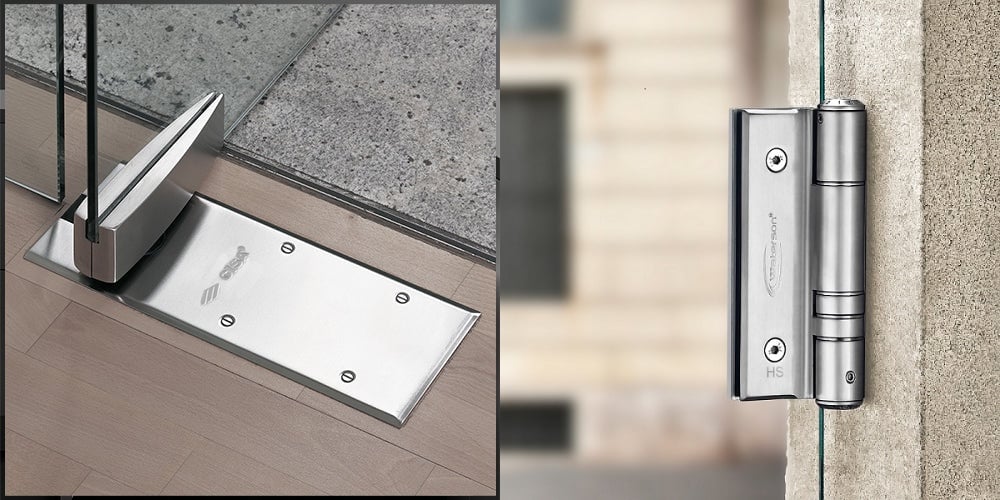
Glass Door Hinges: Floor Spring vs Spring Hinge Compared
Quick Answer Floor hinges (also called floor springs) are hydraulic closers set into the floor slab for center-hung or double-acting glass doors with fully concealed [...]
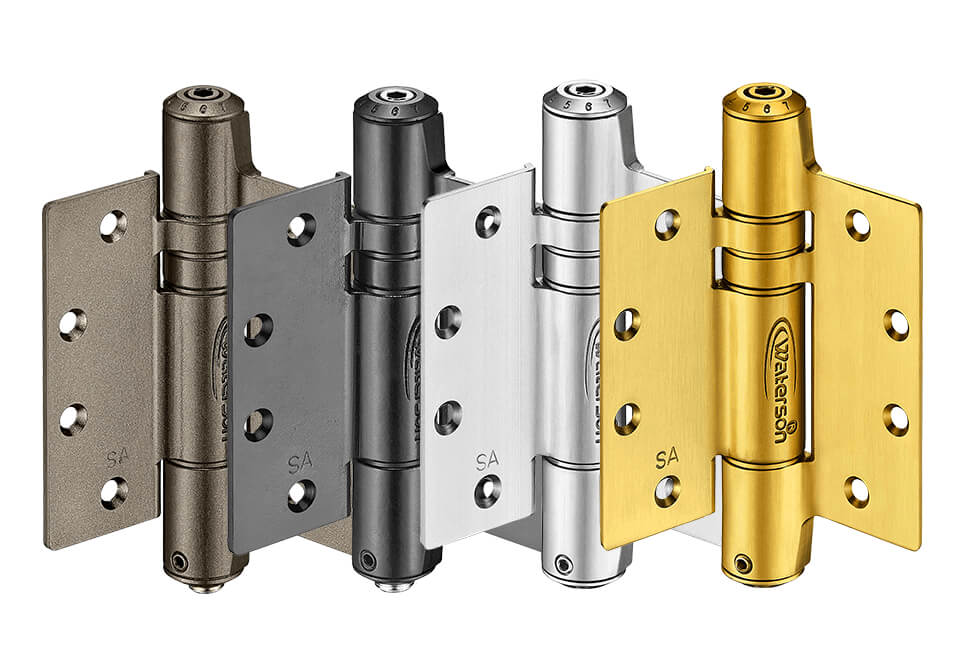
Stainless Steel Spring Hinges: Self-Closing Hinges for Interior and Exterior Doors
Quick Answer A stainless steel spring hinge is a self-closing hinge with a torsion spring inside the barrel, so it swings the door and closes [...]
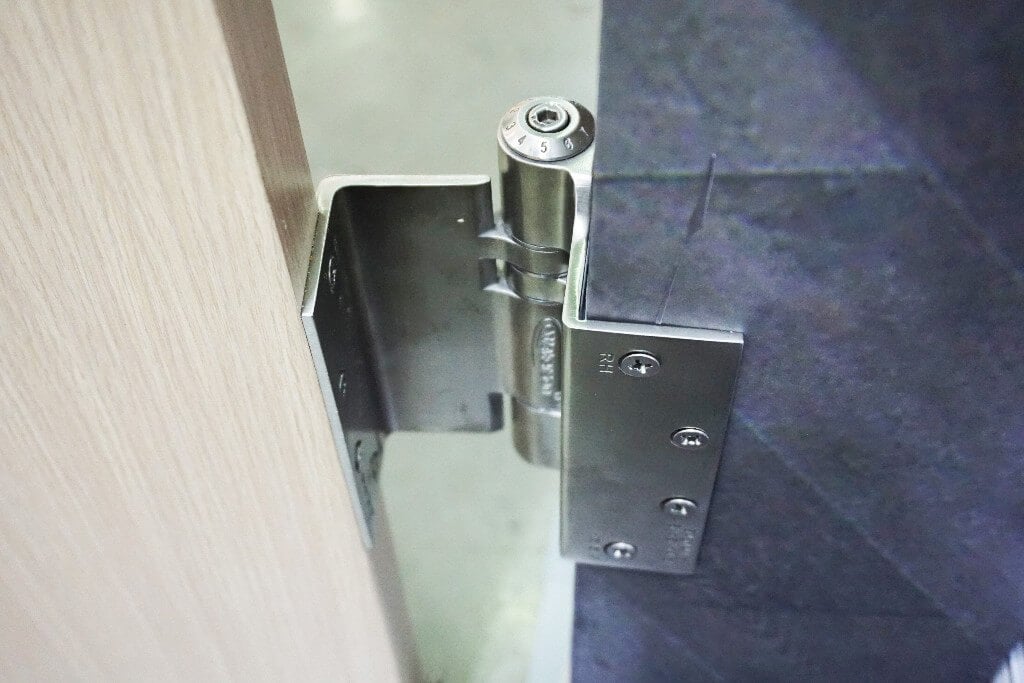
Swing Clear Offset Hinges for ADA Doorway Clearance
In hospital corridors, the rushing trolleys need wider door entrance to avoid bumping[...]