
If you specify hardware long enough, you know this question will eventually come up.
Recently, we received an interesting and practical request:
“Customer was asking if the hinges can be used as a type of torsion/tension hinge? Meaning, have the brake tightened to the point that moving the door (top of a dutch-door) it would stay in the position it’s pushed to without the need to self-close and simply ‘freeze’ in place.”
In other words, can a tension hinge be adjusted to behave like a friction hinge: holding the door at any angle without self-closing?

Can Waterson Tension Hinge Hold a Door Open in Position by Tightening the Brake?
Theoretically, yes — but practically, no.
Waterson is engineered as a tension hinge door closer, not a friction hinge. Even at maximum tension (No.7), the system is designed to remain ADA compliant. That means low opening resistance is intentional.
If you set the tension to “N” or “No.1” and fully engage the brake (A or A1), the door may not actively self-close. However, it will still open easily. It will not “freeze” in place like a torsion lid hinge on a toy chest.
A true tension hinge designed for position-holding uses sustained friction. If the expectation is a vertical hinge that holds the door at any arbitrary angle without drift, this system will not perform that way.
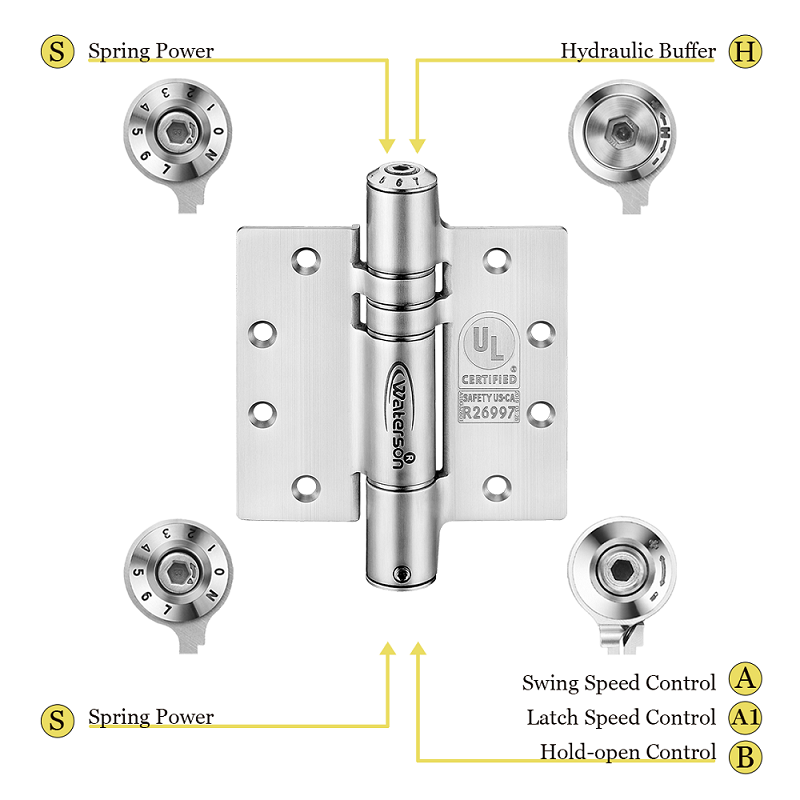
A true tension hinge designed for position-holding uses sustained friction. If the expectation is a vertical hinge that holds the door at any arbitrary angle without drift, this system will not perform that way.
Why We Cannot Tighten the Break of Tension Hinge Door Closer to Hold Open
According to ADA Door Hinge Requirements, an ADA door must meet:
- Maximum 5 lbs opening force (interior doors)
- Minimum 5-second closing time
- Accessible swing path clearance
A hinge that holds a door in place through high friction directly conflicts with the principle of low opening resistance. Especially for elderly users, wheelchair users, and children, doors must move predictably and with minimal force. That is why, under ADA compliance, a tension hinge door closer cannot be tuned to a high-friction hinge without compromising accessibility.
So, What Is the Purpose of the Tension Hinge Mentioned Here?
The customer is not concerned about self-closing; their focus is on position control.
They are looking for a hinge that holds the door open at a certain angle without slamming or drifting. That is not truly a torsion spring request: it is a hold-open requirement. Even if the brake is fully engaged and the self-closing action is minimized, the opening resistance remains low by design, so the door will not stay firmly fixed at every angle.
That is a different mechanical category from a standard tension hinge, and the solution must be specified accordingly rather than adjusted beyond its intended design.
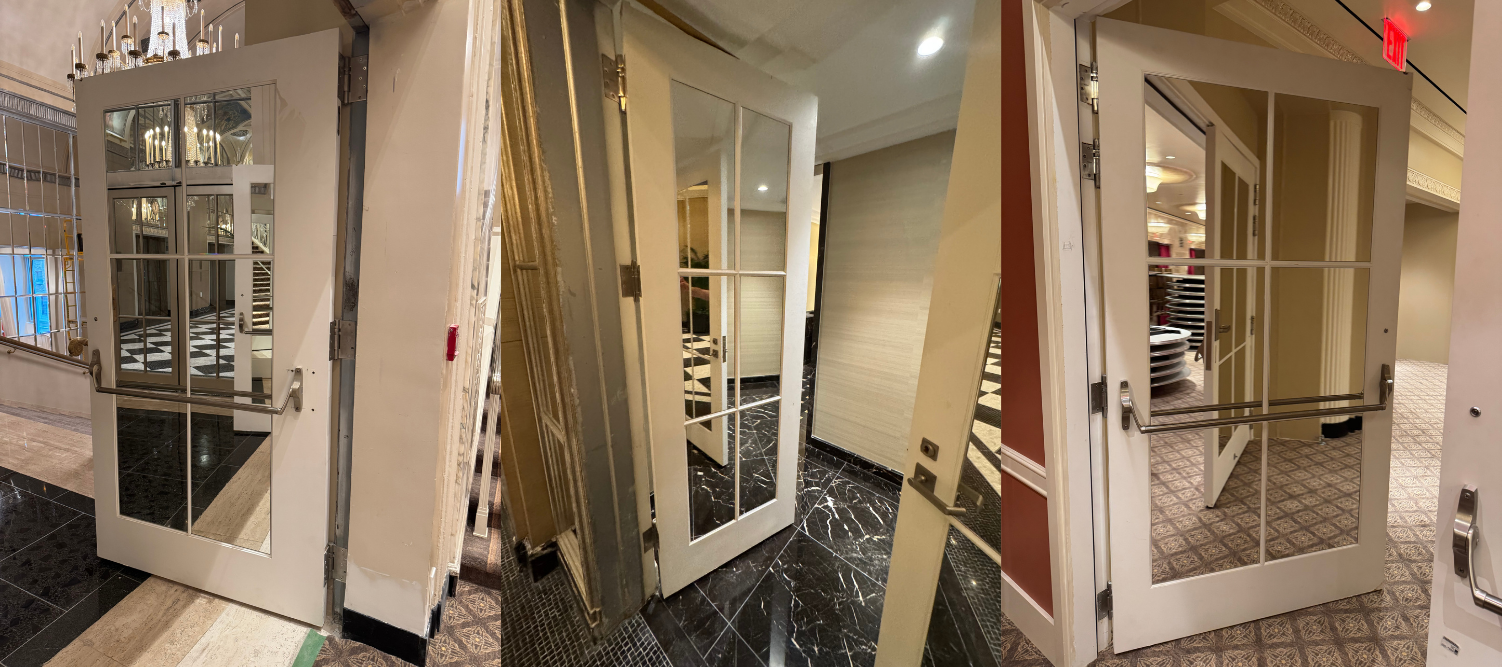
Are There Hold Open Door Hinges with Adjustable Tension Options?
”There are hinges designed that allow the lid to be pulled up or pushed down and stay where it is without slamming shut or flying open to prevent hurting a child’s fingers. This would be the case but in a vertical application for a door using Waterson.
Based on what you say that it would stay open “easily”, then I would say they will indeed work for what the customer wants.”
If your project requires a defined hold-open angle while remaining ADA compliant, the correct approach is a distinct hinge mechanism that holds the door open at a specific angle (typically 85°–90°), while still maintaining controlled self-closing outside that zone.
This is exactly the application for which Waterson’s hold-open hinge configuration was designed.
Some Key Features of Waterson Hold Open Tension Hinge Include:
- Stainless Steel: 304 (standard) / 316 (weather-resistant option)
- Construction: Heavy-duty, full-mortise spring closer
- ADA Compliance: ≤ 5 lbs opening force; ≥ 5 seconds closing time; maintains accessible swing clearance
- Hold Open: Adjustable mechanical hold-open at approximately 85°–90°
- Cycle Performance: 1,000,000-cycle tested (ANSI/BHMA Grade 1 equivalent)
- Adjustability: Numerical tension adjuster with multi-stage speed control
- Closing Performance: Smooth self-closing with controlled soft-close action
- Door Fit: Available in multiple sizes, templates, and radius preparations
- Primary Use: Daily convenience where a controlled hold-open improves traffic flow
- Typical Applications: Offices, retail stores, hospitality spaces, interior passages
- Ideal Use Case: High-traffic interiors requiring temporary hold-open without surface-mounted hardware
- Warranty: 10 years for mechanical, 3 years for hydraulic.
Code Note: Fire-rated self-closing and hold-open configurations are separate; hold-open not permitted on rated doors.
How to Install a Hinge That Keeps a Door Open
Waterson Hinge Installation follows standard full-mortise hinge preparation and must match the specified template size. Proper alignment of the hinge barrel and accurate mortise depth are critical to ensure smooth hold-open engagement and consistent closing control.
Fasteners must match door and frame material (wood or hollow metal), and hinge quantity must comply with door height and weight specifications.
How to Adjust Tension on a Door Hinge
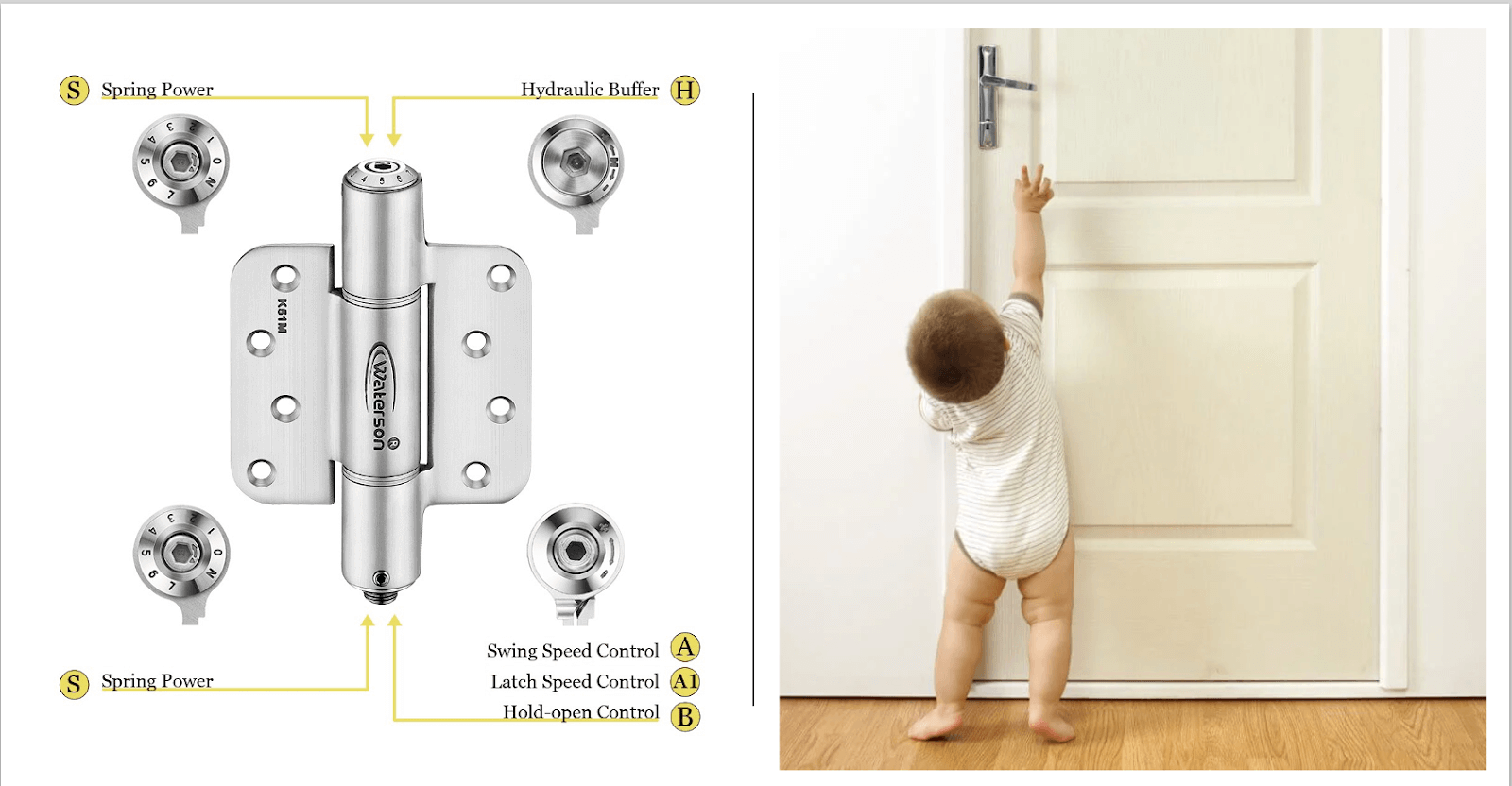
If you’re evaluating how to adjust the tension on door hinge, adjustment is done via the numerical tension dial and brake screw. Tension levels (N to 7) control closing force, while brake adjustment refines speed control and soft-close behavior.
Adjustment should be incremental and tested under real swing conditions. Over-tightening does not create a friction hinge; it modifies closing behavior within ADA limits.
Waterson Self and Soft Closing Hold Open Tension Hinge
Waterson hold open tension self closing door hinges combine the function of an overhead closer and a hinge into a single, sleek component—complete with optional hold-open and door-stop features. Designed for commercial openings, gates, and glass doors, these hinges are easy to install and adjust to meet ADA and ICC A117.1 standards for opening force, while ensuring quiet and secure closure. Crafted from durable stainless steel, they are NFPA 80 compliant, UL 3-hour fire-rated, and built to perform reliably in both interior and all-weather exterior environments. See all our features.
In addition to these performance advantages, Waterson offers flexible customization services. As a direct custom hinge manufacturer, we can tailor hinge sizes, finishes, and especially hinge leaf designs to meet the specific structural needs of your doors. This makes our hinges an ideal solution for door manufacturers seeking custom options that integrate seamlessly with their existing frames.
Request For Quote
Please note that Waterson Closer Hinges start from a size of 4″x4″. If you’re in need of smaller self-closing hinges, we’d recommend checking out some other resources! Also, we only provide single acting closer hinges. Thank you.
Recent Post
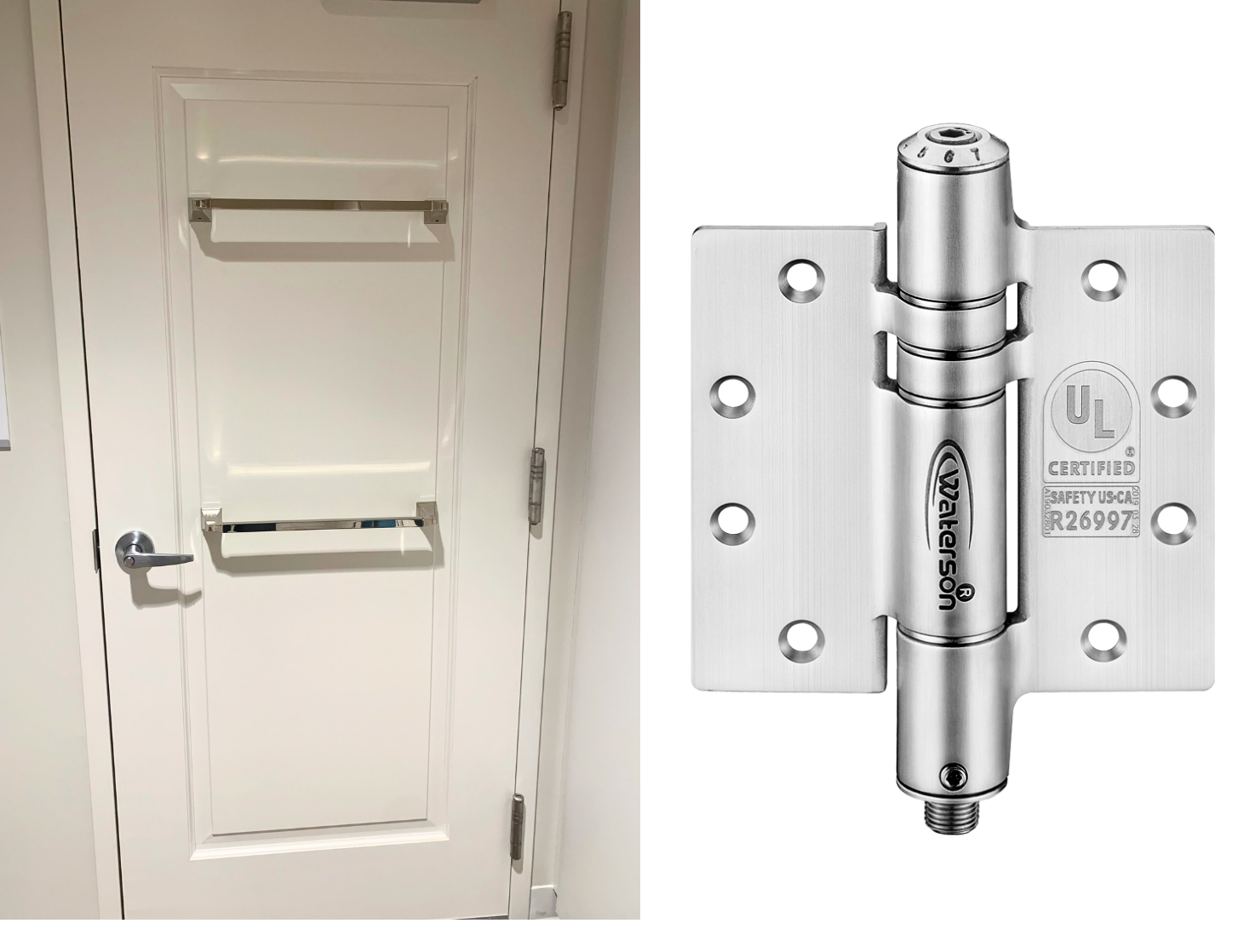
Spring Loaded Door Hinges for Multifamily Residential Buildings
For multifamily buildings, specify self-closing spring hinges listed for use on fire-rated doors and adjustable to ADA closing speed and opening force. They replace a [...]
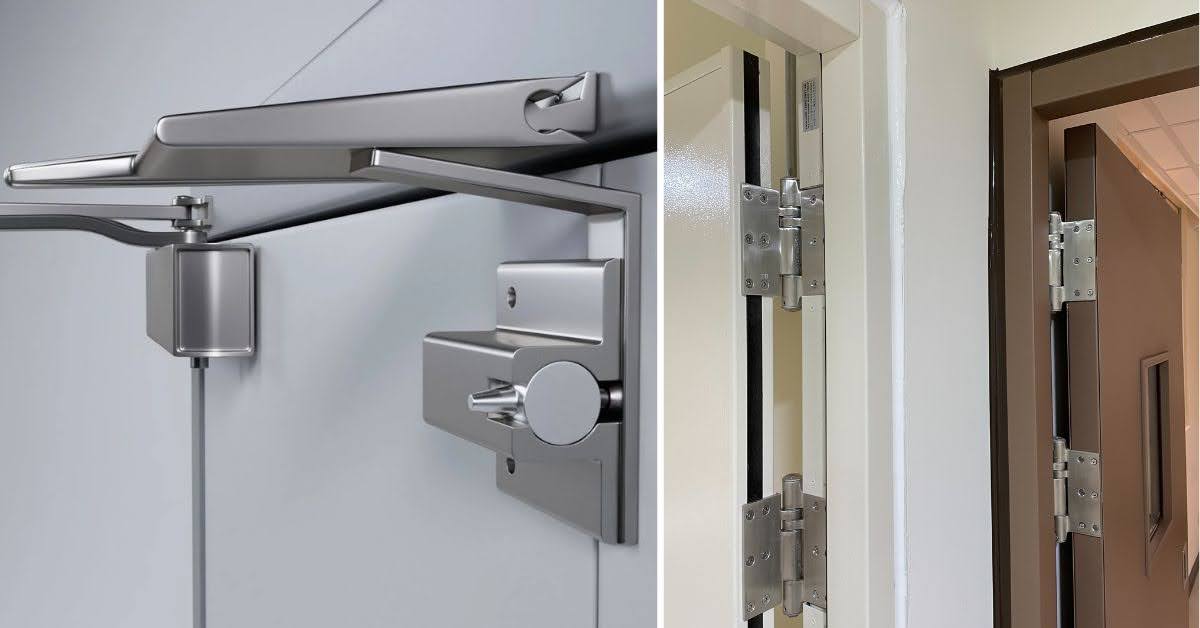
What Is a Door Coordinator? How It Works and When You Need One
Quick Answer A door coordinator makes the inactive leaf of a pair close before the active leaf, so the active leaf can close over the [...]
4 Inch Self Closing Door Hinges for Residential & Commercial Doors
Quick Answer Waterson 4-inch self-closing hinges (K51M-400) fit standard 4" x 4" templates on 1-3/8" or 1-3/4" residential doors, in mechanical or hydraulic versions with [...]