
When you use an asthma inhaler or receive an allergy shot, you rarely think about where it was made. These products are manufactured in cleanrooms where contamination must be strictly controlled.
Now imagine that the cleanroom loses its integrity, not because of major equipment failure, but because a door no longer closes properly. A worn hinge can cause slamming, disrupt airflow, and allow particles to enter.
Cleanroom door hinges differ from common hinges because they are designed to reduce particle generation and withstand frequent chemical cleaning. They are built for controlled environments with smooth surfaces and corrosion-resistant materials.

Photo by Pavel Danilyuk
The Problem: Standard Hardware is Not Ideal for Contamination Control
A clean room is a highly controlled environment where even microscopic contamination can affect safety and product quality. They are commonly used in pharmaceutical, biotech, medical device, and semiconductor facilities.
Key factors controlled in clean rooms include:
- Airborne particle levels
- Airflow direction and pressure
- Temperature and humidity
- Surface cleanliness and material compatibility
That said, to maintain contamination control, every component must meet consistent standards. This includes cleanroom door hinges. One approach that supports quality control is meeting ISO 9001 requirements.

Photo by Tima Miroshnichenko
How Clean Room Hinges Maintain Airflow, Hygiene, and Long-term Functionality
A clean room door hinge is more than a mechanical pivot; it is a component that helps balance airtight sealing with rigorous particulate control. Hinges for clean room doors must provide the closing power to maintain pressure differentials without compromising sterility.
- Maintaining Pressure Seal: Airflow integrity depends on the hinge’s ability to provide a consistent closing force needed to overcome high static pressure and maintain a tight gasket seal.
- Hygiene: Cleanroom hygiene requires zero-shedding components to prevent particulate contamination. Hinges with an integrated self-closing function eliminate oily overhead arms and external joints that act as difficult-to-clean dirt traps.
- Latching Guarantee: Cleanroom doors must remain fully latched even after millions of cycles to maintain pressure differentials.
What Material is Best for Clean Room Hinges?
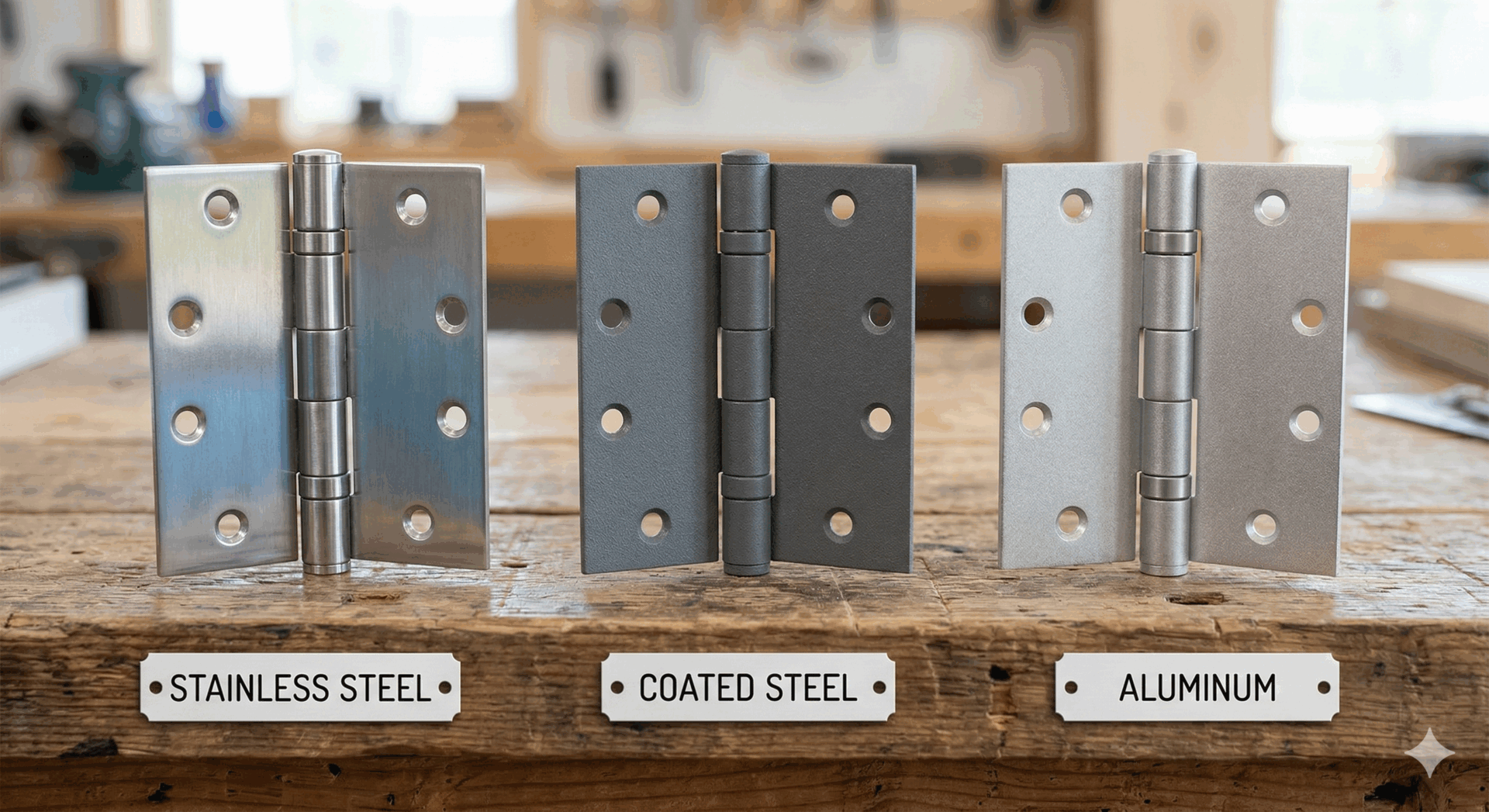
The wrong material corrodes and degrades with cleaning; the right one protects hygiene and long-term reliability. Below is a comparison of common materials for cleanroom door hinges:
| Material | Advantages | Limitations |
|---|---|---|
| Stainless Steel | High corrosion resistance, smooth surface, compatible with frequent cleaning and disinfectants | Heavier than other materials |
| Coated Steel | Lower cost, good structural strength | Coating may chip or wear, risk of corrosion if exposed |
| Aluminum | Lightweight, corrosion-resistant, easy to machine | More prone to surface wear and deformation under high cycles |
Therefore, stainless steel is widely used in cleanroom environments because it resists corrosion and withstands harsh disinfectants. It also maintains a smooth, non-shedding surface that supports hygiene control and long-term use in pharmaceutical, biotech, and medical facilities.
How Anti Slam Hinges Improve Cleanroom Door Performance
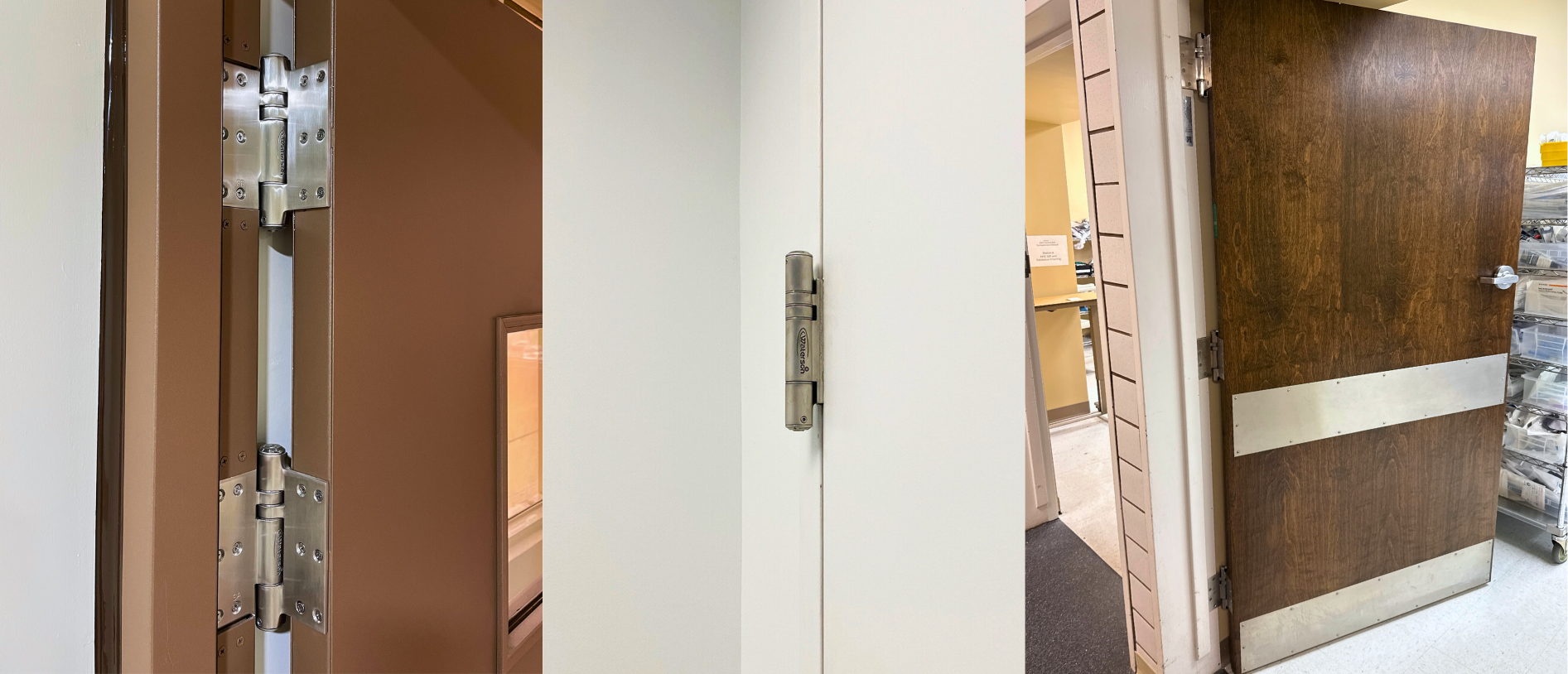
“We had a safety incident where someone smashed their hand in one of our doors. The doors were fitted with standard overhead closers, but they didn’t properly control or slow the closing motion. After that, we knew we needed soft-closing hinges in our cleanrooms to make sure it wouldn’t happen again.”
In a cleanroom, uncontrolled door movement can create safety risks and operational issues. Therefore, an anti slam function becomes essential. Anti slam hinges use a built-in hydraulic damper to control the door’s movement and gradually slow it down as it closes. This results in a safer working environment, reduced hardware wear, and more consistent cleanroom performance over time.
Clean Room Hinge VS Overhead Door Closer
Both overhead door closers and Waterson hydraulic cleanroom hinges are self-closing, but they have distinct differences. The comparison below outlines their key differences:
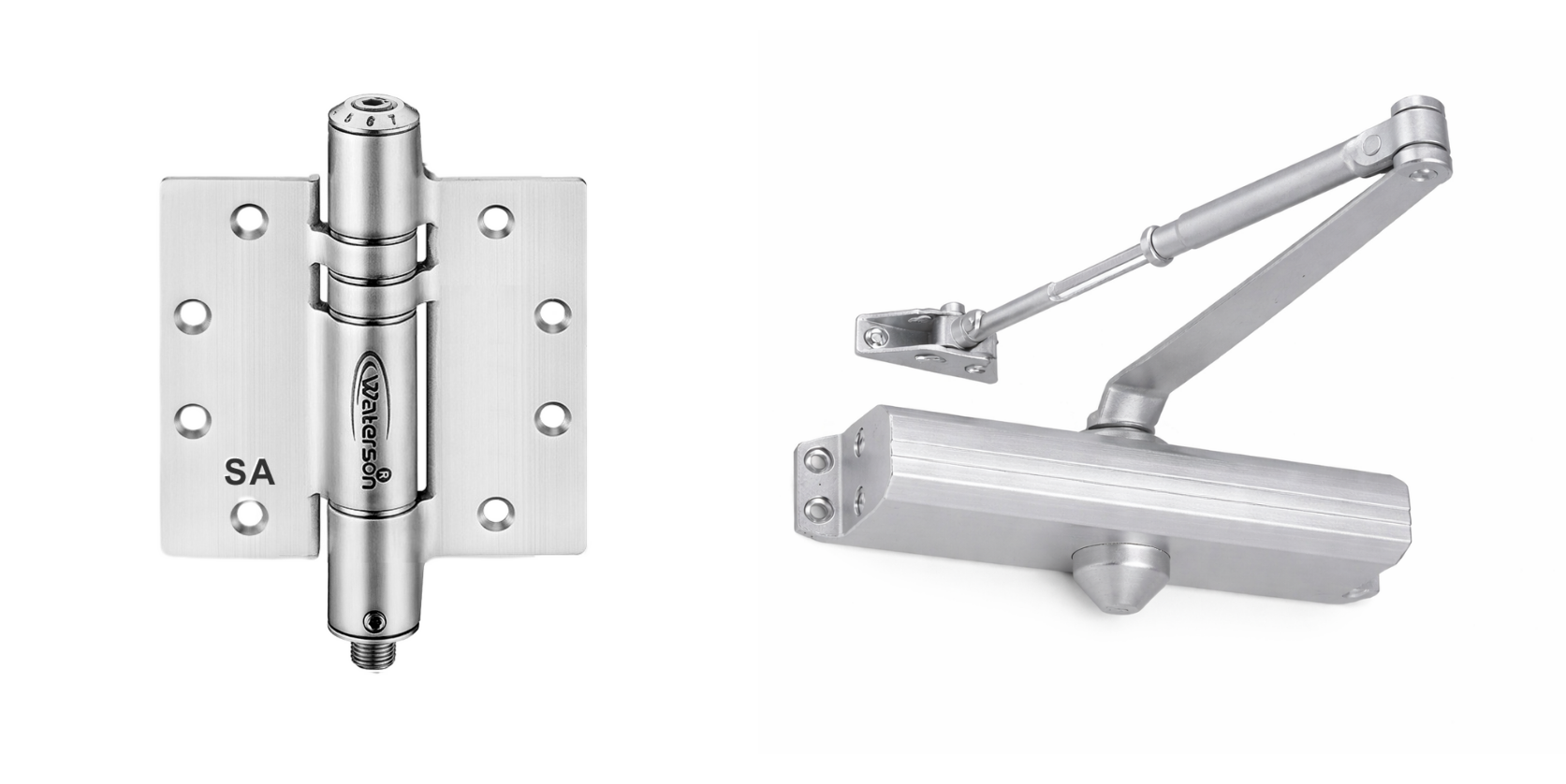
| Feature | Waterson Hydraulic Cleanroom Hinges | Overhead Door Closer |
| Closing Control | Integrated hydraulic damping provides controlled and regulated closing motion. | Standard models provide controlled closing but may require adjustment to regulate speed. |
| Impact Control & Safety | Damping slows the door near the latch, reducing slamming force and pinch risk. | Without fine-tuning, doors may close with a higher impact force near the latch. |
| Cleanability / Surface Exposure | Minimal exposed surface. Fewer external components to wipe and maintain. | Closer body and arm create additional exposed surfaces that require cleaning. |
| Consistency of Operation | The hydraulic damper helps maintain a stable closing speed over time. | Performance may vary with temperature, wear, or adjustment condition. |
| Durability | ANSI/BHMA A156.17 Tested to 1 million cycles | Cycle performance varies by model and grade. |
| Fire Resistance | Up to UL-listed 3 hours. | Fire-rating levels vary by model. |
How Waterson Soft Closing Clean Room Hinges Support Hygiene in Houston
“We had a safety incident where someone smashed their hand in one of our doors. The doors were fitted with standard overhead closers, but they didn’t properly control or slow the closing motion.
This project is for cleanrooms in Houston, TX. I need the hinges in stainless steel, with three hinges for six doors and four for sixteen doors.”
Waterson hinges are compatible for door closer replacement. This cleanroom door renovation project selected Waterson anti-slam hinges to improve door safety while maintaining hygiene standards and durability in a high-traffic environment. The installation has been completed and is performing well, also because of the integrated Waterson hinges features:
- Stainless Steel: Made with 304 and 316 stainless steel to withstand the elements and heavy use.
- Corrosion Resistance: Tested to surpassing ASTM B117 and A156.7 standards in salt spray tests for over 200 hours. `
- Load-bearing Capacity: Waterson hydraulic door closer for heavy doors efficiently support significant loads – three hinges can bear over 260 lbs, and four hinges up to 440 lbs.
- Anti Slamming & Soft Closing: Prevent doors from slamming shut and pose risks like finger trapping and injuries for children.
- ADA Compliance: Meet 32 inch clear width, open force less than 5 lbs, and self-closing mechanisms taking 3-5 seconds to close from 70 degrees to 3 inches of the latch.
- Meeting Test Standards:UL 3 hours, ISO 9001 Quality Assurance, ANSI/BHMA A.156.7 Grade 1
- Hold Open: hold-open door closer keeps the door at 90° so it doesn’t drift closed, provide easier access to move hardwares in clean room and improving work flow
- Installation & Adjustment: Simple installation and easy adjustment with the provided installation kits and detailed instructions.
Waterson soft closing hinges are designed with integrated advanced features and have been trusted in several cleanroom door applications, including KBI biopharma and Xencor Lab.
How to Install Clean Room Hinges on a Metal Door?
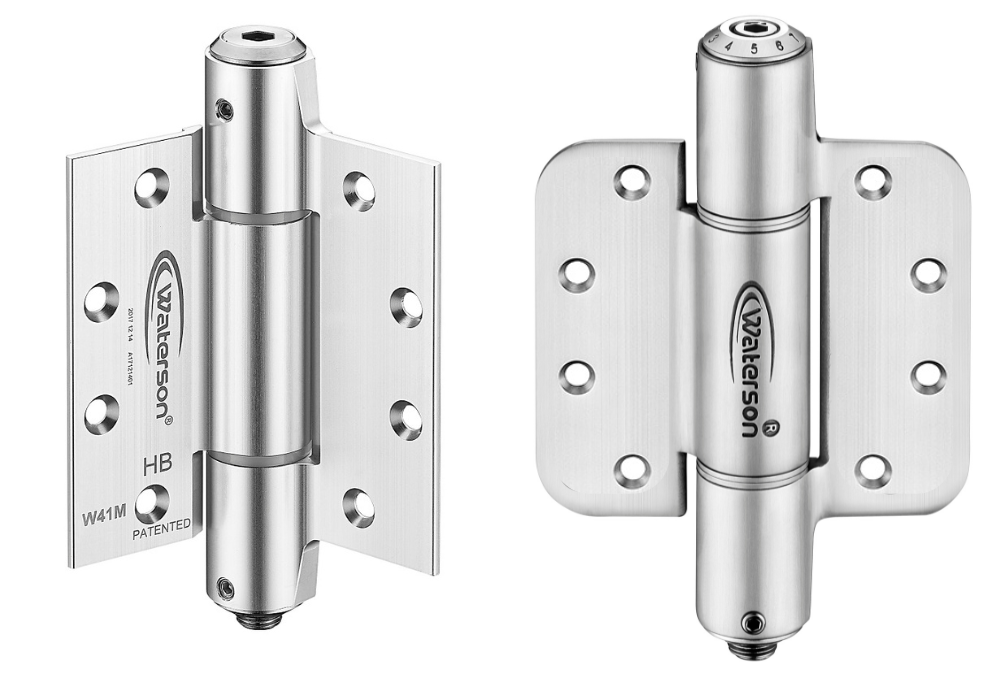
Waterson hydraulic cleanroom hinges are designed for straightforward installation on metal doors. The key is selecting the correct hinge size and quantity based on the metal door’s specs, then following the provided step-by-step installation guide to ensure proper alignment and best performance
Waterson Soft Closing Hinges to Stop Slamming
Waterson hydraulic soft closing hinges combine the function of an overhead closer and a hinge into a single, sleek component—complete with optional hold-open and door-stop features. Designed for commercial openings, gates, and glass doors, these hinges are easy to install and adjust to meet ADA and ICC A117.1 standards for opening force, while ensuring quiet and secure closure. Crafted from durable stainless steel, they are NFPA 80 compliant, UL 3-hour fire-rated, and built to perform reliably in both interior and all-weather exterior environments. See all our features.
In addition to these performance advantages, Waterson offers flexible customization services. As a direct custom hinge manufacturer, we can tailor hinge sizes, finishes, and especially hinge leaf designs to meet the specific structural needs of your doors. This makes our hinges an ideal solution for door manufacturers seeking custom options that integrate seamlessly with their existing frames.
Request For Quote
Please note that Waterson Closer Hinges start from a size of 4″x4″. If you’re in need of smaller self-closing hinges, we’d recommend checking out some other resources! Also, we only provide single acting closer hinges. Thank you.
Recent Post
Glass Door Hinges: Floor Spring vs Spring Hinge Compared
Quick Answer Floor hinges (also called floor springs) are hydraulic closers set into the floor slab for center-hung or double-acting glass doors with fully concealed [...]
Stainless Steel Spring Hinges: Self-Closing Hinges for Interior and Exterior Doors
Quick Answer A stainless steel spring hinge is a self-closing hinge with a torsion spring inside the barrel, so it swings the door and closes [...]
Swing Clear Offset Hinges for ADA Doorway Clearance
In hospital corridors, the rushing trolleys need wider door entrance to avoid bumping[...]