Gate Closer Cold Weather: How to Cold Proof Your Front Gate
You’ve specified heavy gates that operate flawlessly year-round—then winter hits. Suddenly, the closer resists, gates refuse to latch, and frost creeps across hinges.
In cold weather, even a small miscalculation in hardware selection can turn into costly callbacks. Therefore, how do you ensure your gate closer performs when temperatures drop below freezing?
Why Do Gate Closers Struggle in Cold Weather?
Most traditional closers rely on hydraulics. In freezing conditions, the oil thickens, slowing response time and making closing speeds unpredictable. In some cases, hydraulic seals contract and leak, leading to long-term maintenance issues. Even when the closer is rated for exterior use, sub-zero cycles can create inconsistent latching, leaving fire-rated or security gates vulnerable.
That’s why contractors often see sluggish or even seized hydraulic arms on storefronts, schools, or high-traffic facilities in winter. When the closer doesn’t compensate for temperature, the gate either slams or refuses to shut fully—both unacceptable outcomes.
So, what’s the alternative?
What Type of Gate Closer Works Best in Cold Climates?
Six key considerations separate reliable cold-weather hardware from failures:
Mechanism: Mechanical self-closing hinges eliminate the hydraulic fluid issue altogether.
Materials: Stainless steel construction is critical. Unlike low-grade steel that may rust or turn brittle in extreme cold, 304 or 316 stainless resists corrosion and maintains structural integrity.
Cycle Testing: Verify hardware is tested for 1,000,000+ cycles. Winter accelerates wear, so endurance matters.
Adjustability: Cold-weather installations require fine-tuning. Adjustable closing force and speed controls ensure the gate latches securely even as seals stiffen.
Zero Maintenance Design: Hardware that doesn’t rely on oil, exposed arms, or external covers reduces service calls. With fewer moving parts exposed to ice, snow, or salt, performance remains stable.
Seal Integrity: Ensure the gate closes flush. Gaps around hinges let cold air in, causing frost build-up and inconsistent pressure on the closer.
For contractors specifying projects in northern climates or mountain regions, mechanical closers with stainless steel housings aren’t just preferable—they’re essential.
Best Gate Closer Solution for Cold Weather Application
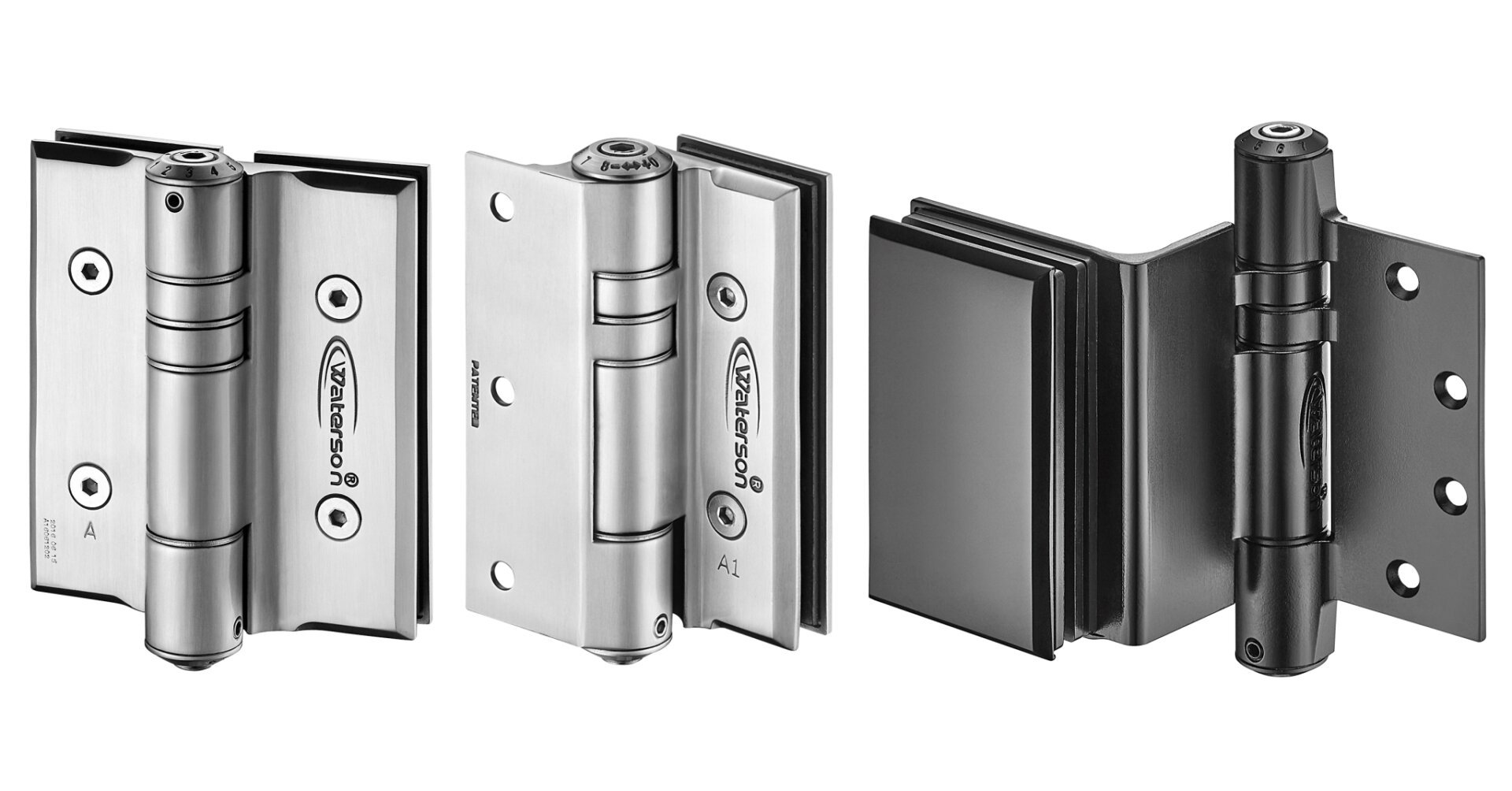
Cold-climate gate performance depends on three things: consistency in subzero temps, corrosion resistance, and adjustability. Waterson’s mechanical gate closers address these needs without relying on hydraulic oil:
Self Closing: Integrates closer, spring hinge, and optional hold-open in one unit, with adjustable tension and speed control to prevent slamming.
Stainless Steel: Corrosion-resistant and durable 304 and 316SST in snow, ice, and moisture exposure.
Temperature: mechanical spring-based door closers (no hydraulic fluid) deliver consistent operation even in subzero temperatures, making them better suited to -C° conditions.
Adjustable Tension: Fine-tune based on seasonal seal stiffness or occupant needs.
Heavy Duty: 1,000,000 cycles Grade 1 BHMA A156.17tested – proven endurance under repeated use in commercial and institutional settings.
Low Maintenance: Zero hydraulic fluid means no leaks, no seasonal adjustments, and minimal service calls.
Universal Application: Suitable for hotels, hospitals, schools, transport facilities, and cold-exposed commercial entries.
For contractors and builders, the choice is straightforward: Waterson provides a cold-weather-ready, maintenance-free closer that delivers reliability and best performance.
Winter-Proof Your Gates Before the First Freeze
Cold weather exposes every weak point in a gate system. Hydraulic oil thickens, seals stiffen, posts shift with frost heave, and winter wind pushes gates harder than any other season. The result is the same callback every contractor dreads: a gate that won’t latch or one that slams.
The fix starts at the specification stage. A mechanical, oil-free self-closing hinge in 304 or 316 stainless steel, with adjustable tension and closing speed, removes the most common failure points before they reach the job site. Pair it with a properly aligned latch and frost-protected posts, and your gates will close the same way in January as they do in July.
Planning a project in Canada, the Northeast, the Midwest, or a mountain region? Contact Waterson for help choosing the right hinge size, finish, and configuration for your cold-climate opening.
Usually it’s a combination of three things: stiffer weather stripping or seals adding resistance, the gate or post shifting slightly from frost heave or wood movement, and (on hydraulic closers) thickened oil slowing the swing. Check the latch alignment first, then increase the hinge’s spring tension a little so it has enough force to overcome the extra resistance in the last few degrees of closing.
Hydraulic closers don’t usually freeze solid, but the oil gets noticeably thicker in subzero temperatures, so the gate closes slowly or stops short of the latch. In regions that regularly see -20°C (-4°F) or colder, a mechanical spring-based self-closing hinge is the more predictable choice because there’s no fluid to react to temperature.
On most adjustable spring hinges, yes, a small seasonal adjustment is normal. Add a little tension in late fall if the gate stops short of latching, and back it off in spring if the gate starts closing too hard. Waterson hinges can be fine-tuned on site with an Allen wrench, with no need to remove or rehang the gate.
Simply increasing spring tension makes slamming worse. You need closing speed control, which slows the gate as it approaches the frame regardless of how hard the wind pushes it. Choose a self-closing hinge with adjustable closing and latching speed, and pair it with a sturdy self-latching gate latch so the gate stays shut during gusts.
Yes. Pool barrier bylaws in Canada and pool codes across the US apply year-round, not just during swim season, and inspectors can flag a gate that fails to close and latch on its own. Using a stainless steel mechanical self-closing hinge with adjustable tension helps keep the gate compliant through freeze-thaw cycles.
Request For Information
Please note that Waterson Closer Hinges start from a size of 4″x4″. If you’re in need of smaller self-closing hinges, we’d recommend checking out some other resources! Also, we only provide single acting closer hinges. Thank you.
November 18th, 2026|Comments Off on What Leads to Premature Wear in Commercial Door Hinges on Storefronts
Quick Answer Premature wear in storefront door hinges usually comes from four causes working together: a hinge grade too low for the traffic, a door [...]
November 18th, 2026|Comments Off on Why Commercial Glass Door Closer Hinges Fail in High Traffic Buildings
Quick Answer Commercial glass door hinges fail in high-traffic buildings due to mechanical fatigue, heavy door loads, improper installation, hydraulic seal degradation, and environmental corrosion. [...]