
Quick Answer
Stand on the pull side of the door. Hinges on the left = left hinge. Hinges on the right = right hinge. For a faster check, open the door, stand with your back against the hinges, and see where the knob is.
Not sure which to order? Waterson K51M models are non-handed and work on either side with no orientation needed.
It sounds simple, but right hinge vs left hinge is one of the most common causes of installation delays, incorrect orders, and return requests. And the confusion grows when you switch between manufacturers, code requirements, and material types.
Recently, one of our customers finally asked the one question that shouldn’t be asked this late:
Do Waterson Hinges have a left and a right option? Or can they work upside down?
So why don’t we start directly with the question most people really want answered?
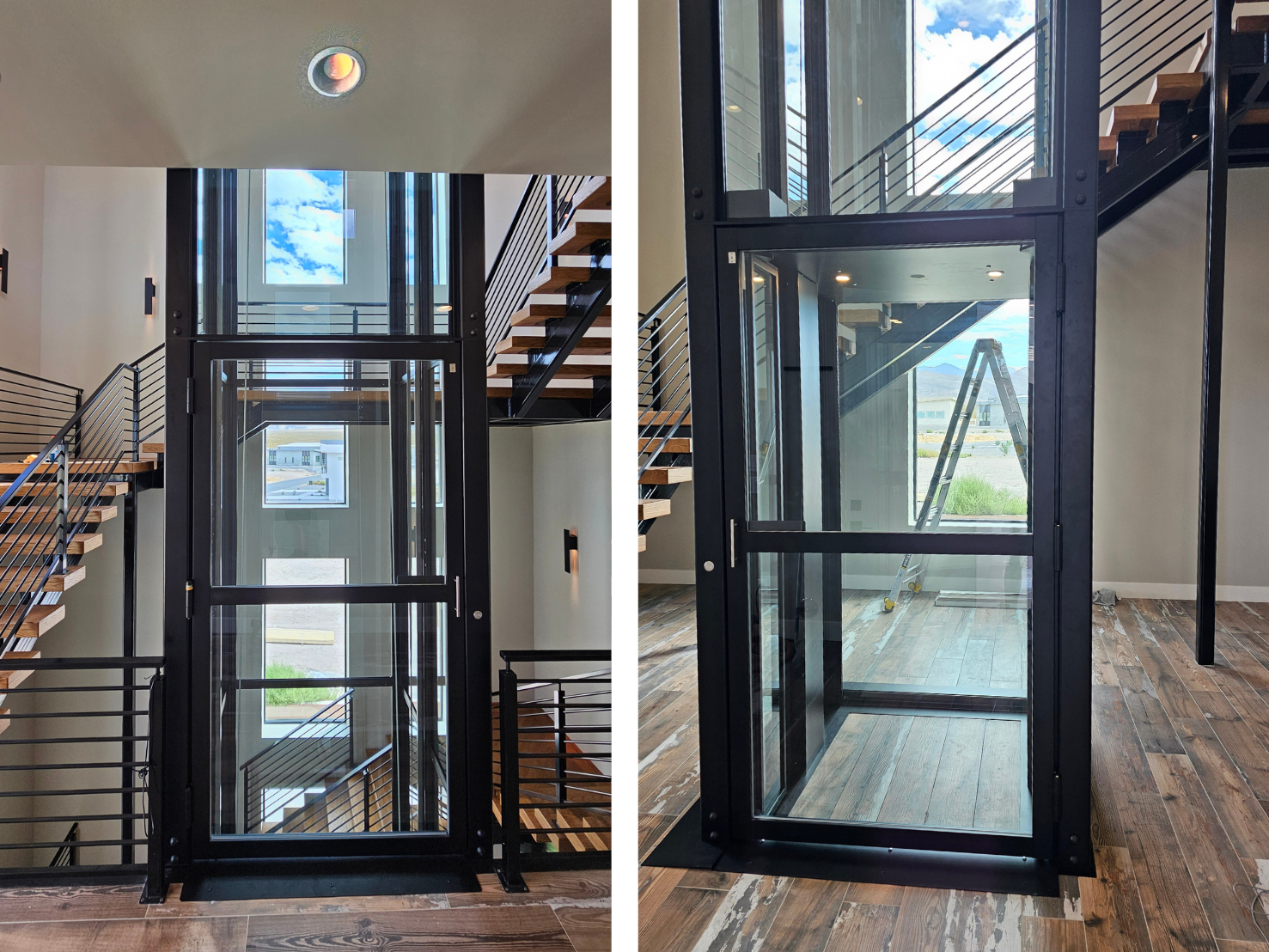
What are Left Hinges (LH) and Right Hinges (RH)?
A left-hand door uses a left hinge; a right-hand door uses a right hinge. The simplest and most accurate way to determine handing is as follows:
- Stand on the pull side—the side where the door opens toward you.
- Look at the hinges:
- Hinges on the left → Left-hand door (left hinge)
- Hinges on the right → Right-hand door (right hinge)
This is the foundation of every right hinge vs left hinge conversation, and it ensures you choose the correct model before installation. But what if you’re already onsite and need to confirm handing fast without relying on which side you’re standing on?
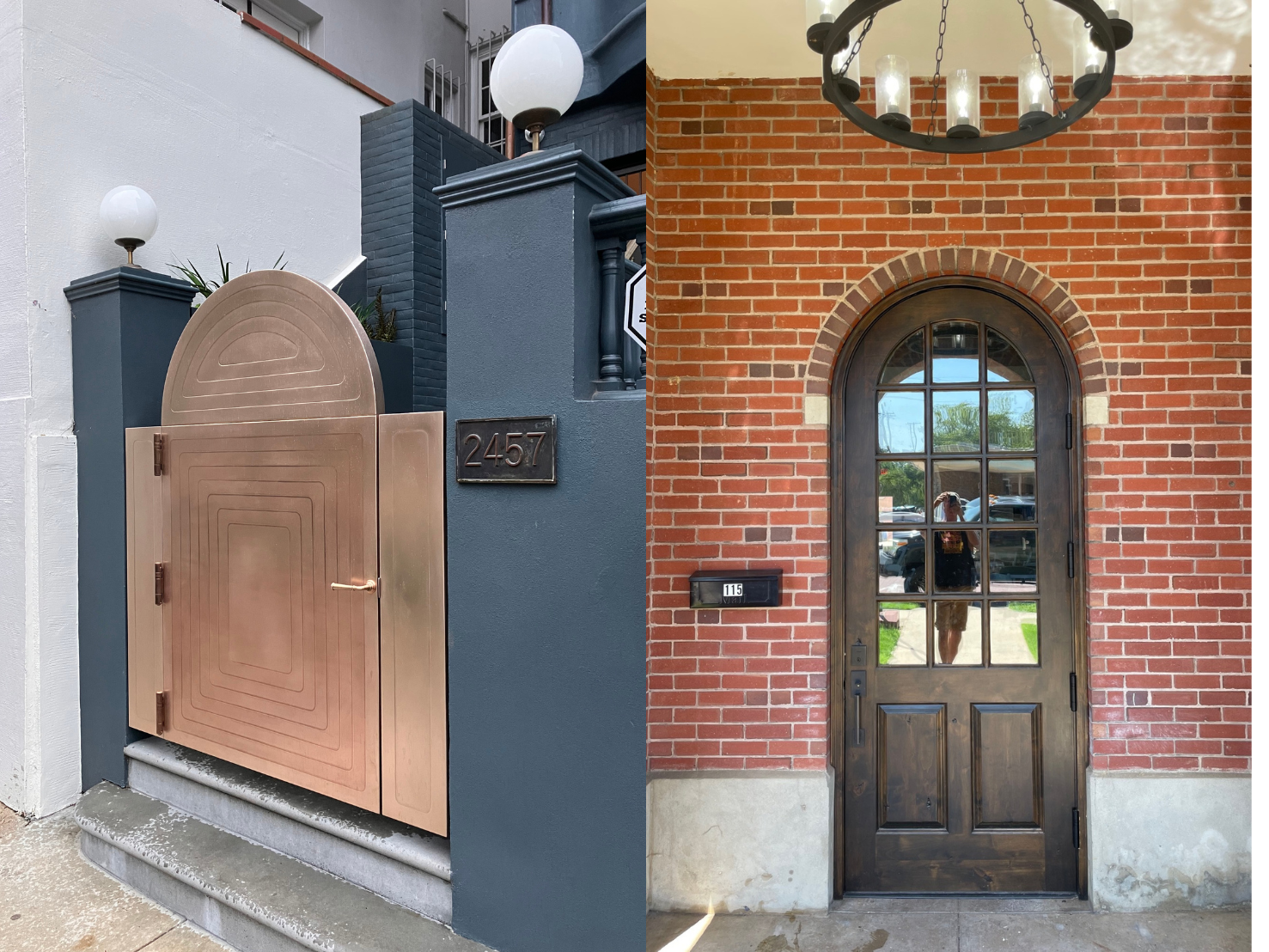
How Do You Determine Right Hinge vs Left Hinge?
When you need zero ambiguity, use the installer’s method:
- Open the door fully.
- Stand inside the doorway with your back against the hinges.
- Check where the knob is:
- Knob on your right → Right-hand / right hinge
- Knob on your left → Left-hand / left hinge
This technique works consistently across wood, metal, and aluminum frames—especially when dealing with renovation projects where the pull/push orientation may not be obvious.
Do Waterson Hinges Require Left or Right Models?
Yes, Waterson not only manufactures stainless steel self-closing hinges in left-hand and right-hand configurations, but we also provide non-handed options.
Non-Handed Models (No Left / No Right Required)
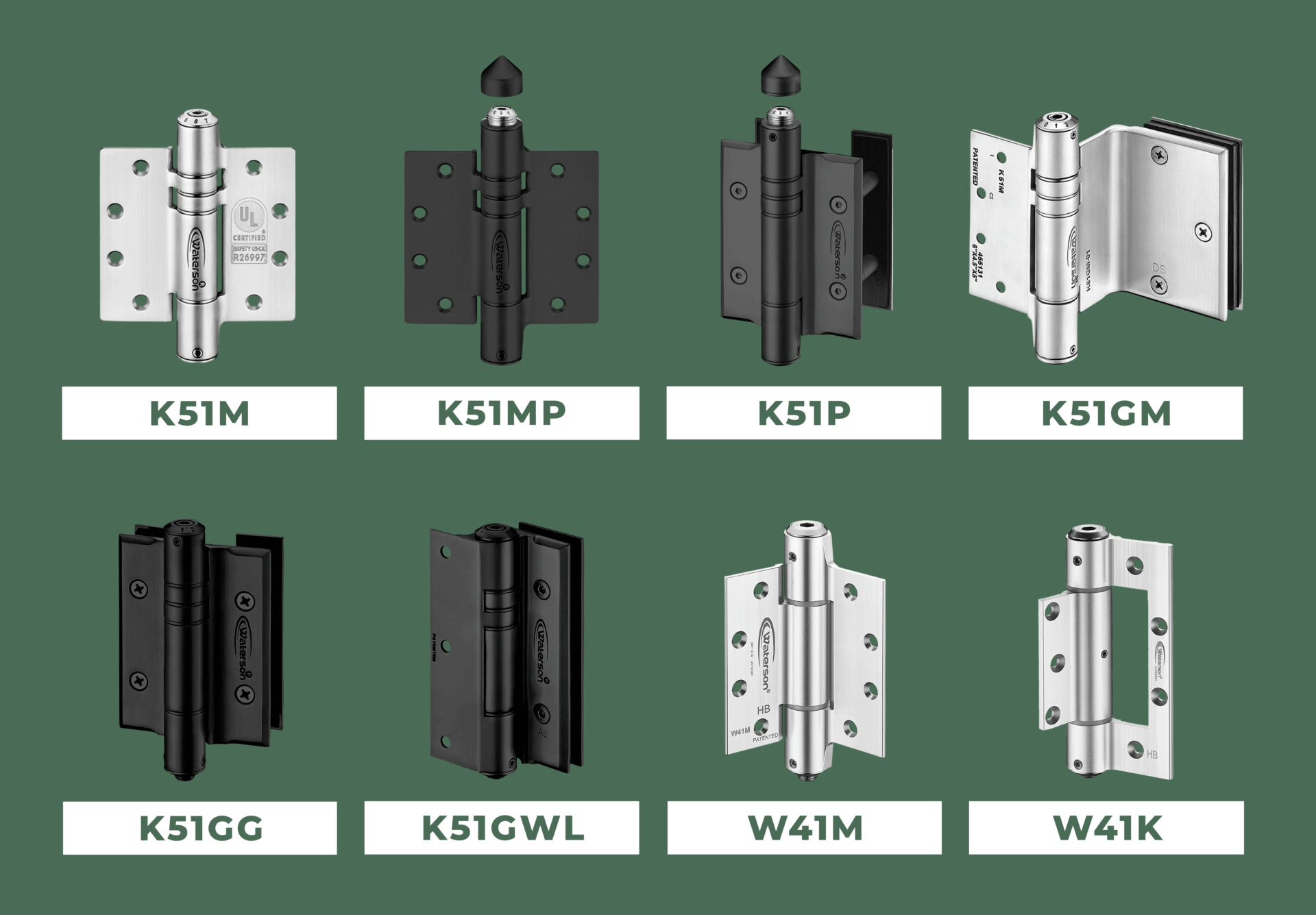
If you see any stainless steel Waterson model with the letter M is non-handed. The M stands for “full-motise”, and these models can be installed on either left or right doors and are not orientation-dependent.
- K51M: Full mortise door hinges for commercial wood and metal doors.
- K51MP: Butt hinges for heavy wood and metal fence gates.
- K51P / K51PS: Full surface hinges, with and without back plate
- K51W: Side Mount Self-closing Gate Hinge without Cap
- K51GM / K51GG: Soft-closing glass door hinges for heavy commercial glass panels, available in glass-to-frame and glass-to-glass hinges.
- W41M / W41K: Aluminum hinges for residential doors, including full mortise and interfold designs.
Handed Models (Left vs Right Hinge Selection)
The following product families are handed. They are engineered with directional geometry for specific swing orientations:
- K51WP : Side-mount gate hinges with cap; right-handed
- K51WPN: Side-mount gate hinges with cap; left-handed
- K51GWL: glass-to-wall hinges; handed
Installation drawings and handing charts are available on the Waterson Download Page.
If you are unsure whether your application requires a right hinge vs left hinge, please contact our technical team to confirm based on door width, frame conditions, and opening clearance.
When Self Closing and Soft Closing Hinges Cover Every Side Need
Whether you select left hinge, right hinge, or a non-handed M-series, the engineering behind Waterson hinges ensures consistent performance across commercial and architectural environments.
Below are some outstanding features for your current projects:
- Self Closing Mechanism: Integrated spring system automatically returns the door to the closed position; no extra hardware required.
- Hydraulic Soft Closing: Prevents slamming, extends hinge life, and delivers smooth, quiet operation.
- Fire Rated: Certified for 3-hour UL fire doors and compliant with NFPA 80 standards.
- Hold Open (Optional): Holds the door open at 85°–90° and auto-releases with a light push or pull.
- ADA Compliant: Provides <5 lbs opening force, ≥5 sec closing time, and required clearances; meets ADA 404.2.8.
- ANSI/BHMA A156.17 Grade-1: Tested to 1,000,000 cycles for heavy-duty performance.
- Adjustable Tension & Speed: Fine-tune spring tension and/or hydraulic speed using numbered markers.
- 304/316 Stainless Steel: Corrosion-resistant for both interior and exterior environments.
- Finish Options: Satin, Black, Brass, or Bronze to match architectural design intent.
- Warranty: 10 years for mechanical hinges, 3 years for hydraulic hinges.
Waterson Heavy Duty Self Closing Spring Hinges
Waterson Self Closing Door Hinge combine the function of an overhead closer and a hinge into a single, sleek component—complete with optional hold-open and door-stop features. Designed for commercial openings, gates, and glass doors, these hinges are easy to install and adjust to meet ADA and ICC A117.1 standards for opening force, while ensuring quiet and secure closure. Crafted from durable stainless steel, they are NFPA 80 compliant, UL 3-hour fire-rated, and built to perform reliably in both interior and all-weather exterior environments. See all our features.
In addition to these performance advantages, Waterson offers flexible hinge customization services. As a direct manufacturer, we can tailor hinge sizes, finishes, and especially hinge leaf designs to meet the specific structural needs of your doors. This makes our hinges an ideal solution for door manufacturers seeking custom options that integrate seamlessly with their existing frames.
Request For Information
Please note that Waterson Closer Hinges start from a size of 4″x4″. If you’re in need of smaller self-closing hinges, we’d recommend checking out some other resources! Also, we only provide single acting closer hinges. Thank you.
Recent Post
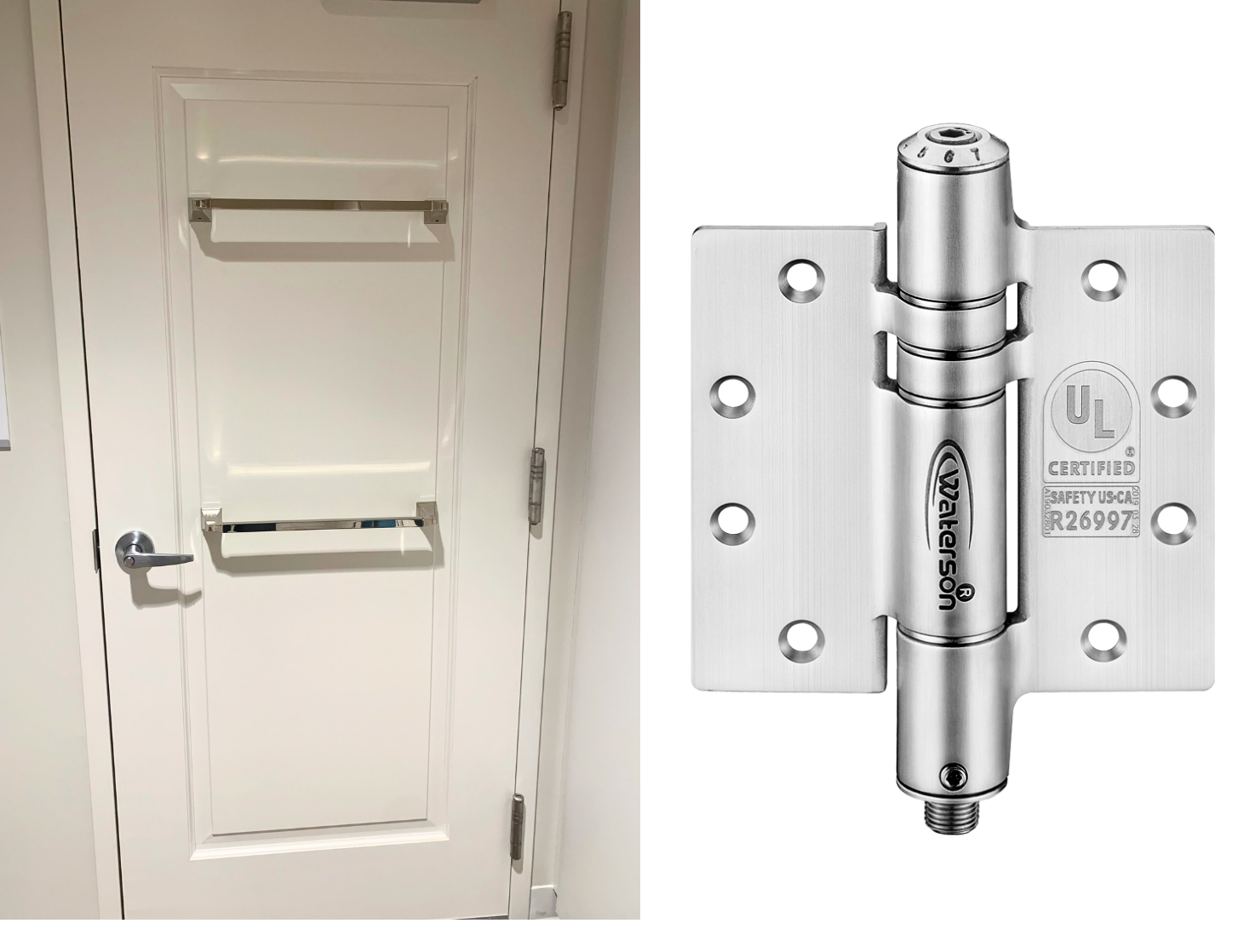
Spring Loaded Door Hinges for Multifamily Residential Buildings
For multifamily buildings, specify self-closing spring hinges listed for use on fire-rated doors and adjustable to ADA closing speed and opening force. They replace a [...]
Cold Weather vs Hot Weather Hinges: How to Deal with Seasonal Change?
Most people only notice their Gate hinges when something's already broken. The gate won't close, the latch misses the strike plate, and the hinge squeaks [...]
Why Are Doors and Gates Harder to Close in the Winter
Most commercial self-closing hinges still adopt either spring or hydraulic damper for [...]