
“This is the barn door exposed to negative pressure. Because of this, I don’t need the spring-loaded hinge to help it close. I need to slow it down. HA hinges worked great and the result is exactly what I needed!”
That kind of relief is what a slow closing door hinge is supposed to deliver. Whether your door slams because of air pressure, a strong pull, or just a little too much momentum, the fix is simpler than most people think. Let’s walk through the solution and understand the mechanism behind it.
A Real Barn Door Slamming Case in Yuma, CO
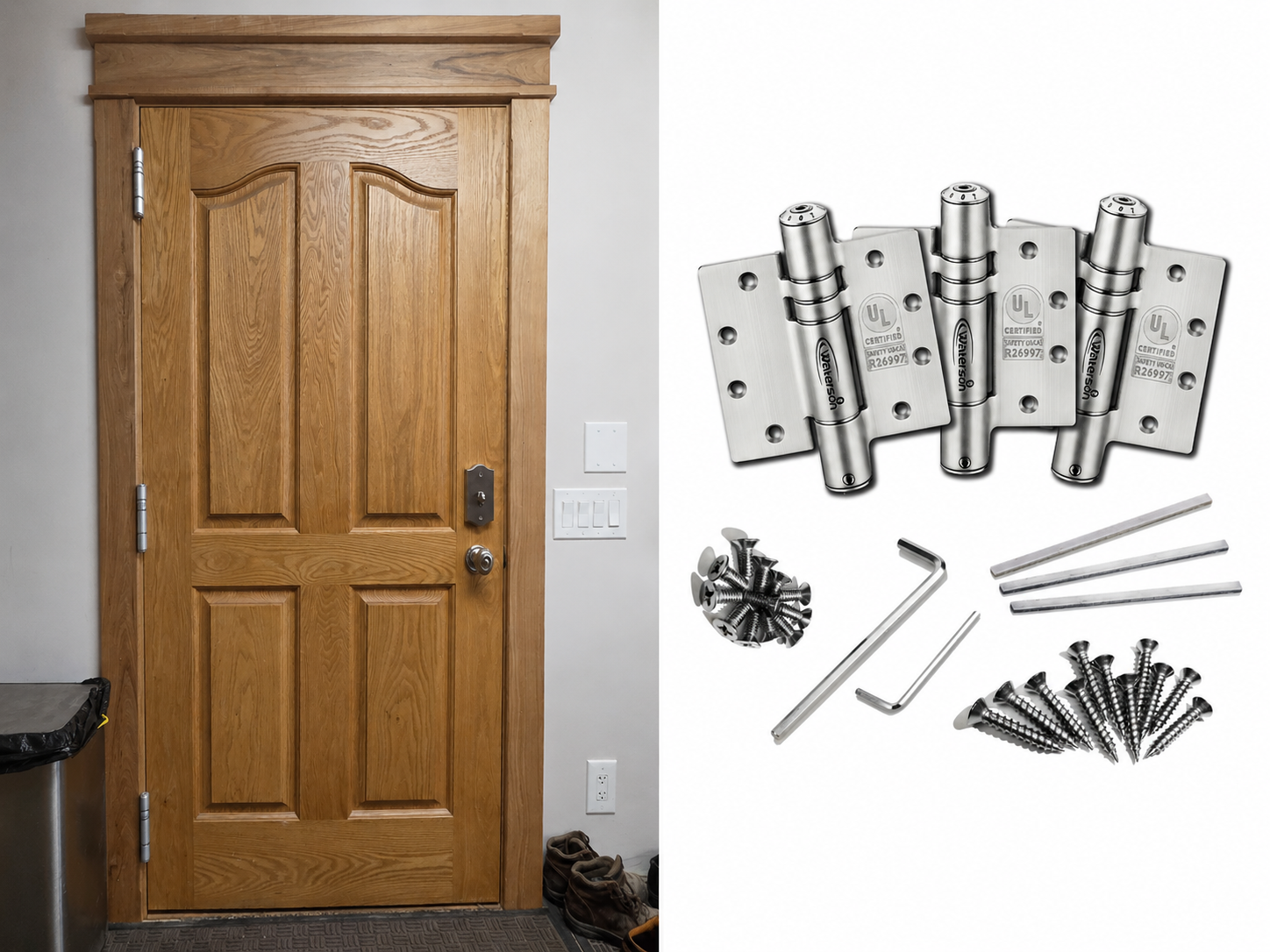
A customer in Yuma, CO came to us with a lightweight interior barn door that kept slamming shut on its own. The specs were straightforward:
- Door size: 36″W x 80″H, no more than 50 lbs
- Hardware needed: 4″x4″ hinges, three-hinge configuration only
- Goal: control the closing and latching speed, nothing else
The door was exposed to negative air pressure inside the building. That pressure was already doing the closing. What the customer needed was not a way to make the door close. They needed a way to slow it down.
Why Does a Barn Door Slam Even Without Anyone Pushing It?
When a building’s HVAC system creates a pressure difference between rooms, the lower-pressure side of the door acts like a vacuum. It pulls the door shut on its own, fast enough to slam the frame hard.
This is not the same as a door someone pushed too hard. The air is doing it. And the harder the pressure differential, the faster the door moves.
The instinct is to add more spring tension. That makes it worse. The spring pushes on top of the pressure that is already there. The door hits harder. What this door actually needs is not more force. It needs a brake.
What is a Hydraulic Damper Hinge, and How Does it Work?
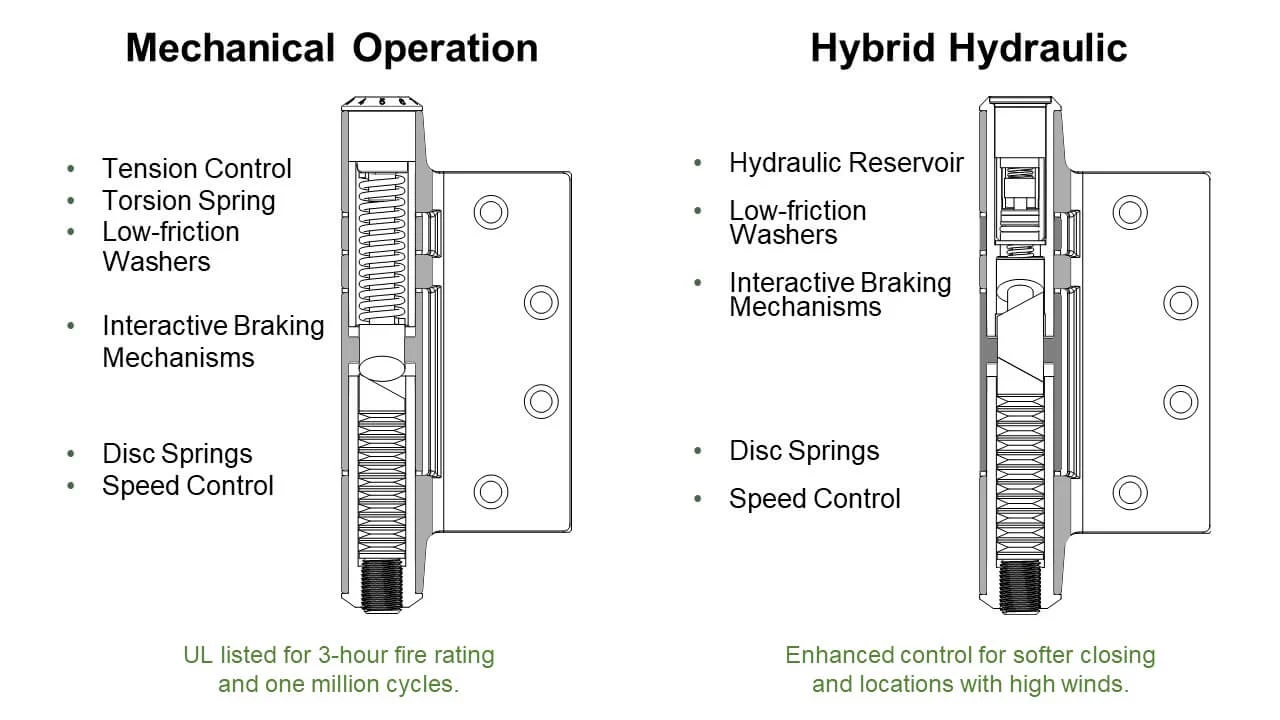
A hydraulic damper hinge looks like a regular hinge. Inside, a small chamber of hydraulic fluid creates resistance as the door swings shut. The door never builds up speed. It just drifts quietly to a close.
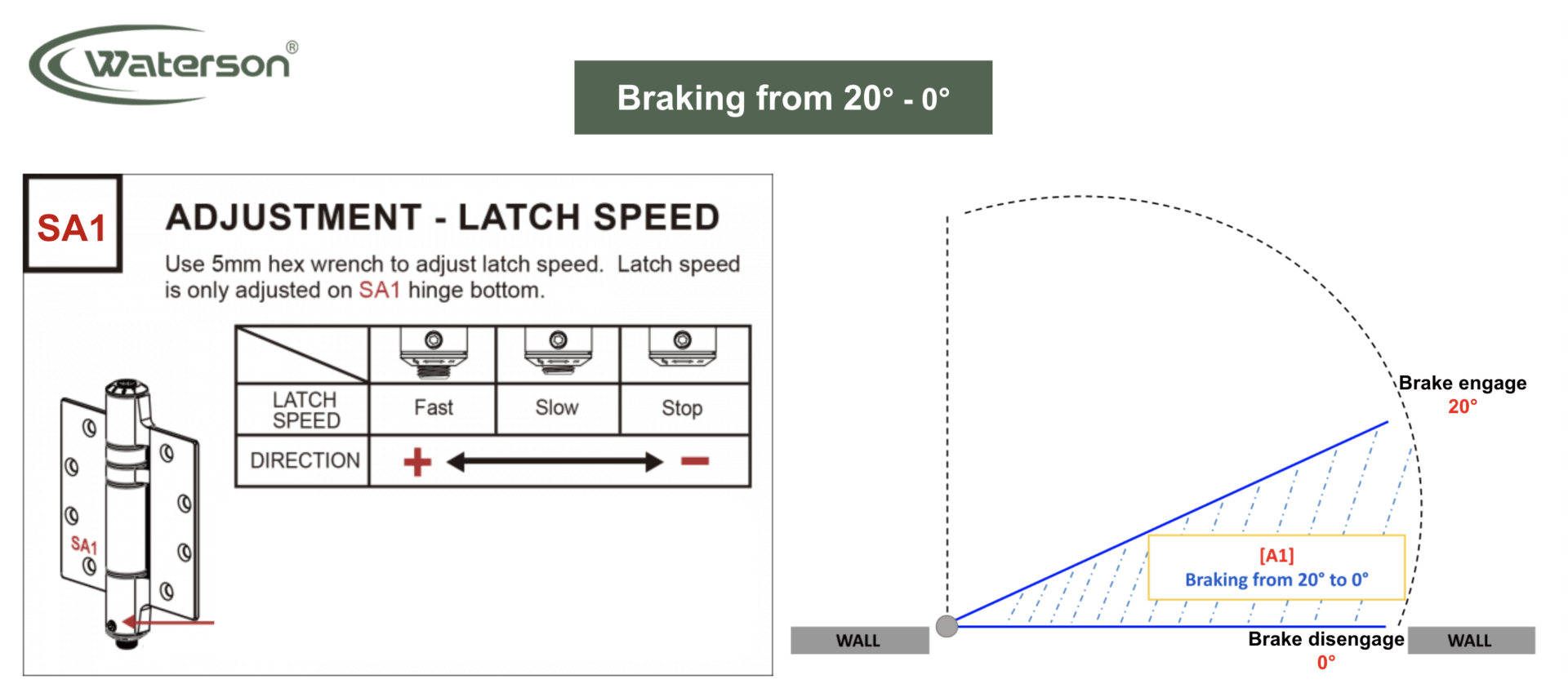
The last couple of inches are handled separately. The door still needs enough momentum to click the latch. A good hydraulic hinge controls both independently: slow through the swing, just enough push to latch cleanly at the end. You can also adjust both of those settings after installation to match your specific door and situation.
Do I Need My Door to Self Close, or Just Close More Quietly?
If your door needs help closing at all, you need a hinge with a built-in spring. Without it, the door will just sit wherever you leave it.
If your door already closes on its own but closes too hard, you don’t need a spring; the hydraulic damping can do its job. This is exactly the situation with barn doors, doors near HVAC vents, and any door exposed to negative air pressure. The pressure is already doing the closing. Adding a spring on top makes the slam worse.
What About the Latching Speed?
Closing speed and latching speed are two different things, and both matter.
Closing speed is how fast the door moves through the main arc of its swing. Latching speed is what happens in the last few inches before the door meets the frame.
A door that is set to close too slowly may drift to a stop just before it latches, leaving the door slightly open. A door that closes too fast in the final inch slams the latch plate hard enough to rattle the frame.
The ideal setup lets the door move smoothly through the swing and then arrive at the frame with just the right amount of momentum to engage the latch quietly and completely. A hydraulic hinge lets you tune these two phases separately, which makes it much easier to get that balance right for any door.
How Waterson Hydraulic Slow Closing Door Hinges Fix the Slamming Problem
Waterson hydraulic slow closing door hinges combine the door closer and the hinge into one single unit. There is no arm across the top of the door, no floor plate to trip over, and no visible hardware on the door face. Everything is built inside the hinge barrel.
Once installed, the hydraulic system handles the speed control automatically. You adjust it once to match your door and environment, and then it just works, quietly, every time the door closes.
- Soft Closing: Hydraulic damper slows the door through the full closing arc, no slamming, no impact noise
- Self Closing: Optional built-in spring pulls the door shut from any open position, for doors that need help closing
- Adjustable Closing and Latching Speed: Separate controls for the main swing phase and the final latch phase
- Clean, Concealed Design: All hardware is inside the hinge body, nothing visible on the door face or frame
- Heavy Duty: Supports doors up to 330 lbs, tested to 1,000,000 cycles
- ADA Compliant: Requires less than 5 lbs of opening force
- Fire Rated: Up to 3 hours for fire-rated door openings
- Hold Open Option: Keeps the door open at 85 to 90 degrees when needed, no wedge required
- Stainless Steel: Available in 304 or 316 stainless for indoor and all-weather exterior use
- Warranty: 10 years for mechanical models, 3 years for hydraulic models
Will Slow Closing Door Hinges Work on My Door?
Slow closing hinges work on a wide range of door types and sizes. Here are some of the most common situations where people use them:
- Interior doors that slam due to air pressure or cross-ventilation
- Barn doors and large panel doors in buildings with negative pressure
- Heavy exterior doors at commercial entrances
- Bedroom and bathroom doors in homes with children or elderly residents
- Hospital and healthcare facility doors that need quiet, reliable operation
- School and office doors that take heavy daily traffic
Waterson soft and slow closing door hinges start from 4×4 inches and support doors up to 330 lbs. If your door is on the lighter side, like a standard 36-inch interior door under 50 lbs, these hinges have more than enough capacity, and the adjustable settings let you dial the closing speed down to something gentle and appropriate for the weight.

Frequently Asked Questions About Slow Closing Door Hinges
Waterson Soft and Slow Closing Hydraulic Door Hinges
Waterson soft closing door hinges combine the function of an overhead closer and a hinge into a single, sleek component—complete with optional hold-open and door-stop features. Designed for commercial openings, gates, and glass doors, these hinges are easy to install and adjust to meet ADA and ICC A117.1 standards for opening force, while ensuring quiet and secure closure. Crafted from durable stainless steel, they are NFPA 80 compliant, UL 3-hour fire-rated, and built to perform reliably in both interior and all-weather exterior environments. See all our features.
In addition to these performance advantages, Waterson offers flexible customization services. As a direct custom hinge manufacturer, we can tailor hinge sizes, finishes, and especially hinge leaf designs to meet the specific structural needs of your doors. This makes our hinges an ideal solution for door manufacturers seeking custom options that integrate seamlessly with their existing frames.
Request For Information
Please note that Waterson Closer Hinges start from a size of 4″x4″. If you’re in need of smaller self-closing hinges, we’d recommend checking out some other resources! Also, we only provide single acting closer hinges. Thank you.
Recent Post
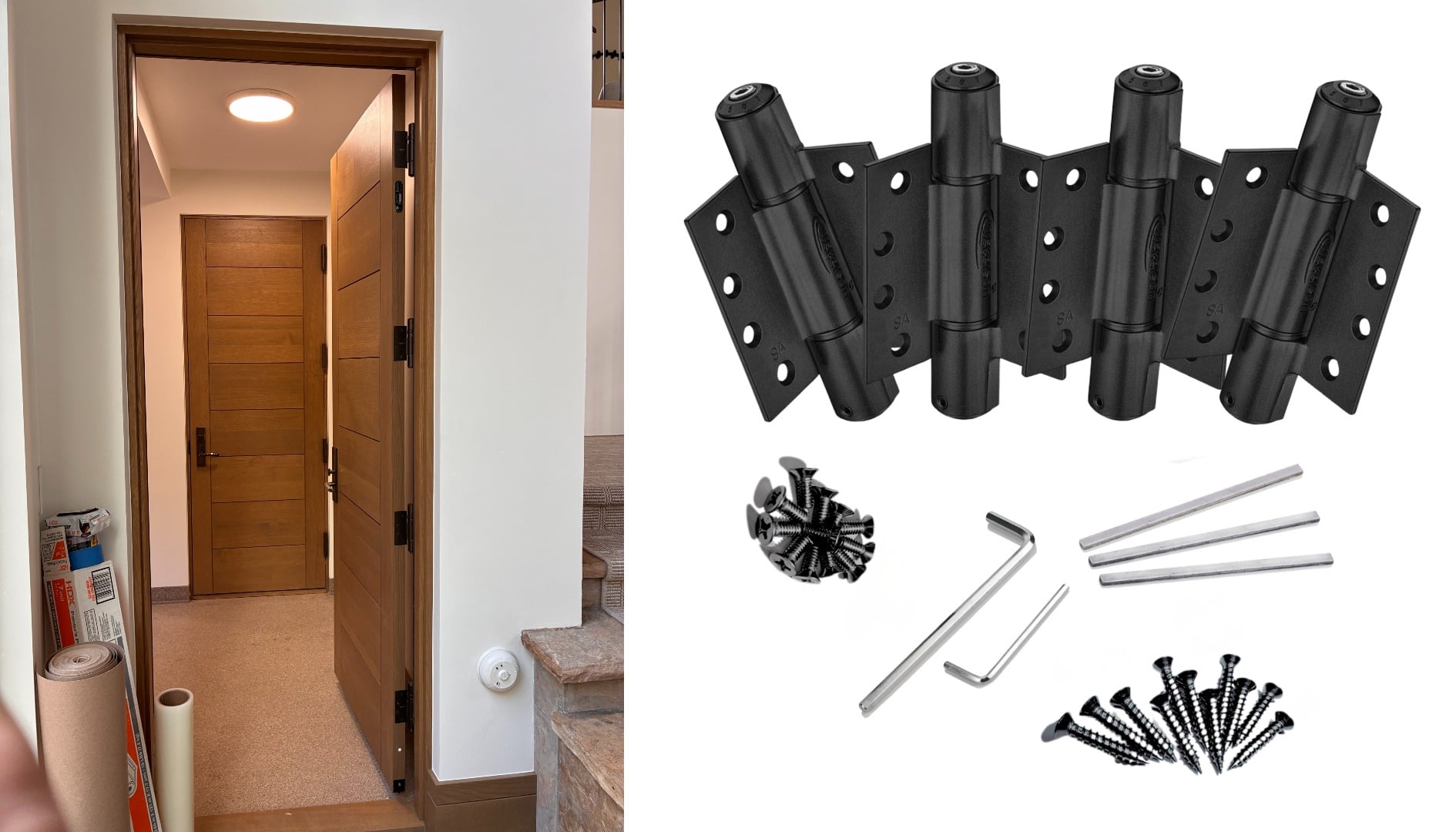
Which Residential Door Hinges Do U.S. OEMs Choose for Upscale Interior Doors
Quick Answer Upscale interior doors call for a 4" x 4" full mortise, Grade 1 hinge sized to the door's height and weight, with self [...]
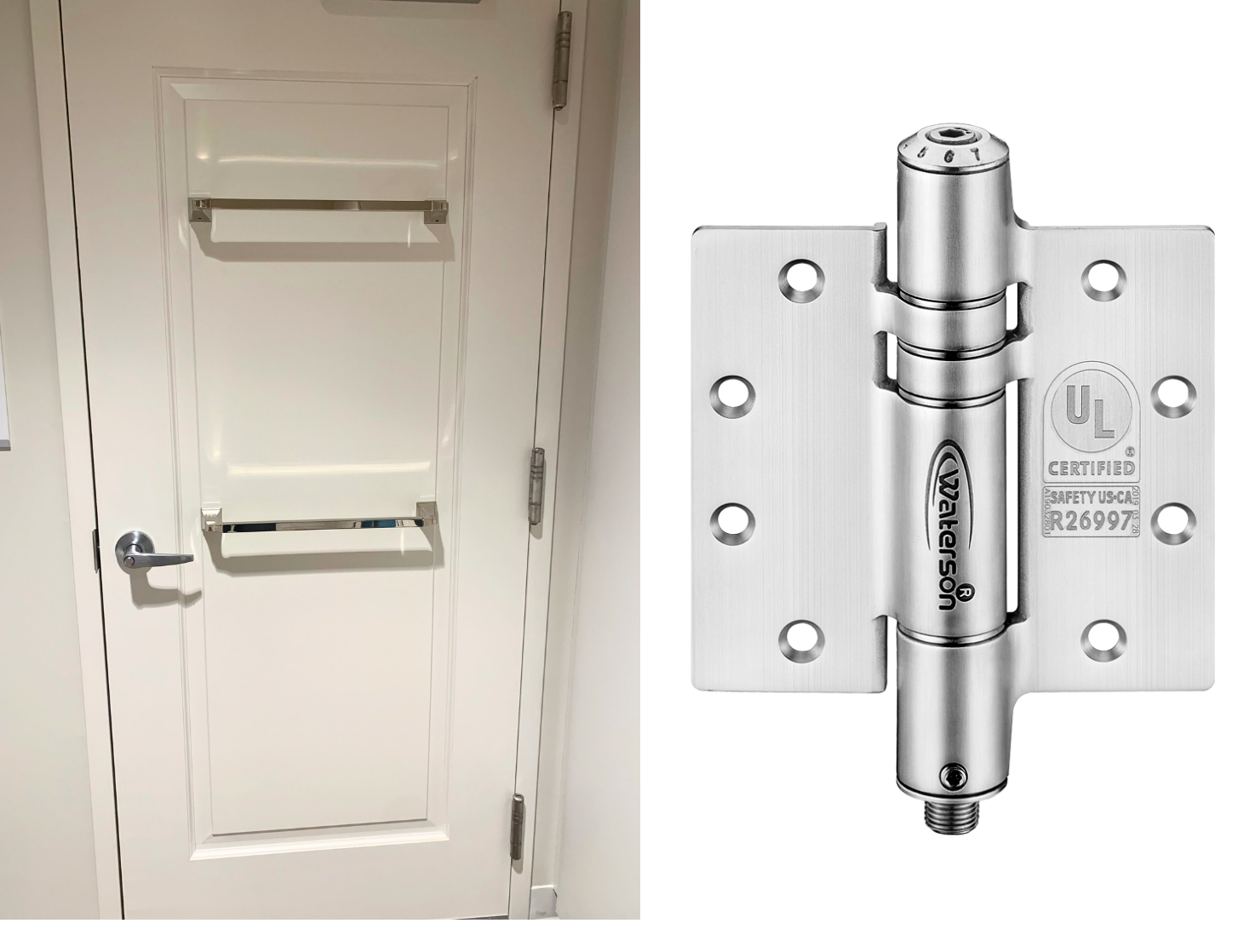
Spring Loaded Door Hinges for Multifamily Residential Buildings
For multifamily buildings, specify self-closing spring hinges listed for use on fire-rated doors and adjustable to ADA closing speed and opening force. They replace a [...]
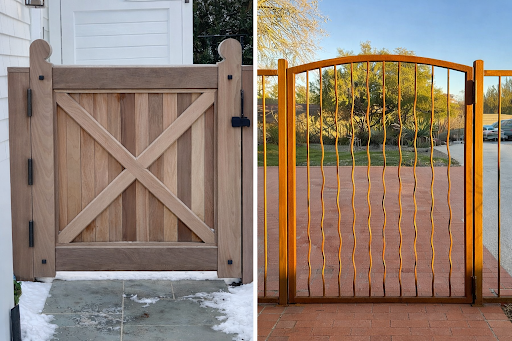
Cold Weather vs Hot Weather Hinges: How to Deal with Seasonal Change?
Most people only notice their Gate hinges when something's already broken. The gate won't close, the latch misses the strike plate, and the hinge squeaks [...]