
Quick Answer
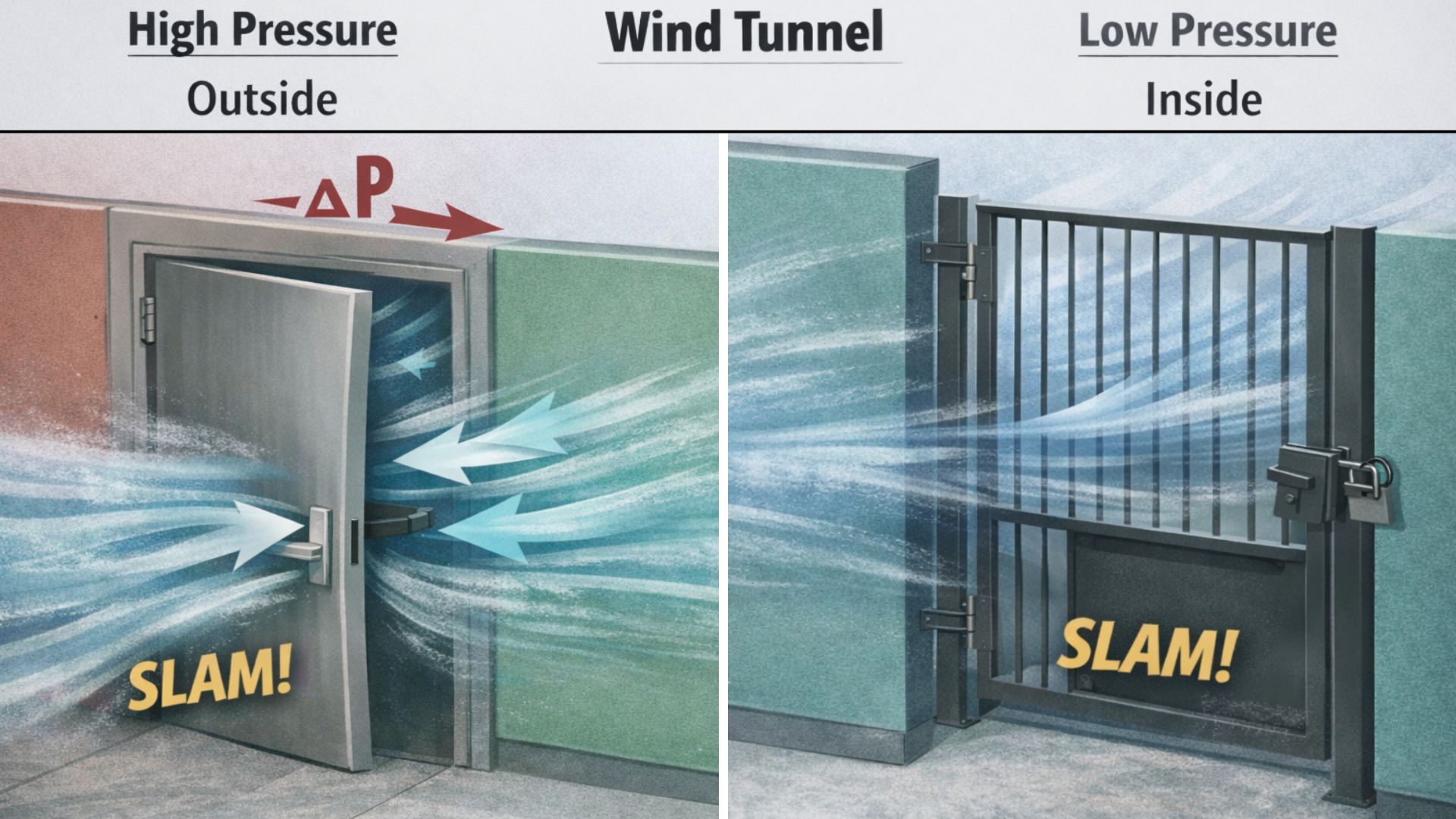
The wind tunnel effect in buildings occurs when wind is funneled through gaps, corridors, or around facades, creating sudden pressure differentials across doors. When a door connects two zones with different pressure levels, that energy releases through the door leaf, causing uncontrolled slamming.
This effect typically triggers at wind speeds as low as 5–7 m/s and can increase door closing speed by 2–4x, with impact force jumping 4–10x above normal, enough to overpower most standard door closers and spring hinges.
You don’t notice it every day. But when it happens, everyone in the building notices.
A glass entrance slams without warning. A stairwell door bangs repeatedly. Then complaints follow: too loud, too violent, unsafe. The first response is usually an adjustment; door closers are tuned, spring hinges are tightened. Yet the problem returns, and nothing really changes.
Recently, a customer reached Waterson Hinges with a similar question:
“Can you elaborate on the Wind Tunnel effect? I want a solution that avoids slamming. How will the wind tunnel effect change the outcome? How often will it occur, and when? What will the outcome be in terms of noise and slam force?”
Before we talk about hardware, we need to talk about how the wind tunnel effect in buildings actually turns on, and why it overwhelms conventional door control. Only after you really understand what’s happening can you start looking for a solution that actually works.

What Is the Wind Tunnel Effect?
In building environments, the wind tunnel effect describes a condition where wind is accelerated and concentrated by building geometry, creating localized pressure spikes at doors, gates, and openings.
This is not about “strong wind” in general. It’s about pressure differential (ΔP).
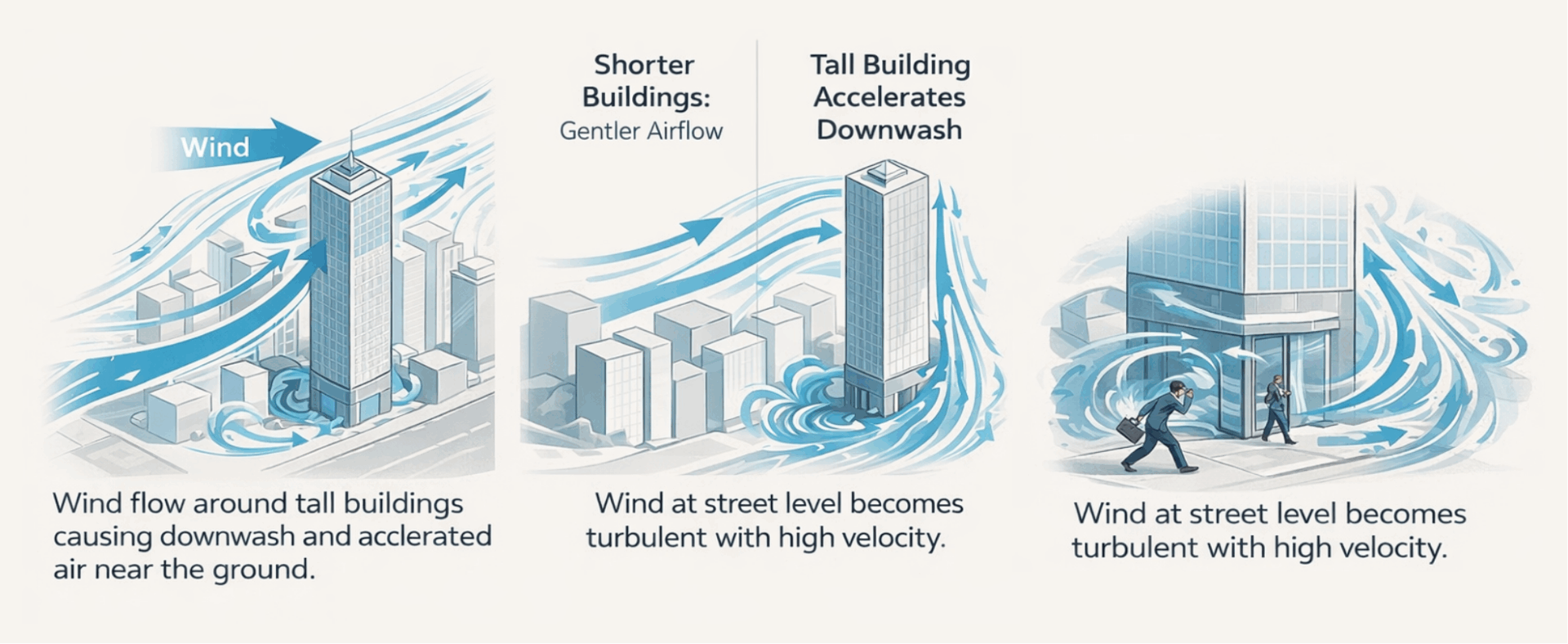
When wind is funneled between buildings, down a corridor, or redirected by a tall façade, the air speeds up and pressure changes abruptly. When a door connects two zones with different pressures, that energy is released through the door leaf.
How Does a Wind Tunnel Work in Buildings?
In aerodynamics, a wind tunnel works by forcing air through a tighter space. When the space gets smaller, the air speeds up. And somehow, buildings unintentionally do the same thing.
Common mechanisms include:
- Venturi effect: wind accelerates when passing through a narrowed gap
- Channeling: wind aligns with long, straight urban corridors
- Downwash: high-altitude wind is driven downward by tall façades
- Corner acceleration: flow speeds up around sharp building edges
What it produces are short, aggressive gusts that arrive without warning. Plus, doors are most vulnerable mid-swing, exactly when these gusts hit. This is where the wind tunnel effect in buildings starts creating real problems for doors, hardware, and the people using them.
What the Wind Tunnel Effect Between Buildings Actually Leads To
The wind tunnel effect isn’t constant. It typically activates when wind direction aligns with a building gap, street canyon, or façade, the external wind reaches a moderate level (often 5–7 m/s is already enough), and a door happens to be unlatched or in motion.
When that happens, the result is not a minor disturbance. It leads directly to sudden pressure spikes that result in the following:
1) Door Slamming
Slamming isn’t driven by springs. It’s driven by pressure.
As pressure differential builds across a door and gusts inject sudden acceleration, closing speed can increase 2–4×, while impact force can jump 4–10× compared to calm conditions. That’s more than enough to overpower most standard door closers.
2) Slamming Noise Around Buildings
Noise rises much faster than speed.
- controlled close: ~55–65 dB
- fast close: ~70–80 dB
- wind-assisted slam: 90–100+ dB
The sound isn’t just loud; it’s sharp, impulsive, and unpredictable. It’s the kind of noise that wakes you up just as you finally fall asleep after a long, exhausting day. One sudden bang, no warning, and you’re fully awake again. This is actually really annoying.
3) Door Damage
When this cycle repeats, damage follows.
Common outcomes include hinge pin wear and ovalization, frame cracking or anchor loosening, glass stress and seal failure, and closer oil leakage or arm fatigue. It’s what happens when hardware is selected for steady conditions, but installed in an environment defined by pressure spikes.
But Why Door Closers and Spring Hinges Fail in the Wind Tunnel Effect
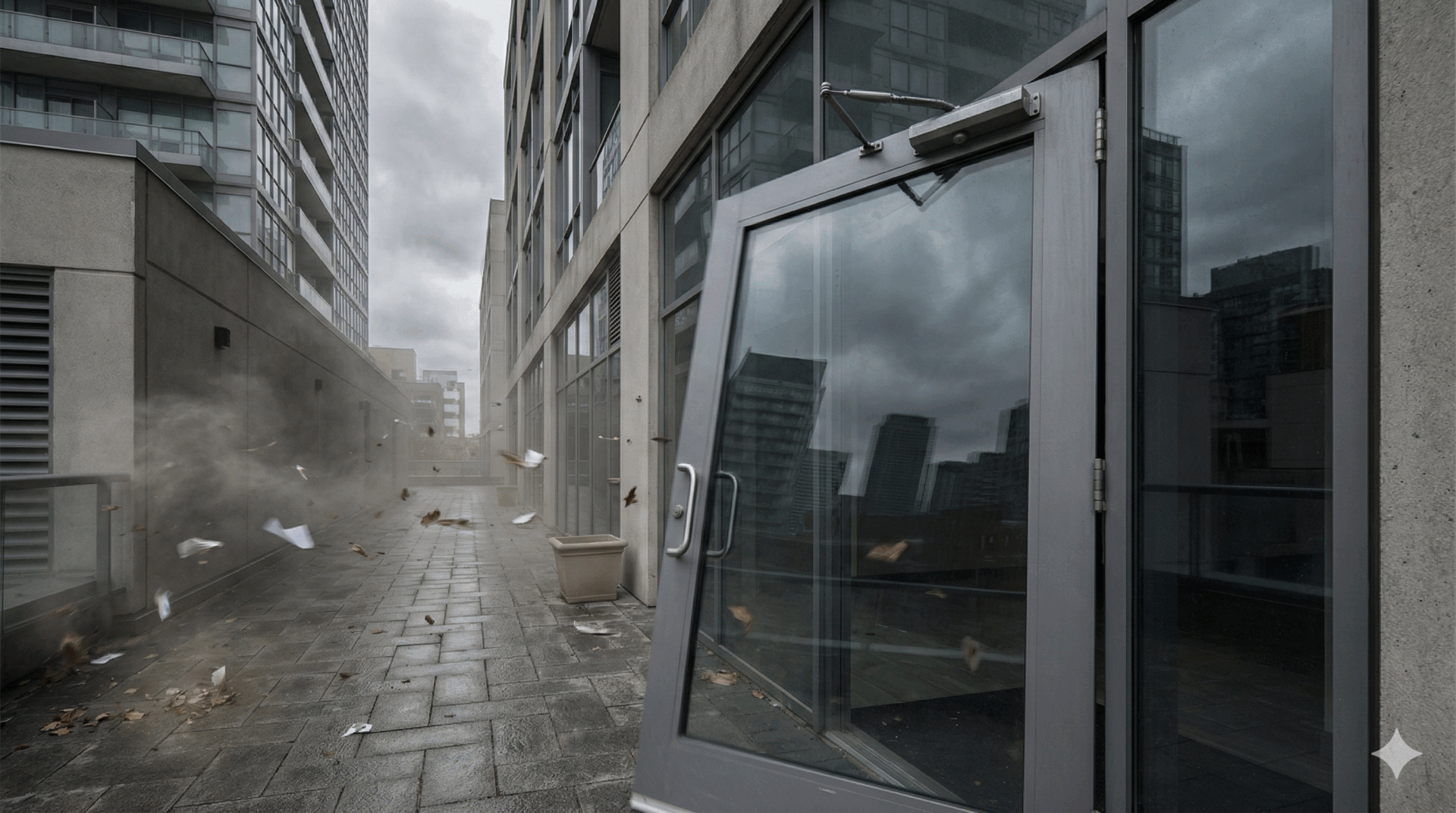
Most door hardware is designed around steady, predictable movement. The wind tunnel effect is the opposite. It introduces sudden pressure spikes and impulse loads that act mid-swing, not at the latch.
That mismatch is where conventional solutions break down:
- Stronger springs increase slam force, raise opening resistance, and create ADA issues.
- Standard door closers are tuned for consistent loads and get overpowered by gusts.
- Slower latch speed helps only at the end of the swing, not when the wind hits earlier.
Is there an alternative door hinge or door closer that can manage sudden pressure spikes, dissipate kinetic energy, stay ADA-friendly, and hold up over long-term use in wind-exposed buildings?
How to Stop Doors Slamming in the Wind
After a long discussion and consideration, the customer finally chose Waterson Hinges….
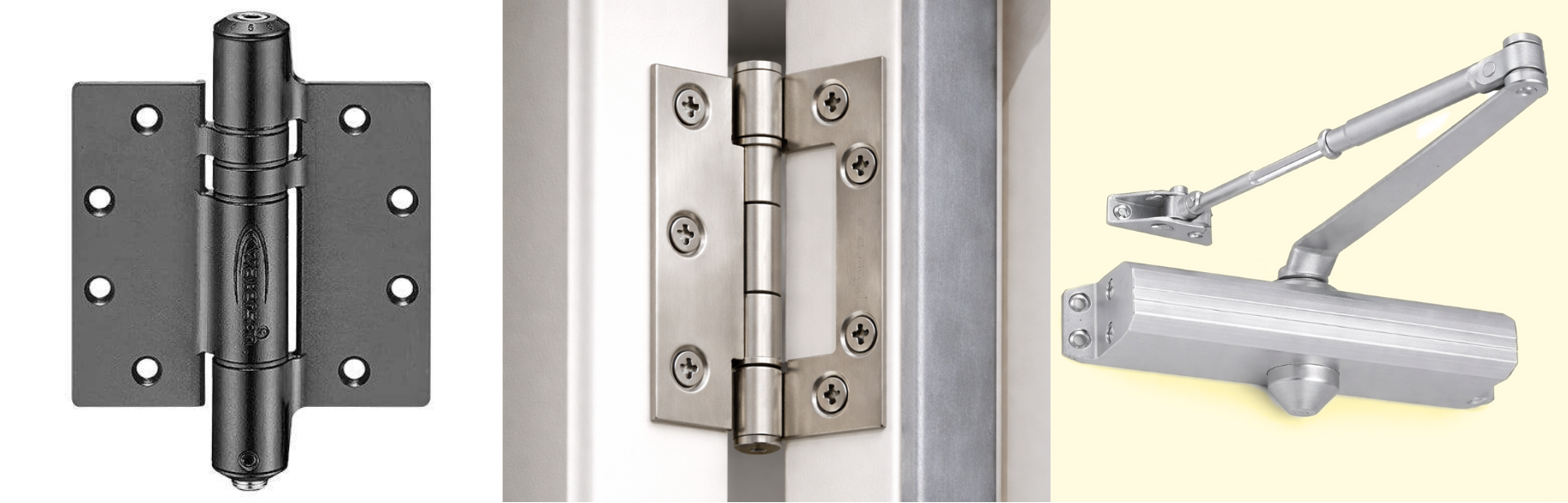
Waterson soft closing door hinges are designed specifically for high-load, high-variability environments, including entrances exposed to wind tunnel effect in buildings.
What makes Waterson Hinges different includes:
- Self Closing: Mechanical spring ensures positive closure even under fluctuating pressure conditions caused by the wind tunnel effect.
- Soft Closing: Hydraulic damping absorbs sudden gust-driven acceleration, preventing slamming and impact noise.
- Heavy Duty: Tested to 1,000,000 cycles under BHMA A156.17; built to withstand repeated impulse loads common in wind tunnel zones.
- Fire Rated: UL-listed up to 3 hours, suitable for fire doors exposed to pressure variation such as exit or entrance doors in buildings
- High Load Capacity: Supports doors up to 330 lbs — perfect for large, solid-core or oversized front doors.
- Stainless Steel: Built from 304 or 316 stainless steel for superior durability.
- Adjustable Tension: Separate controls for swing (90°–20°) and latch (20°–0°) prevent slamming.
- ADA Compliant: Requires only 5 lbs of opening force.
- Hold Open Option: Keeps the door open at 85°–90° when you need it.
- Multiple Finishes: Available in flat black, satin stainless, dark brown, and satin brass finishes.
Limitations: What Even the Best Hinges Can’t Fully Solve
Even the best hardware has limits. Under wind tunnel conditions, air pressure can vary significantly from one location to another, and no single hinge or door closer can perform identically in every situation.
This isn’t a product flaw, it’s the reality of wind-driven pressure in complex buildings. The only reliable way to confirm performance is on-site testing, using actual doors and frames.
For high-risk areas affected by wind tunnel effect, we recommend:
- validating hinge performance under real pressure conditions on site
- using a dual-system approach in extreme zones, combining hinges with a concealed closer for added control
While no solution can fully eliminate extreme pressure effects, the right combination of hardware and testing can deliver safe, quiet, and consistent door operation where it matters most.
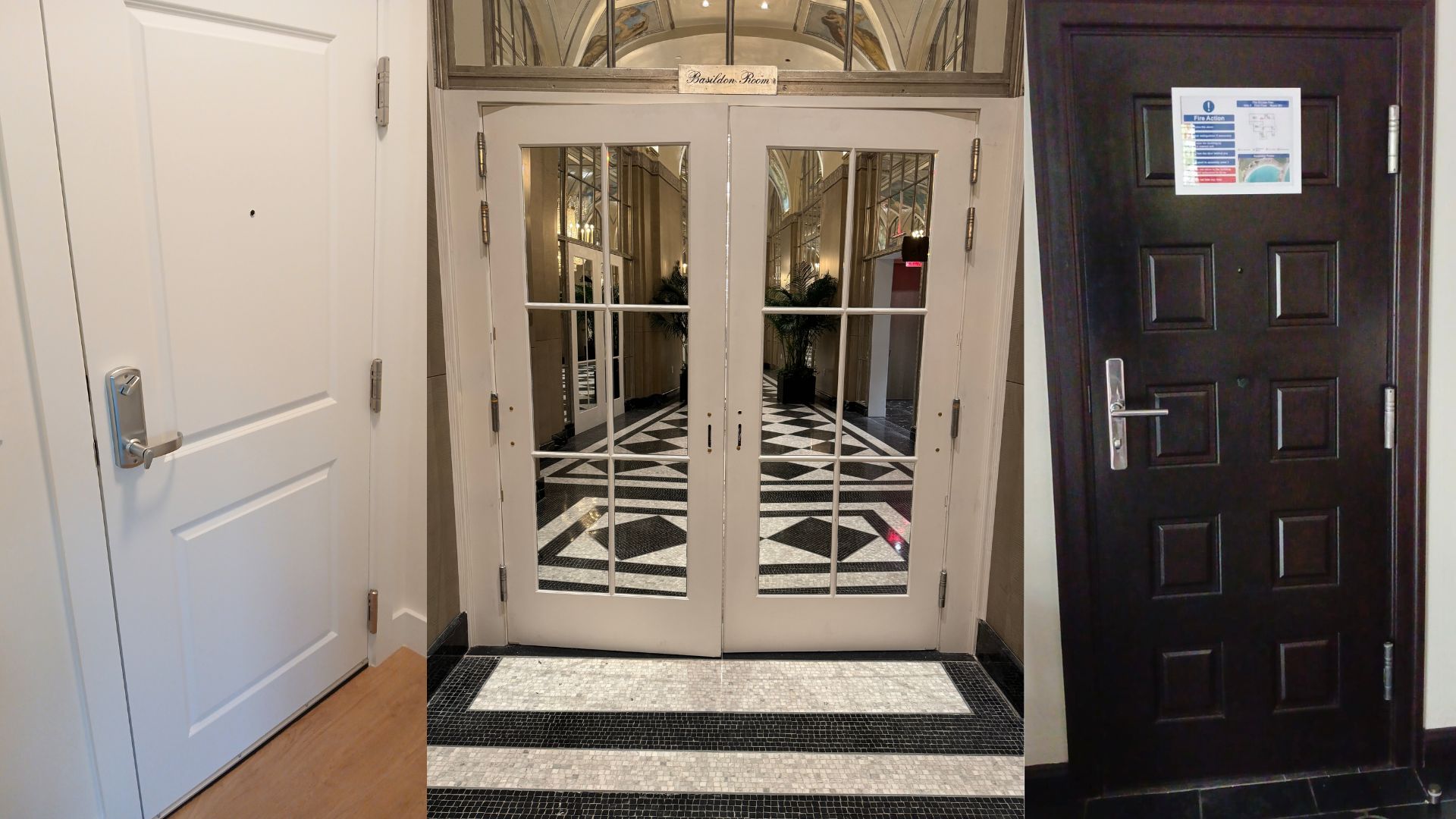
Waterson Soft Closing Door Hinges for Wind Tunnel Effect
Waterson self closing fire door hinges combine the function of an overhead closer and a hinge into a single, sleek component—complete with optional hold-open and door-stop features. Designed for commercial openings, gates, and glass doors, these hinges are easy to install and adjust to meet ADA and ICC A117.1 standards for opening force, while ensuring quiet and secure closure. Crafted from durable stainless steel, they are NFPA 80 compliant, UL 3-hour fire-rated, and built to perform reliably in both interior and all-weather exterior environments. See all our features.
In addition to these performance advantages, Waterson offers custom hinge services. As a direct manufacturer, we can tailor hinge sizes, finishes, and especially hinge leaf designs to meet the specific structural needs of your doors. This makes our hinges an ideal solution for door manufacturers seeking custom options that integrate seamlessly with their existing frames.
Request For Quote
Please note that Waterson closer hinges start from a size of 4″x4″. If you’re in need of smaller self-closing hinges, we’d recommend checking out some other resources! Also, we only provide single acting closer hinges. Thank you.
Recent Post
Glass Door Hinges: Floor Spring vs Spring Hinge Compared
Quick Answer Floor hinges (also called floor springs) are hydraulic closers set into the floor slab for center-hung or double-acting glass doors with fully concealed [...]
Stainless Steel Spring Hinges: Self-Closing Hinges for Interior and Exterior Doors
Quick Answer A stainless steel spring hinge is a self-closing hinge with a torsion spring inside the barrel, so it swings the door and closes [...]
Cold Weather Gate Hinges: How Waterson Performs in Winter
When winter comes, temperatures drop, and outdoor fence gates start to behave differently. Wood absorbs moisture and swells, metal contracts slightly, and hardware components shift [...]