
Older buildings often run into a renovation problem that fire doors that no longer meet ADA clearance. The issue usually starts with a surface-mounted door closer, but removing it on a fire rated door isn’t a simple hardware swap.
According to ADA door requirements, compliant doors must provide a minimum clear opening width of 32 inches when the door is open to 90 degrees. This measurement must account for any hardware that projects into the opening space. Specifically:
- Between 34″ and 80″ above the floor, door hardware may project up to 4 inches into the clear opening on either side.
- Below 34″, no projections are allowed into the required clear width.

A surface-mounted closer often reduces clear width below 32″ and creates headroom conflicts on 80″ doors, where 78″ minimum clearance is required. As a result, many renovation projects replace the closer with fire rated spring hinges. However, because fire doors are strictly regulated, the change must be done correctly to remain compliant.
Missing just one of these steps can result in a failed inspection or a voided fire rating. Therefore, to avoid costly mistakes, here’s what you need to know before changing your door closer to new fire rated spring hinges.
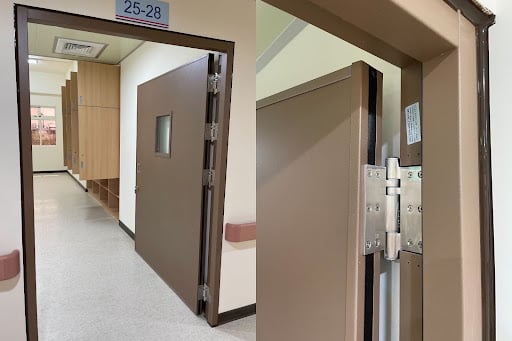
What Does NFPA 80 Require Before You Modify a Fire Door?
Before making any changes to a fire door assembly, it’s important to understand what’s at stake. Under NFPA 80 fire door requirements, fire doors must be inspected at three critical points:
- After initial installation
- After any maintenance or repair work
- Annually
Each inspection evaluates the fire door assembly against 13 point fire door inspection checklist, including certification labels, glazing, self-closing operation, positive latching, clearances, gasketing, and other essential technical requirements.
After the modification is completed, the door must pass this inspection. Therefore, any work performed on a fire rated door must be carried out in full compliance with applicable requirements to avoid inspection failure.
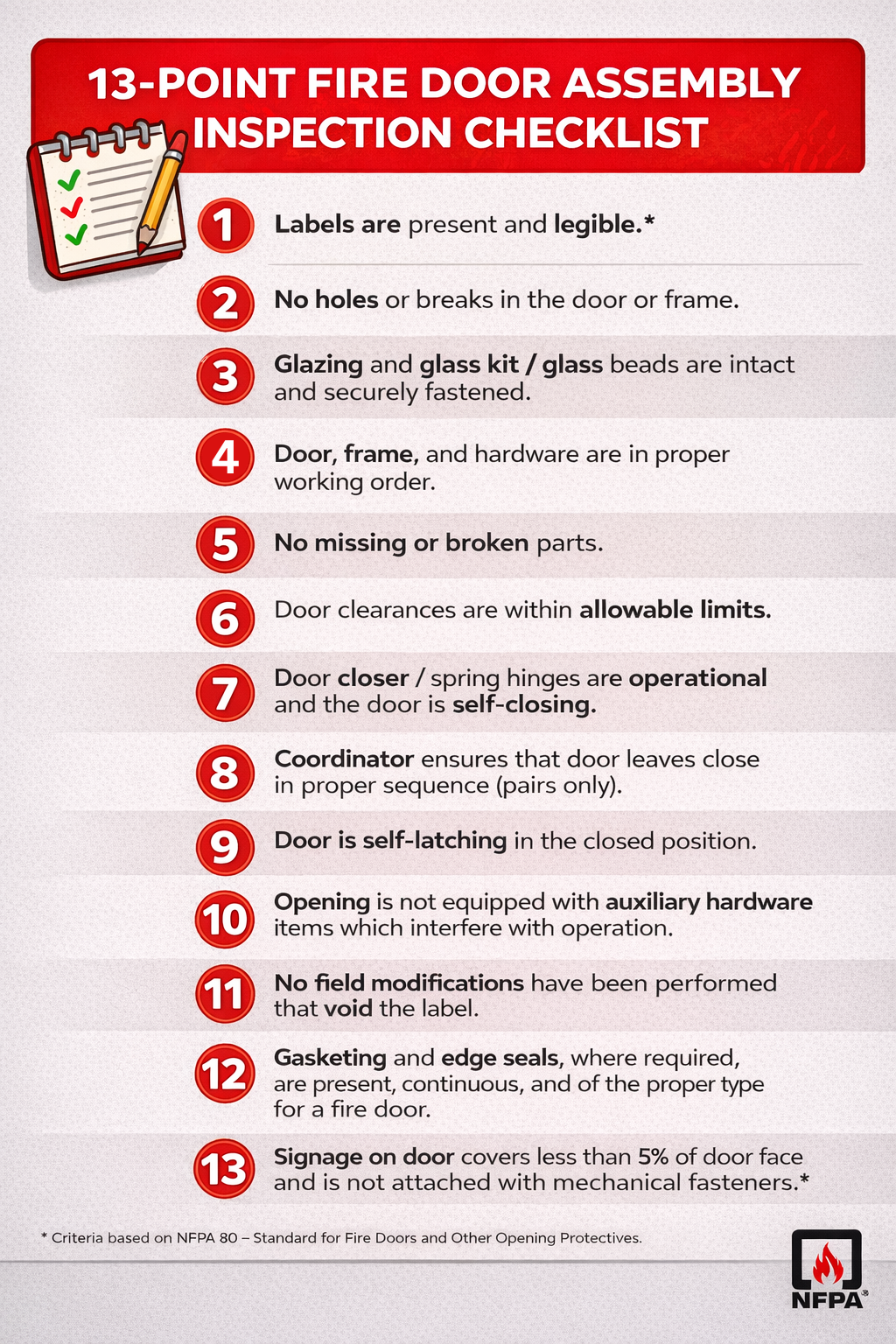
How to Handle the Holes After Removing a Door Closer
When you remove a surface-mounted door closer, you’re left with screw holes in the door and possibly in the frame. On a regular door, that’s a minor appearance issue. On a fire rated door, it’s a compliance problem.
NFPA 80 Inspection Criteria 2 – No Open Holes requires that fire doors have no unauthorized open holes. The reason is straightforward: any opening in a fire door compromises its ability to block fire, smoke, and heat. Even small screw holes can allow fire to penetrate the door’s protective barrier.
For a deeper look at what qualifies as a compliant fire door assembly, see our guide on fire rated door requirements.

To stay compliant, here’s what you need to do:
- All holes left behind by the removed door closer must be filled using fire rated fill materials approved for use on fire door assemblies.
- The fill material must be compatible with the door’s construction (wood, steel, or composite) and must not compromise the door’s fire rating.
- The repair should restore the door surface to its original condition as closely as possible.
Don’t leave this step for later. An inspector who sees unfilled holes from a removed door closer will flag the door as non-compliant, regardless of how well the new spring hinges for fire doors are installed.
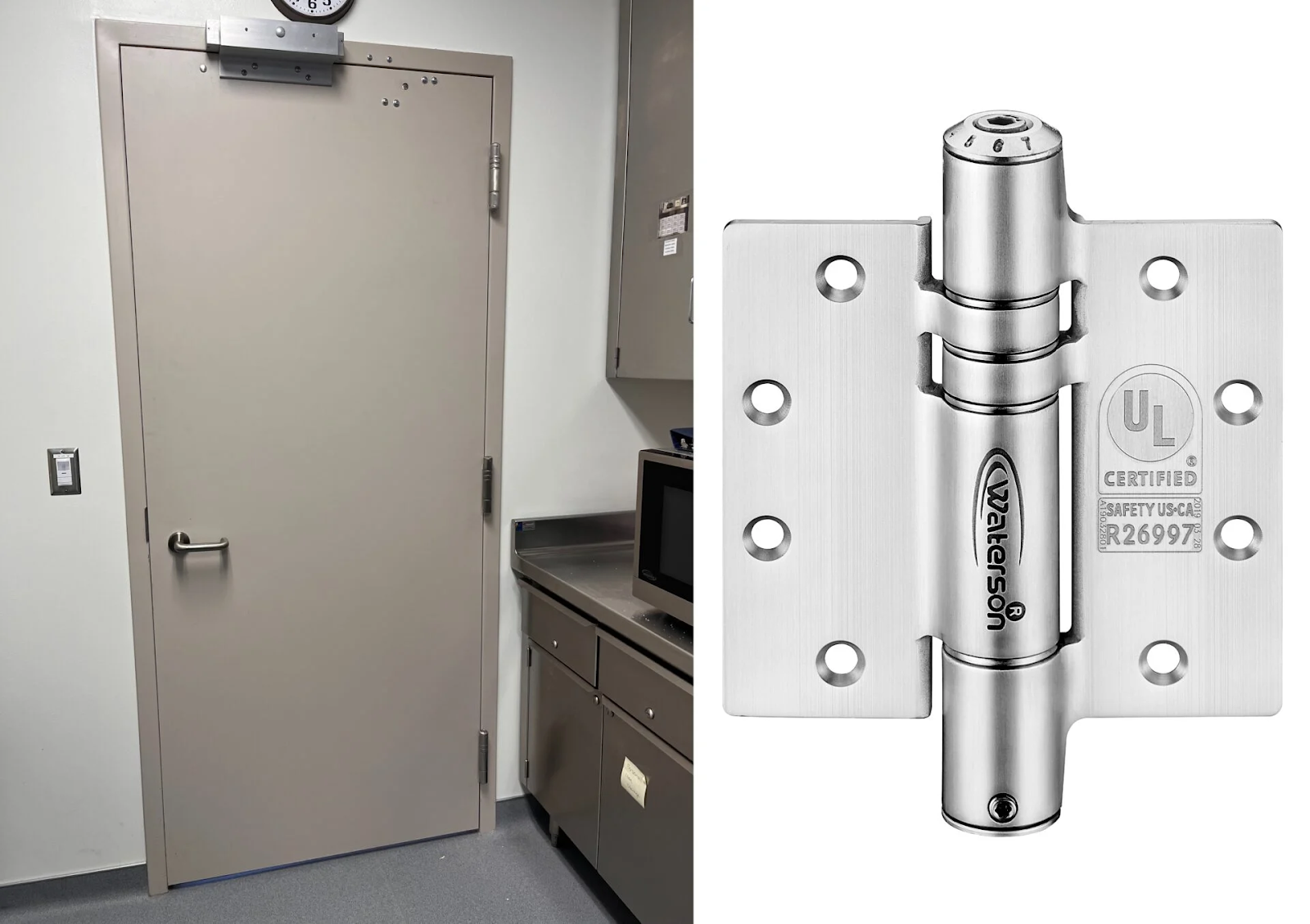
Any existing holes must be addressed to maintain fire door compliance.
Do You Need Manufacturer Approval for Field Modifications?
Yes—manufacturer approval is required.
Under NFPA 80, replacing a door closer with spring hinges for fire doors is considered a field modification. As NFPA 80 Inspection Criteria 11 states: “No field modifications to the door assembly have been performed that void the label.” If the label is voided, the door is no longer a certified fire door—no exceptions.
Therefore, the correct process should be:
- Contact the door or frame manufacturer first. The manufacturer may be able to provide guidance based on the product’s traceability.
- Submit a detailed description of the proposed modification, including written details, graphics, pictures, or templates.
- The manufacturer shares the information with the labeling agency (such as UL Solutions or Intertek) for review and approval.
- Once approved, proceed with the modification. The labeling agency may require a field evaluation after completion.
If you can’t reach the original manufacturer (E.g, if the company is no longer in business), you can contact the labeling agency directly via:
- UL Solutions: ul.com/services/fire-door-inspection-service
- Intertek: intertek.com/building/fire-door-field-labeling
Why Are Metal Shims Critical After a Spring Hinge Retrofit?
After replacing self closing door hinges for fire doors, the door’s alignment and clearances may shift. Frames in older buildings are often out of square, and changing the hardware can amplify existing alignment issues.
This is where metal door hinge shims become essential. NFPA 80 requires only stainless steel, metal door shims for fire rated doors because wood and plastic shims cannot withstand fire temperatures.
Proper clearances for fire rated doors per NFPA 80:
- Top and sides: maximum 1/8 inch (3.18 mm)
- Bottom (to floor or threshold): maximum 3/4 inch (19 mm)
- Bottom (if more than 38″ above floor): maximum 3/8 inch (9.5 mm)
If clearances are off after the retrofit, the door may not close properly, the latch may not engage, or gaps may allow smoke and fire to pass through. This is particularly common in high-rise buildings where pressure differences cause a door not closing flush issue. Therefore, metal door hinge shims should be installed to restore proper alignment.
For more insight, please read the Metal Door Shims on Fire Safety: Small Shims, Big Impact.
What Are the Most Common Concerns About Spring Hinge Retrofits?
1. Do Spring Hinges Count as a “Closer” for ADA Maneuvering Clearance?
No. According to the US Access Board, spring hinges for fire doors are not classified as “closers” for ADA maneuvering clearance.
- Surface-mounted door closers require additional push-side clearance under ADA 404.2.4 because their arms project into the maneuvering space.
- Spring hinges are concealed within the hinge knuckle and do not project into that space.
Spring hinges for fire doors must still comply with ADA closing speed (ADA 404.2.8.2). The door must take at least 1.5 seconds to close from 70°. Because spring hinges close faster than traditional closers, proper adjustment is critical to prevent slamming or accessibility issues.

2. Can Spring Hinges Handle Heavy or Oversized Fire Doors?
NFPA 80 sets a default limit of 3’-0″ × 7’-0″ for spring loaded hinges for fire door, but larger doors are permitted when allowed by the hinge manufacturer’s published listings.
The real concern is performance over time:
- Heavier doors place greater strain on the spring
- Poorly rated hinges may lose tension
- Doors may drift closed but fail to latch, making the fire door non-compliant
For oversized or high-traffic doors, a heavy-duty spring hinge set with heavy load ratings is an ideal solution. Waterson fire rated door hinges, for example, can support over 260 lbs with three hinges and up to 440 lbs with four, and are available in sizes from 4″×4″ up to 6″×6″ to accommodate even the 8ft interior fire door.
For more on self closing door hinges for fire doors, see our product overview.
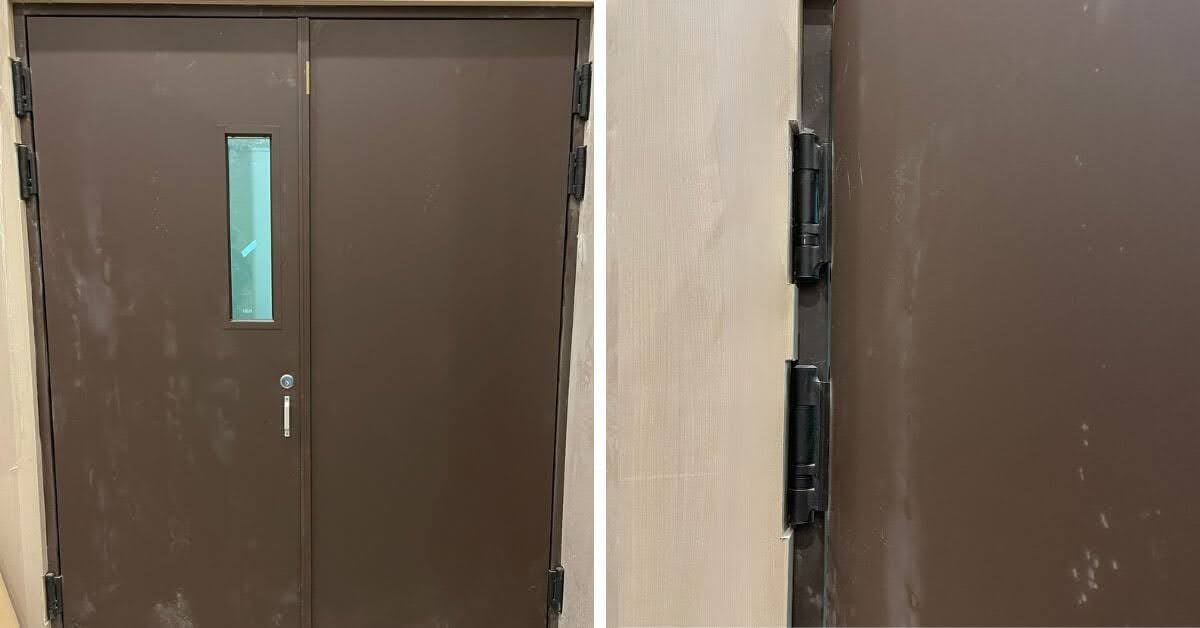
3. Will New Spring Hinges Fit Existing Fire Door Cutouts?
In most U.S. commercial doors, yes—as long as the spring loaded hinges for fire door follow ANSI/BHMA A156.7. When the hinge template matches, the screw holes and mortises usually line up, so no new drilling is needed.
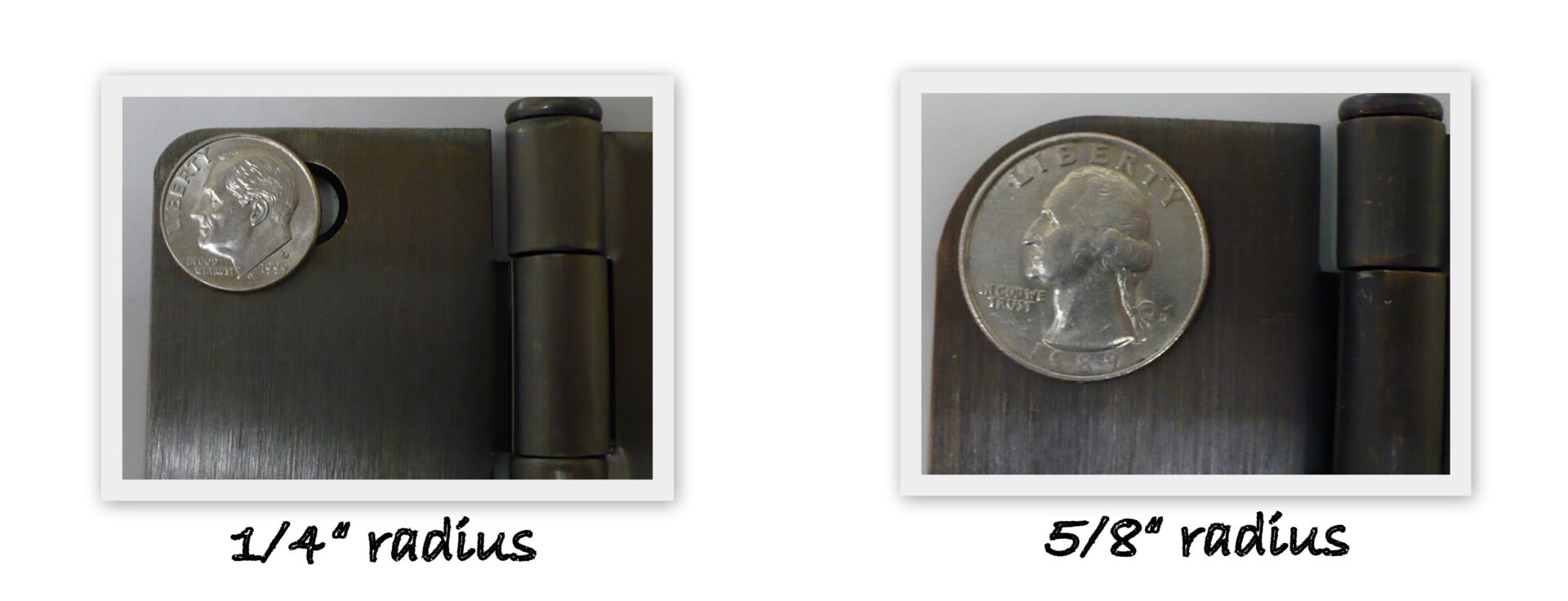
That matters on a fire door, because NFPA 80 doesn’t allow unfilled holes,even small ones can compromise the fire rating. Therefore, to meet the hinge code standards, one quick thing to check is the corner radius:
- Most hinges are 1/4″ or 5/8″
- Dime fits = 1/4″, quarter fits = 5/8″
- A mismatch can lead to gaps or binding. Therefore, please read 1/4 vs 5/8 Radius Hinge: Which One for Your Door carefully if you don’t know how to distinguish them.
Fire Rated Self Closing Spring Hinges: The ADA Compliant Solution
Waterson self closing fire rated door hinge is a mechanical hinge designed to automatically close a fire rated door after it has been opened. Not only does it meet the hinge code, but it offers a complete solution for every application.
- Self Closing Mechanism: Built-in spring action ensures the door closes consistently after every use.
- Durable material: Manufactured from SS304, with SS316 available, to retain strength and structure during fire exposure.
- Fire Rated: Certified with a 3-hour UL-list and NFPA 80 to resist high temperatures and maintain barrier integrity under extreme fire conditions.
- ANSI/BHMA A156.17 Grade 1: Tested for over 1,000,000 cycles, designed for long-term use in demanding environments.
- ADA Compliant: Allow accessibility with smooth operation for everyone, including children, the elderly, and disabled people.
- Heavy Duty: Engineered to support substantial door weights in high-traffic commercial settings.
- Adjustability: Numeric tension adjustment allows fine-tuning for proper closing and alignment.
- Modern design: Enhances the aesthetic appeal while maintaining functionality
Our hinges for fire rated doors come in 4″–6″ sizes with square radius, ⅝ radius hinges – standard screw, and ⅝ radius hinges – zigzag screw options, so most fire door retrofits can be done cleanly, without field modification.
Waterson Self Closing Fire Rated Spring Hinges for Replacing Door Closer
Waterson self-closing fire rated spring hinges combine the function of an overhead closer and a hinge into a single, sleek component—complete with optional hold-open and door-stop features. Designed for commercial openings, gates, and glass doors, these hinges are easy to install and adjust to meet ADA and ICC A117.1 standards for opening force, while ensuring quiet and secure closing. Crafted from durable stainless steel, they are NFPA 80 compliant, UL 3-hour fire rated, and built to perform reliably in both interior and all-weather exterior openings. See all our features.
In addition to these performance advantages, Waterson offers flexible customization services. As a direct manufacturer, we can tailor hinge sizes, finishes, and especially hinge leaf designs to meet the specific structural needs of your doors. This makes our hinges an ideal solution for door manufacturers seeking custom options that integrate seamlessly with their existing frames.
Request For Quote
Please note that Waterson closer hinges start from a size of 4″x4″. If you’re in need of smaller self-closing hinges, we’d recommend checking out some other resources! Also, we only provide single acting closer hinges. Thank you.
Recent Post
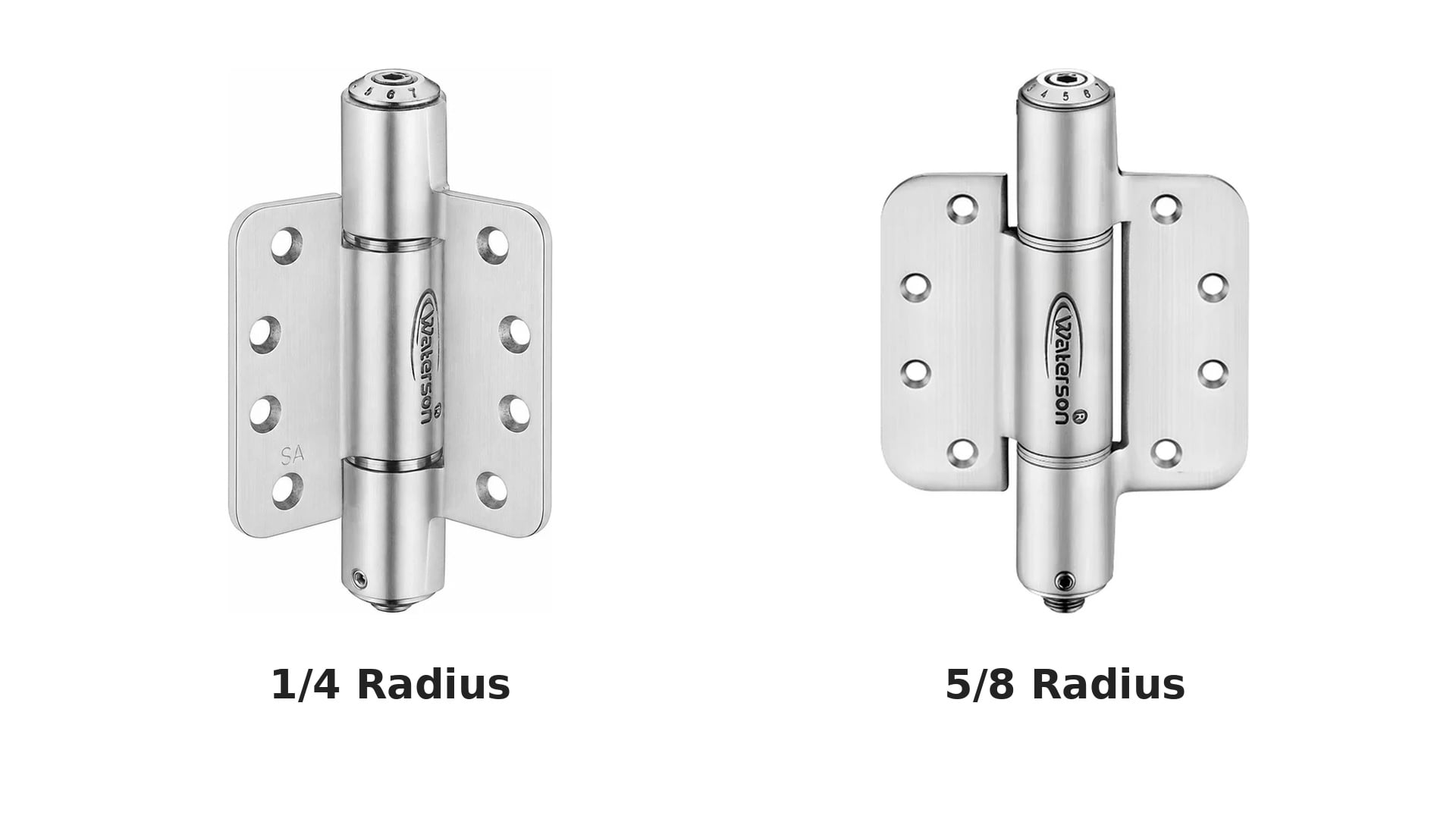
Replacing Door Hinges: 1/4 vs 5/8 Radius vs Square Corners
Quick Answer Most 4 inch residential door hinges have one of three corners: square, 1/4" radius, or 5/8" radius. A rounder hinge fits a mortise [...]
Why Won’t My Self Closing Door Hinges Close in Cold Weather
Quick Answer An exterior door that closes fine in summer but won't latch in winter is usually affected by two things: weather stripping that stiffens [...]

Soft Closing Hinges: 9 Most Frequently Asked Questions
Since the AIA in 2018, there has been an increased interest in Waterson hinges for many different projects. We have been inundated with questions by [...]