
Quick Answer
Wind slams doors or snatches them open when air pressure inside and outside the building differs, and larger doors catch more force. To control it, specify enough spring closing force to overcome the pressure, hydraulic damping to absorb gusts, adjustable control near the latch so the door still closes fully, and a door stop to limit overswing.
A community group in Melbourne, Australia, recently contacted us with a common but serious problem.
“I’m with a community group and we have just completed the construction of a large community hall. It has 10 double exit doors, each door is aluminium frame with double glazed glass, 1.2 m wide by 2.4 m tall. However, we have discovered that the strong winds ‘snatch’ the door away from people, so we’re looking for a product which can help control this problem. Each leaf measured roughly 47 x 94 inches (about 4 x 8 ft), close to the largest size Waterson hinge sets cover.”
Large glazed doors are particularly vulnerable to wind pressure because of their size and surface area. When wind pressure changes suddenly, doors can be forced open or slammed shut, creating safety risks and long-term hardware damage. So, how can you stop a door from slamming in the wind?
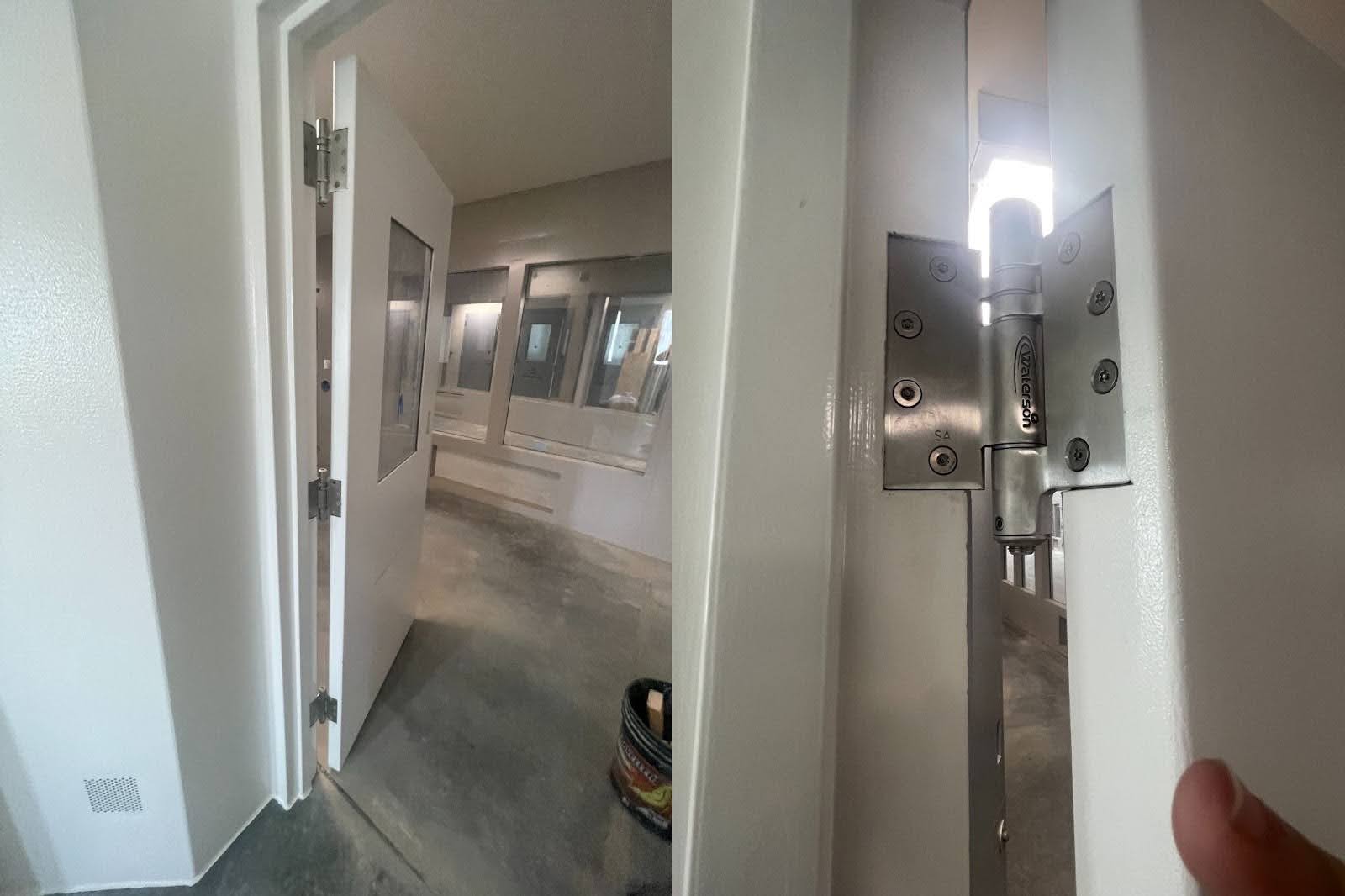
But First, What Is “Wind in the Door” About?
Wind affecting a door is primarily the result of pressure differences between indoor and outdoor air. When strong wind hits a building façade or flows through openings such as corridors, it creates areas of positive and negative pressure.
Large doors act like air pressure panels. The greater the door surface area, the stronger the force applied by wind. When pressure shifts quickly, the door can suddenly accelerate, causing it to swing open or slam shut unexpectedly.
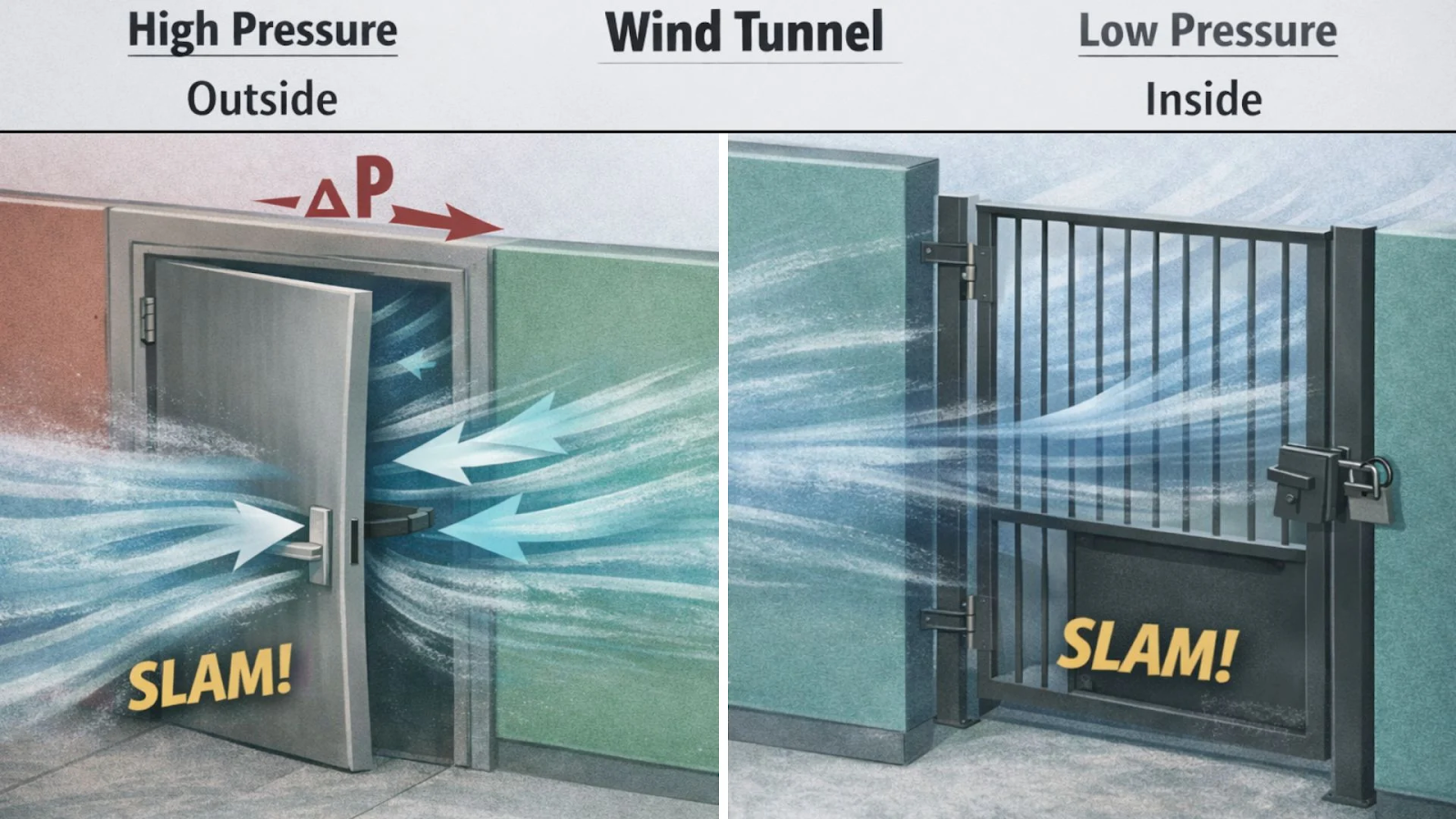
Why Does My Door Slam When the Window Is Open?
This usually happens because of an air pressure imbalance inside the building.
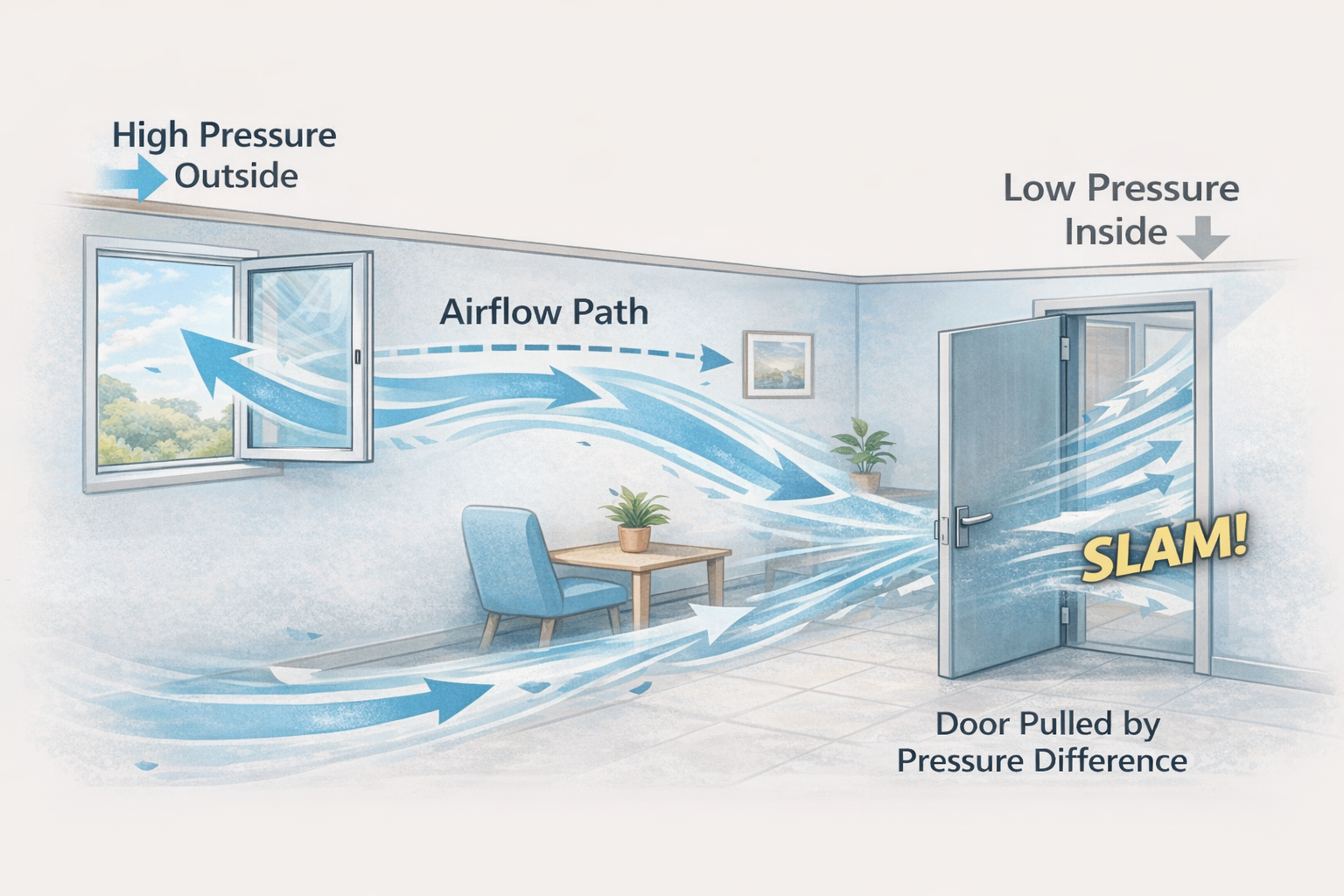
When a window or another door is open, outside air enters and creates a pressure pathway through the building. As air moves from high pressure areas to low pressure areas, it flows through the doorway and pushes or pulls the door with it.
This airflow can create a door wind block or suction effect, where the door is suddenly forced closed or pulled open. The larger the door and the stronger the airflow, the more aggressive the door movement becomes.
What Should a High Wind Door Closer Do?
To control doors exposed to strong wind conditions, the door closer must manage both force and speed effectively.
Key requirements include:
- Strong closing force to overcome wind pressure
- Hydraulic damping to absorb sudden wind-driven acceleration
- Heavy-duty construction for repeated high-impact cycles
- Adjustable closing speed plus a way to make sure the door still latches against pressure
- Compatibility with large or heavy doors
More spring force is not always the answer. ADA 404.2.9 limits opening force on interior hinged doors to 5 lbs, so on interior doors facing drafts, add hydraulic damping rather than extra tension. ADA sets no limit for exterior doors, but check local codes, and fire doors follow the authority having jurisdiction.
| Feature | Overhead closer with backcheck | Waterson hydraulic hinge set |
|---|---|---|
| Mounting | Surface mounted at head of door | Replaces the butt hinges |
| Closing control | Hydraulic sweep and latch speed | Spring force plus hydraulic damper with adjustable hydraulic zone |
| Overswing control | Backcheck, plus stop arm if added | Barrel-mounted door stop, 90° or 120° |
| Appearance | Visible arm and body | Looks like a standard hinge |
| Fire-rated version | Available | B sets, UL listed up to 3 hours |
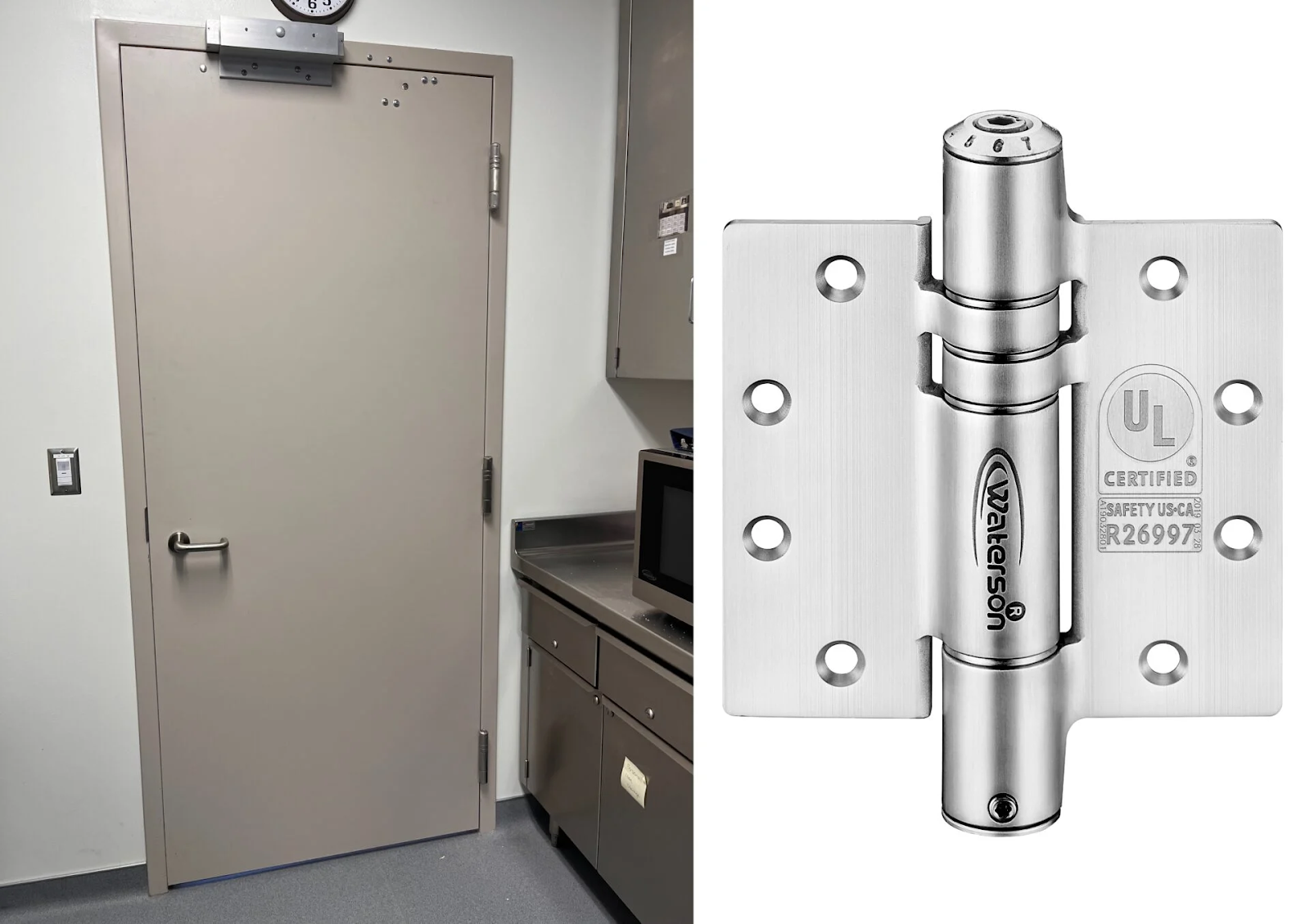
Which Waterson Hinge Sets Work on High-Wind Doors?
Waterson soft closing high wind door closers are designed specifically for high-load and high-variability environments, including entrances exposed to strong wind or pressure changes within buildings.
What makes Waterson door closer for high wind different includes:
- Self Closing: Spring force in every hinge closes the door under changing pressure.
- Soft Closing: Hydraulic hybrid sets (B and D) add a damper that absorbs gust-driven acceleration and adjusts resistance as conditions change.
- Heavy Duty: Certified to ANSI/BHMA A156.17 Grade 1, tested to 1,000,000 cycles.
- Fire Rated: A (mechanical) and B (hydraulic) sets are UL listed for fire-rated doors up to 3 hours.
- High Load Capacity: Three-hinge sets for doors up to 4 x 7 ft and 260 lbs; four-hinge sets for 4 x 8 ft doors up to 330 lbs (fire-rated A4 and B4) or 260 lbs (hold-open C4 and D4).
- Stainless Steel: Type 304 stainless steel standard, 316 marine grade optional.
- Adjustable Tension: Spring tension on a numerical panel; swing speed on every set; separate latch speed on mechanical sets; adjustable hydraulic zone on hydraulic sets for heavy latching doors.
- ADA Compliant: Adjustable to the 5 lb opening force limit for interior doors.
- Hold Open Option: C and D sets hold the door at 90 degrees; not for fire or exit doors that must self-close.
- Multiple Finishes: Satin Stainless Steel (US32D), Flat Black (US19), Satin Brass (US4), Satin Bronze (US10), and Dark Satin Bronze (695).
Unlike standard closer that only provide basic closing, Waterson high wind door closers are designed to control both wind-driven acceleration and the final latching motion, making them especially effective in high-wind environments.
| Door size (max) | Door thickness | Hydraulic fire-rated set |
|---|---|---|
| 4 x 7 ft, 260 lbs | 1-3/4″ | K51M-450-B3 |
| 4 x 8 ft, 330 lbs | 1-3/4″ | K51M-450-B4 |
| 4 x 8 ft, 330 lbs | 1-3/4″ to 2-1/4″ | K51M-500D-B4 |
| 4 x 8 ft, 330 lbs | 2-1/4″ and up | K51M-600-B4 |
What About Overswing When the Door Catches the Wind? How to Solve the Problem
In windy environments, another issue often appears: overswing.
When a sudden gust catches the door, it can force the door past its normal opening angle. This can cause the door handle or edge to strike nearby walls, furniture, or adjacent doors.
A practical solution is installing a door stop.
A door stop limits how far the door can open and protects both the door and surrounding surfaces. In windy applications, the door stop acts as a safety limiter, preventing the door from being pushed beyond its intended range.
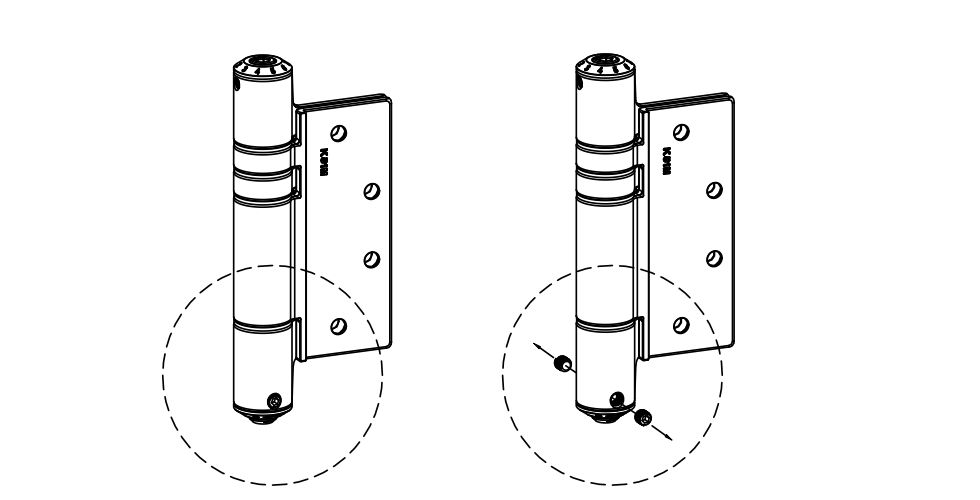
For high-wind doors, Waterson high wind door closer can be paired with a door stop add-on that limits the opening angle to 90 degrees, preventing overswing and protecting the door system from damage.
Can Waterson Door Stopper Work with Other Manufacturers’ Door Closer?
No. The Waterson door stopper is engineered as an integrated component of the Waterson door closer system and relies on the closer’s internal structure and geometry for proper engagement and load transfer. It is not a surface-mounted or universal accessory, and therefore cannot function correctly with standard butt door closer or other manufacturers’ door closer.
Retrofit Tips for Windy Openings
Waterson hinges fit standard BHMA hinge templates, so most wood and hollow metal doors with full mortise hinge preps can be retrofitted directly. Many aluminum storefront doors hang on pivots or continuous hinges instead, so confirm the frame has butt hinge preps before specifying. After installing, set tension one number at a time until the door closes and latches from 20 degrees, then tune speed. On heavy latching doors, turn the hydraulic zone fully to minus.
Wind problems at a door come down to pressure, door size, and how the closing force is controlled. For large exterior or lobby doors, a hydraulic hybrid hinge set sized to the door, plus a barrel-mounted door stop, handles slamming and overswing without an overhead closer.
For Manufacturer’s Suggested Retail Price (MSRP), check our online store or contact us. For project pricing, request a quotation. Spec sheets and CAD files are on the download page.
Hydraulic hybrid sets (B or D). The hydraulic damper absorbs wind-driven acceleration and adjusts resistance as gusts change, while mechanical sets close at the speed you set regardless of wind. Mechanical sets suit high-traffic doors with little wind exposure. Both types are available in fire-rated versions.
Add a door stop that limits the swing. Waterson door stops mount to the hinge barrel and limit the door to 90 degrees (WP01) or 120 degrees (WP02). A two-hinge set takes one door stop, and three- or four-hinge sets take two. Because they mount on the barrel, they only fit Waterson K51 hinges.
Not on interior doors. ADA 404.2.9 limits opening force on interior hinged doors to 5 lbs, so extra tension can make the door non-compliant. Add hydraulic damping instead. ADA sets no limit for exterior doors, but local codes may, and fire doors follow the authority having jurisdiction. Settings above 5 on the Waterson panel also shorten spring life.
Up to 4 x 8 ft and 330 lbs with a four-hinge fire-rated set such as K51M-450-B4. Three-hinge sets cover doors up to 4 x 7 ft and 260 lbs, and four-hinge hold-open sets are rated to 260 lbs. Wind adds load beyond the door’s own weight, so contact Waterson for a project review on doors near or above these limits.
Usually because of stack effect. Warm indoor air rises and creates pressure differences between floors, strongest in cold weather, so lobby, stairwell, and corridor doors slam, stick, or fail to latch. Hydraulic damping controls the closing, and on Waterson hydraulic sets the hydraulic zone can be set for heavy latching doors that pressure pushes back open.
Request For Quote
Please note that Waterson Closer Hinges start from a size of 4″x4″. If you’re in need of smaller self-closing hinges, we’d recommend checking out some other resources! Also, we only provide single acting closer hinges. Thank you.
Recent Post
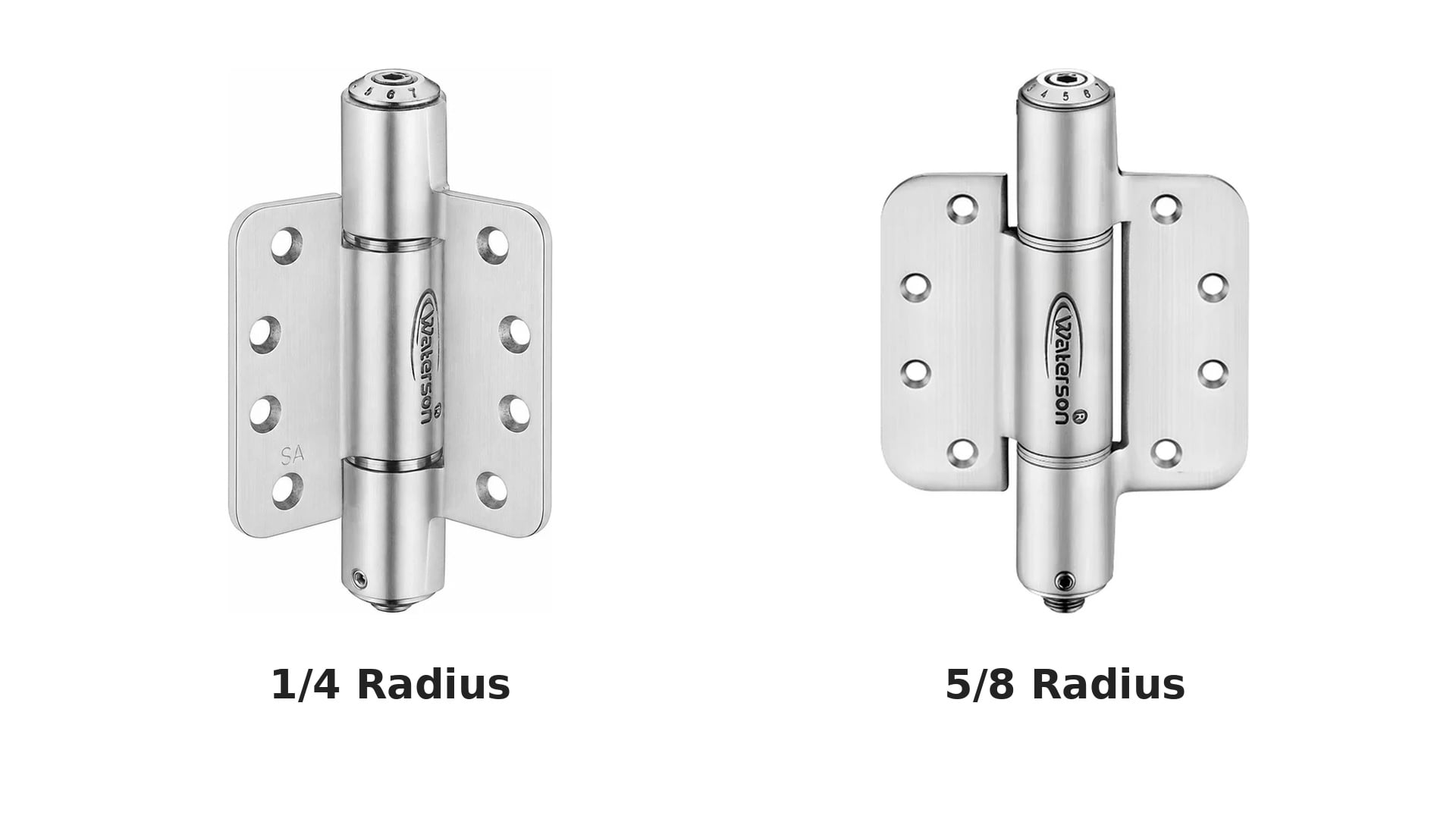
Replacing Door Hinges: 1/4 vs 5/8 Radius vs Square Corners
Quick Answer Most 4 inch residential door hinges have one of three corners: square, 1/4" radius, or 5/8" radius. A rounder hinge fits a mortise [...]
Why Won’t My Self Closing Door Hinges Close in Cold Weather
Quick Answer An exterior door that closes fine in summer but won't latch in winter is usually affected by two things: weather stripping that stiffens [...]
Soft Closing Hinges: 9 Most Frequently Asked Questions
Since the AIA in 2018, there has been an increased interest in Waterson hinges for many different projects. We have been inundated with questions by [...]