
Quick Answer
Specifying self-closing door hinges forces architects to juggle five competing demands at once: ADA opening-force limits, fire-rated latching requirements, the torque load of today’s oversized doors, the desire for clean minimal aesthetics, and the precision that concealed hardware demands during installation.
Waterson’s 304/316 stainless steel hinges resolve all five in a single product, combining UL-listed fire rating, ADA-compliant closing speed, Grade One cycle testing, and a standard ANSI template that drops into any door prep without custom mortising.
Selecting the right self-closing door hinge is one of the most deceptively complex decisions in architectural hardware specification. A single hinge must simultaneously satisfy building codes, accessibility standards, structural demands, and aesthetic intent, often within a project budget that leaves little room for trial and error.
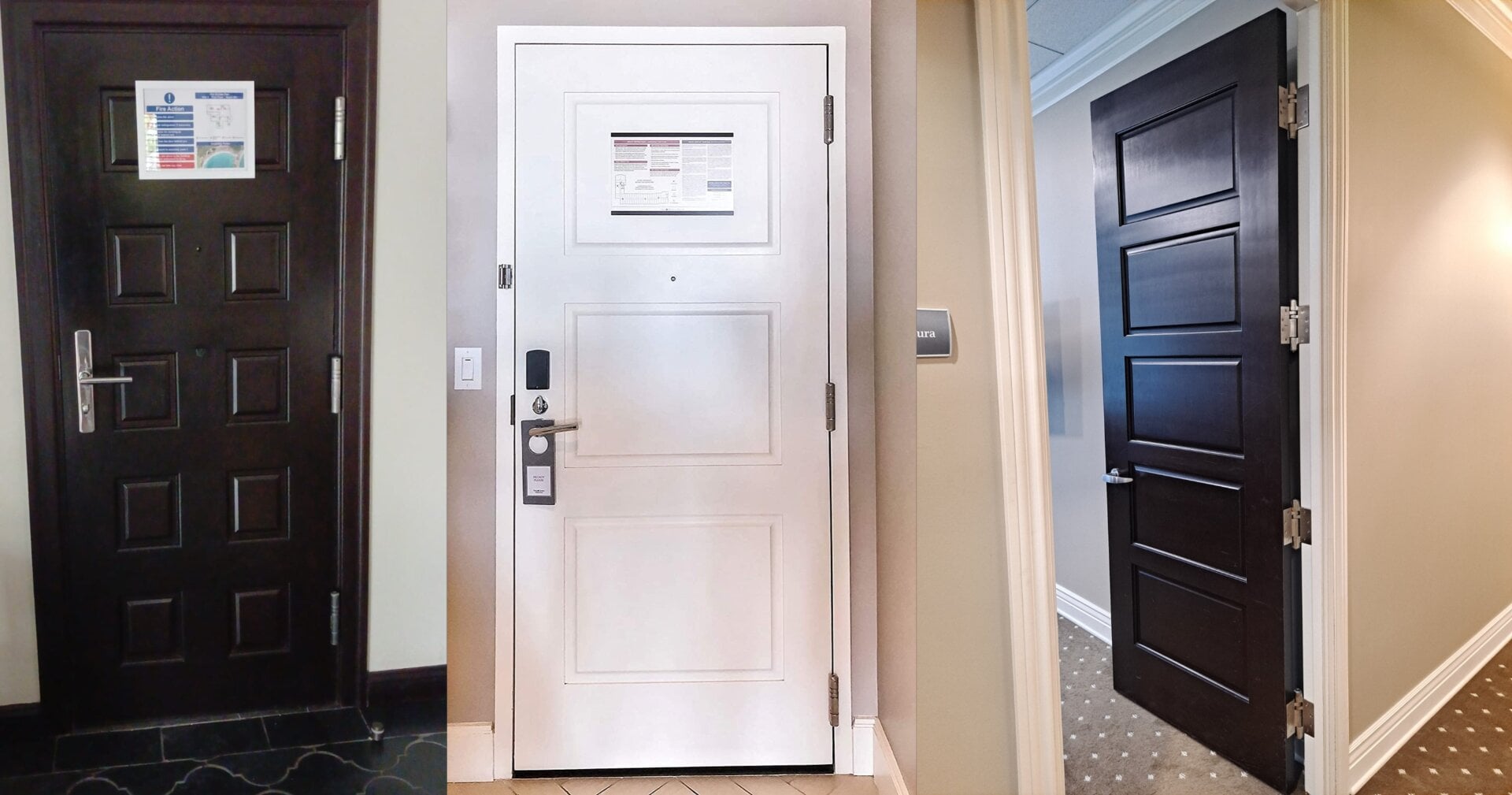
What Makes Specifying Self-Closing Door Hinges Challenging for Architects?
Specifying self-closing door hinges is challenging because architects must balance competing demands: ensuring ADA accessibility without violating fire codes, and concealing bulky hardware without sacrificing heavy-duty structural integrity for oversized doors.
Architectural challenges in hardware specification include:
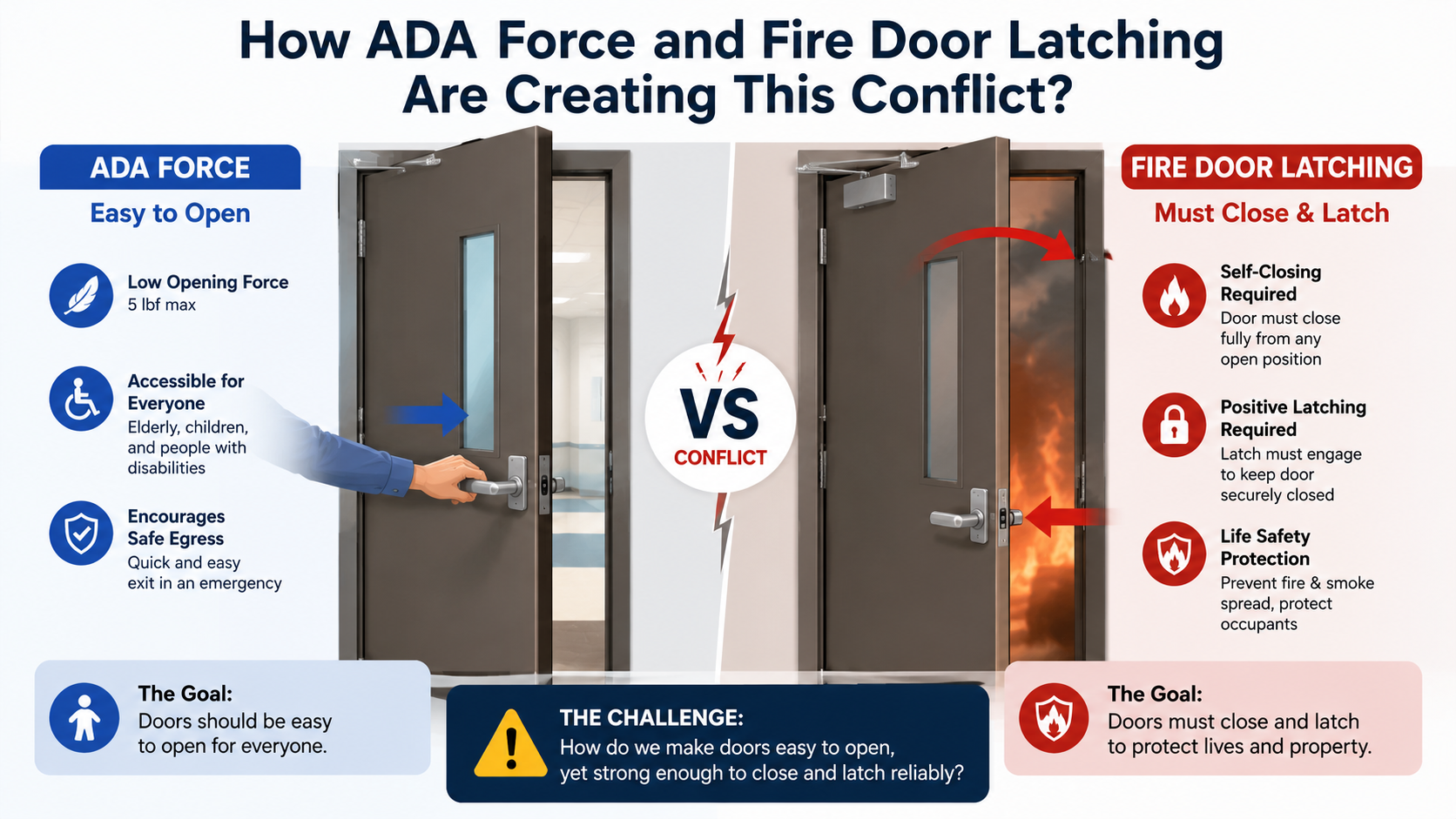
1. ADA Compliance vs. Fire Codes
Federal guidelines mandate that opening forces on doors cannot exceed 5 lbs of pressure. However, fire-rated self-closing hinges require significant spring tension to tightly latch the door against heavy air pressure or door seals. Balancing easy, accessible operation with forceful, life-safety latching is highly difficult.
2. Taller, Heavier Doors
The modern trend of using 8-foot or taller solid-core doors creates immense rotational torque. Heavy doors require specialized multi-hinge configurations to prevent sagging or binding, meaning architects must calculate exact weight, lever arm distribution, and torque capacity.
3. Aesthetics vs. Mechanical Bulk
Architects prefer concealed or minimalist hinges for clean, uninterrupted design lines. However, shrinking heavy-duty closing mechanisms, like hydraulic dampers and high-tension springs, into the hinge barrel reduces the hinge’s load capacity and makes in-field servicing highly complex.
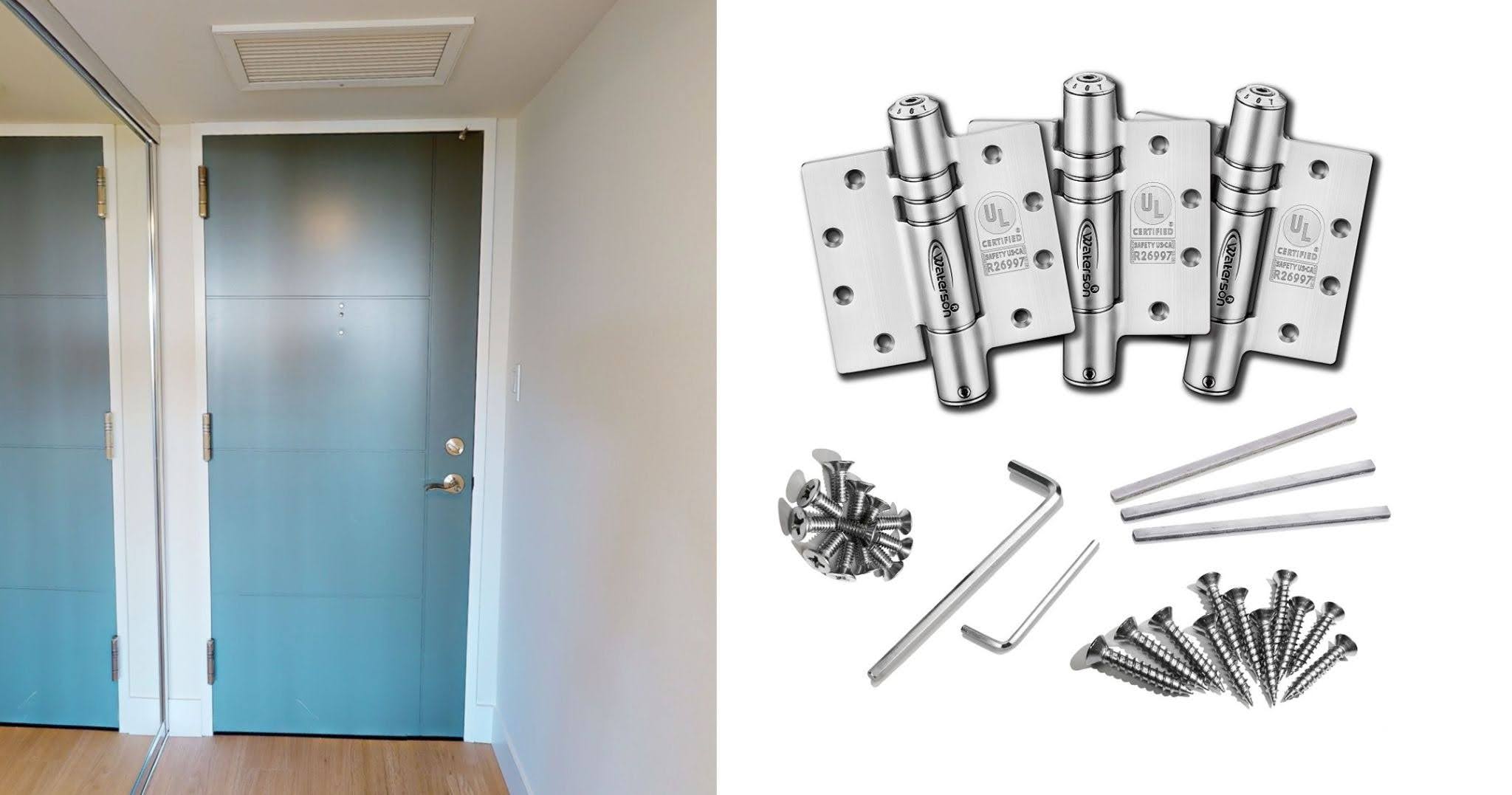
4. Door Slamming and Drafts
Unlike overhead door closers, basic self-closing spring hinges lack controlled hydraulic damping. This often causes heavy doors to slam violently at the end of their swing, transferring destructive force to the frame and surrounding drywall.
5. Precision Installation
For heavy or concealed self-closing hinges, installers must make precise, custom-shaped cutouts in both the door and frame. Even a microscopic misalignment can cause the door to improperly latch or drag across the floor.
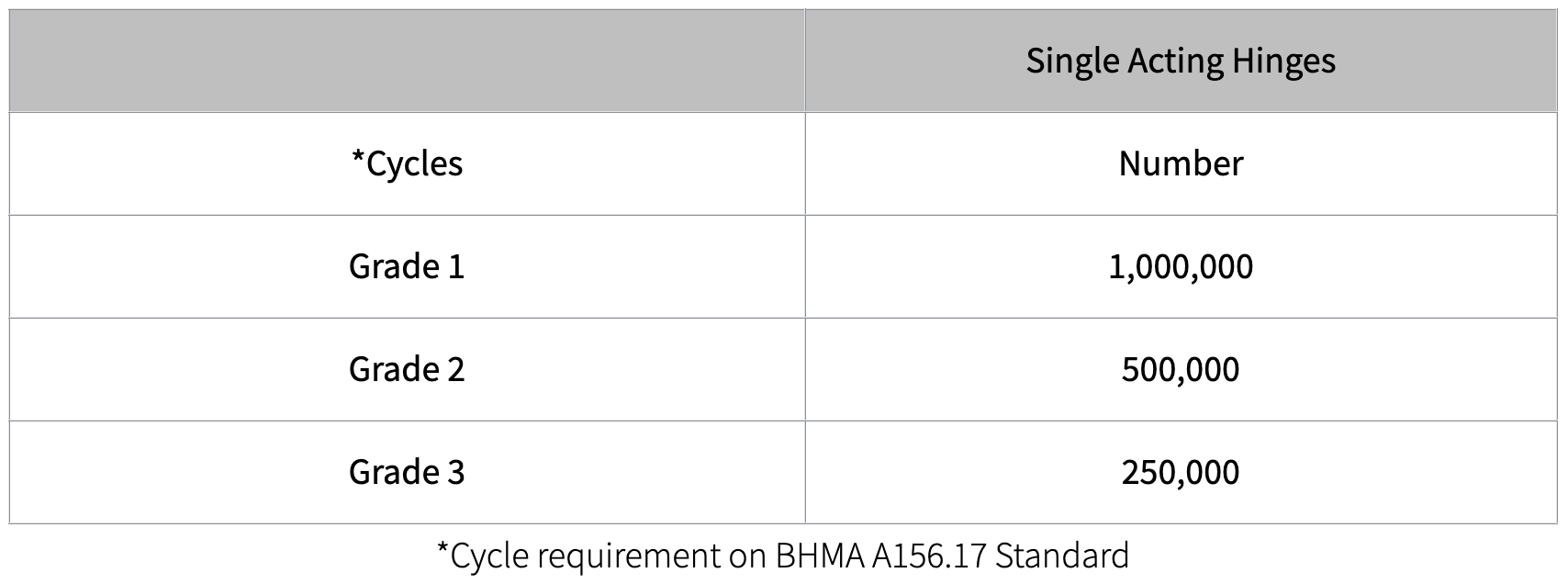
To navigate these hurdles, professionals typically refer to the ANSI/BHMA A156.17 Standards for load capacities and consult manufacturers to match hardware to localized building codes.
How Waterson Relieves the Stress of Specifying Self-Closing Hinges
Waterson self-closing door hinges are investment-grade solutions built from 304 and 316 stainless steel, engineered to meet the highest standards of performance, compliance, and longevity. Whether the project demands fire-rated security, ADA accessibility, or wind-resistant exterior applications, Waterson’s precision-engineered hinge systems are built to address every critical specification challenge architects face.
| Specification Challenge | How Waterson Addresses It |
|---|---|
| ADA Compliance vs. Fire Codes |
|
| Taller, Heavier Doors |
|
| Aesthetics vs. Mechanical Bulk |
|
| Door Slamming and Drafts |
|
| Precision Installation |
|
At Waterson, the product line is organized by system, type, and function, giving architects and specifiers a clear, structured framework for selecting the right self-closing or self-latching solution for any door or gate application. This clarity removes ambiguity from the specification process and shortens the time between design intent and hardware order.
See how architects specify Waterson in real projects
From luxury apartments to high-traffic commercial buildings, architects and contractors have relied on Waterson hinges to solve complex door specification challenges across a wide range of applications.
Frequently Asked Questions from Architects
Can Waterson hinges be produced in large quantities for commercial projects?
Yes. Waterson manufactures at commercial scale and can fulfill bulk orders for multi-unit residential, hospitality, healthcare, and institutional projects. Lead times and order minimums vary by configuration; contact the team directly for project-specific volume pricing.
Is custom design or finish available?
Yes. Beyond the four standard finishes, Waterson offers custom hinge configurations to match specific design requirements, including non-standard sizes, finishes, and mounting options. Custom samples and specifications are available upon request.
Are Waterson hinges compliant with local fire codes outside the US?
Waterson hinges are UL Listed for a 3-hour fire rating and tested to one million cycles, which meets or exceeds the requirements of most major international building codes. For jurisdiction-specific compliance questions, contact the Waterson team with your project location and door specification details.
Can Waterson hinges be adjusted after installation?
Yes. Both the Mechanical and Hybrid Hydraulic models feature field-adjustable closing speed and latching tension, allowing the door’s behavior to be fine-tuned on-site without replacing hardware.
Waterson Stainless Steel Heavy Duty Self Closing Door Hinges
Waterson SS304/316 self closing door hinges combine the function of an overhead closer and a hinge into a single, sleek component—complete with optional hold-open and door-stop features. Designed for commercial openings, gates, and glass doors, these hinges are easy to install and adjust to meet ADA and ICC A117.1 standards for opening force, while ensuring quiet and secure closure. Crafted from durable stainless steel, they are NFPA 80 compliant, UL 3-hour fire-rated, and built to perform reliably in both interior and all-weather exterior environments. See all our features.
In addition to these performance advantages, Waterson offers flexible customization services. As a direct custom hinge manufacturer, we can tailor hinge sizes, finishes, and especially hinge leaf designs to meet the specific structural needs of your doors. This makes our hinges an ideal solution for door manufacturers seeking custom options that integrate seamlessly with their existing frames.
Request For Information
Please note that Waterson Closer Hinges start from a size of 4″x4″. If you’re in need of smaller self-closing hinges, we’d recommend checking out some other resources! Also, we only provide single acting closer hinges. Thank you.
Recent Post

Soft Closing Hinges: 9 Most Frequently Asked Questions
Since the AIA in 2018, there has been an increased interest in Waterson hinges for many different projects. We have been inundated with questions by [...]
Residential Soft Close Front Door Hinges: How to Choose, Install & Adjust the Right Hinge for Your Home
Your front door is usually the heaviest door in your home and the one you use the most. Every time it slams, the impact goes [...]
How to Stop a Door From Swinging Open
In high-traffic projects, when a door swings open on its own, it can create serious trouble. It disrupts daily use, and worse—bam!—the door can slam [...]